Watching Post Viet Nam War Films "Now"

I suppose that being over fifty I should be used by now to this creeping feeling of superannuated post-post superfluity and quasi-irrelevance but just when one is foolishly imagining being on top of things–knowing for instance about The Flaw or how sexting works with robo-software–well then I do something like show some earnest late ’70’s films in a college class and yeah, just stick a fork in me for indeed the world of my young adulthood is as far from the world of today’s students as the world of sailing ships and whale bone corsets. Today in class we watched Coming Home with John Voigt and Jane Fonda and there on screen was an era of rotary telephones, black and white televisions, cars as long as ocean liners, cigarettes in every possible setting, and a collective and corrosive anger toward almost everything and everyone in the world. It was an era when the “F” bomb was not only out of the bag but it was used in common parlance as in: “Fuck the Establishment, those corporate hacks and soulless pall bearers carrying the corpse of freedom.” (For example.) While the movie has its own sadness and tragedies I found myself feeling elegiac for the easy to pronounce outrage of those days. Now, as our planet burns to death and the intersections of sex slavery, famine, war, and the globalized land grab for the last resources on earth is fully underway we’re all too polite. Way way too polite.

I feel better for saying so.


S.K.

Grandstanding with Justice

Watching day one of the confirmation hearings for Judge Sotomayor one could be forgiven for thinking (ever so briefly) of the tea party scene in Alice in Wonderland for indeed yea verily there was some contradictory obfuscatory projective nonsense flying around. My favorite bit of contradictory obfuscatory projective nonsense is the GOP’s notion that their men on the United States Supreme Court are impartial, untouched by the politics of social class, free of the desire to legislate from the bench. As one of my uncles used to say: “There’s only so much shit you can stuff back into the horse.”  All I have to do is think of Antonin Scalia asserting that a man in a wheelchair can be carried up the stairs as opposed to say, making the courthouse accessible. Contempt for others is a political position and don’t you forget it Senator Pachyderm. I’m just saying…


S.K. 

News Received of Shifty

From: Brent bcasey6168@yahoo.com

Sent: Friday, July 10, 2009 2:42 PM

Date: Thursday, July 9, 2009, 11:56 AM

Subject: Fw: Memorial Service: you’re invited.

Subject: Memorial Service: you’re invited.

We’re hearing a lot today about big splashy memorial services.
I want a nationwide memorial service for Darrell “Shifty” Powers.
Shifty volunteered for the airborne in WWII and served with Easy Company of the 506th Parachute Infantry Regiment, part of the 101st Airborne Infantry. If you’ve seen Band of Brothers on HBO or the History Channel, you know Shifty. His character appears in all 10 episodes, and Shifty himself is interviewed in several of them.
I met Shifty in the Philadelphia airport several years ago. I didn’t know who he was at the time. I just saw an elderly gentleman having trouble reading his ticket. I offered to help, assured him that he was at the right gate, and noticed the “Screaming Eagle”, the symbol of the 101st Airborne, on his hat.
Making conversation, I asked him if he’d been in the 101st Airborne or if his son was serving. He said quietly that he had been in the 101st. I thanked him for his service, then asked him when he served, and how many jumps he made.
Quietly and humbly, he said “Well, I guess I signed up in 1941 or so, and was in until sometime in 1945 . . . ” at which point my heart skipped.
At that point, again, very humbly, he said “I made the 5 training jumps at Toccoa, and then jumped into Normandy . . . . do you know where Normandy is?” At this point my heart stopped.
I told him yes, I know exactly where Normandy was, and I know what D-Day was. At that point he said “I also made a second jump into Holland , into Arnhem .” I was standing with a genuine war hero . . . . and then I realized that it was June, just after the anniversary of D-Day.
I asked Shifty if he was on his way back from France , and he said “Yes. And it’s real sad because these days so few of the guys are left, and those that are, lots of them can’t make the trip.” My heart was in my throat and I didn’t know what to say.
I helped Shifty get onto the plane and then realized he was back in Coach, while I was in First Class. I sent the flight attendant back to get him and said that I wanted to switch seats. When Shifty came forward, I got up out of the seat and told him I wanted him to have it, that I’d take his in coach.
He said “No, son, you enjoy that seat. Just knowing that there are still some who remember what we did and still care is enough to make an old man very happy.” His eyes were filling up as he said it. And mine are brimming up now as I write this.
Shifty died on June 17 after fighting cancer.
There was no parade.
No big event in Staples Center .
No wall to wall back to back 24×7 news coverage.
No weeping fans on television.
And that’s not right.
Let’s give Shifty his own Memorial Service, online, in our own quiet way. Please forward this email to everyone you know. Especially to the veterans.
Rest in peace, Shifty.
“A nation without heroes is nothing.”
Roberto Clemente

Remembering Ed Freeman


We are passing along this memorial message with humility.


S.K.

**


You’re a 19-year-old kid. You’re critically wounded and dying in the jungle in the Ia Drang Valley , 11-14-1965, LZ X-ray, Vietnam . Your infantry unit is outnumbered 8-1 and the enemy fire is so intense, from 100 or 200 yards away, that your own Infantry Commander has ordered the MediVac helicopters to stop coming in.

You’re lying there, listening to the enemy machine guns, and you know you’re not getting out.. Your family is half way around the world, 12,000 miles away and you’ll never see them again. As the world starts to fade in and out, you know this is the day.

Then, over the machine gun noise, you faintly hear that sound of a helicopter and you look up to see an unarmed Huey, but it doesn’t seem real because no Medi-Vac markings are on it.

Ed Freeman is coming for you. He’s not Medi-Vac, so it’s not his job, but he’s flying his Huey down into the machine gun fire, after the Medi-Vacs were ordered not to come.

He’s coming anyway.

And he drops it in and sits there in the machine gun fire as they load 2 or 3 of you on board.

Then he flies you up and out, through the gunfire to the doctors and nurses.
And he kept coming back, 13 more times, and took about 30 of you and your buddies out, who would never have gotten out.

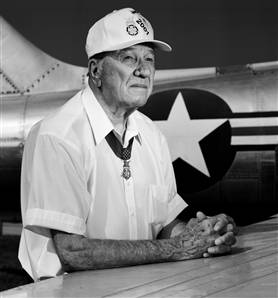
Medal of Honor Recipient Ed Freeman died on Wednesday, June 25th, 2009, at the age of 80, in Boise , ID.   May God rest his soul.


Ed Freeman


Medal of Honor Winner
Ed Freeman

Since the media didn’t give him the coverage he deserves, send this to every red-blooded American you know.

THANKS AGAIN, ED, FOR WHAT YOU DID FOR OUR COUNTRY.
RIP

A Soldier's Rant


We at POTB received the following e-mail from a friend who is an activist for our nation’s veterans.  All we can add is: “Amen, Brother, Amen.”


This is written by a young man serving his third tour of duty in Iraq.

Thought you might find his take on the Michael Jackson news interesting.

____________________________

Okay, I need to rant.
I was just watching the news, and I caught part of a report on Michael Jackson.  As we all know, Jackson died the other day. 

He was an entertainer who performed for decades.  He made millions, he spent millions, and he did a lot of things that make him a villain too many people. 

I understand that his death would affect a lot of people, and
I respect those people who mourn his death, but that isn’t the point of my rant.
Why is it that when ONE man dies, the whole of America loses their minds with grief?

When a man dies whose only contribution to the country was to ENTERTAIN people, the American people find the need to flock to a memorial in Hollywood, and even Congress sees the need to hold a “moment of silence” for his passing?
Am I missing something here?  ONE man dies, and all of a sudden he’s a freaking martyr because he entertained us for a few decades?  What about all those SOLDIERS who have died to give us freedom?  All those Soldiers who, knowing that they would be asked to fight in a war, still raised their hands and swore to defend the Constitution and the United States of America.  Where is their moment of silence?  Where are the people flocking to their graves or memorials and mourning over them because they made the ultimate sacrifice?  When did this country become so calloused to the sacrifice of GOOD MEN and WOMEN that they can arbitrarily blow off their deaths, and instead, throw themselves into mourning for a “Pop Icon?”
I think that if they are going to hold a moment of silence IN CONGRESS for Michael Jackson, they need to hold a moment of silence for every service member killed in Iraq and Afghanistan.  They need to PUBLICLY recognize every life that has been lost so that the American people can live their callous little lives in the luxury and freedom that WE, those that are living and those that have gone on, have provided for them. 

But, wait, that would take too much time, because there have been so many willing to make that sacrifice.  After all, we will never make millions of dollars.  We will never star in movies, or write hit songs that the world will listen too.  We only shed our blood, sweat and tears so that people can enjoy what they have.
Sorry if I have offended, but I needed to say it. 

Remember these five words the next time you think of someone who is serving in the military;

“So that others may live…”

Isaac

God Bless our Veterans past, present and future and their families.

Coffee Alone

Would it help you to know that I am now the meanest man in Iowa? Here in this cafe where the locals are so very nice, here, where the kids stand in line politely awaiting their double shot caramel lattes and all to the strains of country music; smiles, all smiles, all smiles, here I am, fresh from the Hawkeye Barber Shop with a supremely mean haircut.

Yes. I decided this morning to get myself some snarling hair. I told the barber to make me look like the king of foreclosure, a banker who sees homelessness in the still faithful eyes of his hapless borrowers–yep, I demanded slick, foreclosure hair and now I’ve got it. Every strand of my coiff has a  poisonous fang. Don’t touch me, I’m a real live wire. My hair will give you an “owie”! 

Screw country music. Screw Disney.

My Medusa-esque scrubby tonsure jumps like wild fire. Screw the candy makers and the manufacturers of welcome mats. Down with them all!

Thinking of mean and truthful books, have you ever read Ariel Dorfman’s How to Read Donald Duck?

Well, that’s a superb book to be sure. I think its best if one reads it alongside The Magic Kingdom by Stanley Elkin which to my mind is the finest treatment in fiction of the cruel subterfuge that is Disney. My hair snarls: Its a small world after all…

Screw these shorts that reach to a man’s knees.

Screw fantasy baseball.

Screw your hot pink cell phone and its accompanying corporation tee shirt.

How tenderly Mr. Duck loans you the money. His Uncle has your fingerprints on file.

Today I have mean hair. It does not matter my heart still leaps up for poetry.


S.K.

Caravaggio & Caruso, or, Taking a Dark Place into Your Guts


Sometimes artists need to grow in fierce and tangled places. It is interesting that the painter Caravaggio hit his theme in Italy’s most impoverished and crowded city and that some three hundred years later the world’s greatest opera singer would hone his craft in those same streets.

In her brief biography Caravaggio: Painter of Miracles, novelist Francine Prose writes of the influence of Naples on the artist’s development:

“When autumn came, Caravaggio departed for Naples, which was then under Spanish rule, and which might as well have been a different country. Even today Naples can make you feel as if you have left Italy and been magically transported to North Africa or Asia. The streets of the old city are narrower and more mazelike than those in the capital, and they’re darker, shadowed by ancient dwellings that loom like skyscrapers, compared with the relatively low-rise buildings of Rome. The population was and is poorer and more likely to be unemployed, the prevailing atmosphere more volatile and anarchic.”


Immediately Caravaggio undertakes the painting of “The Seven Acts of Mercy” which Francine Prose describes this way:

“The Seven Acts of Mercy was a daunting assignment, but Caravaggio rose to the challenge, setting his nocturnal drama in a cramped piazza and crowding the lower half of his canvas with figures involved in scenarios corresponding to each of the seven good works. The most startling and most brightly lit of these illustrates the ancient Roman legend of Cimon and Pero, an exemplary tale of filial devotion concerning a woman who saved the life of her imprisoned and starving father by nourishing him with her breast milk. Here, in an astonishingly naturalistic touch, Pero has lifted the hem of her skirt as a sort of bib beneath the chin of her grizzled father, whose head protrudes between the prison bars as he suckles her bare breast. Half turning from him, Pero regards the spectacle around her: Samson drinking from the jawbone of an ass, Saint Martin dividing his cloak to clothe a naked beggar, an innkeeper directing pilgims to his establishment. Just behind Pero, a priest raises his torch to aid a man grasping the ankles of what appears to be a corpse. Above it all soars Mary, tenderly holding her radiant child, and from a tangle of angels, feathered wings, and swirling drapery, she surveys the world beneath her with perfect and absolute compassion.”

“Lacking a central emotional core, a vibrantly intimate interaction of the sort that allowed Caravaggio to achieve his most powerful effects, the painting seems chaotic, almost circuslike, and unfocused. It’s hard to know what we should look at first, or what impression we should take away from this jittery, hyperactive carnival of competing activity-that is, until we realize that what we are seeing is Naples itself. Even now the darkness, the light and shadow, the frenetic buzz of the crowd makes the altarpiece seem less like a biblical or mythical narrative than like a cityscape, like reportage.”

Ah but the artist takes Naples “inside” him and in your guts its transformed into poetry rather than newsprint.

**

In a novel I’m writing about Caruso I depict him working as a very young man with an autocratic teacher who sends him into the streets to practice his breathing techniques.

Here is a section:


Vergine.

Who makes the boy walk in circles. Tells him the notes are within each circle. Tells him to think of circles all his life. Tells him the mouth is circular. The tongue is simply homesick for the circle.

And the boy closes his eyes and sees three circles. Red, green, and white. He is instructed a bit more explicitly.

“The red circle is the stomach,” says the teacher. “The seat of all that’s warm, and also of everything that’s cold.”

The boy imagines the cavern of appetite and tries to think of sudden revulsion.

“Verdi spends much of his time in this circle,”Vergine says. The boy notices for the first time how round his teacher’s eyes are. They are like black marbles.

“The next circle is the diaphragm. You must learn every degree of this circle. You must know it so well that you dream about it.”

“And of course the third circle is the throat. Left to its own devices the throat merely howls like a street cat. But when you roll it into the other circles it can become a great instrument.”

Vergine sends the boy out into the streets to think about the circles.

In the harbor of Naples he watches sailors from Egypt unloading bolts of cloth. Ruby colored cottons and blue mysteries—the blues going to indigo, yards of cloth shaded like the night sky. He watches great rolls of fabric as they are hoisted by teams of longshoremen, immense, rose colored cannons coming slowly through dense crowds.

Red is for the stomach.

He sings without opening his mouth. The cotton comes through the press of people and he sings an old, Neapolitan love song. He sings with just his stomach and his throat. He appears to be talking to himself amid orient colors and the press of people.

He remembers a priest who said “the voice precedes the prayer.” The voice is always there. You find it with simplicity. With honesty. By desiring something larger than personal happiness.

The boy walks in circles among ten thousand people. The sun bears down in Naples. Ships are unloaded in a sunlight so dazzling that it is said there is no need for a customs inspector. The sun exposes everything.

He stands amid carpenters and pickpockets. He runs his fingers over his neck, pressing lightly at the y-crested collar bone. He strokes the soft flesh of his chin and kneeds the skin of his throat like bread dough.

The boy can sing with his throat. He is pure in the head registers. Vergine says he can become startling.

Ah but the diaphragm is the human portion of the prayer. The diaphragm is a cinctured scroll. Each singer must learn to open it without showing an outward sign.

And so the green circle will be the hardest one to master.

He walks in circles just as Vergine has instructed.

Walking in this way, with no destination, he decides that he will wear a piece of discarded metal by affixing it to his sternum. Something made of brass. An old faucet perhaps.

He will ask his father who repairs public fountains. His father will give him a spigot that was once inside a cherub. The boy will wear this affixed to his gut. He will heave it up and down beneath an oversized shirt.

And the boy’s father isn’t brutal. Neither does he possess curiosity. When asked for a broken faucet from a dry fountain he hands over a perfect,fluted curl of brass and his unusual singing boy carries it away.

Vergine tells the boy to practice his breathing in a public square.

The boy-Caruso picks a spot in the open air opposite the entrance to the Mercadente theater. It is a shaded spot and because the hour is just after the mezzo-giorno no one sees him though he stands in plain view in the southeast corner of the wide plaza.

He is aware that he is lucky. He is 16 years old and he is a pupil of the great Vergine.

Vergine. Who sang for Verdi. Whose eccentricities are sub-rosa.

Vergine. Who sleeps with a cat’s skin draped on his larynx.

Who claims to have received the skin from Chaliapin.

Who believes one should practice breathing in a public square.

He wears the faucet under his shirt having tied it with butcher’s twine.

The metal affixed to his ribs weighs one pound and seven ounces. It’s just heavy enough to transform ordinary breathing into a private wrestling match.

The boy’s job is to enunciate a single word and to breathe slowly in and out.

His word is lacrymosa and he must work this across the twin circles of the diaphragm and the throat

Lacrymosa.

“Breathe deeply without the appearance of taking breath
,” says Vergine,

“Ex
pel breath by pronouncingLa and cry. Inhale while saying mosa.

Exhale on a.”

Vergine.

Who tells the boy that his singing sounds like wind whistling through a window crack.

Lacrymosa

The boy pushes against the metal with his stomach.

Lacrymosa

Two men pass in front of him pushing a cart piled high with mattresses.

He sees two prostitutes laughing in the shadows by the Royal Hotel.

He hides the fact that he is breathing.

The metal pipe under his shirt moves in short spasms like a piece of furniture.

He sees a “mage”—a fortune teller, a woman with a turquoise colored scarf and voluminous skirts. She has joined the prostitutes for the shared laughter. He knows they haven’t seen him.

He knows he is perfecting the art of breathing and lifting without being seen.

**

Poets and painters are the eavesdroppers who effectively hide their breathing.


S.K.
A Valediction of the Grass Growing Under My Feet

I walk out in the early morning and the dew is heavy as Russian tea. A small creature jumps where the grass stands uncut. My thin legs tremble as if I spent the night on the ocean.

Last night my wife slept fitfully and I was the cause. I tossed and pulled the blankets, snored operatically, dreamt of the dead. Connie had to leave the room at four in the morning while I went on dreaming of dead friends.  

If the early grass could talk I think it would speak of the prairie moon with no untruths or fantasies: a boat would drift to a far shore, away from time, those long vowels aimed where coins are useless.


S.K.  

What Are We Waiting For? Indeed.


The following excerpt from The Huffington Post comes to us via The Inclusion Daily Express.


Obama’s Chance To Lead: Sign the Disability Treaty
(Huffington Post)
July 6, 2009
WASHINGTON, DC– [Excerpt] President Obama has made it a priority to re-position the United States as a leader in the global arena. One area where we are conspicuously silent — and could lead or at least participate more fully — is disability rights.

Over all, according to the U.N., 650 million people, 10% of the world population, live with a disability. This makes them the world’s largest minority. Worse yet, the World Bank reports that 20% of the world’s poorest people have some kind of disability. They tend to be regarded in their own communities as the most disadvantaged.

On December 13th, 2006, The UN General Assembly adopted the United Nations Convention on the Rights of Persons with Disabilities. At the time of its adoption, UN Secretary-General Kofi Annan called the CRPD a “remarkable and forward-looking document . . . The first human rights treaty to be adopted in the twenty-first century.” The purpose of the Convention is to promote, protect, and ensure the full and equal enjoyment of all human rights by persons with disabilities. A staggering 139 countries having signed the Convention and 58 have ratified it, including the United Kingdom this past month.

What are we waiting for?

Entire article:
Obama’s Chance to Lead: Sign the Disability Treaty

http://www.inclusiondaily.com/news/2009/red/0706f.htm


**


The answer (offered here in the spirit of speculation) is that the United States is reluctant to sign a world wide treaty on human rights for people with disabilities because our military activities (remember “Shock and Awe”?) create civilian populations with disabilities. We wouldn’t want to be responsible for this, would we?


S.K.