The Solstice Blues


Each year as the winter solstice draws near I feel the losses, feel them like some kind of arthritis of the spirit, and I find that I walk around on the customary streets and fall away from all that’s around me. This isn’t alienation. I don’t feel like the narrator of Pablo Neruda’s famous poem “Walking Around” who is sick of being a man even while he enters movie houses and tailor shops. This condition I experience has more to do with pagan grieving–as the days grow shorter I am less able to imagine eternal life in the Christian sense; more in mind of dead souls of the ones I’ve loved, mindful of their adjacent suspensions, imagining them like fish in Hades hanging in darkness.

Small wonder then that the Macy’s parade and the iridescent inflatable bubble gum mangers and the thousand Santa Clauses don’t help me. There are dead souls bumping against my ribcage and there’s a pull of stars I can feel in my eyelashes. And walking around I know that the problem (such as it is) has to do with my people for we have forgotten how to gather at the ends of the shortened days in winter. We don’t know how to honor the fish of Hades. Instead we practice loud affirmation, swelling with musical assurances, giving away delicate music boxes; all to feel right. But if you’re like me and you have 30 % of the pagan you don’t feel right. You have arthritis in the spirit as I’ve said and all the forced cheer of the Judeo-Christian festival won’t quite do. The pagan in me believes that the dead circulate; they are not secure in the many mansions of their father’s house, neither are they a mineral blank; they are moving like neural messages, cold or hot, flickering, pin prick and flare of matches, sad as notes from a Baroque mandolin. Last night, up late, my wife already asleep I wrote a short poem. I wanted to get the pagan grieving into focus. The poem doesn’t solve anything of course. It is an adjacent suspension for the ones who are near and unseeable. It is the solstice. The Finn in me needs to say so.


Solstice


Night and a baroque mandolin

Are equal—a conceit of drunks

Or the ineffably sad—sky so close

It calls the heart to shore

The mandolin upturned there, played

In weeds, played like light.

Call out our losses, saddle the horses,

Ask my father back from his grave,

Beg him, cry, Vivaldi and trillions of stars.


S.K.


— Publishers Weekly, 11/9/2009

{In
this scene, Skloot meets with Henrietta Lacks's daughter, Deborah, who
reveals her own research into the fate of her mother's harvested cells.
–Ed}

Deborah
grabbed her bag off the floor, and dumped its contents onto the bed.
“This is what I got about my mother,” she said. There were videotapes,
a tattered English dictionary, a diary, a genetics textbook, many
scientific journal articles, patent records, and unsent greeting cards,
including several birthday and Mother’s Day cards she’d bought for
Henrietta.


While she sorted through the pile, as though she was saying something as everyday as It’s supposed to rain tomorrow,
Deborah said, “Scientists do all kinds of experiments and you never
know what they doin. I still wonder how many people they got in London
walkin around look just like my mother.”


“What?” I said. “Why would there be women in London who look like your mother?”


“They
did that cloning on my mother over there,” she said, surprised I hadn’t
come across that fact in my research. “A reporter came here from
England talking about they cloned a sheep. Now you go on the Internet,
they got stuff about cloning my mother all over.” She held up an
article from the Independent in London and pointed at a
circled paragraph: “Henrietta Lacks’s cells thrived. In weight, they
now far surpassed the person of their origin and there would probably
be more than sufficient to populate a village of Henriettas.” The
writer joked that Henrietta should have put ten dollars in the bank in
1951, because if she had, her clones would be rich now.

Deborah raised her eyebrows at me like, See? I told you!


I started saying it was just Henrietta’s cells
scientists had cloned, not Henrietta herself. But Deborah waved her
hand in my face, shushing me like I was talking nonsense, then grabbed
a videocassette and held it up for me to see. It said Jurassic Park on the spine.

“I saw
this movie a bunch of times,” she said. “They talking about the genes
and taking them from cells to bring that dinosaur back to life and I’m
like, Oh Lord, I got a paper on how they were doin that with my
mother’s cells too!


“I don’t know what I’d do if I saw one of my mother clones walkin around somewhere.”

Deborah realized Jurassic Park
was science fiction, but for her the line between sci-fi and reality
had blurred years earlier, when her father got that first call saying
Henrietta’s cells were still alive twenty-five years after her death.
Deborah knew her mother’s cells had grown like the Blob until there
were so many of them they could wrap around the Earth several times. It
sounded crazy, but it was true.


“You
just never know,” Deborah said, fishing two more articles from the
pile. One was called Human, Plant Cells Fused: Walking Carrots Next?
The other was Man-Animal Cells Bred in Lab. Both were about her
mother’s cells, and neither was science fiction.

“I don’t know what they did,” Deborah said, “but it all sound like Jurassic Park to me.”

Amazon.com Widgets

A Brief Essay on Exercise


Small-Island--Lake-Winnipesaukee--New-Hampshire--USA_web


1.

Each summer I return to the state where I was born and where I own a cottage. There is no substitute for sentiment which is the sister of nostalgia. The difference between them is in degree.

2.

I’ll say it: the nostalgic person never goes home. The NP prefers poetry to the rising gnats and the clouds like mare’s tails. But enough. I go home. I go home because sentiment places a rough stone in the mind. And poetry can’t dissolve it.

3.

The state is New Hampshire and god knows more than enough has been written about the granite state by now. I’ll say it: I do not prefer Robert Frost’s New Hampshire to the real one. I like the people too much. I like the men and women who work at Merrill Fay’s Boat Yard in Gilford. I like their work ethic and I enjoy their jokes. They are the people I grew up with. They bear no resemblance to Robert Frost’s New Hampshire.

4.

I go to the island and smoke a cheap cigar and listen to wind and I give up on argument for awhile. I give up a long while. I am tired of talk and unlike Frost I have no need to invent some. My skeleton pertains to its own urgencies. I lie down in the moss among cinnamon ferns. I fall asleep that way. And I dream quite literally of my father who, like many Finns had his favorite tree. In the dream my father plays a grand piano before tall windows, the snow falling outside. I notice that his music sheet is a page from the family bible, a section from Mathew but in the way of dreams I can’t read it. My father is playing the gospel of Mathew. I am asleep in the ferns. When I wake up I understand this is not sentiment. I walk some more in the woods. There is a big wind in the tree tops, an effect you get on the island. The birds are silent.

5.

When I was a boy our family divided time between New Hampshire and Finland. Both places are granitic, forested and cold. Both have a brief summer. Finland exports her granite. My New Hampshire grandmother is buried beneath a quarter ton of polished Finnish red granite—the export came as ballast in cargo ships, was sold to the cemeteries, was decorated with Yankee care. Granite: unknowable as the eyes of crows and as ubiquitous. I imagine Robert Frost is buried under Finnish granite. That stone of brief summer. Thoughts while walking alone on Rattlesnake Island far out on Lake Winnipesaukee, mid summer in my 54th year…

6.

So although I am blind I take the old row boat at midnight and strike out for the center of the lake. Old story: navigating the dark in a boat that’s too small.

And my breathing is easy; shoulders and neck bent to the task…

And the creaking oarlocks; the slosh of old water around my feet…

Late night; the summer people asleep now; wave after wave and the darkness of my own flesh.

Wind and no far shore… just another of the world’s blind rowers.


S.K.

Disability at the Window


Like the marks of children’s fingers on the glass, disability is at the window. Like those tiny, smudgy marks we don’t like this disability thing. No one likes it whether you’re inside looking out or outside looking in. No one likes it. Even those of us who seek to celebrate disability culture are invariably struggling with the relative disinterest of “abled” culture, whatever that is. If you have a disability and you love the arts you can often feel like the person inside who looks out the window. In this figure the “outside” people are looking in, where they see the disabled trapped in their little glass room of performance. This is a hard figurative position to escape. No one wants to be side-show entertainment. Or, by turns, from a position of political persistence and some authentic naughtiness, some of us relish the opportunity to be poetry cripples. If we’re “inside” the room and standing at the window we hold up a mirror and by turns, if we’re outside and looking in, well, we hold up a mirror. We want the “normates” to see themselves seeing us. And isn’t that what all artists want? The poetry cripples wilfully forget the glass room of disability performance, preferring performance that makes the toes curl inside the shoes and the hidden tongue goes exploring the rude teeth. I want that. I don’t want the casual “ooh” and “ah” of the mundane, academic poetry reading. The latter pretends to avant garde discomforts by playing at bodily or spiritual alienation of a hundred varieties, sex in the church pew, the poem as fetish, language as antithetical, anti-bourgeois rubber pants; one sees it all the time, but alas that shit ain’t got what the poetry cripples have: we’ll make you wish you had a naughty, ungovernable tongue; rubber limbs; darkened eyes; ears like feathers; miles of nerve endings that spell electricity in seven languages yet to be deciphered and for which the Rosetta stone is still aborning. The poetry cripples will feed your customary hats to their underworld animals.

Who can do what I’m talking about? Lots of great artists–many of whom are not as widely known as they should be.

As we enter the holidays we are presented with Tiny Tim the most famous Victorian figure of disability. I like to think of Tim “today” and far from begrudging him his “cure” (for Dickens presents us with the philanthropy of a reformed Scrooge and the restored health of a crippled boy) I’d like to imagine Tiny Tim as a man who retains a mindfulness about disfigurement, understanding it as a terrible irrelevance, nay, even a drain on human intelligence. I like to think of Tiny Tim as becoming a kind of Noam Chomsky of the body. But I’ll leave that idea for another day. Meantime I’m thinking of the arts and of their glorious infidelity to old ideas. Here are some places to go:


Jim Ferris: “The Hospital Poems”:

http://www.mainstreetrag.com/JFerris.html


See what Petra Kuppers has to say about Jim Ferris at:

http://www.valpo.edu/vpr/kuppersreviewferris.html


Read more about Petra Kuppers at:


http://www.valpo.edu/vpr/kuppersreviewferris.html


http://www.disstudies.org/about/board/bio/Petra_Kuppers


http://www.amazon.com/s/?ie=UTF8&keywords=petra+kuppers&tag=googhydr-20&index=aps&hvadid=1153747061&ref=pd_sl_7f60v957i0_e


Visit Neil Marcus and Petra Kuppers’ remarkable book of poems Cripple Poetics at:


http://www.wordgathering.com/issue6/excerpts/excerpt.html


Read about Neil Marcus and Dan Wilkins and Laura Hershey and many other poets at:


http://walkingisoverrated.com/2009/01/22/disabled-country-poem-by-neil-marcus/


http://www.disabledandproud.com/prideart.htm


Visit the excellent blog “Disability is an Art” at:


http://disabilityisanart.blogspot.com/2005/07/inspiration-short-biography-of-neil.html


Learn about the Inglis House poetry contest at:


http://www.poetryslam.com/index.php?option=com_content&view=article&id=94:inglis-house-poetry-contest&catid=1:latest&Itemid=79


http://74.125.95.132/search?q=cache:tEnf9Vw2MBgJ:www.inglis.org/pdf/spotlight_200908.pdf+inglis+house+poetry&cd=2&hl=en&ct=clnk&gl=us


Visit Axis Dance at:


http://www.axisdance.org/


Visit Dancing Wheels at:


http://www.gggreg.com/dancingwheels.htm


Learn about Deaf American Poetry:


http://gupress.gallaudet.edu/bookpage/DAPbookpage.html


You want Tiny Tim? I’ll give you mothafuckin’ Tiny!


S.K.

Pilgrim's Progress, from the Indians' Side

Pilgrim Turkey


The ruffians had me by the throat of my inner throat–that place of simplicity and credulous cheer; not satisfied with choking my decency they squeezed the optimism from my fibrous tissues, leaving me dry in the muscles. “Who are these ruffians?” I wondered. Then I thought: “How can I feed them?” I’m just enough of a non-Christian to think such things as the hope is being sucked right out of me. And so I waved a turkey leg before their eyes. (I just happened to have a spare turkey leg in my pocket.) I waved that leg for all it was worth, waved it like a truce flag, short and long arcs, up and down, and all the while they kept choking my better nature. “Look! I’m offering to feed you you dumb bastards!” Eyes bugging out. I mean, my eyes were bugging out. I could see clearly that things weren’t going so well. So I reached in my other pocket and produced a head dress of feathers. Well that stopped them cold. Who would have guessed it? The ruffians loved feathers! And one could fair imagine why: they dressed all in black and not just during a lunar eclipse, they dressed that way every day. And so they grabbed those turkey feathers, all burnt orange and pure white and they began jumping up and down and gesticulating wildly in a code that no right minded individual could ever understand and then they ran away.


Fast forward: the Pilgrims took those feathers and made them into writing quills and wrote nasty stuff about the natives which of course furthered their cause but what the heck, they didn’t publish the material til after the famous first feast.

Moral of story: I should have clobbered them with the turkey leg. Kept the feathers. Stayed home on Thanksgiving. In general terms, when dealing with religious zealots, generosity should be your second option.


S.K.

Etymology of Gratitude

By Andrea Scarpino

Los Angeles


This time of year, gratitude and gratefulness.

Grateful meaning pleasing to the mind or senses, agreeable. Which must be what people mean when they say things like, “I’m grateful for macaroni and cheese.” Of people: thankful. Of land: Responsive to the labour bestowed on it, fertile.

Gratitude meaning a warm sense of appreciation of kindness received. And thankful: feeling or expressing thanks or gratitude; done without reward or payment.

My favorite: responsive to the labour bestowed on it. Gratefulness for parents who read to me hours every night, spent money on books instead of silly toys. Gratefulness for the time they spent in doctor’s appointments and hospitals, finding me the best treatments they could. Grateful meaning I try to hold up my end of their giving, always continue my education, always treat my body with kindness.

My second favorite: done without reward or payment. My friends’ many kindnesses, Zac’s cooking, how my brother calls just to say he misses me, how my step-mother sends her old People magazines in brown boxes, how my mother sends the free gifts she gets from her make-up purchases. How, for the past two nights, I’ve dreamed about my father. Last night, I could hear his voice as it was before he became ill—he invited me to come visit him. Growing up, his voice on the telephone was the only thing I knew of him for years at a time. Now, his voice on tape recordings the only thing I have left of him. I’m thankful that I woke up thinking of him. I’m trying to let go of my hope that somehow he can still think of me.

This Thanksgiving may be my last in Los Angeles. Zac is on the philosophy job market and since California is on the brink of total collapse, universities aren’t hiring here. So I’m feeling especially grateful for sunshine and warm weather at the end of November, for my friend Jennifer, who has invited me every year I’ve lived here to spend Thanksgiving at her house. For my cousins, with whom I didn’t become friends until I moved here. For the ocean. That rises and falls every day without wanting anything in return.


Andrea Scarpino is the west coast Bureau Chief of POTB. She can visit her at:

www.andreascarpino.com

Brava, Senator Mikulski

We have today received the following press release:


SENATOR MIKULSKI INTRODUCES BILL TO STRIKE TERMS “MENTAL RETARDATION” AND “MENTALLY RETARDED” FROM FEDERAL LAWBOOKS
“Rosa’s Law” honors young girl whose brother said, “… what you call people is how you treat them.

WASHINGTON, D.C. U.S. Senator Barbara A. Mikulski today introduced “Rosa’s Law,” a bill that will eliminate the terms “mental retardation” and “mentally retarded” from the federal law books. U.S. Senator Michael B. Enzi (R-Wyo.), Ranking Member of the Health, Education, Labor and Pensions Committee, is the Republican sponsor of the bill.

Under Rosa’s Law, those terms would be replaced with “intellectual disability” and “individual with an intellectual disability” in federal education, health and labor law. The bill does not expand or diminish services, rights or educational opportunities. It simply makes the federal law language consistent with that used by the Centers for Disease Control, the World Health Organization and the President of the United States, through his Committee on Individuals with Intellectual Disabilities.

Rosa’s Law replicates a law recently adopted in Maryland. Senator Mikulski first heard about the state law from Rosa’s mother during a roundtable discussion about special education held in Edgewater, Maryland. Due to requirements in the Individuals with Disabilities Education Act (IDEA), each student who receives special education services at public schools has an individualized education program (IEP) that describes the student’s disability and the special education and services that child will receive. Rosa has an intellectual disability – Downs Syndrome – and so was designated as a student with “mental retardation” in her IEP, giving way to people at the school referring to Rosa as retarded. Senator Mikulski promised Rosa’s mother that if the bill became law in Maryland, she would take it to the floor of the United States Senate.

“This bill is driven by a passion for social justice and compassion for the human condition,” said Senator Mikulski, a senior member of the HELP Committee. “We’ve done a lot to come out of the dark ages of institutionalization and exclusion when it comes to people with intellectual disabilities. I urge my colleagues to join me to take a step further. The disability community deserves it. Rosa deserves it.”

“Mental retardation” and “mentally retarded” are terms commonly used in federal laws, including the Individual With Disabilities Education Act, the Higher Education Act, the Elementary and Secondary Education Act, also known as No Child Left Behind, and the Rehabilitation Act of 1973.

“We know now that words have meaning, sometimes far beyond what we intend,” added Senator Enzi.  “Therefore, we must be very careful about the way we describe the people we see every day, including those with disabilities, or those who are undergoing treatment for a variety of health issues.  Unfortunately, the federal government has not dropped this term from our laws and it still appears in the regulations and statutes that come before our legislative bodies and our courts. I am pleased to have this opportunity to join my colleague from Maryland, Senator Mikulski, in introducing Rosa’s law.  I would like to thank her for her leadership and her commitment on this issue.  Simply put, this legislation will make an important change in the words we use to refer to those with intellectual disabilities.  It is a much needed change in the law that is fully deserving of our support.”

When Rosa’s Law was being considered by the Maryland General Assembly, Rosa’s 13-year-old brother, Nick, successfully testified on her behalf for a substitution of mentally retarded with intellectual disability. He explained, “Some people say they are just words, and it’s not going to make a difference if we just change the words. Some say we shouldn’t worry about the words, just the way we treat people. But when you think about it, what you call people is how you treat them! If we change the words, maybe it’ll be the start of a new attitude towards people with intellectual disabilities. They deserve it.”

“Senator Mikulski’s bill is a most welcome and necessary step in ending the pervasive discrimination against the 7 million people living with intellectual disabilities in this country,” stated Peter V. Berns, the Chief Executive Officer of The Arc of the U.S. “With federal adoption of the term ‘intellectual disability’ perhaps our society and others will begin to understand the legitimacy of the condition and treat those living with it in a more respectful fashion.”

The Arc is the world’s largest community based organization of and for people with intellectual and developmental disabilities. It provides an array of services and support for families and individuals and includes over 140,000 members affiliated through more than 780 state and local chapters across the nation. The Arc is devoted to promoting and improving supports and services for all people with intellectual and developmental disabilities.

Rosa’s Law has garnered support from six additional cosponsors from both sides of the aisle, Senator Sherrod Brown (D-Ohio), Senator Benjamin L. Cardin (D-Md.), Senator Lamar Alexander (R- Tenn.), Senator John Barrasso (R-Wyo.), Senator Richard Burr (R-N.C.), Senator Judd Gregg (R-N.H.), Senator Tom Harkin (D-Iowa), and Senator John Thune (R-S.D.), as well as more than 30 national organizations to date: http://mikulski.senate.gov/_pdfs/Press/Organizations.pdf.

A copy of the Dear Colleague letter circulated by Senators Mikulski and Enzi is available here: http://mikulski.senate.gov/_pdfs/Press/RosasLawDearColleageLetter.pdf.

Senator Mikulski’s full floor statement is here: http://mikulski.senate.gov/Newsroom/PressReleases/record.cfm?id=319975.


11/24/2009
CONTACT
Rachel MacKnight (Mikulski)
202-228-1122
Steve Wymer (Enzi)
202-224-3193


S.K.

While Administrators Slept, An Alum Noticed


From The Inclusion Daily Express:


Capital Alumnus Demands ADA Compliance
(The Capital Chimes)
November 23, 2009
COLUMBUS, OHIO– [Excerpt] While much of the University focuses on Thanksgiving break and final exams approaching, one man is focusing on making campus a more accessible place.

About two months ago, 1970 Capital alumnus Robert Lortz began to contact various members of the administration regarding the accessibility of campus.

The issue arose in February, when Lortz attended an economics conference, where a reception in Schumacher Gallery was held.

“I immediately noticed the inaccessibility in the Blackmore Library,” Lortz said. “Soon after, I made a call to the alumni association, and began writing to the President’s office and the Provost’s office.”

Lortz also has multiple technical issues with the University, mainly from the 1992 Americans with Disabilities Act (ADA).

Entire article:
‘Hoppin’ mad’ alumnus demands ADA compliance

http://www.InclusionDaily.com/news/2009/red/1120a.htm

[Editor’s note: The Americans with Disabilities Act was signed into law in July 1990, not 1992.]

Shhh. Its Early

222_Steve_Nira


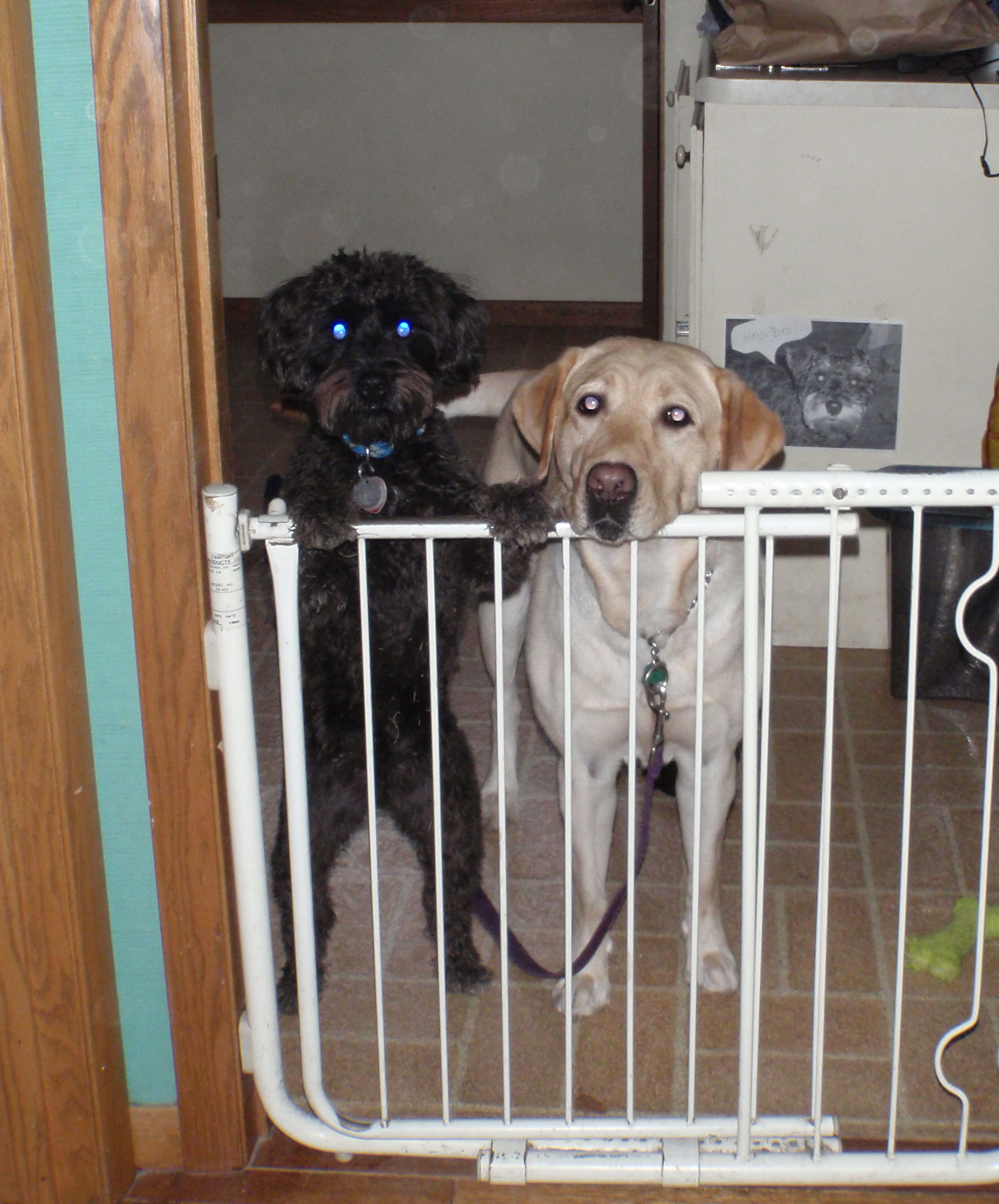
It is too early for the field mice who live under my garage to have noticed us. And it’s too early for the day’s miscast personnel, nattering hooligans, half-assed bureaucrats and self-serving politicians to have discovered that we’re about. At present only the machinery of the house, the steam pipes and weight bearing joists know of our existence. And the loyal dog. The dog has noticed. She has awakened with the sure knowledge that her people are fair wondrous without a speck of clotted evil in their souls. And just now I like to think my dog is right. I’m a pretty good guy. It’s too early in the day to consider the ironies and all the darkling confoundments of the super-ego. Let us stay quiet just ten minutes longer. Let’s be quiet together.


S.K.