Blind Movie Goers Have a Victory

We just received the following group e-mail from Lainey Feingold:


From: Lainey Feingold

Date: Sun, 9 May 2010 22:00:32 -0400

Subject: Court victory for blind movie goers

Dear friends and colleagues:  

I was on vacation when the Ninth Circuit opinion in the Harkins movie theater case came out on April 30, but I have now posted something on my website about this tremendous victory.  The direct link is:  http://lflegal.com/2010/05/harkins-opinion/

The Ninth Circuit opinion allows an Arizona case seeking audio description (for blind and visually impaired movie goers) and captioning (for deaf and hearing impaired theater patrons) to proceed.  

Congratulations to the plaintiffs, the Arizona Attorney General’s Office, the Arizona Center for Disability Law, the amicus parties and their lawyers, and the U.S. Department of Justice.   Great commitment, great result!

Lainey

Lainey Feingold

Law Office of Lainey Feingold

http://lflegal.com/

510.548.5062

LF@LFLegal.com

Twitter: @LFLegal

Lainey Feingold

Law Office of Lainey Feingold

http://lflegal.com/

510.548.5062

LF@LFLegal.com

Twitter: @LFLegal

The Stillness of the World Before Jesus

John Shore’s post over at Huffington “Ten Ways Christians Tend to Fail at Being Christian” offers a sensible approach to Christian critical thinking and is therefore highly worth reading even if you aren’t Christian. Shore, who has been “trying god’s patience since 1958” suggests that Christians need to be more humble, reflective, and “worldly” in the best sense. Surely these are good ideas for anyone, Christian or not.

One thing Christians might do more of is to read poetry. Here is a poem by Lars Gustafsson that I’ll offer as today’s Christian reading:


Eel and Well


In the province of Skane there was a custom:

into their deep black wells they put

small eels from the sea.

And these eels spend their lives

imprisoned in the wells’ deep blackness.

They keep the water crystal-clear and clean.

When sometimes the well-eel

is brought up in the bucket, white, frighteningly big,

blind, coiling in and out

of the riddles in its body, without knowledge,

everyone hurries to sink it back again.

Often I see myself

not just in the well-eel’s place

but as both eel and well.

Imprisoned in myself, and yet this self

is something else: I’m there.

I wash it with my wriggling,

muddy, white-bellied presence in the dark.


–from The Stillness of the World Before Bach: New Selected Poems edited by Christopher Middleton, New Directions Press


S.K.

Mash Books in a World Beyond Irony


Back in 1844 George Boole published his book on the laws of thought–a little treatise on algebra if you will. In effect his book conveys the DNA of the modern computer. Every “set” has something in common with the “empty set”.

I remember reading Boole in 1974 at Hobart and William Smith Colleges. I was a sophomore there. I was studying Boole while reading Finnegan’s Wake. The Viet Nam War was still going. Everyone I knew–students and faculty felt a secret anxiety. Something was happening “out there” in the world and we couldn’t describe it. We understood that every set had something in common with the empty set.

Something was coming. Something with pistons awry…

Meanwhile 1 and 0 entered their blazing micro-static relays and Steve Jobs said: “Voila: Je m’appelle Steve Jobs!”

Back in those days if we wanted some irony we picked up a book–any book by Kurt Vonnegut Jr.

Back in those days we genuinely believed that random consciousness stood in opposition to the things we could see. And irony was the ability to say it. (Yes Poindexter, we weren’t very sophisticated in them times.)

So for instance you could see a photograph of a napalmed child in Viet Nam and then listen to The Grateful Dead. And using irony you could tell yourself that your favorite relaxation technique was a kind of politics. Every set has something in common with the empty set.

That digital technology has changed irony is already an old old story. But the empty set goes on in its expansions. If irony is now passe, or if seeing is no longer contextual, then it follows we must recreate it from a position of nostalgia.

This is what Mash Books are about. They represent post-ironic nostalgia for irony in the age of the iPad.

As we enter the age of post-digital technologies I like to think of mash books as a bird that evolves with its cage.

Readers sit inside their whitewashed living rooms and softly enter the canal systems of a far country where Abraham Lincoln tracks vampires.

It’s a little bit Gothic, a little bit Rock & Roll.

Over at the blog Tiffany’s Bookshelf Tiffany says of Jane Slayre, the mash novel that puts Jane Eyre into a vampiric narrative: “This is not your post-twilight, romantic vamp pulp fiction, and it is not your high school English teacher’s beloved Bronte. It is just so much more.”   

The mash book or literary mash up is the smoke from post-ironic gardens. The twigs and stumps of the verities are burning.

The Beatles are re-invading as Zombies. David Russell is set to direct Natalie Portman in the film version of Pride and Prejudice and Zombies.

Human beings like to see the world as small, as a thing that’s possible to survey. We want our signals and observations to fit our landscapes. On the other hand the logic in quantum physics says that matter obstinately refuses to be anything other than probabilities.

Leaping randomly between spectral lines is a nostalgia for irony, but with irony’s skepticism largely disposed of.

Fitful illumination.

Perhaps. But it is what it is.


S.K.

Essay: Auden in Berlin


Auden in Berlin


City of infinite shiverings, twilit, un-carapaced, face to face. Human beings lived that way. In the museum of our rights we see how it was done, suspended like circus flyers: carnal; blessed; reaching; reached. Hope and remembrance for the rest. All time is eaten up by thoughts of time. I like good sir to think we live in an age when love is rising. Here in my city, in the gray of early morning I see your faces again, there in the irresolute, agitated dark.

In Search of Friends

calvinhobbes_friends

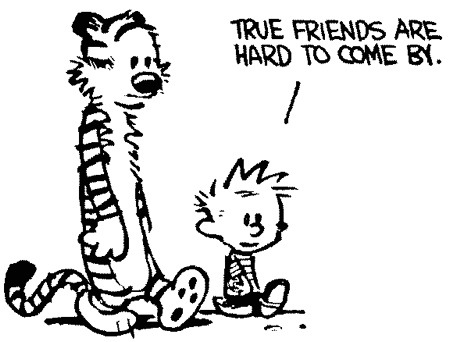
Dear readers: I am restless but not in despair. Yes. I like to sneak artfully through the branches like the blue jay but alas for me I am just a man with an ordinary taut heart that wakens me to this simple morning. I get down on my knees and thank God for a simple morning. There are the resolute punctuation marks of suffering children and of men and women–all viewable from above the earth. You see them in refugee camps, that glib first world term for lawless imprisonments. I get down on my knees and thank God for a simple morning. I weep for my nation’s foreign policies that sustain refugee camps and arm the thieves and war lords of (insert region here). I long to be a step ahead of the premises that American citizenship requires a de facto investment in worldwide and regional sufferings. I want our government to fight for a reduction in arms sales–an international treaty–like ending slavery–arms manufacturing and profiteering are in fact a system of slavery. I want to get down on my knees. I wake up this way. I wake up and want to move faster than the inhuman state–the nation states. This has always been my pet theme. The life of the mind is like the tracks of a bird that’s hard to trace. I’m wriggling in the dawn. I feel like weeping. My country is killing civilians all over the place. My nation is on the wrong wavelength. America follows the smuggler’s paths. I want to kiss the ground, the literal, marled, wet ground. I want the young writers of my nation to give up on so much irony. I want them to stand up between the spectral lines and wave their bloody shirts. I want to say too much. I want to get down on my knees. I want to stand on gallows hill and read a poem. And yes, I need to check myself to see that my favorable darkness is properly wrapped around the stone in my poetry sling. I want to weep. Who would have me as a friend? I imagine those of us who care about human rights; we’re riding on trains that enter the illuminated stations. And the stations are futuristic. When we climb from our trains the directional signs say: “Freedom this way” and the other sign points to a museum of human affairs. I get down on my knees and thank God for a simple morning. I am restless but not in despair.


S.K.  

What is interesting to me? TypePad, the Blogging Platform offers a Quick Compose feature that asks me to share with others "what is interesting to me"–the matter presented like an invitation to make a grocery list. What is as interesting as a grocery list? That the first hot air balloonists thought of themselves as intellectuals; imagined they would experience something of the majesty of God by rising; that they saw the world of humankind as a labyrinthine prison. That is interesting. Measurements in geometry are interesting. The sturbborn wind, knuckles, thumb and forefinger, cathedrals, green frogs–are interesting.

R.I.P. Harry Weider


Image of Harry Weider reading a newspaper


I just received an e-mail from my dear friend Craig Lucas. Craig reports that Harry Weider died on April 29. Harry was struck and killed by a New York taxi. Like all of Harry’s friends I am devastated. While blogs and news stories are quick to say that Harry was “gay, Jewish, a dwarf, an activist” etc., in my world view Harry was simply another universal citizen. Rob Eshman’s blog post is the best summary of Harry’s wild, unflappable, edgy, righteous, funny and loving intelligence. See also deeply loving tributes to Harry at Michael Petrelis’ blog and at Haaretz.com.

I had just gotten to know Harry by way of e-mail. Craig Lucas had introduced us. In recent weeks I’d been thinking of ways to bring Harry to the University of Iowa to talk about anything he desired. You see, in the world of universal human citizenship the life of the mind is like the discord in Stravinsky’s Concerto in D Major–suddenly one hears an old Russian chorale, the universal voices of long sufferings–voices still daring–still risking communities of love and acceptance.

Harry, I hardly knew Ye; yet I did. And I am the luckier for it. Yes we live on this blue planet like fragments of broken glass. Then the poet comes to town. Says, ex nihilo “didn’t you know all despairs are reversible?” 

My own greatest fear is that I will be struck by a taxicab in New York. Nowadays, what with some restored vision in my left eye and the possibility that I will have the same good luck with the other, what with all this, I fear giving up my guide dog–my vision is just above legal blindness when I’m in the doctor’s office, but probably just below it when I’m on the street. 

And well meaning people come up to me and say: “So when the dog retires can I have her?” They really do mean well.

Yet here’s the thing: Harry demonstrated over and over that disability is complex, protean, that it changes multiple times during the course of a single day. That living with disabilities contains multiple social, intellectual, political, and physical risks. Harry also demonstrated daily that you can’t judge a person by appearances. Of course.

In our post-modern, post-industrial, digital age we assume that the body is a text. Harry taught us that you have to look “up” from a text every once in awhile.

Some days I feel like an elderly gentleman in a remote house far out by the sea. None of the locals understands me.

I think Harry knew how that felt. It’s okay to feel a little melancholic in this polysemous and often frightening village.

It is also right to shake your fist at the bank palaces and staircases, at the bureaucratic rhetorics of hesitation.

Harry, I hardly knew Ye. But I knew Ye. You are in my song.


S.K.   

The Moral Law Within Us


How quickly must the falling angels fall to set the algebra of all that’s human?

Didn’t we know there were no abstractions? Didn’t we always know

Everything sails toward resurrection?

I know as a son of The Enlightenment I should be suspicious

Of the sky. But the angels throw back their long hair

Saying the soul turns simple once more, that it was always simple.

We are better than the proteins that animate us.

We can simplify. We can again say we abjure violence,

That we shall live daily by the golden rule.

“Why not?” the angels say. Those who weep for this world of distances and shadows.

A man is a question asked of another question, the indefinite

The sole body

In which we properly live.

It is spring again. Time to burn the dead winter grass.

And so we ache and plant and turn again to love our neighbors…


S.K.

Electro-shocking Students with Mental Disabilities Brought to Attention of the United Nations


Each morning I read the disability news because Dave Reynolds over at The Inclusion Daily Express does us all a yeoman service by coordinating and distributing vital information about what is happening in disability land. When I opened this morning’s edition I was veritably stunned to read about the inhumane electro-shocking of people with mental disabilities at an institution in Massachusetts.

Take a look at Diana Sweet’s story at The Raw Story for more on this.


S.K. 

Immigration

Immigrants-Island-Ellis-002


Andrea Scarpino

Los Angeles


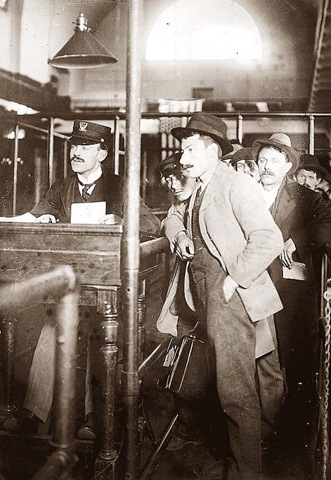
Arizona’s new immigration law has me thinking about my own family, what it means to cross borders and languages and cultures in search of something—a better paying job, a different life, the fulfillment of a promise. My father’s family immigrated to the US from Italy in the 1900’s, and my mother’s family came centuries earlier from England. I don’t really know why either uprooted their lives to try on the United States, but I do know my father suffered from terrible harassment throughout and after World War II because he was Italian, had a clearly recognizable Italian name.

By the time he had me, anti-Italian sentiment had mostly vanished, but he still balked at telling people his heritage. If asked, he would insist he was American. If asked again, he would concede, I’m of Italian extraction. But that was it. He wore American flags on his lapel every day to teach, raised the flag on the Fourth of July, voted in every election. He took being an American seriously—in part because he knew the consequences, how quickly the tide of public sentiment can turn, how quickly he could have found himself targeted for his ethnicity once again, even though he had subsumed the language of his parents to English, even though he spoke proudly of American ideals, bought American cars, wore that lapel pin, even though, even though.

So when I think about immigrating to a new country, a new language, raising children like my father, the man my father became, I feel awe and admiration. How brave you have to be to risk all you know for the shadowy outline of a different life. How much embarrassment you suffer as you struggle through a new language. How much shame you must feel for your “other” status, for your children’s refusal of your “otherness.” How often you must question your decision, wonder if you made the right choice. The risk of immigration, of tearing up all you know for a vast unknown. What a display of hope.

I know there are statistics and arguments on both sides of Arizona’s law, know that many people are passionate about “protecting” the United States from those who were born sometimes only a few miles away. But my family is made up of immigrants, from Italy, from England. And I’m in awe of them. No matter if they moved here legally (and my mother’s family certainly didn’t).

Which brings me to compassion, what happens when a citizenship loses it, when lawmakers lose it. I feel sad for Arizona, for such nearsightedness. But mostly, I feel sad for the people who will be harassed because of this new law, who will feel shame and embarrassment, who will be treated as less than. And I will see my father’s family in their faces.


Andrea Scarpino is the west coast Bureau Chief of POTB. You can visit her at:

www.andreascarpino.com