National Council on Disability Releases Federal 'State of the Union'

National Council on Disability

WASHINGTON, DC — On Tuesday, November 1, the National Council on Disability (NCD) will release National Disability Policy: A Progress Report detailing Federal disability policy. NCD is a small, independent federal agency comprised of 15 Presidentially-appointed, Senate-confirmed Council Members and a small staff, who advise the President, Congress and other Federal agencies on disability policy, programs and services.

In the report, NCD assesses Federal disability policy in the United States and examines how emerging trends and government policies influence the quality of life of Americans with disabilities. NCD also offers recommendations to maximize independence and self-sufficiency of people with disabilities. The report notes progress where it has occurred and makes recommendations to both the Executive and Legislative branches where necessary.

"People with disabilities have lower rates of employment, lower annual earnings, lower educational attainment and achievement; lack adequate access to housing, transportation, technology, and health care," revealed Jonathan Young, NCD Chairman.  "The current economic downturn is having a disproportionate negative on the quality of life for people with disabilities and their families. A strong Federal commitment to the implementation and enforcement of the standard set forth by the Americans with Disabilities Act will be central in determining both success and savings in these difficult economic times. This report provides a necessary snapshot of where we're at – and a clear, workable suggestions for moving forward."

"People don't live in silos.  Living, learning and earning in America requires the integration of various complimentary supports and approaches. Policy decisions, if we want them to work, must reflect that reality," continued Aaron Bishop, NCD's Executive Director. "Over the past year, NCD brought people together in a multitude of ways to exchange information, build collaborations, and inform solutions to both long-standing and emerging challenges.  By connecting community with the most recent national data available we've helped identify unique solutions to correct the vast disparities that still exist between people with and without disabilities in the United States."

For more information or to obtain a hard copy of the report, please contact Lawrence Carter-Long at 202-272-2112 or 202-272-2074 TTY.

Full report is available on NCD's website at:http://www.ncd.gov/progress_reports/Oct312011
 

Essay: The End of History

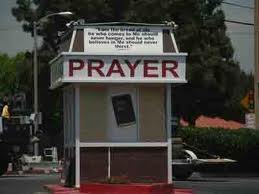
Prayer Booth


Tell me again the story of selflessness, dear Uncle Theory. (Uncle Theory is boiling his water, mumbling about the end of history–he’s an ivory tower academic, fears the end of history more than the loss of trees…) 

The old boy likes to talk about himself. If you mention an obscure locale he will tell you he was there once. He’ll tell you it was glorious.

Meanwhile selflessness gets archived. It gets put in a little box on a shelf next to seldom. 

Uncle Theory buys up all the old drive in photo processing booths. He’s making them into little museums devoted to abandoned places.  

A reflection appears on the water, then it is gone.


Population Overload

Earth


By Andrea Scarpino 


This week, 7 billion people are living on our little planet. 7 billion of us. And each wanting to eat good food, drink clean water, breathe unpolluted air. And maybe even wear interesting clothes, earn a good income, sometimes take vacations, sometimes eat food someone else has prepared.

And I’m not convinced our little planet can support us all. Many people aren’t convinced—environmentalists, scientists of all sorts, public officials. Our little planet—a star among stars/ and one of the smallest, the poet Nazim Hikmet saysis already overtaxed. 1.2 billion people already live without sanitation. 1 billion already lack access to clean water. 14% of the world’s population is already malnourished. We couldn’t successfully support 6 billion people, or even 5 billion, with enough food to eat, enough clean water to drink, basic healthcare.

So my hackles go up a little bit when I’m asked about having children, why Zac and I don’t have children. When I’m told dramatic stories of women experiencing the greatest love they’ve ever felt with the birth of their child. Which is not to say those stories aren’t true, or that parenthood—motherhood—isn’t life changing for many people. I enjoy my friends’ kids. I adore my niece. I have taught and worked with people of every age, starting with 2 ½ year olds. I love children’s books, love developing children’s book ideas. I am not, by any stretch of the imagination, a person who hates kids.

But birth one of my own? Add one of my own to this overpopulated world? That doesn’t interest me at all. There are so many advantages I already have, so many ways that I already use more than most of the rest of the world. Even with my vegetarian ways, my composting, my buying of recycled clothes—just by dint of a daily five-minute shower, I use more water than many people worldwide can access in a day. I am already a drain on our ecosystem—adding another human to our environmental stress? No thank you.

Do I sound self-important? Am I standing too high on my soapbox?

We all make choices—how to best use our time, our money, our individual and collective resources. How to best make our world a better place. I do many things my twenty-year-old self would have labeled “selling out.” More than one friend has called me “bougie.” And I deserve it.

But it’s just true that there are too many of us. It’s just true our planet can’t support us all—we can’t support us all. And until we can, I can think of no reason to bring a new child into the world. No reason at all. 


Andrea Scarpino is a frequent contributor to POTB. Visit her at: http://www.andreascarpino.com/

The Blessings of Socrates

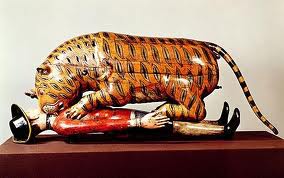
  Tipu the Tiger

The old Socratic dictum that no one commits an error if he can help it is hard to place in these times. I was thinking of this early today while watching the “Morning Joe” television program and hearing GOP presidential candidate Hermain Cain’s combative response to allegations that he engaged in sexual harassment when he was leading a restaurant trade association. While the allegations appear to be founded on legal materiality–non-disclosure agreements–Cain argues that he’s the victim of a witch hunt. The willful quality of his response is the error in question. A wiser man might say: “These are settled matters and by decree of the court they cannot be discussed. I affirm my innocence.” We are living in an age when mistakes are judged more useful than standing for upright characteristics like honesty or courage. Blame the media or your political foes if you like, Mr. Cain–certainly Nixon tried this–but commiting an error on purpose won’t solve your problem.


Why can’t we affirm a curious, idiosyncratic sanity in our time? Like it or not, we pretend nowadays that leadership must contain moral qualitites. Idiosyncratic sanity suggests our recognition of our human faults. Perhaps we would welcome that recognition more readily if we lived in a genuinely Christian nation. But of course we don’t. This country is a neo-Puritan labrythinth of rigidity and claustrophobia.  The irony is that neo-Puritan claustrophobia is the very metaphorical tiger that Cain and his GOP pals hope to ride.


SK


On Steve Jobs' Last Words


“Oh, wow! Oh wow!”


“I never saw a wild thing sorry for itself,” wrote D.H. Lawrence.  How is it then that our civilzed nature is self-pitying? The libertarians say that government makes us needy. Liberals blame our social structure and the fierce strictures of capital. Tyrants of every kind tell you it’s the Tibetans or the Jews or the Mexicans who have stolen your contentment, probably while you slept. The Freudians say it’s your Mama did it to you. Jungians say it’s the split from ancient Sumeria–everything’s gone down hill after we gave up sun worship. 


What I love about Lawrence is his appreciation of death. As Kenneth Rexroth puts it: “In a world where death had become a nasty, pervasive secret like defecation or masturbation, Lawrence re-instated it in all its grandeur–the oldest and most powerful of all the gods.” Rexroth is correct: Lawrence’s “Ship of Death” poems have a vivid ecstatic quality, one that mocks the mordancies of customary death-fearing consciousness. 


In Lawrence’s hands the absence of body is not a mineral blank, nor is it the narrative of a risen spirit. He writes: 


“And yet out of eternity a thread

Separates itself on the blackness,

A horizontal thread

That fumes a little with pallor upon the dark.”


This is the side of Lawrence who read Whitman. 


I think he saw it aright. The flood of light and darkness subsides and the body re-emerges, a flush of rose, and the whole thing starts again.


Whether you buy Lawrence’s gnosticism or not, we can be safe in saying that the journey is not what you’d suppose. Not at all. Oh wow, indeed. 


SK   


Huffington Post: 'Tax The Poor' Becomes Conservative Rallying Cry

  WASHINGTON — The nation's ongoing economic downturn has sparked an odd response from a growing number of conservative and Republican leaders: a desire to blame the unfortunate and a demand for the poor to pay more.

'Tax The Poor' Becomes Conservative Rallying Cry

WASHINGTON — The nation's ongoing economic downturn has sparked an odd response from a growing number of conservative and Republican leaders: a desire to blame…


Sent from my iPhone

The Thrill Of Mozart All Over Again


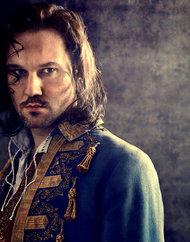
Mariusz Kwiecien
Yesterday’s live simulcast of the Metropolitan Opera’s production of Don Giovanni was a thrilling event. One appreciates occasionally the elevation that comes from the marriage of superb singing and exeptional stage acting–as opposed to the razzle dazzle of Rococo stage sets and Hollywood smoke. This Giovanni has a stage set so darkly minimal you are entirely directed to the singers and Lord how they take advantage of Mozart’s orchestral swings: there’s hardly a moment when the push and pull of the old morality play lags or plods. In fact the show has you on the edge of your seat. It is not my intention to write a review. Some days I feel as though I’ve only recently learned how to understand the shiver and vision of art. Some days I want to ask the very weather to forgive me for my primitivism. Watching this version of Mozart’s opera you feel the struggle of commoners to find an ethos and the dignity of human worth. Oh, and Mariusz Kweicien is one hunky DG. These live from the Met broadcasts are repeated at your local theater, so take a look at this–consult the Met’s website for your local listings. 


Scudding Clouds

And snow coming to the northeast. And the doorbell rings, two strange men, Baptists they say, pushing pamphlets. They seem vaguely purgatorial. I tell them "Trick or Treat" isn't until Sunday.

Meantime I'm getting ready for the opera. Seeing the Met's live simulcast of "Don Giovanni" in the hugely ugly Syracuse "Carousel Mall" for that's where the theater is. We make sacrifices for art. 

We do not ring doorbells for god. We head to the monolith shopping center for Mozart. Day of first snow. Opera and Mexican food, better than staying home…


SK