New Hampshire, 1959

IMG00109-20100820-1520

We’re eating dinner when the siren goes off.

Then the doorbell rings.

The horse barn is on fire! Neighbors are at the door!

Alarms wail and automobiles start up.

We rush into the weird twilight. My father says he can see the glow of the fire above the trees.

Our neighbors, the whole neighborhood, elders and children, all are piling into cars. The horse barn is on fire and the town is on the move. This is New Hampshire. Not everyone has television. Eisenhower is President. People still gather for things. When a local fraternity boy tries to become the world’s record holder for grease pole climbing hundreds turn out to watch him scramble up a pole and then descend in a series of ungainly leaps. He does this for days. Families spread out blankets, set up lawn chairs. The grease pole boy is a local wonder.

But fires are always preferred. Our immediate neighbors love fire gazing. They’ve studied the town’s alarm patterns and know where every fire is ccurring. They jump into their station wagon and roar out of the driveway.

My parents cluck their tongues. They believe that watching a scene of private or public misfortune is lowbrow behavior.

“It’s bad to gawk at other people’s tragedies,” my mother says. “Wouldn’t it be terrible if our house was on fire and strangers came to watch our possessions go up in smoke?”

I have tried more than once to convince her that we should follow the neighbor’s example and see a fire as it’s happening. My mother never bends and I’m forced to hear about the drama of burning houses from the neighbor kids. One boy who is my age tells me about a family that won’t come out of their burning house. They lean from the shattered windows and throw small possessions into the night while firemen shout at them to come down. Dolls and a rocking horse fly from an upstairs room. Dresses float like parachutes. The fire is in the back of the house and the inhabitants feel no pressure to escape. They’re New Englanders. No one tells anyone what to do. In New Hampshire no one has any authority. And so of course the firemen and the local sheriff strut and shout. They threaten to carry the family out by force. And a man’s hat sails out into the spotlight. And a pair of loafers. The neighbor kid saw all of this with his family. They sat in their car and drank Cokes and watched as the fire men carry the children out.

I long to be a part of the firewatcher’s brigade. Even though I can’t see a damned thing! I want to soak up the high spirits of the watchers and the certain drama.

Now the university’s horse barns are on fire and my mother decides that we ought to go and see what’s happening. Obviously no family is involved in this spectacle. And my mother loves animals. She is also quietly superstitious. She believes in sympathetic magic. Maybe she thinks that wishful thinking on her part will save the horses and that standing nearby is essential for this magic to work. Whatever the case, we’re suddenly in our black Rambler station wagon and following the neighbors down a dust choked access road that leads to the agriculture school. The flames are visible for miles. We must park in the weeds and walk through a pasture to get near the action.

I can hear the popping of the barn’s galvanized roof. And the shriek of horses is unlike anything I’ve ever heard before. Their cries are sharp as the edges of stones and the larger the animal the more terrible the cry. We stand in the dark listening to the horses in terror and the tin roofs exploding. My mother says that fire bursts like yellow leaves from a row of windows. Was she narrating for me because I couldn’t see? No! All the adults describe what’s going on, as if they were reporting for the radio news. The involuntary comfort of declaration comes over a crowd witnessing a scene of violence.

I hear there’s a fireman with a roped horse. They are rushing from a fiery door.

Someone says that was the last horse. All the horses are safe now.

A sonic rush of exploding chaff stops everyone for an instant. A silo has burst into flame.

I’m not sure how any of the spectators are getting their information but someone announces that the firemen can’t get the bull out of an adjacent barn. He’s too big.

A little girl I scarcely know starts crying. She can picture just as I can the horror of being burned alive.

I imagine the bull’s eyes as he stands in the flames.

Wait! They’ve gotten the bull out! A cheer goes up from the onlookers. The bull comes out with total dispassion. “Like an old car,” someone says. And the bull stands in tall grass while the barn blazes behind him and puts his head down as if to graze.

And there are scraps and bits of other sounds. Men cry out. There’s a whirring of generators.

A stranger tells my father that the drama of a fire is often very fast.

My father, always a prankster, says suddenly, “Look! That cow has only one udder!”

My mother tells him to be quiet.

“What’s an udder?” I ask.


S.K.

Peloponnese

Greek Village

It was a village that smelled of baking bread but I can’t remember where—

A day’s bus ride from the capitol

& only a decade since their civil war…

American college kids

Took a cigarette break in the square.

They didn’t know a thing about the local graves.

I heard old men talking softly in the café.

I have always liked the way the Greeks

Can break your heart by means of whispers.


S.K.

Window in Florida

Window

I was sad this morning remembering my parents and their decency–their respective losses. I sat beside the telephone waiting for a call in my overheated room. I put my face against the sun flecked window. I cried. In the damp house of my spirit with my seeing-eye dog looking on I felt like I was nothing more than a shadow on a silver knife. I opened my eyes to the glass which was white and flowing and charged with sun. My tongue, my debtor, my companion, had private words then.


S.K.

Government Publishes Veterans Homelessness Report


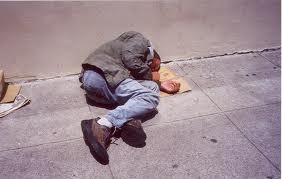
Homeless Man Sleeping on Sidewalk

From HUD and VA News Releases


Thu, 10 Feb 2011 12:29:00 -0600

Government Publishes Veterans Homelessness Report


WASHINGTON, Feb. 10, 2011 – The Housing and Urban Development and Veterans Affairs departments today published what officials say is the most authoritative analysis yet of the extent and nature of homelessness among military veterans.

According to HUD and VA’s assessment, nearly 76,000 veterans were homeless on a given night in 2009, while roughly 136,000 veterans spent at least one night in a shelter during that year.

The assessment, part of President Barack Obama’s plan to prevent and end homelessness in America, is based on an annual report HUD provides to Congress and explores in greater depth the demographics of veterans who are homeless, how veterans compare to others who are homeless, and how veterans access and use the nation’s homeless response system.

"This report offers a much clearer picture about what it means to be a veteran living on our streets or in our shelters," HUD Secretary Shaun Donovan said. "Understanding the nature and scope of veteran homelessness is critical to meeting President Obama’s goal of ending veterans’ homelessness within five years."

"With our federal, state and community partners working together, more veterans are moving into safe housing," Secretary of Veterans Affairs Eric K. Shinseki said. "But we’re not done yet.

"Providing assistance in mental health, substance abuse treatment, education and employment goes hand-in-hand with preventive steps and permanent supportive housing," Shinseki continued. "We continue to work towards our goal of finding every veteran safe housing and access to needed services."

Obama announced in June the nation’s first comprehensive strategy to prevent and end homelessness, including a focus on homeless veterans. The report, Opening Doors: Federal Strategic Plan to Prevent and End Homelessness, puts the country on a path to end veterans’ and chronic homelessness by 2015; and to ending homelessness among children and families by 2020.

Key findings of the report include:

— More than 3,000 cities and counties reported 75,609 homeless veterans on a single night in January of 2009; 57 percent were staying in an emergency shelter or transitional housing program while the remaining 43 percent were unsheltered. Veterans represent about 12 percent of all homeless people counted nationwide during the 2009 assessment;

— During a 12-month period in 2009, about 136,000 veterans — or about 1 in every 168 veterans — spent at least one night in an emergency shelter or transitional housing program. The vast majority of sheltered homeless veterans — 96 percent — experienced homelessness alone. Four percent of homeless veterans were found to be part of a family. Sheltered homeless veterans are most often single white men between the ages of 31 and 50 and living with a disability;

— Veterans are 50 percent more likely to become homeless compared to all Americans and the risk is even greater among veterans living in poverty and poor minority veterans. HUD and VA examined the likelihood of becoming homeless among American veterans with particular demographic characteristics and found that during 2009, twice as many poor Hispanic veterans used a shelter compared with poor non-Hispanic veterans. African American veterans in poverty had similar rates of homelessness;

— Most veterans who used emergency shelter stayed for only brief periods. One-third stayed in a shelter for less than a week; 61 percent used a shelter for less than a month; and 84 percent stayed for less than three months. The report also concluded that veterans remained in shelters longer than did non-veterans;

— Nearly half of homeless veterans were in California, Texas, New York and Florida while only 28 percent of all veterans were located in those states;

— Sheltered homeless veterans are far more likely to be alone rather than be part of a family household; 96 percent of veterans are individuals compared to 66 percent in the overall homeless population.

HUD and VA are working to administer a joint program targeting homeless veterans. Through the HUD-Veterans Affairs Supportive Housing Program, HUD provides rental assistance for homeless veterans while VA offers case management and clinical services.

HUD last month awarded $1.4 billion to keep nearly 7,000 local homeless assistance programs operating. The Department also allocated $1.5 billion through its new Homeless Prevention and Rapid Re-housing Program. Made possible through the American Recovery and Reinvestment Act of 2009, HPRP is intended to prevent persons from falling into homelessness or to rapidly re-house them if they do.

To date, more than 750,000 people, including more than 15,000 veterans, have been assisted through HPRP.

Related Sites:
U.S. Department of Housing and Urban Development
U.S. Department of Veterans Affairs
Interagency Council on Homelessness
Veteran Homelessness Report to Congress
Federal Strategic Plan to Prevent and End Homelessness


Defense Department News Through Facebook On American Forces Press Service’s Facebook page, you can post comments and share news, photos and videos. Go to http://www.facebook.com/pages/American-Forces-Press-Service/65137437532 or search for American Forces Press Service at Facebook.com.

Update your subscriptions, modify your password or e-mail address, or stop subscriptions at any time by clicking on your ‘User Profile’ page at https://service.govdelivery.com/service/user.html?code=USDOD. You will need to use your e-mail address to log in. If you have questions or problems with the subscription service, please e-mail support@govdelivery.com.

Have another inquiry? Visit the online FAQ at http://www.defense.gov/landing/questions.aspx for up-to-date information.

Get the help you, your family, and fellow servicemembers need, when you need it. Visit www.WarriorCare.mil to learn more.

Check out the National Resource Directory at www.nationalresourcedirectory.org, a new web-based resource for wounded, ill and injured service members, veterans, their families, fa
milies of the fallen and tho
se who support them from the Departments of Defense, Labor, and Veterans Affairs.

This service is provided to you at no charge by U.S. Department of Defense. Visit us on the web at http://www.defense.gov/.

Urgent Message from the Wounded Warrior Project

— Administration Misses Deadline for Implementing Support for Caregivers of Wounded Warriors; Nation’s Military Families Still Waiting for Promised Help —
The Department of Veterans Affairs submitted its plan for providing assistance to the family caregivers of severely wounded veterans as required under the Caregivers and Veterans Omnibus Health Services Act. While it is technically the next step in what has become a long process to provide the comprehensive services required under the law signed by President Obama in May 2010, it has brought help no closer to the veterans and caregivers who so desperately need it.
The following is a statement issued today by Wounded Warrior Project Executive Director Steven Nardizzi.
After nearly a year of waiting for the Department of Veterans Affairs to begin providing the comprehensive services required under the Caregivers and Veterans Omnibus Health Services Act, our nation’s wounded veterans and their families received the news yesterday that they must wait longer.
The VA plan submitted to the Committees on Veterans’ Affairs not only establishes no date for when these severely injured veterans and their caregivers will begin receiving the assistance and training they have been promised, but its unreasonably restrictive criteria also would effectively disqualify thousands of caregivers who are clearly covered under the law from receiving needed assistance.
While I applaud the continued commitment the Administration has made to support our military members and their families, we must do more than promise—we must deliver.
If bureaucracy and red tape are delaying help for the families of these brave men and women, that’s inexcusable. If the program is facing budget cuts, that’s even worse. We cannot and, in good conscience, should not balance the budget on the backs of those whom we’ve asked to sacrifice so much for our country.
On Monday, February 14, join us in an outreach movement to send a message to the White House:

  • Tweet your demand for support for wounded warriors.
  • Donate your Facebook status for the day.
  • Visit woundedwarriorproject.org for instructions and additional information.

Stay tuned for updates on this important legislative issue.

Steven Nardizzi, Signature
Steven Nardizzi
Executive Director
Wounded Warrior Project®


Disability and the Church


Church on a hill

“Beloved, let us love one another, because love is from God; everyone who loves is born of God and knows God. …Beloved, since God loved us so much, we also ought to love one another.  No one has ever seen God; if we love one another, God lives in us, and his love is perfected in us.”  I John 4:7, 11-12

Let me be clear that when I say “the church” I do not mean a particular denomination. I ought to say “organized religion” but I want the picture of a church—a church without ramps since religious denominations are not required to meet the standards of the Americans with Disabilities Act. This is because Jesus said: And ye shall send away the cripples lest they defile your baskets…

No one knows what Jesus meant by “baskets” as hermeneutic interpretation also suggests he may have said biscuits but in either case the picture isn’t pretty. How Jesus must have loathed it when the cripples licked his biscuits and then put them back! (That’s what cripples do you know—they lick things intemperately.)     

Churches enjoy their exemption from the ADA because religious leaders argued successfully before Congress that houses of worship should be considered as “private clubs” which is why you frequently see parishioners wearing “Members Only” jackets. (Yes, the Lutheran jacket is in tasteful earth tones.)

For Jesus said: We shall have no grimacers or limpers before the Lord…

He also said: Ye shall live with perfect people and lock out the droolers and moaners and those who walk with sticks…

There are indeed lots of progressive movements that seek to address the inaccessibility of places of worship. The National Catholic Partnership on Disability describes its mission this way:

Rooted in Gospel values that affirm the dignity of every person, the National Catholic Partnership on Disability (NCPD) works collaboratively to ensure meaningful participation of people with disabilities in all aspects of the life of the Church and society.

The Dallas Theological Seminary offers an excellent course entitled “Theology of Suffering, Disability & the Church” -–a course that includes people with disabilities as lecturers.

Professor Jeff McNair has a terrific blog Disabled Christianity.

I am a fan of the Episcopal Disability Network.  

We like the Calvin College video interview with Christopher Smit who, among many other things is a scholar with an interest in disability and film. 

We like the Disability Ministries page of the Evangelical Lutheran Church

We are fond of Julie Clawson’s blog One Hand Clapping.

We are enormously fond of Wheelie cATHOLIC’s blog.

There are many other progressive individuals and groups who are working to ensure that congregations offer full inclusion for people with disabilities—work that reflects the understanding that people with disabilities have gifts which they they can share.

But twenty years after the passage of the ADA this work is still insufficient. In 2011 churches of all kinds still lag far behind the rest of the nation when it comes to disability access and what might be called “inclusion consciousness”.

The irony is of course nearly unsupportable. 

For Jesus said: Build me a private club and turn away the deformed for they ruin all contemplation…

Private clubs indeed.

Leviticus 21:16-23 "The LORD said to Moses, "Say to Aaron: ‘For the generations to come none of your descendants who has a defect may come near to offer the food of his God. No man who has any defect may come near: no man who is blind or lame, disfigured or deformed; no man with a crippled foot or hand, or who is hunchbacked or dwarfed, or who has any eye defect, or who has festering or running sores or damaged testicles. No descendant of Aaron the priest who has any defect is to come near to present the offerings made to the LORD by fire. He has a defect; he must not come near to offer the food of his God. He may eat the most holy food of his God, as well as the holy food; yet because of his defect, he must not go near the curtain or approach the altar, and so desecrate my sanctuary. I am the LORD, who makes them holy."

Woe unto those who have defects!

The “private club” status of churches is an outgrowth or extension of the baleful ideas one finds in the Old Testament. Like my friend Nancy Mairs I refuse to believe that my God is a “Handicapper General”.   

Still, physical perfection remains a dominant trope in organized religion. The ableism of the enterprise has much to do with the transitive images of healing that surround Jesus. Many congregations get Jesus’ relationship to disability and to people with disabilities all wrong. (We like Sharon Post’s article “The Ministry of Jesus to People with Disabilities”.

Sharon Post points out that while Jesus healed people with disabilities he really much more interested in their souls. Amen.

Me? I’m just the grandson of a Finnish Lutheran minister. Some years ago I became an Episcopalian though I’m quite a back slider—I often don’t go to church and let’s be clear that I don’t feel good about it. But I can still hear the bells from my gray forest.

But to badly paraphrase Groucho, I wouldn’t join any private club that would offer me membership. The jacket would itch. Boy! Would it itch!

We like this prayer of inclusion from The National Catholic Partnership on Disability

Loving God,

You make each living person in your image
…Your gift of love and commitment to the human race
…A seed to build a community of interdependence and respect for all life

As we celebrate the U.S. bishops’ proclamation of welcome and inclusion,
open our hearts to their words
Commit us to their proclamation that “There can be no separate Church for people with disabilities. We are one flock.”

Guide our hands to build access and welcome
Guide our minds to understand the power and wisdom of human vulnerability
Guide our actions to create parish communities open to the gifts of each individual
Give us courage to stand up to the forces willing to destroy life because they fear disability or
make judgments about its “quality.”
Give us understanding that your body is incomplete if people are left behind
Give us an appreciation of the role we must play in spreading your good news to all we meet

We praise you Lord for all of your good gifts
We thank you fo
r those pioneers who have wo
rked tirelessly
to carry out the bishops’ prophetic vision of 1978

We give thanks for loving parents who welcome and nurture their children
We appreciate all those living with disabilities who contribute their time and talents even in the
face of obstacles or rejection

Guide us always Lord in your way


Amen


We hope that the presence of inhospitable churches will end in these times.


S.K.


Technorati Tags:

Ode to My Twin Brother William Who Died at Birth

Dragonfly

When I think of my twin brother I imagine I’m living his life for him. I do not imagine myself as a “stand in” for him but rather as a living vehicle for his secret life. I move through the gray, half dead winter with William’s light inside. If I try and explain this I seem suffused with sentimentality and so I never say a thing. Why am I saying something today? What green force has turned in my hands that I should reveal I’m the outward form of his unaccountable life?

We know our thoughts—their patterns—are like musical compositions. The piano stays silent in a concerto and then it returns, its dark notes merging with every stone in the church. How the music has tricked us! The alien mind of Rachmaninoff has swept through the lead gray water of your own brain. The trick of music is that we don’t mind the possession or more rightly “being possessed”. In a period only a few seconds or minutes long we’ll submit to another woman’s or man’s neurological reception of cold moonlight. Oh and we will be lonesome when this extra-corporeal suspension occurs. We are always alone when we feel the mind of another though the trick of imagination is to say this is intimacy. (See Walt Whitman…) We’re talking about an occasion that mimics the loneliness of twins—twins long separated—whether by death or a cultural calamity. There is no loneliness like feeling the twin inside. But stranger still, it’s an ache that’s overloaded with life like a boat that’s too heavy. My twin brother and I are low in the water.

One summer years ago I felt a dragonfly land on my wrist. I saw that my brother’s presence was a light touch in just this way. I did not imagine that the dragonfly was him. I knew that he was inside me. I understood his delicacy. I saw that he was relative to the breeze. He remains to this day like the stitching of sun that falls unaccountably through the branches and I cannot predict the marriage of breeze and light and mind that reveals the pregnant sense that I am carrying him—my twin brother, my identical twin. It would be foolish for me to pretend I understand how he arises. Almost as foolish as saying he’s within me.

Meanwhile the sun makes the broken statues seem to rise behind the house where I am staying.

So I say to my brother the beauty of miracles exists. I have chosen to say this. The dragonfly’s wings turn invisible against the earth.


S.K.


Justice Department Settles with Sheriff's Office Over Use of Tasers in County Jails

I'm Gonna Kick Your Ass


February 8, 2011

Excerpt provided by InclusionDaily:

COLUMBUS, OHIO– [Excerpt] A settlement agreement has been reached with the Franklin County Sheriff’s Office in Columbus, Ohio, over the use of Conducted Energy Devices (CEDs), or electrically charged weapons commonly referred to by the brand name "TASER," in its two jails, the Franklin County Corrections Centers, the Department of Justice announced today. The settlement was filed as a joint motion in the U.S. District Court for the Southern District of Ohio.

On Nov. 3, 2010, the United States filed a motion to intervene in a case alleging that the Franklin County Sheriff’s Office engaged in a policy and practice of excessive and abusive use of CEDs against detainees and inmates. The case, which is represented by the Ohio Legal Rights Service, Ohio’s protection and advocacy system for people with disabilities, includes "all persons who . . . are or will be placed in the custody of the Franklin County Sheriff’s Office at the Franklin County Corrections Centers."

The United States moved to join in the case under the provision of to the Violent Crime Control and Law Enforcement Act of 1994, and filed its own complaint to ensure the uniform national interpretation and application of civil rights laws pertaining to excessive force by law enforcement, an area in which the Justice Department has special expertise. The district court granted the United States’ motion to join the matter on Dec. 14, 2010.

The court-enforceable agreement not only establishes significant safeguards against the abusive use of CEDs against detainees and inmates, but also ensures that those who disobey deputies’ orders in a non-violent manner will not be stunned by the electrically charged weapons. The agreement also requires changes to the suicide risk-assessment policies that will restrict the practice of electrically stunning individuals who show resistance to being forcibly changed into suicide safety gowns.

Entire press release:
Justice Department Settles with Franklin County Sheriff’s Office Over Use of Tasers in County Jails

http://www.justice.gov/opa/pr/2011/February/11-crt-153.html