Insights from the Planet of the Blind: An Interview. Part 1.

After reading Planet of the Blind, Kathleen Avery, Senior Director of Marketing at Cleinman Performance Partners, had occasion to talk with the author (Stephen Kuusisto) about his story and all that he’s come to understand.  Thank you, Kathleen, for allowing us to share this with our readers.

Kathleen:  Your book is so rich with visual metaphor, just the most vivid descriptions.  I’m curious how you are able to reference such diverse imagery.  Comparing a man in a rain coat to the sails of Tristan’s ship or an elephant’s ear, for instance…

Stephen:  Well, the first answer to that question is about language.  All nouns are images.  If you say strawberry…or horse…or wheat field…or lighthouse in Maine – you automatically see these things in your mind.  This is why ancient people believed that poets were magical.  They could make you see things.. They once had a radio advertisement on NPR: “Listen to the Theater of your Mind.”  That’s how poetry works.  It throws off powerful nouns and the reader sees them; they’re called power nouns.

Kathleen:  But how do you know what a lighthouse in Maine looks like?

Stephen: I either do or do not (laughs).  And that’s the second answer.  There is a way in which imagination approximates things.  You can actually create things with language that don’t exist.  The poet Charles Simic says, “Go inside a stone, that would be my way…”  He takes you inside the stone and it is the universe all over again.  The truth is you can’t see that at all, but you can trick the mind into seeing what can’t be seen.  This is also why ancient people thought poets were magical.

And, of course, people describe things to me.

You know, people think that blindness is like living in a vacuum.  The general public tends to think that blind people are trapped inside the stone.  They will ask me how I could possibly go to an art museum.  Well, you pick your friends.  You go with friends who will describe what they see.  Is it an immediate experience?  No.  But I like it, because there is poetry in it.  It is mediated.

Kathleen:  Oh, how interesting would it be to listen to different people describe the same Picasso?

Stephen: That would be a fabulous NPR piece!

You can read Kathleen Avery’s interview in its’ entirety by visiting www.cleinman.com/insights-from-the-planet-of-the-blind

**************************

Professor Stephen Kuusisto is the author of Eavesdropping: A Memoir of Blindness and Listening” and the acclaimed memoir Planet of the Blind, a New York Times “Notable Book of the Year”. His second collection of poems from Copper Canyon Press, “Letters to Borges, is scheduled for release in October 2012.  As director of the Renee Crown University Honors Program and a University Professor at Syracuse University, Steve speaks widely on diversity, disability, education, and public policy. www.stephenkuusisto.com, www.planet-of-the-blind.com


What a Dog Can Do: An excerpt

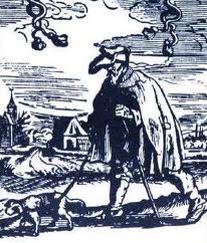
No one knows when the forerunner of today’s guide dogs first appeared. Drawings of blind people accompanied by dogs date back to the 17th century. Those early pairings were most likely memorization teams, one pictures the dog leading its partner through the village square.  It’s clear no substantial training was involved. But we can imagine the tremendous bond with dogs that developed between the uncharted and lonely blind people of prior ages. It is a safe bet that dogs solved the puzzle of solitude for blind travelers who lived in a time when sightlessness was a great calamity. (The idea that blind men and women could be taught to read was a late development in cultural history, as Diderot’s essay Lettre sur les aveugles published in 1749 offered the first speculation that raised letters might be possible.) The world of the blind has been a dismal place throughout much of history. It’s possible to say, along with the poet Pablo Neruda that pure faith cannot withstand the assaults of winter, but your survival is more likely with a dog. Sometimes when I think about the ancient blind with their lives of begging and fiddle playing, their relentless wandering, homelessness, sickness, I weep to imagine the righteous loyalty of those early dogs.

From: What a Dog Can Do: A Memoir of Life with Guide Dogs, by Stephen Kuusisto, forthcoming from Simon and Schuster

**************************

Professor Stephen Kuusisto is the author of Eavesdropping: A Memoir of Blindness and Listening” and the acclaimed memoir Planet of the Blind, a New York Times “Notable Book of the Year”. His second collection of poems from Copper Canyon Press, “Letters to Borges, is scheduled for release in October 2012.  As director of the Renee Crown University Honors Program and a University Professor at Syracuse University, Steve speaks widely on diversity, disability, education, and public policy. www.stephenkuusisto.com, www.planet-of-the-blind.com

The fatal diagnosis

Been doing a lot of whining about my bad back and I'm sorry about that. It's not the pain that's getting to me though. That's mainly annoying.� What's driving me crazy is the way it's limited me. I can't do a lot of the things that I not only could do but enjoyed doing. Take long walks. Putter around the yard. Sit and read for hours. Stand up.

Yesterday I was out on my bike for the first time in over a year and it dawned on me. It hasn't been as much the matter that I can't do these things as that I've been avoiding doing theses things, telling myself to wait until my back feels better. Which of course has contributed to making it feel worse. So what 's really making me nuts is that I've let it turn me into a big baby.

I've seen the doctor. He ordered X-rays. They came back a couple of weeks ago.� No slipped discs. No fractures. I was expecting to be carted off for immediate surgery.

Wait til your appendages start falling off! Then the doc will say those things were just vestigial, don't ya know?

An Untenable Situation


    Shutting an eye can be just as difficult

    as shutting an ear, believe it or not.

    –Lars Gustafsson

Dear Lars: In my country the vast majority have accomplished the most difficult thing and have managed to shut their eyes. We were good at keeping them open until the American Bicentennial, but something happened in the mid 70’s and people began closing their eyes like angry children. Was it the military industrial complex? JFK? Viet Nam? Watergate? Birds flew into windows. Adolescents ran away. Tiny cyclones swept through tasteful living rooms. Books piled up on desks. One said TV killed democracy. Another said it was insatiable vanity. Soon librarians shut their eyes. And students, who once were our vanguard, they fell asleep.

Lars, those who kept their eyes open by means of strength and sorrow, through sad cheer– they felt themselves standing on the perilous front of a lost battle–the only place where they might confess their hope.

Support the Convention on the Rights of Persons With Disabilities (CRPD)


TELL YOUR SENATORS TO SUPPORT DISABILITY RIGHTS EVERYWHERE!!

Support the Convention on the Rights of Persons With Disabilities (CRPD)

ATTEND THE SENATE HEARING SCHEDULED FOR THURSDAY, JULY 12TH

AND CONTACT KEY SENATORS!


The Convention on the Rights of Persons with Disabilities (CRPD) is an international treaty that outlines the obligations of ratifying countries to promote, protect, fulfill, and ensure the rights of persons with disabilities. It embodies the American ideals that form the basis of the Americans with Disabilities Act (ADA) by empowering persons with disabilities to be independent and productive citizens. The US signed the CRPD on July 30, 2009.

Three years later, the Convention has yet to be ratified by the United States! 153 countries have signed it and 115 others have already ratified it!

On May 17, 2012, the Obama Administration submitted its treaty package to the Senate, which has since been supported by a bipartisan group of Senators.

Thanks to the disability community’s hard work, a hearing on the Convention on the Rights of Persons with Disabilities (CRPD) has FINALLY been scheduled for Thursday, July 12 in the Senate Committee on Foreign Relations.

But we still need your help convincing the Foreign Relations Committee to VOTE YES and send the treaty to the Senate floor for a vote!

We need you to fill the room at the hearing to show our support for the CRPD!

We have received word that the Home School Legal Defense Association, which opposes the CRPD, has activated national calls in opposition to the Convention based on inaccurate statements about the treaty. They will NOT stop us with stall tactics nor erroneous interpretations of the treaty language. Let our voices be heard over the opposition … make a call to your Senator on the Foreign Relations Committee and tell them that the disability community needs their support!

Attend the hearing currently scheduled for THURSDAY, JULY 12TH AT 9:00 AM IN SENATE DIRKSEN OFFICE BUILDING ROOM G50 (note that the time is currently scheduled for 9 am but may change. To see the latest schedule click here)

MESSAGE: “Senator, I am a constituent from your state and I support the CRPD. I look to you to attend the Foreign Relations Committee hearing on July 12th and to support ratification. The CRPD is in the United States’ interests, protects our citizens and veterans abroad, and honors the Americans with Disabilities Act.”

CONTACT:

Chairman: Senator John Kerry (D-MA)

(202) 224-4651


Ranking Member: Senator Richard Lugar (R-IN)

(202) 224-6797


Senator John Barrasso (R-WY) COSPONSOR OF CRPD

(202) 224-6441


Senator Barbara Boxer (D-CA)

(202) 224-3553


Senator Ben Cardin (D-MD)

(202) 224-4524


Senator Bob Casey, Jr. (D-PA)

(202) 224-6324


Senator Chris Coons (D-DE) COSPONSOR OF CRPD

(202) 224-5042


Senator Bob Corker (R-TN)

(202) 224-3344


Senator Jim DeMint (R-SC)

(202) 224-6121


Senator Dick Durbin (D-IL) COSPONSOR OF CRPD

(202) 224-2152


Senator Jim Inhofe (R-OK)

(202) 224-4721


Senator Johnny Isakson (R-GA)

(202) 224-3643


Senator Mike Lee (R-UT)

(202) 224-5444


Senator Bob Menendez (D-NJ)

(202) 224-4744


Senator Marco Rubio (R-FL)

(202) 224-3041


Senator Jim Risch (R-ID)

(202) 224-2752


Senator Jeanne Shaheen (D-NH)

(202) 224-2841


Senator Tom Udall (D-NM) COSPONSOR OF CRPD

(202) 224-6621


Senator Jim Webb (D-VA)

(202) 224-4024


American Association of People with Disabilities

2013 H Street NW, 5th Floor | Washington, DC 20006


The First Guide Dogs in the World

Graphic: Black and white artist's sketch of a little dog on a leash leading an older looking man wearing a cape, carrying a walking stick.

From: What a Dog Can Do: A Memoir of Life with Guide Dogs, by Stephen Kuusisto, forthcoming from Simon and Schuster


No one knows when the forerunner of today’s guide dogs first appeared. Drawings of blind people accompanied by dogs date back to the 17th century. Those early pairings were most likely memorization teams, one pictures the dog leading its partner through the village square. It’s clear no substantial training was involved. But we can imagine the tremendous bond with dogs that developed between the uncharted and lonely blind people of prior ages. It is a safe bet that dogs solved the puzzle of solitude for blind travelers who lived in a time when sightlessness was a great calamity. (The idea that blind men and women could be taught to read was a late development in cultural history, as Diderot’s essay Lettre sur les aveugles published in 1749 offered the first speculation that raised letters might be possible.) The world of the blind has been a dismal place throughout much of history. It’s possible to say, along with the poet Pablo Neruda that pure faith cannot withstand the assaults of winter, but your survival is more likely with a dog. Sometimes when I think about the ancient blind with their lives of begging and fiddle playing, their relentless wandering, homelessness, sickness, I weep to imagine the righteous loyalty of those early dogs.


This Morning I Think of Things I Know


The yellow mask I wear on buses and trains, because I do not trust the uproar,

And behind it, a master of tempests. 

The childish trick I have of hiding important things. 

In the woods I always stand alone 

Like an orphan without mercy.

Because night has no name I spend the days in conjecture.

The summer wind knows about grief. 

Gauss, the great mathematician, was a tremendous poet. 


Bravo for the New York Mets

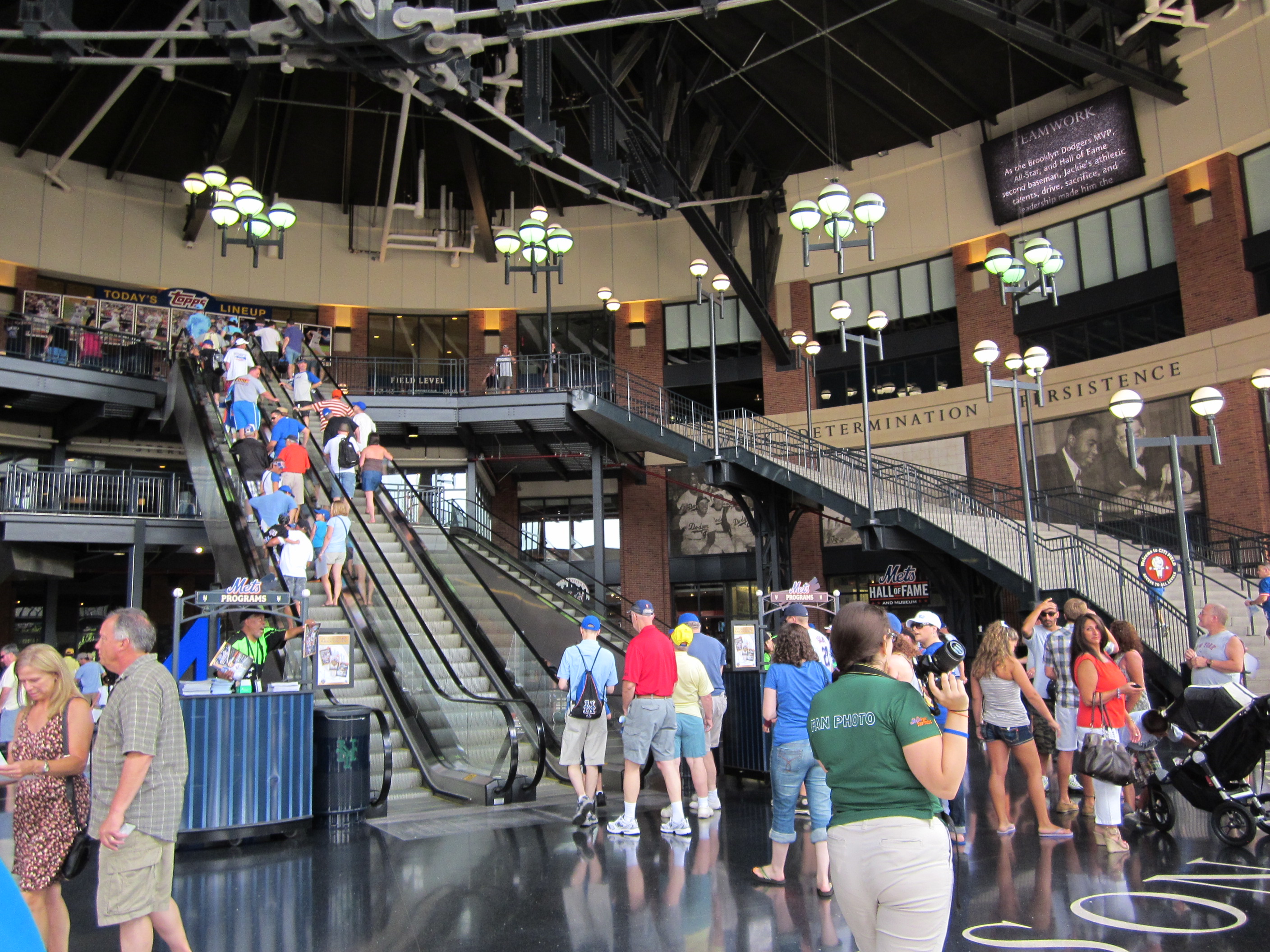
IMG_0399

I went to see the New York Mets this past Sunday with my inlaws, Bill and Norma, and my wife Connie. Lifelong Mets fans all. Bill has been rooting for "the Amazins'" since their first season in 1962, back when they had players so inept that their manager, Casey Stengel remarked, famously, "Can't anyone here play this game?" If you're not a baseball fan you may not know that in 1962 the Mets lost 120 games, still the record for the worst season in history. They were lovable losers with players like Choo Choo Coleman and Marvelous Marv Throneberry. 

The franchise was created to offset the fact that New York City lost two baseball teams to California–the Dodgers and the Giants. 

Now the Mets are celebrating their fiftieth anniversary and they're fighting to be respectable with a cast of young players and some old fashioned grit. No matter what happens they won't lose 120 games. 

Pictured above is the rotunda to Citi Field, which is essentially a museum honoring the memory of Jackie Robinson, the first African-American player to be signed by the all-white major leagues. The entrance to Citi Field is stunning, both as a piece of architecture, but also as a civil rights memorial. I do not know of any other professional sporting team that honors civil rights in their stadium. Tell me if you know? Let's go Mets!


Stop the Bullying

toolkit full of resources specifically designed for parents, educators and students dealing with bullying of children with special needs.

Let’s help spread the word, shall we?

**************************

Professor Stephen Kuusisto, blind since birth, is the author of Eavesdropping: A Memoir of Blindness and Listening” and the acclaimed memoir Planet of the Blind, a New York Times “Notable Book of the Year”. His second collection of poems from Copper Canyon Press, “Letters to Borges, is scheduled for release in October 2012.  As director of the Renee Crown University Honors Program and a University Professor at Syracuse University, Steve speaks widely on diversity, disability, education, and public policy. www.stephenkuusisto.com, www.planet-of-the-blind.com