One day, mid winter, I walk on a thawed road. The packed earth wet in the sun, frozen deer tracks, long shadows of man and dog. Surrounding me all the hurdy-gurdy of the unconscious, projections of smiles, old politics, frayed understandings, ice water underfoot. In a winter melt, I meet my ghost in a birch grove. A boyhood light surrounds the trophies of mid life. Barns, houses, fence posts…
WASHINGTON, DC– [Excerpt provided by Inclusion Daily Express] In the coming weeks and months, Congress will enact sweeping reductions in federal spending, finalize the 2013 federal budget and raise the debt ceiling. The cuts that will come with these decisions are not merely numbers on a ledger; they will decimate programs that directly impact the lives of the most vulnerable among us and the ability of social service agencies to serve them.
For individuals with disabilities who are aspiring for healthy, independent lives, this is a particularly critical time. The unemployment rates we associate with the slow recovery from the Great Recession pale in comparison to the persistent lack of employment opportunities that have ever been available to the disability community. The disincentive to work inherent in our social safety net, and the inability for those relying on it to build assets, makes upward mobility even more difficult.
The growing challenge for non-profit agencies to provide home- and community-based care makes independent living for many individuals with disabilities an impossibility.
This is why dozens of advocates representing a broad range of Jewish communities, religious streams, social service providers and public policy organizations traveled to Capitol Hill on Tuesday to promote the Community First Choice (CFC) option in Medicaid and the Achieving a Better Life Experience (ABLE) Act, both of which further the goals of ensuring individuals with disabilities can lead healthy, independent lives.
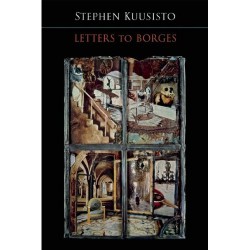
Stephen Kuusisto Reads from Letters to Borges, His New Book of Poems
JUST RELEASED! Best-selling memoirist Stephen Kuusisto uses the themes of travel, place, religion, music, art, and loneliness to explore the relationship between seeing, blindness, and being. In poems addressed to Jorge Luis Borges—another poet who lived with blindness—Kuusisto leverages seeing as negative capability, creating intimacy with deep imagination and uncommon perceptions.
If you enjoyed this reading and would like to listen to several more poems from Letters to Borges, it’s easy enough to arrange. This FREE recording is yours to enjoy at your leisure, preferably from your favorite cozy chair with a cup of coffee or a nice glass of wine in hand. Simply fill in the “Join me for a cozy ‘fireside’ poetry reading…” form found to the right of this blog post or make your request below.
REVIEWS:
Seth Abramson, Poet
Kuusisto’s is a life one wants to know, detailed sparingly by a man one wants to know, inscribed in a generic form one finds oneself not merely compelled but honored to read. Letters to Borges is highly recommended for those who still find honor and beauty in both simplicity and–can it be?–actually having something to say. Read more of Seth Abramson’s reviewfrom the Huffington Post, Huff Post Books, November 2012
~~~~~~~~~~~~~~~~~~~~~~~~~~~
If we account for Kuusisto’s restricted sight, the brilliance of his verse acquires deeper resonance, for his work imagines a realm between sight and sound composed of the sensory stimuli we all know and recognize, but split, fractured, and juxtaposed to inhabit the mind’s ear of his readers, a feat unique to this truly gifted poet. — Diego Báez, Booklist Advanced Review
The news that Oscar Pistorius has been charged with murder reflects what many in the US already know: that guns in the home increase the likelihood of violence. In the coming days and months we will hear all the sad facts and I predict there will be little else to say. Gun violence is all too prevalent, its carnage predictable. Guns help people kill people.
Celebrate. New Year’s Eve, decorating the Christmas tree, on birthdays and Mother’s Day and 4th of July. But smaller days too: my father turned garage sales into a party, ordering pizza and soda for everyone at lunch, making a trip to Graeter’s Ice Cream at the end of the day to celebrate the trinkets and ties and furniture he and my step-mother sold. When he was a teenager, he treated his cousins at the soda shop every payday. Even a random Saturday: lunch and dinner in a restaurant, the week’s grocery shopping squeezed between.
Give presents. Big and small. A gingerbread house stuffed with flavored popcorn and old-fashioned candy. Teddy bears. Cards filled with exclamation points. Jewelry. When I was in college, bags of fruit and anisette cookies from the grocery store—he washed the fruit for me, divided it into plastic bags. One Christmas, with the help of a personal shopper, he bought my step-mother a leather miniskirt and motorcycle jacket. He loved that purchase—even though she returned it for something more sensible.
Laugh. Scream. Cry. No matter: feel life deeply. When my father was angry, everyone knew it—he and my grandmother once threw eggplants at each other in an argument. When he was sad, everyone knew it—the one time I remember being spanked by him (for being mean to my grandmother), he felt so badly that he woke me in the night to apologize and let me come sleep with him. When he was happy, everyone knew it: he laughed wildly, grasped your hand.
Get out into the world. Experience it: amusement parks, zoos, colonial forts, strawberry picking, ice skating, trips through China and South Africa, to Hadrian’s Wall, the Vatican, to Bed and Breakfasts just miles from his house, riverboat casinos, parks, museums, antique stores, walks around the neighborhood. The world is huge: go experience it.
Work hard. Rest when you can. Listen to the radio. Watch crazy sci-fi on PBS when you can’t sleep. Be kind. Be generous. Help others when you can. Run like hell—always save yourself. Hold grudges when need be. Always speak to children. Give up your seat for a person who needs it more. Fill your home with sweets: flowers, diet soda, miniature candy bars, good tea. Sing every chance you get, no matter how terribly. Read daily. Support political candidates. Make people angry. Be vigilant about doctor’s visits. Use the car horn frequently. Always say yes to Parmesan cheese.
WASHINGTON, DC– [Excerpt provided by Inclusion Daily Express] Diversity is our strength, and everyone, including persons with disabilities, has important contributions to make.
That was one of the overarching messages at the 10th Special Olympics 2013 World Winter Games in South Korea this month, where athletes Tae Hemsath and Henry Meece — born in South Korea with developmental disabilities — returned to their birth country as Special Olympics athletes. Tae competed as a snowshoe racer, Henry as a snowboarder.
That same message resonated today throughout a public forum, where participants at Gallaudet University came to learn about opportunities in international exchange for persons with disabilities, and for members of the deaf community.
The audience was moved by the words and experiences of speakers, including U.S. Representative Tammy Duckworth (D-Ill.), a former Army helicopter pilot who lost her legs in Iraq; T. Alan Hurwitz, President of Gallaudet and recipient of the DeafNation Inspiration Award for Higher Education in 2012; and Dr. Christie L. Gilson, a Fulbright alumna who is the first blind member of the Fulbright Board.
Our message of disability inclusion is central to telling America’s story, because we believe that no story can be complete — and no challenges fully addressed — without everyone’s full involvement. Inclusion isn’t just the right thing to do. It’s the smart thing to do.
STROUDSBURG, PENNSYLVANIA– [Excerpt provided by Inclusion Daily Express] Surely banks could have done better in making their automated teller machines accessible to the blind.
It seems like a natural: keypads with Braille, audio prompts and the like. And advocates for the seeing-impaired have been working with the industry since 1999 to provide just such adaptations.
So why does it take a series of costly federal lawsuits to force banks to comply with changes they agreed years ago were needed?
Advocates for the blind and sight-impaired have filed 146 cases since December against banks in Pennsylvania New Jersey, Ohio and Texas, calling for them to come into compliance with the Americans with Disabilities Act by making all their ATMs, which are considered a public accommodation, accessible to the blind. Among the affected banks in the Pocono region are Honesdale Bank, Citizens, PNC, US Bank, Sovereign Bank, M&T Bank, First Niagara and BB&T. About 60 cases have been settled.
The National Federation of the Blind began discussions with ATM manufacturers and the banking industry as early as 1999 to define ATM accessibility for the blind. Some of the larger banks, including Bank of America, began making the accommodations right away. Still, 14 years later, many ATMs don’t have tactile cues on their keypads, Braille instructions an audible component with a screen over the shield to ensure privacy.
WASHINGTON, DC– [Excerpt provided by Inclusion Daily Express] A state administrator, nursing home administrator and economist . . .
This sounds like a setup for a joke, but it isn’t a laughing matter.
These are the final three Congressional appointments for the Long Term Care Commission.
So far, a dozen people have been appointed. These include doctors, policy experts, a union leader, and a couple nursing facility/assisted living representatives. A number have expertise in aging services.
None represent the disability community.
None use attendant services.
None represent the point of view that this is a civil rights issue.
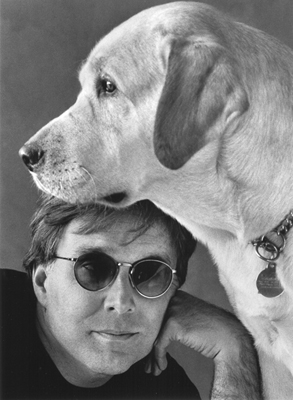
Attendant Surprise: An Interview with Stephen Kuusisto
By Lia Purpura (originally published in The Georgia Review)
This interview took place at Loyola College in Baltimore, Maryland, on 8 November 2007, before Kuusisto read as part of the Modern Masters Reading Series. I had just finished Eavesdropping and was renewed by Steve’s approach to the memoir; to my mind, he had created a form that was fresh, lyrical, and flexible enough to move deftly through well-built scenes without sacrificing an essentially poetic stance. Although his approach to memoir in Eavesdropping is not wholly unlike that of Planet of the Blind, I felt that in some profound ways Steve had advanced and deepened the form. When Steve arrived at Loyola on 7 November, our informal conversation took flight as we traded enthusiasms for new books we had read, talked about teaching at the University of Iowa and elsewhere, and discussed the dual-genre life we share as poet-essayists. Read on…

 Planet of the Blind


