“Violence seemed unreal for a few moments.”
–Tomas Transtrømer
Seemed, like stability of lilies–
one might step from the boat
and swim with broken arms of faith…
“Violence seemed unreal for a few moments.”
–Tomas Transtrømer
Seemed, like stability of lilies–
one might step from the boat
and swim with broken arms of faith…
It happened one day, late winter, an oboe played when I opened the door. Spring is not the Leonora Overture. It’s a moment for reflection in a tragic opera. Not everyone we love has made it this far, not this season. I stepped out onto small puddles of melting ice.
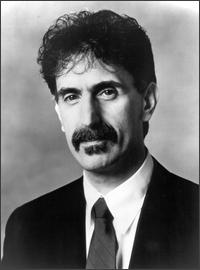
Last night (I’m told, for I don’t have TV right now) Saturday Night Live was hosted by “musical guest” Justin Bieber. When I first watched the show they actually featured edgy innovative musicians.
Oh Frank, given where we are now, the decent people should despise themselves for not being kitchen appliances. But you already said that, didn’t you?
As I grow older my hands open more slowly. Maybe they know more? What’s empty turns its face to us, said a good poet, long ago. My left hand agrees, longs to touch her. My right is stoical, leaves fingerprints like tracks of deer in snow.
During the heavy storm my life caught fire. This was not a surprise–I’d been training for this all my life, folding page after page into the iron stove. Didn’t you know? When a fire catches it is not lonely, it has no thirst, puts statistics to the side, is more real than all the tyrannies.
Fire. In the center of the cross. And I woke feeling someone tugging on my arm though no one was there.
Weird and Wonderful is a feature length documentary about the rise and fight of the disability rights movement. It features interviews and extraordinary archival footage from around the world as activists who fought for disability rights recall the issues, battles, characters, leaders and triumphs of the disability rights movement from the 1960’s to today. The names of activists are not famous yet they are people who have literally changed the world we live in: Bob Kafka, Colin Barnes, Johnny Crescendo, Lesley Hall, Kitty Cone, Zona Roberts, Mike Letch, and many more have changed our schools, buildings, buses, footpaths, offices, workplaces, houses and most of all they have changed our perceptions when it comes to what is possible with a disability.
These stories come from the UK, America and Australia and are woven together to tell a compelling cultural and political story from the earliest murmurings of protest from those segregated in institutions through a series of extraordinary battles that disabled people fought to be seen, heard and participate in society.
Research for this film began in 2008 and filming took place in the UK, Switzerland and America in 2010 followed by further filming in Australia through 2011 and 2012. Archives from across the world have been collected and we are currently creating an assembly edit. So far this project has attracted a total of $125,000 from Film Victoria, the City of Melbourne, Screen Australia, A Churchill Fellowship, the Victorian Department of Human Services and Yooralla. The money so far has paid for research and filming in Australia, the UK, Switzerland and The USA. Interviews have been recorded, much archival footage has been uncovered, and assembly edit is well underway. the next step is that the Pozible crowd funding dollars will be used to pay editor Rob Murphy to create a fine cut. From there we will be seeking completion funding to pay for archival rights and final grading and sound mixing. The money for the edit is a crucial stage in getting this project into shape so the structure, style and tone of the film can be fully appreciated.
A short teaser for the film has been created and you can watch it here:
You can explore this project further here: www.wierdandwonderful.net On this website you can see tasters of some of the stories from the film, as well as written articles that relate to the stories and characters in the film.
(ABC News)
February 6, 2013
INDIANAPOLIS, INDIANA– [Excerpt provided by Inclusion Daily Express] An Indiana couple is looking for answers from their daughter’s former elementary school after the 8-year-old came home from her special-needs program with her shoes duct-taped to her feet and ankles.
Nate and Elizabeth Searcy’s daughter, Shaylyn, who has Down syndrome, was in her first year at the Life Skills Program at Westlake Elementary in Indianapolis. But after what the parents saw when she returned from school Tuesday, they have re-enrolled her in Bridgeport Elementary, the school she attended last year.
“Shaylyn got home and the assistant on the bus said, ‘Where’s mama?’ I looked down at my daughter, and she said, ‘My feet hurt,'” Nate Searcy told ABCNews.com. “I noticed she had duct tape around her shoes, over and under the tops of her shoes, and up and around her ankles to keep them on.”
Shaylyn had to be wheeled to the bus because she couldn’t walk, Elizabeth Searcy said the assistant principal told her. Her dad carried her from the bus when she got home.
Entire article:
Parents ‘Stunned’ to See Disabled Daughter’s Feet Duct-Taped After School
http://tinyurl.com/ide0206134
There’s a poem by the great Swedish poet Tomas Transtromer entitled “Below Freezing” which begins: “We are at a party that doesn’t love us.” Almost all socialized people know the feeling–the disconnect between a formal occasion and the brutal realities of the subconscious. As a person with a disability I experience it all the time. I’m at the party on sufferance, provisional, accepted only in a guarded way.
Years ago, (around twenty years ago, now that I think of it) I went to a faculty party at the small college where I was an adjunct professor. I entered only to realize that I was being surveyed, appraised, categorized, and dismissed by dozens of near strangers. “We are at a party that doesn’t love us” zinged into my mind. Because the first seconds of a cocktail party require the ability to make eye contact I’m an abject social failure. My eyes wander, jump, drift, hop like birds. It’s next to impossible to mingle and enter the little circles of casual conversation.
Transtromer’s poem is more interesting though, for he plumbs the depths of analytical psychiatry with astonishing clarity:
“Finally the party lets the mask fall and shows what it is: a shunting station for freight cars. In the fog cold giants stand on their tracks. A scribble of chalk on the car doors.”
In short, just beneath the veneer of the party stands the machinery of the holocaust. I submit if you’re a wheelchair user, a blind man, or a member of the LGTB community–just to name a few dis-normative body types–you will “get” Transtromer’s associative image immediately. Beneath the party is a history of cultural sanctions against people who “cripple” the normal. Then Transtromer says:
“One can’t say it aloud but there is a lot of repressed violence here.”
I’ve been thinking of this poem quite a lot lately. The poem ends this way:
“I work the next morning in a different town. I drive there in a hum through the dawning hour that resembles a dark blue cylinder. Orion hangs over the frost. Children stand in a silent clump, waiting for the school bus, the children no one prays for. The light grows as gradually as our hair.”
Transtromer’s poems speak elegantly and cleanly about the social lying that is often committed in our names and that we easily shrug off because we want so desperately to belong at the party.
Some losses never leave you. Some losses never should.
The nurse walked around me, hands constantly moving. She was talking about the Super Bowl, how her daughter’s boyfriend made ribs, how she felt like she spent the whole day eating. Then she touched my foot, my “clean water” tattoo. She didn’t ask what it means, just let her fingers linger on the words.
Then she turned to me, began talking about her brother, how since his death she’s gained 6o pounds, how since his death she doesn’t feel the same. I didn’t tell her my tattoo is in memory of my father. She just touched it, turned, began to speak about her own loss.
I told her German has a word for weight gained while grieving: kummerspeck. Literally, “grief bacon.” She smiled, said “That sounds about right.”
I didn’t tell her that I think every day about my father, about the friends I have lost in the last several years. That I think every day about death, what it means to our living. What it means to leave and to leave behind. What it means to the project of being human, of being a writer.
One of my students is Puerto Rican and explained to me once that in the culture of her youth, there was no separation between the living and the dead: “They’re just always here,” she said, “The dead are just always with us.” In her writing, characters who may be dead and may be alive eat and breathe and sleep together, speak to one another. Relationships don’t end just because one person dies. New relationships are forged just because one person dies.
And while there is sadness there, sadness in the weight of the dead who never leave us, I think there is something else, too. I’m not sure what to call it. Comfort, maybe? Connection? Relief?
In that moment of the nurse touching my tattoo then speaking about her brother, a connection was forged. We understood one another. She told me about her brother and I carry him with me now. Because we come to one another in our loss. With our losses. We hold them up for one another to see, to share. And in so doing, we keep our dead alive.
When you’re blind Vermeer is a mystery. His paintings are like the idea of magic or reflections in a department store window. Your friends, the sighted ones, talk of lace, a spark of sun on a girl’s lip. Their voices are like yellow flowers. It is always summer when they describe Vermeer. The words rise like balloons at the edge of a field.
 Planet of the Blind