Head in the Clouds

I tend to read compulsively though not canonically. African folk tales, history of science, D. H. Lawrence, old white men, young Latinx women, Russian history, eco-theory, contemporary poets from China. And things happen, my soft shell crab of a mind is fed. I learn that Abraham Lincoln came home from Gettysburg with a case of the small pox, that he infected his black servant who died, that behind every story we thought we knew there’s another one having to do with disability and illness and injustice. Speaking of Lincoln and disability I’ve recently learned while reading David S. Reynold’s “Abraham Lincoln in His Time” that on the frontier in Lincoln’s boyhood violent fights often involved gouging out the eyeballs of one’s opponent and that victorious fighters used to flaunt the enucleated eyes of their victims. Lincoln did not participate. I knew that blinding thieves was an old juridical practice dating back to the Greeks, but I’d no idea blinding the guy in the other corner was a popular entertainment in Illinois.

Seeing such things Lincoln developed rectitude. That emergence made him the greatest of men. Not perfect. But moral.

I put the words disability, illness, and injustice together because in a society without moral leaders these wanton circumstances feed each other. But you know that. If you’re reading this blog you already know.

Compulsive reading…not long ago I re-read Robert Graves memoir “Goodbye to All That” in which he narrates how he turned his back on England after the debacle of the First World War. He hoped he could find a better garden much as contemporary Americans tweet about where they want to live now that the USA has seemingly devolved into a fascist stock yard. Anyway the following passage caught my attention–Graves and his wife Nancy are living in Islip, post-war, and everything is going to hell:

“The Herald spoiled our breakfast every morning. We read in it of unemployment all over the country due to the closing of munition factories; of ex-service men refused reinstatement in the jobs they had left when war broke out, of market-rigging, lockouts, and abortive strikes. I began to hear news, too, of the penury to which my mother’s relatives in Germany had been reduced, particularly the retired officials whose pensions, by the collapse of the mark, now amounted to only a few shillings a week. Nancy and I took all this to heart and called ourselves socialists.”

That this should strike one as familiar and smoothly contemporaneous speaks to the corruption and contagion we’re now forced to endure.

Reading Eric Alterman’s “Lying in State: Why Presidents Lie and Why Trump is Worse: one reads the following:

“Like Woodrow Wilson during the latter stages of his presidency, Roosevelt was not at all a well man during his final election campaign. But FDR proved so adept at hiding his infirmities that his personal physician, Dr. Ross McIntire, confided in his diary, “It made me doubt my accuracy as a diagnostician.” In December 1944, just a month after his final election victory, a new physician, Dr. Robert Duncan, conducted a thorough examination of the president and gave him only a few months to live. This prognosis was apparently due to a “hardening of the arteries of the brain at an advanced stage.” We can see at least one important result of his infirmity in the fact that, according to biographer Robert Dallek, “Roosevelt’s cardiologist ‘begged Eleanor time and again not to upset her husband’ with complaints about State Department appointments of anti-Communist conservatives.” 14 It so happens that these appointees were the very same people who slammed the door shut on refugees from Hitler’s Holocaust. The question of whether his health affected his performance at Yalta cannot be put entirely to rest. FDR could work for only a few hours at a time during his final months during his final months, and he was hardly at his best when he did. In retrospect, however, the problems that arose with the Soviet Union in the aftermath of the war did not result from Roosevelt’s having been hoodwinked at Yalta, much less from any nefarious attempts to undermine him by pro-Soviet members of the US delegation there, as so many have since charged. Rather, it was that in securing the best deal he could, Roosevelt apparently lacked the energy to tell anyone—for example, his vice president—about what he had agreed to and why he had done so.”

Again history is startlingly near. Illness, public relations repression of same, disability behind the curtain, a feckless medical establishment lining up to disguise FDR’s true circumstances, all combining to “lose the peace” as we might say.

Does Trump even now how ill he is? Do his apologists and crackpot doctors care? What are we losing on the world stage because of this pandemic driven denial, charade, canard, con-man cathexis?

Here’s another passage that caught me recently. This is from Edmund Wilson’s “To the Finland Station”:

“In 1891–92, the famine and the cholera epidemic that followed it brought the intellectuals into the field. Tolstóy at sixty-three set an example by turning in with all his family and working his head off for two years: he and his sons established hundreds of soup-kitchens, and he tried to get the people on their feet again by distributing seed and horses. Vladímir Ulyánov, however, according to one of his friends, was one of the only two political exiles in Samára who refused to do anything about the soup-kitchens, and he would not belong to the relief committee. Our only knowledge of his position at this time is derived from the indictment of a Populist opponent, who declares that Vladímir welcomed the famine as a factor in breaking down the peasantry and creating an industrial proletariat.”

Lenin is seen here rooting for starvation. Sound familiar? Trump was going to tear off his shirt and reveal his Superman costume while Americans are falling ill in record numbers and oh yes, many are starving. Of course for Trump he wants Industrial Proud Boys, not a proletariat. But his behavior is strikingly similar to the heartlessness of Vladímir Ulyánov.

I’m reading during a pandemic.

Here’s a passage from Leila Lalami’s “The Other Americans” which grabbed at my disabled child’s heart:

“Yet the sense of being different never completely went away. The fault lines usually appeared when I was asked what church I went to, or when my mother spoke to me in the school parking lot, or when the history teacher asked a random question about the Middle East and all eyes turned to me for an answer. It didn’t help that my parents weren’t getting along and that there was constant squabbling at home. Every time a door was slammed or a dish was smashed, I locked myself in my room and listened to music. I dreamed of growing up, going to college, escaping the desert. “Why do you always have your head in the clouds?” my mother would ask.”

Head in the clouds indeed.
Poems help…

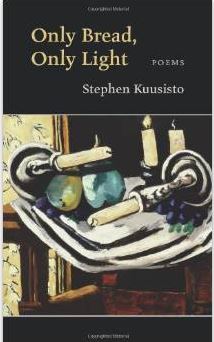
I wish I could sit with you Father Time, Mother Eternity. Maybe we’d drink tea from tall glasses as I did when a boy in Finland–Russian tea, the candles shining through.

Damask and silver, twilight. Together reflecting on the small, beautiful, ineluctable joy of seeing animals, their eyes.

**

The dictator has broken all the gramophone records but one. He plays it for his dinner guests: wolves howling. When the record is over he starts it again. Stalin as disc jockey…

**

Father Time, Mother Eternity, how do I shake these blues?

**

My friend, the poet Jim Crenner wrote: “Life is like a game of chess. Death is like two games of chess.”

Once, playing with a friend in a Greek taverna, a spider walked across the board and we both decided it was a draw.

**

I wonder if Stalin ever played his record backwards?

When people say “all lives matter”…

When people say “all lives matter” in response to BLM they’re saying something they don’t generally believe. If the premise was true we wouldn’t have deep structural inequalities haunting America. If All Lives Matter children with disabilities would grow up to attend Harvard in significant numbers. Latinx women would be well represented in board rooms. Black men would be widely and enthusiastically employed. Women would receive equal pay.

ALM is a canard. If you say it, prove you mean it.
As the French would say, “don’t half-sell your duck.”

The All Lives Matter crowd reminds me of Christopher Hitchens assertion that one may choose to be altruistic but it can’t be compelled. All Lives Matter means: “you can’t compel me to think about structural inequality and I’ve got a slogan too.”

It also means “shut the f*** up.”

If All Lives Matter why has the GOP worked tirelessly to defund Head Start, Programs for Women with Infant Children, health care extensions, medicare and medicaid, eliminate Social Security?

All Lives Matter is the slogan of moral cowardice.

Jose Saramago Redux….

A British theater company is performing a staged version of Jose Saramago’s novel “Blindness” as a special pandemic event. The novel is built from the premise that a mysterious virus has blinded the world’s entire population. The book trades on all the worst ideas about disability in general and blindness in particular. Non-disabled people often believe that proximity to the disabled will in fact harm them.

Am I disgusted? You bet. Surprise? Not so much. Ableist tropes are everywhere in popular culture.

Yes, the audience will wear blind folds.

I wrote to a friend this morning and said I now understand I’ll go to my grave having failed to see progress where disability employed as a demeaning metaphor is concerned.

I truly believed when the ADA was passed some thirty years ago we’d be further along by now.

Blindness lends itself to a host of cultural significations–lack of knowledge or knowledgeability; a figure for unreason or rage; lack of affect; to be bereft of intelligence.

I once had a cab driver in New York City tell me that I was obviously the victim of a dark spell.

Not long ago a faculty colleague at Syracuse University called me an ignoramus because I told him his behavior toward me in was essentially ableist. Of course I’m ignorant. All blind people are of lesser intellectual capacity.

Don’t stand next to them. You might get it too.

Blindness Awareness Month

Whether you know it or not this is Blindness Awareness Month. Let’s get right to it. Blindness is a disability. It involves eyes. Awareness is from the late Old English gewær “watchful, vigilant,” from Proto-Germanic *ga-waraz (source also of Old Saxon giwar, Middle Dutch gheware, Old High German giwar, German gewahr), from *ga-, intensive prefix, *waraz “wary, cautious,” from PIE root *wer- (3) “perceive, watch out for.”

Awareness among the sighted means keeping your eyes peeled lest you run into a blind person which wouldn’t be good.

In the old days if you encountered a blind person, especially first thing in the morning you had to run to the woods, find a tree with twin trunks sporting a hole between them, gather the rain water found there–then find a black cat, cut its fur, burn it, and mix the ashes with the spunk water and rub it into your eyes. This would forestall becoming blind by association.

(See the Oxford Encyclopedia of Superstitions.)

Be aware.

It’s Blindness Awareness Month. Do you know any blind people? Do they make you uncomfortable? Do blind-deaf people make you really really uncomfortable?

Let’s not hire them. I don’t think there’s enough spunk water and cat ashes to go around.

According to the World Health Organization there are “at present at least 2.2 billion people around the world have a vision impairment, of whom at least 1 billion have a vision impairment that could have been prevented or is yet to be addressed.”

The truth is the World Health Organization doesn’t know how many blind people there are–the “at least” is meaningful both as a nod to the lack of quality data and also as a confession of sorts: we have to guess at the number of blind citizens both globally and in the US.

Stealing from Al Gore the blind are an “inconvenient truth.”

According to the American Foundation for the Blind 75% of the blind in the US are unemployed.

While statistics are hard to come by students with disabilities who matriculate to colleges and universities are far more likely to drop out than their peers.

I thin we should rename Blindness Awareness Month.

Let’s call it Blind Pride and Global Employment Month.

I’m not fond of awareness unless its attached to action.

Slumgullion and Ratched

The last few days have been a nauseating slumgullion and there’s no way around it. From a barbarous faux debate to super spreader GOP events to the medical emergency affecting Trump–every bit of national news has been dreadful. Worse is the full knowledge that there’s no decency in the Executive Branch or the GOP portion of the US Senate. We’re forced to watch a dystopian cartoon about “the Donald’ while millions of Americans are struggling without money to pay the rent, buy food, or obtain medical care. We’re drinking from a vomitorium of Trump’s design, a Romanesque tankard filled with scabs and excretions unseen since the Middle Ages.

In the midst of all this I made the mistake of watching “Ratched” the Netflix “prequel” to Ken Kesey’s “One Flew Over the Cuckoo’s Nest” which is ableist pornography of a high order and just stir in homophobia, racism, eugenics, and you’ve got something even Kesey would disdain.

All I could think after watching several episodes of “Ratched” is this is the kind of thing a nation of self-contempt ridden cynics will watch without judgment. “It is what it is.”

October

This is the season
When I think most

Of my mother
Who drank herself

Into the grave.
Others greet red leaves

With tourism
Or wistfulness—

Longfellow
For dummies

Hot soups…
But I see her

Gasping for air
Clutching a lead pillow

To the open wound
In her chest

Death’s trusting child.
“Art is the child of nature

In whom we trace the features
Of the mothers face.”

See the bare trees.

Don’t Be Like Putin…

I am a sinner. I’m loaded with envy coveting my neighbor’s ox. As of today I’ve not murdered anyone. My occasional acts of adolescent thievery were minor.

Having cleared the decks let me add I’m appalled by covid virus schadenfreude of any kind. If you think it’s funny that Donald Trump has the virus then it follows you think anyone with whom you disagree should suffer unto death.

Don’t start up with your would you kill Baby Hitler nonsense.
I’m talking here and now.

I despise Donald Trump and the greasy minions who work for him.

If I don’t believe in the death penalty (and I don’t) how can I suborn comic resentment to a position I don’t hold?

Another way to think of it: Putin wishes death on his opponents.

Don’t be like Putin.

Well, there it goes, my last brain cell…

The news media is reporting on Trump’s illness as if he was the president. Putin is president. By proxy. Bzzzz.

Trump runs nothing. His only job is to shout divisive horseshit. He can do that in the hospital. As any nurse will tell you, that’s what most patients do.

Now Steven Miller can get down to business promoting every toddler Nazi he can find.

Well, there it goes, my last brain cell. Bye bye! Bzzzz. Move over Emily Dickinson. I’m hearing flies.

**

Back to Emily.

Because I could not stop for Covid
He kindly stopped for me…

Do you think Trump will read poetry at Walter Read?

**

I so wish him good health. I wish everyone good health.

**

Back to Emily.

“I’m Covid! Who are you?
Are you Covid, too?
Then there ’s a pair of us—don’t tell!
They ’d banish us, you know.”

**

Jokes aside Emily Dickinson wrote: “How do most people live without any thought? There are many people in the world,–you must have noticed them in the street,–how do they live? How do they get strength to put on their clothes in the morning?”

Let us hope Trump arrives at a place, a state where thought is divested from hatreds.

Trump, Covid, and Camus

There’s a pithy sentence deep inside Stephen Eric Bronner’s book on Camus:

“Realpolitik is not always incompatible with ethical ends; Hans Morgenthau and others could oppose the Vietnam War without supporting the terror of Ho Chi Minh. ”

Excerpt From: “Camus: Portrait of a Moralist.”

One forgets how hard Camus fought colonialism–a fight which earned him contempt from Sartre and so many other communist sympathizers in France. But ethical ends require knowing what not to support no matter your polemics.

So I’m thinking of this upon learning Donald and Melania Trump have contracted Coronavirus. I know what not to support which means I won’t cheer at their misfortune. I will wish them each a speedy recovery, knowing they’d never do the same for me.

Camus:

“Nevertheless, many continued hoping that the epidemic would soon die out and they and their families be spared. Thus they felt under no obligation to make any change in their habits as yet. Plague was for them an unwelcome visitant, bound to take its leave one day as unexpectedly as it had come. Alarmed, but far from desperate, they hadn’t yet reached the phase when plague would seem to them the very tissue of their existence; when they forgot the lives that until now it had been given them to lead. In short, they were waiting for the turn of events. ”

Excerpt From: “The Plague.”

Covid is now the very tissue of Trump’s existence. What will he do?

I can condemn his politics and not celebrate his misfortune for it is ours.