Matthew Briones in his book Jim and Jap Crow describes the racial discrimination suffered by Japanese-American citizens during and following World War II and contextualizes their oppression against a much larger framework of American racial intolerance. In our honors course on the San Francisco LIterary Renaissance we’ve been reading and discussing the work of Kenneth Rexroth who is often called the “father of the Beats”—the contrarian poets who came of age in the 1950’s and 60’s. During WW II Rexroth declared himself a “Conscientious Objector” risking imprisonment rather than serve in the armed forces. Rexroth was not the only American writer or intellectual to refuse combat for moral or spiritual reaons during WW II. The poet Robert Lowell was imprisoned in New York City for his refusal to fight and his famous poem “Memories of West Street and Lepke” describes his life in jail alongside the notorious organized crime boss Czar Lepke. Its significant that declaring one’s status as a conscientious objector was not easy—the matter wasn’t as simple as simply not wishing to fight. Conscientious objectors or “CO’s” as they were called had to answer a number of openly vexatious questions in order to be declared ineligible for non combat status. Here are some examples:
-
Describe the nature of your belief which is the basis of your claim.
-
Explain how, when, and from whom or from what source you received the training and acquired the belief which is the basis of your claim.
-
Give the name and present address of the individual upon whom you rely most for religious guidance.
-
Under what circumstances, if any, do you believe in the use of force?
-
Describe the actions and behavior in your life which in your opinion most conspicuously demonstrate the consistency and depth of your religious convictions.
-
Have you ever given public expression, written or oral, to the views herein expressed as the basis for your claim made above? If so, specify when and where.
-
Have you ever been a member of any military organization or establishment? If so, state the name and address of same and give reasons why you became a member.
-
Are you a member of a religious sect or organization?
-
Describe carefully the creed or official statements of said religious sect or organization as it relates to participation in war.
-
Describe your relationships with and activities in all organizations with which you are or have been affiliated other than religious or military.
http://www.nationalpeacemuseum.org/history.htmlFor Kenneth Rexroth such questions were attractive. His views on nation states and industrial capitalism were highly developed and thoroughly oppositional. KR was famous for his articulation of what he called “the social lie”: Here he is in his own words:
“Since all society is organized in the interest of exploiting classes and since if men knew this they would cease to work and society would fall apart, it has always been necessary, at least since the urban revolutions, for societies to be governed ideologically by a system of fraud.”
For Rexroth then, all big governments are constructed around the exploitation of citizens and warfare is another plank in the corrupt house of industrial society. KR was wholly unapologetic in his views:“There is an unending series of sayings which are taught at your mother’s knee and in school, and they simply are not true. And all sensible men know this, of course.”
Over at the Bureau of Public Secrets they ask: “Does the rejection of the social lie imply a rejection of the idea of a “social contract”?” They quote Rexroth:“This,” says Rexroth, “is the old deliberate confusion between society and the state, culture and civilization and so forth and so on. There was once a man by the name of Oppenheimer who was very popular in anarchist circles. He said the state was going to wither away in a sort of utopia of bureaucrats who serve the state. And you are always being told that your taxes go to provide you with services. This is what they teach in school as social studies. There is nothing contractual about it. There is an organic relationship which has endured from the time that man became a group animal and is as essential a part of his biology as his fingernails. That other thing, the state, is fraudulent. The state does not tax you to provide you with services. The state taxes you to kill you. The services are something which it has kidnapped from you in your organic relations with your fellow man, to justify its police and war-making powers. It provides no services at all. There is no such thing as a social contract. This is just an eighteenth-century piece of verbalism.”
The state taxes you to kill you is about as deliberatively anarchicistic as one can get. Rexroth rejects the idea of cynicism or “disaffiliation”:“He isn’t disaffiliated from society, he is disaffiliated from the social order, from the state and the capitalist system. There is nothing unusual about this. It’s just that in America there is an immense myth which is promulgated by the horrors of Madison Avenue and Morningside Heights, by the professors and the advertising men (the two are now practically indistinguishable), that intellectual achievement lies within the social order and that you can be a great poet as an advertising man, a great thinker as a professor, and of course this isn’t true. There happens to be a peculiar situation in literature due to the fact that literature — and this is true of Russia too — that literature is the thing that sells the ideology. After all, just as the scribe knew in ancient Egypt, writing and handling words is the thing that sells the ruling class to the ruled. So departments of English are particularly whorish. On the other hand, a philosopher like Pitirim Sorokin can say at a meeting of a philosophical association, ‘of course we are operating on the assumption that politics attracts only the lowest criminal types’ — he happened to be speaking of the president of the United States. The entire pressure of the social order is always to turn literature into advertising. This is what they shoot people for in Russia, because they are bad advertising men.”
What is it, then, that holds
the natural community of men together?“The organic community of men is a community of love. This doesn’t mean that it’s all a great gang fuck. In fact, it doesn’t have anything to do with that at all. It means that what holds a natural society together is an all-pervading Eros which is an extension and reflection, a multiple reflection, of the satisfactions which are eventually traced to the actual lover and beloved. Out of the union of the lover and the lover as the basic unit of society flares this whole community of love. Curiously enough, this is Hegelianism, particularly the neo-Hegelians who are the only people who ever envisaged a multiple absolute which was a community of love. It is unfortunate that the Judeo-Christian wrath of Marx and the Prussianism of Engels has so transformed us that we forget that this is what lay back of the whole notion of the Hegelian absolute. But, irrespective of the metaphysical meanings, this is what makes a primitive society work. The reason that the Zunis all get along together is that they are bound together by rays which are emitted from one lamp and reflected from one lamp to another and these rays are ultimately traced back to their sources in each lamp in the act of the lover and the beloved. So the whole community is a community of lovers. This sounds very romantic but it is actually quite anthropological.”
“To counter this cohesive social force the state employs the social lie.
“The masters, whether they be priests or kings or capitalists, when they want to exploit you, the first thing they have to do is demoralize you, and they demoralize you very simply by kicking you in the nuts. This is how it’s done. Nobody is going to read any advertising copy if he is what the Reichians call orgastically potent. This is a principle of the advertising copy writer, that he must stir up discontent in the family. Modern American advertising is aimed at the woman, who is, if not always the buyer at least the pesterer, and it is designed to create sexual discontent. Children are affected too — there is a deliberate appeal to them — you see, children have very primitive emotional possibilities which do not normally function except in the nightmares of Freudians. Television is designed to arouse the most perverse, sadistic, acquisitive drives. I mean, a child’s television program is a real vision of hell, and it’s only because we are so used to these things that we pass them over. If any of the people who have had visions of hell, like Virgil or Dante or Homer, were to see these things it would scare them into fits. But with the adult, the young married couple, which is the object of almost all advertising, the copy is pitched to stir up insatiable sexual discontent. It provides pictures of women who never existed. A guy gets in bed with his wife and she isn’t like that and so he is discontented all the time and is therefore fit material for exploitation.””
(Interview with Kenneth Rexroth, from Lawrence Lipton’s The Holy Barbarians, Messner, 1959). See link: http://www.bopsecrets.org/rexroth/sociallie.htm
Although Rexroth is often associated with eastern poetry traditions he was in fact an ardent Christian—but by “ardent” one must add keen modifiers—“radical”; “communitarian”; “erotic” and “mystical”. In his famous essay on Thomas More’s Utopia he wrote:
“It has certainly taken a long time but Christians are slowly coming to realize that their religion, even when considered only a system of social ethics, is utterly incompatible with modern civilization. Catholic aggiornamento must be understood as the onerous and complicated struggle of the Church to free itself from unholy alliances and to return to the evangelical person of Christ and start over. This has led to a new emphasis on the theology of the Apostolic Age and the early Fathers of the Church in Alexandria and Asia Minor. This was a period before Constantine when Christianity was still a subversive creed offering its own social ethic in complete opposition to Imperial Rome. There was a similar movement amongst the Humanists of the early sixteenth century, contemporary with the Renaissance and the Protestant Reformation. They attempted to develop a social philosophy based on the Gospels, the Acts of the Apostles, Clement of Alexandria, John of Damascus and similar thinkers. Its basic concept was the establishment of a community of love encompassing all of society and having as its final end the divinization of the world. These words are John Damascene’s. They are also Teilhard de Chardin’s. They are also Karl Rahner’s. They are also St. Thomas More’s. This is the basic reason for the tremendous revival of interest in More today. Yale University is issuing a critical edition of his complete works. Accompanying it will be a popular edition of selected works in translation. Edward Surtz, S.J., and J.H. Hexter are editors of the Utopia in the complete works and the separate paperback editions by both Surtz and Hexter respectively together constitute the best text and the best introduction to it there have ever been. One of the most extraordinary things about the Utopia is the immense literature which has developed since the rise of our civilization founded upon covetousness to explain the book away. Pro-capitalist churchmen have dismissed the moneyless communism of the Utopia as just another of More’s witticisms, and attempted to prove that his slashing criticisms of sixteenth-century society were motivated by a scholastic defense of monasticism. Socialists, on the other hand, have dismissed his attempt to construct a society in which covetousness, pride, sloth and anger were inhibited to the greatest degree compatible with an organic social flexibility. To them such ideas have been just the reflection of the poverty of the pre-capitalist mode of production. They have seen his communism and his emphasis upon education, creative work and technology as an attempt to escape from this into a communist society with the unlimited satisfaction of human appetites as its highest goal. Since they cancel each other out, both arguments are obviously false.
J.H. Hexter and Father Surtz have been leaders in the movement in More studies which has insisted that St. Thomas More meant what he said. Since they are themselves profound students of More’s sources in the pre-Constantinian past and amongst the pre-Reformation and pre-Counter-Reformation Christian Humanists who were his contemporaries and immediate predecessors, they are able to speak with completely cogent authority. More’s book, as Gibbon says of Boethius’s Consolation of Philosophy, “a golden book worthy of the leisure of Cicero or Plato,” and in fact surpassing either, has provided all languages with a common noun which means an idyllic society of social peace, justice and abundance inherently impossible of achievement. Marx and Engels constantly contrasted “Scientific Socialism,” their own kind, with all others — “Utopian Socialisms.” What they meant was that all other Socialist thinkers have undertaken schemes for the basic reconstruction of society for ultimately moral reasons, while their Socialism had accepted from classical economics an idea ultimately derived from Newtonian physics, that a society which released the maximum number of individual social evils would result in the greatest possible common good.
Whether Adam Smith, Ricardo, Bentham or Mill, classical political economy was a pseudo-science of human relationships emptied of moral content, and so today its descendants, whether Marxist Communism or Capitalist Democracy, are founded upon amoral assumptions. But there are no such things as amoral societies. A value-neuter philosophy or
science of man is a contradiction in terms. Therefore a society guided by value-neuter principles and amoral in the assumptions which underlie the action of its social mechanisms simply becomes ever-increasingly immoral until the acceleration of the destruction of human values drives its best minds from it in dismay. This is More’s argument in his criticism of sixteenth-century Europe, and of course it is also the argument of artists, writers, philosophers, even economists, on both sides of the Iron Curtain today. It is also the argument of Christianity, even at its most institutionalized and compromised, but it is an ever-mounting experiential, existential realization in the very guts of the most articulate Christian leadership.
This is the relevance of More. He is one of the very few thinkers ever to try to construct a model of a community of love while recognizing the fragility and recalcitrance of his material. He did not believe that man was naturally evil. He believed that man was naturally good but prone to mischief. He did not believe that tinkering with the economy and the environment would ensure the automatic release of universal benignity. He did believe that it might be possible to construct an environment and an economy based purely upon natural law as distinguished in his mind from revelation (his Utopians are pagan) which would inhibit tendencies to social destructiveness and enable tendencies toward social peace, joy, creativity and familial community.”Social peace; joy; creativity and familial community…
How I wish there was a transcript of Rexroth’s interview with the military board charged with deciding whether he was a true CO.
We can only imagine it.
All CO’s were required during the second world war to do some kind of public service. If they chose not to, they went to jail. Most CO’s had no problem with working on behalf of the public good—many were Quakers, or like Rexroth, communitarians with highly developed spiritual impulses for promoting love and tolerance. Like many objectors Rexroth went to work in a mental hospital and while he tended to patients, he looked for ways to use his strong labor and community ties to help Japanese-Americans elude imprisonment in the notorious “camps” which are discussed in Matthew Brione’s excellent book.
Just as KR tried to help Japanese-Americans during WWII by attempting to create a kind of “underground railroad” he helped successive generations of young people. Sam Hamill, the poet and essayist, and founder of one of America’s best known poetry presses (Copper Canyon) describes how Rexroth literally got him off the streets and off of drugs and let him stay in his home and read books. In this way its better I think to say KR was the asylum provider for the “Beats” rather than a father.
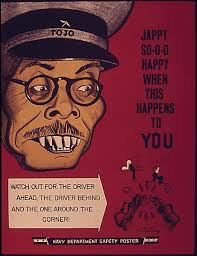
Later, Gary Snyder would say famously, “if you want to know a culture, know its craft” (I’m paraphrasing but this is close). Rexroth was not merely trying to save Japanese-Americans from concentration camps, he was deeply, reverently mindful of the humanity and the spiritual lives of his fellow Californians. In other words, KR refused to see Japanese-Americans as they were presented in US propaganda. Here’s an example:
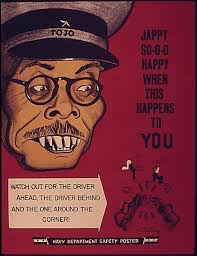
Instead Kenneth Rexroth knew his Asian neighbors through thier poems. In this way, poetry and the translation of poetry is political because “craft” undermines the social lie, and reinforces our essential and collective humanity. Again, this is a spiritual belief, as potent as any anarchism.
Its significant that during the war Rexroth began translating Chinese and Japanese poetry into English. Its easy perhaps to say you love your neighbors—its more radical to prove you love your opponent. Its far more radical to build a seamless intellectual and aesthetic life around those beliefs.
Here are some examples of Rexroth’s translations from Japanese and Chinese that were supremely different from the American poetry that prevailed during the time:
Tu Fu (712-770)
Winter Dawn
The men and beasts of the zodiac
Have marched over us once more.
Green wine bottles and red lobster shells,
Both emptied, litter the table.
“Should auld acquaintance be forgot?” Each
Sits listening to his own thoughts,
And the sound of cars starting outside.
The birds in the eaves are restless,
Because of the noise and light. Soon now
In the winter dawn I will face
My fortieth year. Borne headlong
Towards the long shadows of sunset
By the headstrong, stubborn moments,
Life whirls past like drunken wildfire.
Tu Fu is considered by many to be the world’s greatest lyric poet and in Rexroth’s translation we see potent images and soulful discoveries that mark great lyrical poetry. In Tu Fu’s day, forty was old, and life was strenuous. Old friends have sat up all night, drinking, singing, sharing old stories. The stars of the zodiac are a reminder that life and its fortunes are beyond our control; moreover our lives are small when compared to great forces that march over us. Observations about our mortality and our apparent powerlessness in the face of nature are not confined to the ancients. In one of his own poems Rexroth writes an elegy to his second wife who died young:Andree Rexroth (died October 1940)
Now once more gray mottled buckeye branches
Explode their emerald stars,
And alders smoulder in a rosy smoke
Of innumerable buds.
I know that spring again is splendid
As ever, the hidden thrush
As sweetly tongued, the sun as vital —
But these are the forest trails we walked together,
These paths, ten years together.
We thought the years would last forever,
They are all gone now, the days
We thought would not come for us are here.
Bright trout poised in the current —
The raccoon’s track at the water’s edge —
A bittern booming in the distance —
Your ashes scattered on this mountain —
Moving seaward on this stream.The simplicy and care evident in KR’s elegy for Andree are things he learned from the great poets of Asia. He’s both emotionally intelligent and clear of eye. Moreover, he believes poetry should speak to all and should not be consigned to the specialized “logos” of the academies.
Here’s another poem by Tu Fu, as translated by KR:
Written on the Wall at Chang’s Hermitage
It is Spring in the mountains.
I come alone seeking you.
The sound of chopping wood echoes
Between the silent peaks.
The streams are still icy.
There is snow on the trail.
At sunset I reach your grove
In the stony mountain pass.
You want nothing, although at night
You can see the aura of gold
And silver ore all around you.
You have learned to be gentle
As the mountain deer you have tamed.
The way back forgotten, hidden
Away, I become like you,
An empty boat, floating, adrift.In ancient times it was not uncommon for poets to leave the world of c
ivic affairs and choose solitude. Chang’s hermitage is nothing more than a lean to—a thing of sticks. Nature, the gods, the small things, mountain deer and overgrown paths are all composite elements of the human spirit—not things outside us but, when properly understood, parts of us. This is poetry as meditation: like Chang who is free of worldly things, Tu Fu becomes like an empty boat, floating, adrift. And implicit in this figure, is the freedom that goes with not caring where you might go.Rexroth writes in one of his own poems from the forties of the losses young people endured in a century of wars:
Between Two Wars
Remember that breakfast one November —
Cold black grapes smelling faintly
Of the cork they were packed in,
Hard rolls with hot, white flesh,
And thick, honey sweetened chocolate?
And the parties at night; the gin and the tangos?
The torn hair nets, the lost cuff links?
Where have they all gone to,
The beautiful girls, the abandoned hours?
They said we were lost, mad and immoral,
And interfered with the plans of the management.
And today, millions and millions, shut alive
In the coffins of circumstance,
Beat on the buried lids,
Huddle in the cellars of ruins, and quarrel
Over their own fragmented flesh.If the ancients suffered from the shortness of life and the confusing omens of heaven, the moderns suffer from urgencies caused by war, state control, and all the associated ruins of the spirit. If Rexroth teaches anything at all to the younger poets of the San Francisco Literary Renaissance its this keen and unrelenting sense that the poet’s business is to help people reclaim their flesh and their inner lives. To do less is to surrender to the coffins of circumstance. (Think cubicle.)
Now onto our first assignment, due next Monday.
This is a creative writing assignment, one Rexroth would have loved. I want you to each write your own contemporary version of KR’s famous (some would say infamous) poem “Thou Shalt Not Kill”. I will not be grading you on your capacities as poets. But I expect you will look again at KR’s poem and attempt to write something that speaks to our age, the anguishes of your generation, the fears and horrors that you see all around. If you’re clever you will use some allusions as KR did—bring in some examples from the past, or ideas from books or moves if you like. In order to get a good “flow” with this assignment try to make it 4-5 pages. I have a feeling you will have fun. Get caffeinated!



 Planet of the Blind