UN Rights Chief Stresses Need To Promote Employment Of Persons With Disabilities

(United Nations)
March 8, 2013

GENEVA, SWITZERLAND– [Excerpt provided by Inclusion Daily Express]  The United Nations human rights chief today called for promoting the employment of persons with disabilities and removing the obstacles that impede them from working on an equal basis with others.

“The right to work is a fundamental human right that is inseparable from human dignity,” said High Commissioner for Human Rights Navi Pillay. “Not only does it provide individuals with the means to make a living and support their families; insofar as work is freely chosen or accepted, it contributes to their development and recognition within their communities.”

“Work carries no less meaning to persons with disabilities,” she told the Human Rights Council in Geneva, as it held its annual discussion on human rights and persons with disabilities.

Ms. Pillay noted that when the Convention on the Rights of Persons with Disabilities was adopted in 2006, it embodied an “important shift” in the way that the global community viewed persons with disabilities.

“Prior to this, they had been regarded as mere recipients of charity, goodwill or medical care,” she said. “The Convention challenges these perspectives, establishing that persons with disabilities are holders of human rights on an equal basis with others.”

Entire article:
UN rights chief stresses need to promote employment of persons with disabilities

http://tinyurl.com/ide0308132

It's Still Our War

Yesterday there was a lot of sanctimonious writing in “the spheres” about the terrible repercussions of the W Bush admin’s war in Iraq. I looked at most of the major outlets and saw lots of hand wringing about the cost of the war, the loss of American prestige, the blown opportunity to develop good relations with the broader middle east, the ostentatious and narrow ideas of the neo-cons, etc. But nowhere did I see a lament for the approximately 200,000 Iraqi civilians who were killed. Even progressive outlets managed to leave this out. Meantime, people are crowing about Rand Paul’s filibuster. How about trying George W. Bush and Dick Cheney for war crimes? And let’s throw in Henry Kissinger while we’re at it. For my money Christopher HItchens’ best book remains his Kissinger indictment which is both morally and factually unassailable.


Protesting the DSM 5

Back in December 2012 I wrote a blog post entitled “Good-bye Little Professor, Hello Sow’s Ear” and took Issue with the modifications and deletions in the DSM-5. Accordingly I was pleased to read of Jack efforts to boycott the manual. He writes on his blog “Mad In America” about the human difficulties of standing up for people with mental illnesses. Bravo, sir!


Ever since we launched our DSM-5 Boycott three weeks ago, we’ve received support from organizations and individuals but have become entangled in more wrangling than I ever would have anticipated. While some folks have endorsed our approach and our immediate objective, curtailing the sales and the use of the new DSM, many others have criticized our tactics and strategy and have suggested we stop what we’re doing and start all over again.

Most of the comments have been pointed but civil, but a few have been personal and fierce enough to make me wince. My wife has helped keep me somewhat grounded, reminding me, as only someone who’s known me for thirty-five years can, “Well, what did you expect?” When a few sympathetic individuals attempted to commiserate over the barrage of criticisms directed my way, I tried to remain philosophical and remarked, “It seems some folks are unhappy because we haven’t declared the revolution and others because they’re afraid we might.” Another of our Boycott Committee members suggested I stop responding to the more provocative e-mails I was receiving. You know; what if they gave a war and nobody came?


Local Literacy


Storm from the north. Those were provincial days, local kids grabbed the bumpers of cars in snow and sailed down the streets. Lights in the houses glittered like the eyes of lions. There was a house, utterly dark, where we said the enemy lived. Of course there were no enemies, save for high school teachers. We read the handwriting stretched out on all sides. It was a small city, mind you.  We were the bookish kids. 

Scenes from the Café


By Andrea Scarpino


An elderly man in dress shirt and pants, brown dress shoes with Velcro closures. His hands shake as he holds a short story collection, turns each page. Between his knees, a black cane and tote bag filled with books. 


Two women from Eastern Europe—Romania maybe?—dark hair and eyes, slender bodies. Both wear fur vests, carry beautifully tailored leather bags. Their language lilts in the space between them, unfamiliar (to my ear) consonants. 


A man wearing a gray flat cap and black-framed glasses works on his laptop. Leans around the white stone wall separating his table from the table next to him, asks the woman sitting there to explain how to use the words ‘to’ and ‘too.’ ‘English is my second language,’ he says. The woman leans around to read his laptop screen. 


A tourist couple wearing heavy winter coats share a pot of tea, the turquoise china set between their hands, their unfolded maps. New mothers push plastic covered strollers in from the rain. Three women with white hair tie bright scarves around their necks, fasten them with gold broaches. 


And suddenly, my father. Through plate glass windows, my father in a boxy suit, black briefcase in each hand. He walks quickly, slightly limping from his bad knee, and is out of my sightline before I can wave my hand. But a wave would have been ridiculous: my father is dead. And the man didn’t look my way, that ghost of my father didn’t see me. Another woman’s father, maybe. 


London. Bath. Café after café: I watch a woman eat chocolate cake for breakfast, a business-looking man reading a folded paper, a man who worked the night shift—red plaid shirt, dirty knit cap—sleeping on a corner sofa. Listen to a couple discuss William and Kate’s expected baby—a girl, the woman claims. 


Café as meeting place, resting place. Pause in the middle of the day. Time to be anonymous, alone in thought. Time to eavesdrop on others’ lives, imagine their lives as my own for a moment: if I wore that fur vest, who would I be? If I met that girlfriend with two-year old twins? If I came here to write, ask help of those around me? I sit and watch and listen. I ask myself again and again: who of these myriad variations do I want to be?

2013


Someone aims to steal your shirt though he lacks talent.

Neighborhoods sink in a gravel of loose ideas–

befouled nostalgias about dim sleep and militias. 

A pal says all lingering romanticism is under our fingernails.

As Transtrømer said, “A helmet with nothing inside has taken over.”


Thank you, Poetry Daily, for This Honor…

 I’ve been designated the “Featured Poet” for today at Poetry Daily.  Needless to say I’m delighted.  I’m grateful, too.


~~~~~~~~~~~~~~~~~~~~~~~~~~~

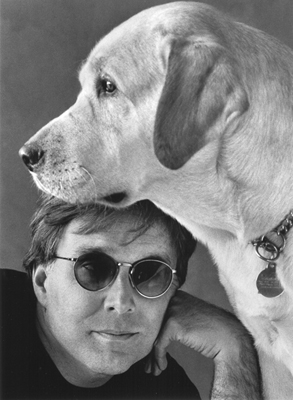
Professor Stephen Kuusisto is the author of Eavesdropping: A Memoir of Blindness and Listening” and the acclaimed memoir Planet of the Blind, a New York Times “Notable Book of the Year”. His second collection of poems from Copper Canyon Press, “Letters to Borges has just been released. Listen to Steve read “Letter to Borges in His Parlor” in this fireside reading via YouTube. He is currently working on a book tentatively titled What a Dog Can Do. Steve speaks widely on diversity, disability, education, and public policy. www.stephenkuusisto.com, www.planet-of-the-blind.com