Check out this video on YouTube:
My pal Brenda Brueggemann on YouTube!
Stephen Kuusisto
Director
The Renee Crown University Honors Program
University Professor
Syracuse University
Check out this video on YouTube:
My pal Brenda Brueggemann on YouTube!
Stephen Kuusisto
Director
The Renee Crown University Honors Program
University Professor
Syracuse University
What does embodiment mean in literary terms? It means that Ahab and the white whale and the man named Queequeg and the one called Ishmael are all struggling to get a fiercer grip on physical form, each has a limp or a gash in his side or a missing limb or a shiver that comes after dark.
Always the turn toward embodiment comes from irony, from self-consciousness:
British actor Stephen Fry:
“It’s not all bad. Heightened self-consciousness, apartness, an inability to join in, physical shame and self-loathing—they are not all bad. Those devils have been my angels. Without them I would never have disappeared into language, literature, the mind, laughter and all the mad intensities that made and unmade me.”
Herman Melville:
“…consider them both, the sea and the land; and do you not find a strange analogy to something in yourself? For as this appalling ocean surrounds the verdant land, so in the soul of man there lies one insular Tahiti, full of peace and joy, but encompassed by all the horrors of the half-known life. God keep thee! Push not off from that isle, thou canst never return!”
Embodiment is a practice, the willful deployment of language that both makes and unmakes us.
W.S. Merwin:
“What if I came down now out of these
solid dark clouds that build up against the mountain
day after day with no rain in them
and lived as one blade of grass
in a garden in the south when the clouds part in winter
from the beginning I would be older than all the animals
and to the last I would be simpler
frost would design me and dew would disappear on me
sun would shine through me
I would be green with white roots
feel worms touch my feet as a bounty
have no name and no fear
turn naturally to the light
know how to spend the day and night
climbing out of myself
all my life”
–“A Contemporary”
First let’s agree: no one knows the whole body–just as we do not know the entire world.
Olav Hauge:
“Don’t come to me with the entire truth.
Don’t bring the ocean if I feel thirsty,
Nor Heaven if I ask for light;
but bring a hint, some dew, a particle,
as birds carry only drops away from water,
and the wind a grain of salt.”
–translated from the Norwegian by Robert Bly
We know the world in lyric terms. We know it by its parts.
So “claiming disability” (Simi Linton’s term) is to claim the lyric. What’s particularly important is the brevity of lyric impulse. The urgency of short forms reflects the self-awareness of blocked paths and closed systems of language. The lyric reinvents the psychic occasion of that human urgency much as a formal design in prosody will force a poet to achieve new effects in verse. Igor Stravinsky put it this way: “The more constraints one imposes, the more one frees one’s self. And the arbitrariness of the constraint serves only to obtain precision of execution.” We are in a hurry. We must tell the truth about the catastrophe that is human consciousness. And like Emily Dickinson who feared the loss of her eyesight we will tell the truth but “tell it slant”—the lyric writer may not have a sufficiency of time.
Kuusisto:
Letter to Borges from Estonia
Where I go is of considerable doubt.
Winter, Tallinn, I climb aboard the wrong trolley.
Always a singular beam of light leads me astray…
After thousands of cities I am safe when I say “it is always the wrong trolley”—
Didn’t I love you with my whole heart? Athens? Dublin?
Solo gravitational effects: my body is light as a child’s beside the botanical garden’s
iron fence—
But turning a corner one feels very old in the shadow of the mariner’s church.
I ask strangers to tell me where I am.
Their voices are lovely, young and old.
Yes I loved you with my whole heart.
I never had a map…
Coordinated, Platonic movement in deep snow…
Crooked doors & radios in the bread shops…
Disability is static, then, oddly protean: the poet finds his way by means of luck, gravitational effects, tricks, the kindness of strangers, weather, and the voices of strangers. Embodiment is the life inside the life, like the spoon inside the shovel. The poet, especially the crip poet, distills the fragmentary into a body of bodies, attenuated, organic.
Did I mention irreverent?
Kuusisto:
Jazz From Cripple City
I saw tonight four men in wheelchairs eating
Flowers, laughing through the dusk
In a public garden.
Forsythia leaned to the water.
O to bear up under such rollicking measures…
O to live in Buffalo, New York & eat civic plantings…
Yes, it’s true:
A friend had to tell me about the men who ate from the soil.
Her description was full of detail, let us say, as
The courts are full of law,
As Doc Williams might have said.
But no one can describe the murmurous laughter that does not
Alter the case & the twilight full of sounds…
But a poem can be slippery, making odd exo-embodied counter claims:
Kuusisto:
Letter to Borges from Tampere, Finland
Winnowing and threshing in the far north—
Sunlight like tea in a glass (a stranger
Tells me) & local musicians play waltzes
In a coffee bar. Borges
I got a bit drunk last night
& walked into a field & lay down where
The caterpillar machines had torn a long seam in the earth
& the waltzing was, as the Finns say, “nurin kurin” all topsy turvy
In my head
& my ruined eyes took the roses and broken shards
Of twilight & built another village—a counter village
Where the houses stood like wine stems.
You could see through everything
Even the walls of the church
A fact that didn’t bother anyone
As men and women made of light
Are necessarily long lived & unconcerned
About the hour…
Disambiguation and figurative difference make for strange bedfellows:
Letter to Borges from Graz
I spent last night drinking with two madmen.
We sat up late in a summer garden & laughed like mad about the mercenary bullshit of capitalism.
One of us played the accordion.
One of us had actually been to Tuva.
Otto said the “throat singers” are enormously fond of marijuana.
Otto and I talked about the business of traveling when a man is blind.
“You wake up somewhere, face down in fragrant leaves, and you don’t know if you’ve been captured or, perhaps you have, against all odds, arrived in heaven…” he said.
Okay, but embodiment can be categorically darker, and ironic:
Vassar Miller:
I’m either a monster
in search of a horror movie to be in,
or else I’m a brain floating within a body
whose sides I must gingerly touch while
you glance discreetly away.
The aim nowadays is to transform the speaker from a being who is subjected to the normative gaze to one who redirects thought itself:
Tito Mukhopadhy:
“I am he.
And I am me.
I am he behind that mirror
I am me watching the he.”
Disability offers no simple self-to-self dichotomies. With disability the usual drama of the self is absent. Disability literature is on the floor below Surrealism. On this floor everything is a riddle: a horse has eight legs; a man has four; they don’t work in sequence or else they do. Tito:
“With the help of my imagination, I can go to places that do not exist and they are like beautiful dreams. But it is a worl
d full of improbability raci
ng toward uncertainty.”
Embodiment is laced to uncertainty as the skin is to the bones. The mind-body dichotomy is full of improbability. How else to say it? Writers with disabilities are perfectly poised to weigh in:
Tom Andrews:
“There is a mat’
hematical process, useful to physicists and probability theorists, called the “self-avoiding random walk.” Walter, one of MR’s physics editors, once explained it to me as a succession of movements along a lattice of given dimensions, where the direction and length of each move is randomly determined, and where the walk does not return to a point already walked on. I almost wept with delight.
Walter looked confused. “You studied randomness in school?” he said, earnestly.”
Disability is the school of randomness. Take it to school. Tom Andrews, hemophiliac and motorcycle racer:
“Body positioning, weight distribution, throttle control.
Work with the bike. Don’t fight it.
The sooner you shift your weight out of a corner, the sooner
you can accelerate. Don’t lose time between braking and accelerating.
Use the bike’s ability to control itself.
Preparing the bike–the gear ratios, the suspension, the jetting–
ahead of time will help your ability to concentrate on the race.
Concentration: don’t let something stupid happen in the lulling
middle of a race.
Adapt to the track as it changes. Be on the lookout for alternative lines.
Racing in the rain: controlled insanity. Get out front to avoid being
roosted with mud from the rear tires of other riders.”
This is the magic of poetry: a hemophiliac’s riding instructions for the motorcycle are also the life of the body. This is the ancient horseman. He has eight legs. You knew it all along.
Kuusisto:
Guiding Eyes
–Corky, a yellow Labrador
It’s been five years
Since I was paired with this dog
Who, in fact, is more than a dog–
She watches for me.
Our twin minds go walking,
And I suspect as we enter the subway
On Lexington
That we’re a kind of centaur–
Or maybe two owls
Riding the shoulders of Minerva.
The traffic squalls and plunges
At Columbus Circle,
Seethes down Broadway,
And we step out
Into the blackness
That alarmed Pascal:
The emptiness between stars.
I suppose we’re scarcely whole
If I think on it–
We walk on a dead branch,
Two moths still attached,
The inert day poised above us,
The walls of the canyon looming.
Did I think on it?
A blessing opens by degrees
And I must walk
Both bodily and ghostly
Down Fifth Avenue,
Increasing my devotion full much
To the postulate of arrival–
To how I love this inexhaustible dog
Who leads me
Past jackhammers
And the police barriers
Of New York.
All day snow falls
On the disorderly crowds,
It clothes Miss Corky
Until her tawny fur
Carries the milky dirt
Of ocean and stone.
The centaur gathers
What passes from our flesh
Into the heart
Of animal faith.
Meanwhile,
She guides me home.
Wallace Stevens:
“A man and a woman are one.
a woman and a blackbird are one.”
Stevens was almost right. The mind and bodies are dark wings and six eyes. A strange find at the back of the mirror.
Borges:
“Which of the two is setting down this poem–
A single sightless self, a plural I?”
Kuusisto:
Essay: Disability and the Wild Onion
The skin of the onion is the measure of his glory. But his skin is imperfect, a humiliation, a hundred layers of anguish. The onion is a kind of library, an archive of failures. Explore him. Peel away the layers. See Aristotle waving five roses at sunrise. See Cain who goes on killing Abel. See Algebra. See the coins of Silesius. Damned if you can’t see everything in the broken and thin leftovers. This is a sufficient way of knowing, immortal. Say what you want.
Or:
Essay: Sewing
“My mind forgets the persons I have been along the way…”
–Jorge Luis Borges
This morning I stitch them back together: the anorexic kid who was afraid of the hot, metallic words in his throat, who stared at the blue washed walls of the psychiatric hospital. The young man who conjectured that the world was an activity and not a foregone conclusion. The older man who saw that disability was simply an ingredient in a daily rebirth. And my needle is swift. It pushes between danger and disorder. Here is the man who holds all his shadows inside himself and remains in love. He is like the heroes in a tale that only contains animals. Oh he’s stitching alright. He stands on one of the world’s three angles with his damaged eyes wide open.
Or:
Intimate News
–after Borges
I was walking in the garment district of Manhattan, making my way down the shady side of the street. I was careful in the way of all blind people since I couldn’t tell the pavement from the sky, couldn’t find the bottoms of puddles.
Being blind is, finally, to become a kind of angel: life graces your desires but you must keep moving.
Then my guide dog walked me around a dress maker’s dummy. I thought how the womanly torso and the darkened man were both pared to their essence: she swayed in wind and traffic, I dipped in the weighted seconds.
Androgynous couple, we respectively saved reality’s honor.
By now you may see a theme: the doubling and re-doubling of crip lit consciousness. Disability is customary thinking driven, raised, pushed, flummoxed, sparked, twisted.
Tito Mukhapadhyay:
There was the earth, turning and turning.
The stars receded, as if
Finding no wrong with anything.
Birds flew by all morning—
The sky lit
From the earth’s turning and turning.
My hands, as usual, were flapping.
The birds knew I was Autistic;
They found no wrong with anything.
Men and women stared at my nodding;
They labeled me a Misfit
(A Misfit turning and turning).
And then I was the wind, blowing.
Did anyone see my trick?
I found no wrong with anything.
Somewhere a wish was rising,
Perhaps from between my laughing lips.
Why stop turning and turning
When right can be found with everything?
If there is a broad premiss in crip poetry it’s “right can be found with everything.”
Kuusisto:
“What is human reason?” asked Uncle Theory. He was, as usual, challenging the children. One little boy said he thought it had something to do with waking up alone.
It was just another morning amid the bruised hearts and Uncle was having none of it. “What on earth does your tiny heart, beating like a bird trapped in a barn, have to do with reason?” he shouted.
Baby Deleuze climbed on his desk and spoke up. “Suppose we imagine the subordination of difference to identity.” he said. “In ordinary terms difference is just an empirical relation between two terms each of which have an a priori identity– (“x is different from y”). But this notion of primacy can be inverted: identity persists, but it is now a secondary principle created by a prior relation between differentials (dx rather than not-x). Difference is no longer an empirical relation but becomes a transcendental principle that constitutes the sufficient reason of empirical diversity.”
(Thanks to: Smith, Daniel and Protevi, John, “Gilles Deleuze”, The Stanford Encyclopedia of Philosophy (Winter 2011 Edition), Edward N. Zalta (ed.), http://plato.stanford.edu/archives/win2011/entries/deleuze/
Kuusisto:
Essay: Frail Wisdoms
I eat what they put in front of me. I am a terravore, I will eat the world.
I feel shame because lately I’ve been eating irrecoverable rhythms.
Last night I ate the superstitions of sunset.
Inside, these old troublemakers fall in the bottomless echo of poverty, a fancy way of saying my guts.
You just think you are sizing up your destiny Mr. K. It’s time now for you to eat and realize falsity in your daily bread.
Crip poetry has its own perseverative logic. And it says that the story of Eden is all wrong. First life was disability life.
– Posted using BlogPress from my iPad
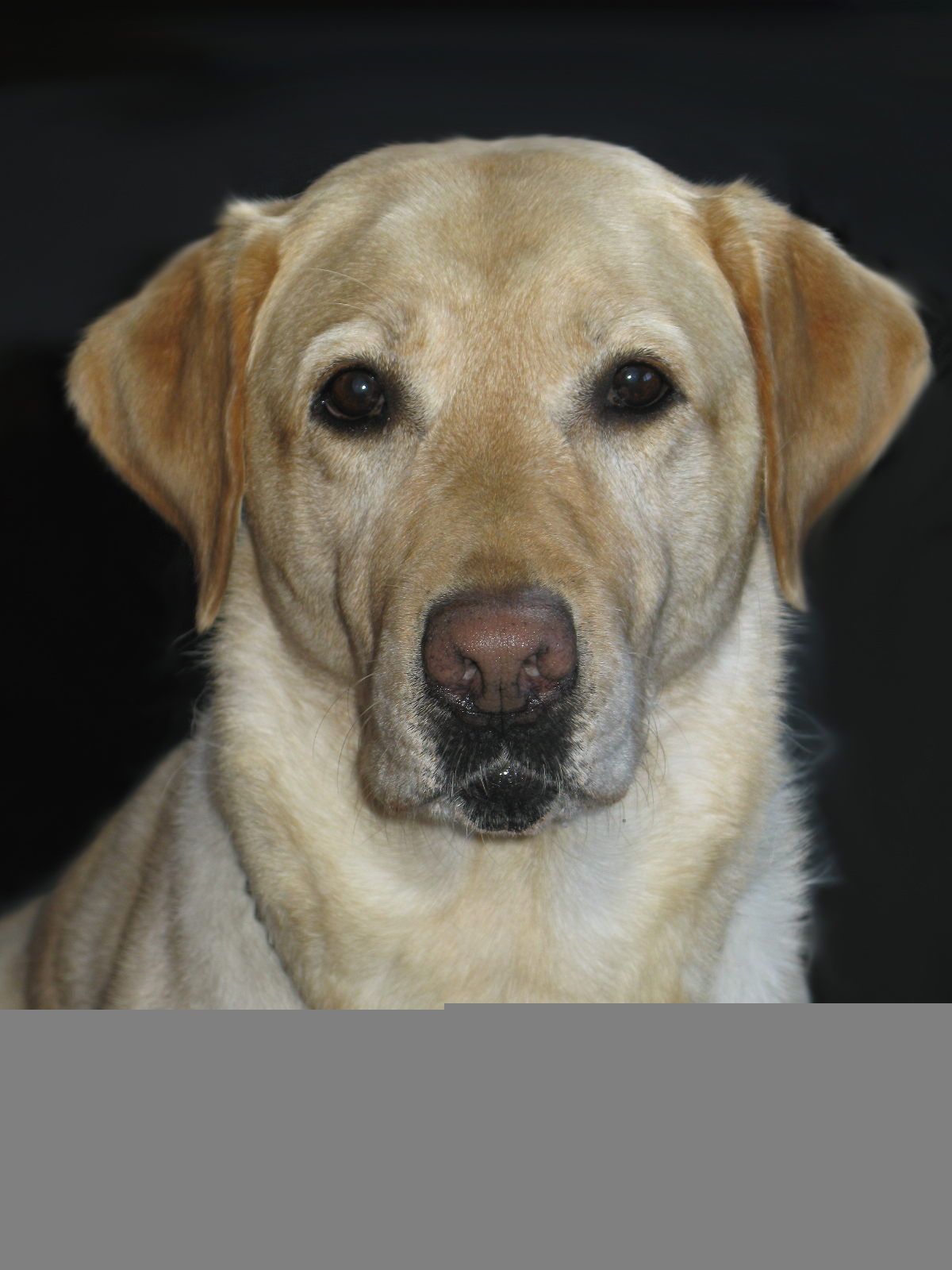 “When the Man waked up he said,
‘What is Wild Dog doing here?’
And the Woman said,
‘His name is not Wild Dog any more,
but the First Friend,
because he will be our friend
for always and always and always.'”
— Rudyard Kipling
I am not an old man. Not yet. Do you understand? I am not tired. Understand? As far as I can tell, I’m in my right mind. But even so I’ve decided to “occupy my world” –not Wall Street, (though I’m all for OWS). I’m now occupying my own diurnal occiput. My pinch of reason.
Here’s a quote:
"The moral test of government is how it treats those who are in the dawn of life . . . the children; those who are in the twilight of life . . . the elderly; and those who are in the shadow of life . . . the sick . . . the needy . . . and the disabled." – Hubert H. Humphrey
Under the imprimatur of “Occupy My World” the Paul Ryan budget plan is not moral. And MItt Romney, who has embraced the plan is not moral.
Schopenhauer said: “Compassion is the basis of morality.”
In OMW compassion is also the basis of reality.
NORDMALING, Sweden, April 23 (UPI) – A Swedish town's Disability Council wants to post "laziness is not a disability" signs at local designated handicapped parking spaces.
Members of the council in the northern town of Nordmaling said they want Sune Hoglander, the town's community development officer, to have the signs erected at handicapped spaces across the city to reduce the amount of able-bodied drivers using the spots, The Local reported Monday.
Well of course. How appalling. How entirely appalling.
http://www.cnn.com/2012/04/23/justice/florida-teen-shooting/index.html?hpt=hp_t1
Stephen Kuusisto
Director
The Renee Crown University Honors Program
University Professor
Syracuse University
|
On March 16, Representative David Schweikert (R-AZ) introduced H.R. 4200, “To Amend the Americans with Disabilities Act (ADA) of 1990”. On March 26, Representative Mick Mulvaney (R-SC) introduced H.R. 4256, “The Pool Safety and Accessibility for Everyone (pool SAFE) Act”. These bills will prevent the Department of Justice from enforcing its own regulations and keep public pools from being accessible as required by the ADA. We need to act today. The House Judiciary Subcommittee on The Constitution has scheduled a hearing to discuss this legislation. When: Tuesday, April 24, 2012 Time: 4:30pm EST Room: 2141 Rayburn House Office Building Take Action:
Here's what your representatives need to know:
For more information, click here. |
I should be honest here and say that I was offered the position of Commissioner of the Mayor's Office for People with Disabilities by former NY Mayor Rudy Giuliani. That was a long time ago. I declined the offer. The politics of disability access vs. business interests in NYC is a difficult and often terrible process. Now I have received the following email from my friend and fellow advocate, Christoph Keller, which I share in its entirety:
COME AND SPREAD THE WORD!
Ronnie Ellen Raymond
New York, New York
–
Ronnie Ellen Raymond
New York, New York
–
Christoph
Never was no white man had the blues, so Leadbelly said,
Til Larkin came along–Larkin, like a fungus, invisible–
He stained margin after margin.
Sweet as iodine, dysmorphic,
I see my coffin coming
Lordy Lord in my back door…
If you're a New York Mets fan, this terrific piece by Michael Trager will resonate:
Stephen Kuusisto
Director
The Renee Crown University Honors Program
University Professor
Syracuse University
 Planet of the Blind