Huffington Post: 'Tax The Poor' Becomes Conservative Rallying Cry

  WASHINGTON — The nation's ongoing economic downturn has sparked an odd response from a growing number of conservative and Republican leaders: a desire to blame the unfortunate and a demand for the poor to pay more.

'Tax The Poor' Becomes Conservative Rallying Cry

WASHINGTON — The nation's ongoing economic downturn has sparked an odd response from a growing number of conservative and Republican leaders: a desire to blame…


Sent from my iPhone

The Thrill Of Mozart All Over Again


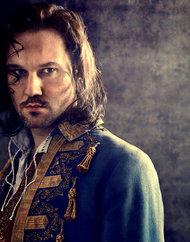
Mariusz Kwiecien
Yesterday’s live simulcast of the Metropolitan Opera’s production of Don Giovanni was a thrilling event. One appreciates occasionally the elevation that comes from the marriage of superb singing and exeptional stage acting–as opposed to the razzle dazzle of Rococo stage sets and Hollywood smoke. This Giovanni has a stage set so darkly minimal you are entirely directed to the singers and Lord how they take advantage of Mozart’s orchestral swings: there’s hardly a moment when the push and pull of the old morality play lags or plods. In fact the show has you on the edge of your seat. It is not my intention to write a review. Some days I feel as though I’ve only recently learned how to understand the shiver and vision of art. Some days I want to ask the very weather to forgive me for my primitivism. Watching this version of Mozart’s opera you feel the struggle of commoners to find an ethos and the dignity of human worth. Oh, and Mariusz Kweicien is one hunky DG. These live from the Met broadcasts are repeated at your local theater, so take a look at this–consult the Met’s website for your local listings. 


Scudding Clouds

And snow coming to the northeast. And the doorbell rings, two strange men, Baptists they say, pushing pamphlets. They seem vaguely purgatorial. I tell them "Trick or Treat" isn't until Sunday.

Meantime I'm getting ready for the opera. Seeing the Met's live simulcast of "Don Giovanni" in the hugely ugly Syracuse "Carousel Mall" for that's where the theater is. We make sacrifices for art. 

We do not ring doorbells for god. We head to the monolith shopping center for Mozart. Day of first snow. Opera and Mexican food, better than staying home…


SK

Second Thoughts, Disability Style

I have been thinking lately of disability not as a form of disablement but as a counter-intuition, a matter that may get me in trouble. Taken at face value the assertion is irresponsible, for by calling disability a quality of mind one is guilty of suborning physical difficulty within the frame of intellect. That’s a troublesome idea, akin to saying that mind over matter will solve physical challenges–a canard that people with disabilities have long experienced.

What I have in mind is that physical difference stands in relation to normatively–to able- bodiedness if you will, as a counter-intuition stands against a first thought. Talking of literary writing Jack Kerouac is famous for extolling the virtues of fast composition, of getting your words down quickly, and by turn of not editing the text. “First thought, best thought,” was the phrase he made famous. Because I am a poet I think about craft. I tend to see poetry as a vehicle for philosophical speculation rather than a tabula rasa on which we scrawl our grocery lists. I like poetry that demands something from the reader and this shouldn’t be confused with style. Poetry that reads clearly can be as inciting to good ideas as a more abstract mode of verse. William Carlos Williams is clear but very shrews. Wallace Stevens isn’t clear at all, but well worth reading. Both are philosophical poets. Both would not subscribe to Kerouac’s notion of composition. A first thought is often not the best thought. Trusting a second sense is vital both in art and in life’s negotiations. This may seem evident, but in America we value easy acquaintanceships, simple ideas of fashion, embodiment, athleticism–even when we imagine we are being outre. Look at a high school yearbook from 1970 and you will see all the boys wearing the same “mod” hair styles. Normalcy encodes it’s parameters quickly because there’s money to be made. Body piercings are a similar example. I’m not saying that self-expression is a bad thing, or insincere or flip–only that it’s easy to create a new normal in a society that holds the idea of “lifestyle” to be valuable.

I think disability provokes second thoughts–far more often than the able-bodied citizen will likely experience. Able-bodiedness is “first thought, best thought” whereas disability calls for a second or third premis. This is of course a view that’s familiar to certain spiritual traditions–one thinks of the Hindu belief that with an act of deep devotion a maleficent goddess can become a begnign figure. Please note that I am not saying that people with disabilities are more likely to be hindus. I am suggesting that the problem solving that accompanies whatever we might call the non-able-bodied life is characterized by an intuitive steadfastness that calls for revisioning and patience. One may say that such a characteristic of mind is marked by a dual consciousness that things are not what they invariably seem. Yes. I’m generalizing. I’m a poet. I get to do that. Even when I’m talking about disability as epistemology. I can make claims. But in this case my counter-intuition tells me my intuition is alright. 

SK 
 

But To Think Is To Be Full Of Sorrow


Keep silent. And write.

Each letter is incomprehensible,

Broken no matter where you look.

Watch them. Your fevered skin

The only light.


Tap the rim of a cracked glass.

The heart is an anchor rope.

Now it flies in the night.

In the dark pages of this room 

I spell everything. Out loud.


–Jarkko Laine

(Translated from the Finnish by Stephen Kuusisto)

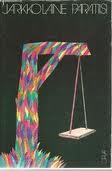
Paradise

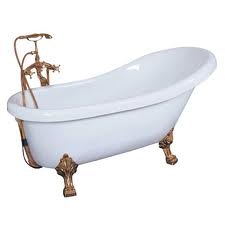
Bathtub

Man is a creature of his home.

A wary animal who hopes to walk on shining streets, 

He does not trust his heart out loud

So he worships the brightness of the night sky,


Surely his living voice is there–

He sings in the tub to his great god.

Life gives us such beautiful pictures

But the subsequent fate is cruel.

Home is no protection.

Rebellion simply makes a man old

And then he has no further escape 

But one…  


–Jarkko Laine

(Translated from the Finnish by Stephen Kuusisto)