Poetry in Your Eyelashes

I remember reading the Finnish poet Pentti Saarikoski who said that he felt the new season in his eyelashes. I’ve been feeling autumn in my hair—the faintest tracings of coming cold. I want to reach up and brush it away as if I’ve walked through a spider’s web. But there’s no silk to brush aside. Autumn has touched me casually, almost absent mindedly, like an old aunt.

I know how this works: autumn will soon move to my eyelashes and where it will announce itself as flurries.

Good morning autumn. I am printing your money as fast as I can.


S.K.   

No Wonder Blind People Have So Much Difficulty Getting Jobs, Have You Checked Out Their Computer Situation Lately?

Alright, I don’t speak for all blind people, as I’ve said repeatedly in my books and on this blog. But I am among the visually impaired as surely as L. L. Bean is among the ducks and I seldom forget my ducks.

Two weeks ago my employer, the mighty University of Iowa bought me a new Dell Latitude laptop for use in my faculty office. It looked nice. It even came with a nifty docking station and a large screen. I thought the thing was handsome.

The new Dell is running Windows 7. W7 is reputed to be more stable and user friendly than earlier versions of Microsoft’s oft maligned operating system. “Huzzah!” thought I.

I should be among the first to admit that I like technology. I’m a fan. I bought an Apple IIE back in 1984. I got it because it could run the Echo speech board. And when Jaws for windows came out, I switched to the IBM pc world and found that every single new iteration of Windows was largely incompatible with the prior version of Jaws. And so I’ve spent a small fortune on upgrades for basic pc accessibility over the past twenty years. Why do blind people have to do this? Because Windows is not seamlessly accessible “out of the box” and visually impaired folks must buy what’s called “second party” software to run their computers. There are many brands of “accessibility” software but the screen reading program called Jaws is one of the leading ones. Jaws costs close to a thousand bucks to purchase. So blind people have to pay tons extra just to use a computer.

The new Windows 7 system is supposed to have its own screen reading software built in, along with screen magnification. “Huzzah!” thought I. “Let’s give it a go!”

Well of course it turns out that the W7 “narrator” is just a stunt or a gimmick–it’s not a fully functional screen reading program like Jaws (which though pricey does afford full functional access to most major Microsoft programs). So guess what? Blind people will still have to fork out the hefty price for Jaws or its competitors in order to effectively use the pc.

If you’re a visually impaired person this is all familiar enough.     

Ah but grasshopper, I was just getting started with my new Windows 7 journey. When I loaded Jaws it conflicted with the video drivers and voila the pc crashed. And so I upgraded Jaws and it still conflicted with the drivers. And so I called Dell and they examined my pc remotely and said my drivers were functioning correctly. And so I uninstalled and reinstalled everything.

This has all occurred during the first two weeks of classes at the university, a time when ramping up for teaching and for engaging with students and colleagues is very important. Perhaps there’s never a convenient time for a techno disaster, but having to occupy myself with these issues during just this period has been particularly maddening.

All of the madness is compounded by the fact that the University of Iowa has absolutely no one in their Information Technology program who is trained in using and supporting assistive technology. This is a bit of a scandal but my outspoken efforts to improve the situation have been ignored over the past three years. Like my friend William Peace the administration at Iowa has come to think of me as a “bad cripple” who is simply a thorn–largely because I keep insisting that we need to have accessible campus buildings and a dignified disability culture that stands for true inclusion. Call me a thorn if you must. I simply believe that 20 years after the ADA people should be able to work and go to the bathroom by golly. When I think of how low my utopian dreams have fallen I could just cry.

Given all the problems with Windows 7 and the Dell laptop and Jaws I began to think about switching to the new Mac. Apple has been touting (or is that “tooting”?) about its new “Voice Over” screen reading program that’s built into the OS 10 operating system. IN effect they’re bragging about how seamless and accessible the new Mac is for blind people.

So of course I tried it out with a loaner Mac from the university. What I discovered is that Voice Over doesn’t work with Mac’s version of Microsoft Office, the very productivity tool one needs to work at the University of Iowa. It doesn’t work with the Mac version of “Outlook” which is called “Entourage” nor does it work with the Mac version of “Word”. I spent hours last night combing through Apple’s unfriendly assistive technology website trying to gain information about why Voice Over couldn’t work with these essential tools. Lo and Behold, buried on a web page about programs that “do” work one finds by process of elimination that Voice Over won’t currently function with these all important programs.

And so, there goes the myth of the new groovy disability friendly Mac. If I didn’t have a job it might be fun to play with the thing, send e-mail via “Apple Mail” and keep a calendar with I Calendar, but these features are useless in my work place.

I hope if you’ve read this far that you’ll forgive the tedium of my post. But I need to say how disappointed I am that in this season of ADA anniversary celebrations we aren’t much further along in the accessible technology universe. Spending two weeks on this nonsense has utterly wearied me. It’s taken me away from writing, both on this blog and in my private affiliation with lyrical lingo. It’s kept me from responding to e-mails and phone calls. It’s kept me from the things I love.

At this point I don’t know if the Dell laptop is functional or not. We shall see. If this gritty process of access is like all the other miseries I’ve experienced with Windows upgrades Jaws and W7 will work okay in about 6 months.

I grieve for blind and visually impaired people. It’s not bad enough that they’re unemployed in staggering numbers, the software and hardware makers manage to make the whole journey harder, more expensive, more time consuming, and ultimately more frustrating than the customary technical problems that non-disabled people experience. We’re a long long way from being included in Mac-land and Windows-ville. Meanwhile, the cost of second party software like Jaws is unconscionable.

Have you ever tried to get an answer about accessibility problems from Apple or from Microsoft? Ha!

Ha Ha Ha!

I’ve had better luck talking to a rubber boot.

Did you know that the Finnish cell phone manufacturer “Nokia” used to be a maker of rubber boots back in the 19th century?


S.K.
The Willow

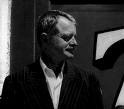
Kenneth Rexroth Wearing Al Capone's suit


I’ve been re-reading Kenneth Rexroth’s excellent volume: One Hundred Poems from the Chinese and although I know this book as an old friend, there are moments of readerly reception that still surprise me after more than thirty five years.  Rexroth’s rendition of Tu Fu’s poem about a willow tree first affected me when I was 17 years old and was hospitalized for severe depression. The poem, taken from classical Chinese, rendered into English, is still, for me, the most perfect evocation of our frail human affections for nature and our mortal understanding that natural forces know nothing of us. This is not existentialism but really the site of human consciousness, the place from which all opportunity for spiritual awakening derives. Here is the beautiful poem:


My neighbor’s willow sways its frail

Branches, graceful as a girl of

Fifteen. I am sad because this

Morning the violent

Wind broke its longest bough.


As John Donne would say in western parlance: “No man is an island” and he would add: “If a clod be washed away by the sea, Europe is the less, as well as if a promontory were, as well as if a manor of thy friend’s or of thine own were.”


Ah but Tu Fu and Rexroth have grace. To which I will simply add, “no man is a sermon” and I’ll add “no woman too” and assert that poems can save us from many a churchly hour and all that timorous rhetoric.


Now I must go and put on my timorous pants and go into the rhetorical world. But I will have Tu Fu under my shirt.


S.K.


“Wearing their resentments like badges of honor”

Lot’s going to be made of this Vanity Fair article on Sarah Palin and it’s full of stuff that could take days to unpack.  But, really, there’s nothing much we didn’t already know in it.

via lancemannion.typepad.com

Could we but write this well about Sarah Palin and her Vanity Fair "ipse dixit", oh, oh, oh, etc.

The All One Fraud Movement: Thinking of Kenneth Rexroth on Labor Day

The passages below come from Kenneth Rexroth’s fabulous autobiographical novel, a book that was really a memoir though Rexroth changed names and created some compound characters—protecting people against the witch hunts of McCarthyism

IN this section of the book Rexroth recalls being 14 years old and living on his own in Chicago in the 1920’s.

We admire particularly this sentence:

Rather than being converted to the deliquescence of orthodoxy and heterodoxy, so characteristic of our time, I was inoculated against it.

**

More than any of the official education and cultural institutions my favorite school was the Washington Park Bug Club. This was a spontaneously evolved public forum which met every night except in the dead of winter in a shallow grassy amphitheater beside a lagoon off in the middle of the park. Years later it was to be moved to another part of the park and equipped with a concrete floor, benches, a podium, and an all-powerful Party faction. In those days it looked like something in ancient Greece, very sylvan and peripatetic, and I suppose, if the truth be known, it really was like ancient Greece, of which possibly the cynical Jewish doctor St. Luke was a better judge than Plato or Pater. Here, every night until midnight could be heard passionate exponents of every variety of human lunacy. There were Anarchist-Single-Taxers, British-Israelites, sell-anointed archbishops of the American Catholic Church, Druids, Anthroposophists, mad geologists who had proven the world was flat or that the surface of the earth was the inside of a hollow sphere, and people who were in communication with the inhabitants of Mars, Atlantis, and Tibet, severally and sometimes simultaneously. Besides, struggling for a hearing was the whole body of orthodox heterodoxy — Socialists, communists (still with a small “c”), IWWs, De Leonites, Anarchists, Single Taxers (separately, not in contradictory combination), Catholic Guild Socialists, Schopenhauerians, Nietzscheans — of whom there were quite a few — Stirnerites, and what later were to be called Fascists. There were even leftover apostles of Free Silver and unemployed organizers of the Knights of Labor. It was better than Hyde Park. In fact, the only place I have ever seen anything as good is Glasgow. […]

I don’t want to give the impression that I had become a self-educated antiorthodox precocity, because I had not. I spent my time reading history and the sciences and philosophy. The lunatic fringe of radical Chicago in those days — the Hobo College, the Bug Club, the Dill Pickle, Bughouse Square — taught me one thing, that the orthodox view of the universe, although acceptable and empirically satisfactory, was probably so only because millions of men had devoted their work and their attention and their consent to seeing the universe in that way. If it were possible for a ragged hobo in a gaslit room off West Madison Street to work out a fairly adequate world picture, it is obvious that if historically men had worked along lines which had in fact diverged from the accepted orthodox path to the understanding of reality, they could have evolved an equally acceptable but radically different scientific universe.

Rather than being converted to the deliquescence of orthodoxy and heterodoxy, so characteristic of our time, I was inoculated against it. The radical disbelief which has been characteristic of all my contemporaries I shared from the beginning, but I was never led by it to embrace any of the extraordinary follies which were to become fashionable in intellectual circles in the next thirty or forty years. I have known Socialist-Realist novelists who religiously consulted the astrology column in the daily newspapers every morning before breakfast. The whole Socialist movement after the First War, led by Frank Harris and Upton Sinclair, embraced the Abrams electronic diagnosis machine. Twenty years later, after the Second War, the reborn Anarchist movement committed suicide in the orgone boxes of Wilhelm Reich. Anyone who had taken a course in high school physics would have known that this stuff was arrant nonsense but the trouble was that these people had lost belief in high school physics along with their belief in capitalism or religion. It was all one fraud to them.

**

Reading the passages above one is reminded of a strain in American Puritanism—ironic, ingrown, historicized, and palpable—and vagrantly democratic with a small “d”. It matters not whether we choose to speak of the left or of the right. What is true is that whenever a crowd gathers in these United States it must disregard itself in rhetorical terms. Americans distrust every impulse that seeks to defend individuality. The Glenn Beck march or the Million Man march are only the latest examples. In the end, the participants of these parades will see everything as a fraud, just as the world trade protestors must imagine that both capitalism and religion are co-conspirators. Such heterodox positions hail from the pulpit of Cotton Mather and are conspicuously American in their mass applications. One mustn’t think for a moment that Rupert Murdoch doesn’t understand this full well.

May the workers of my nation respect themselves enough to distrust the "it's all one fraud" school of American public gatherings.

S.K.

Forewarned is Forearmed? Fox Business Network Takes Aim at the ADA

We at Planet of the Blind received the following note this morning from a good friend:


On NYC time this PM @9:00 PM on Fox Business Network (who else?)

John Stossel "explores" the ADA with Curtis Decker, Director of The

National Disability Rights Network and Greg Perry, author of "Disabling

America; The Unintended Consequences of the Government’s Protection

of The Handicapped". Stossel hates the ADA seemingly. Thought you

might need something to "get your dander up" as I noticed it is

un-characteristically flat.


We of course remember John Stossel for his vituperative and rabid denunciations of pro-golfer Casey Martin back when he was trying to get the PGA to let him use a golf cart as a reasonable accommodation. Stossel dislikes the ADA but he’s even more contemptuous of people who require accommodations. He reminds me of the people who wanted to protect the red man by relocation.


Hey? When did I get flat?


P.S., Mr. Perry’s book is fluff from the fog factory. 


S.K. 

Blindness in Especial

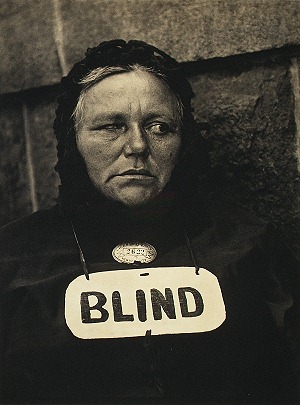
vintage photo of blind woman wearing sign

It is easy to say that things are good. Things are good. Bubble gum for instance is now available in sugar free varieties. It was not so distinguishable in my youth. We may cite several examples of generalized goodness and shall not divagate from our purpose. “Blindness in especial” is our theme.

We should say from the outset that it is better to be blind now than it was when the photograph above was taken. There are many reasons, not the least of which is that the “ugly laws” are out of style (though certainly we ought to maintain vigilance where that matter is concerned, eh?) We speculate that the poor woman pictured above was allowed a sign that said “blind” as a kind of passport—a severely ironic passport—but a passport nonetheless, as the sign allowed her to stand on the street when other people with physical defects were prevented by law from doing so. “Blind” meant that she was a socially or civically sanctioned beggar, not to be confused with the other deformed people who were not permitted on the sidewalks of these United States. We continue to recommend The Ugly Laws by Susan Schweik.

And so we say things are better and we mean it. Surely.

Blindness in especial means blindness as a sub-category—though we may not know what category we mean precisely—though in general terms we are discussing human rights. You likely see the problem immediately: blindness and/or vision impairments will invariably occupy an indexed position when we speak of the “good”—and by this we mean the “human good” for it is not our intention today to discuss the animals though we love them sincerely.

The subject we are embarking upon is either large or small depending on your philosophical position. But let’s say the subject is small. Blindness does not enter into considerations of engineering, technology, human resources, street signs, public recreation facilities, transit, education, libraries—the critical organs of civil life if you will.

No visually impaired person is ever unmindful of this fact, though he or she may be thankful to live in these United States as opposed to rural Uganda where blind women are routinely persecuted because after all, they are surely witches. As I said above: it is easy to say that things are good.

Yet the blind are persecuted still and right here in the US of A. And like all matters of persecution the process can be self-delivered, for indeed as we all know, those who are stigmatized will in some instances further their own stigmatization through the unfeeling and unthinking machinations of the defective people industry.     


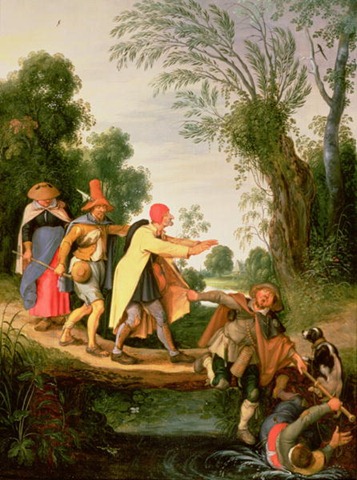
The-Blind-Leading-the-Blind-xx-Sebastian-Vrancx 


We have spoken here before of the shameful activities of the Iowa Department for the Blind. See the story of Stephanie Dohmen at: http://www.planet-of-the-blind.com/2009/02/blind-woman-and-guide-dog-suffer-setback-in-iowa-that-is-incomprehensible.html


Briefly, Ms. Dohmen was taking a computer course at the IDFB but was told that she couldn’t bring her guide dog to class. The Iowa Department for the Blind is influenced heavily by a Baltimore based organization of blind people called the National Federation of the Blind. The NFB believes that everyone who is receiving training with a talking computer must wear a blindfold. Or by turns, if you’re learning how to navigate the world you must wear a blindfold. The idea is that if you have minimal or “residual” vision (that is, you are legally blind and not entirely without light) then you must learn how to be entirely blind even if all you want to do is take a computer class to get a job or what have you. This restrictive and inhumane policy is not broadly believed to be a matter of best practice and yet the Iowa Department for the Blind clings to this medieval idea. In Ms. Dohmen’s case, one can scarcely understand how a guide dog would have interfered with her taking a computer class. And let’s also be clear that the IDFB’s position is illegal under the ADA. But we digress.

It is our view that many organizations that purport to assist blind and visually impaired people are in fact components of what we in disability studies call “the defective people industry”. Human rights of course are not negotiable, cannot be subborned, can’t be relegated to minor clauses, are not conditional. We must be clear. And the prospect of the blind leading the blind into abjection and additional confusion is distressing to us.

We shall talk more about blindness in especial in the coming weeks.

Just keep in mind that some 70 % of the blind remain unemployed in this country. The defective people industry must be at work!


S.K.


The More Things Change

by Andrea Scarpino


Marquette, Michigan. Before February, I had never heard of it. Now, I live here, have an apartment and library card, a membership to the food co-op, my name on the mailbox. But at some point every day, I think about Los Angeles, think about the differences between living in a major metropolitan city and a town with 25,000 residents, the differences in attitudes and culture between the upper Midwest and the West Coast.

For one thing, people talk to you here. In the street, at the grocery story, when running by on the bicycle path. They make eye contact, nod, expect you to do the same. The cashiers at the food co-op know my name, ask about the food I’m buying, suggest recipes. Restaurant servers know my name. No matter how hard I’m running or how hard the other person is running, we greet one another as we pass. On your left, all the bicyclists call. Good Morning everyone else says.

There is also no traffic here. Zac’s morning commute is 4 minutes. I never drove less than 45 in LA for my different jobs. Here, I get to the airport 15 minutes before take-off and have no problem making my flight. Of course, in LA I never had a problem getting through security. In Marquette, I’ve had food confiscated, my contact solution tested, and received two lectures on the appropriate sized bag to hold my carryon liquids. Even though the airport isn’t much bigger than my apartment.

My apartment. In LA, we rented a tiny one bedroom. Both of our desks were in the living room/dining room/kitchen/hallway. In Marquette, we have three bedrooms, a mudroom, a closet that Zac turned into his office. One entire room is still empty because we can’t figure out what to do with it. There is space to move around and breathe here. Life doesn’t feel so rushed.

But life also feels more closed-in. We have a handful of restaurants from which to choose, a handful of clothing stores. One movie theater, two bookstores. Limited venues for art exhibitions and performances, limited venues for anything. So far, limited opportunities to find friends.

So I feel a constant tug. Marquette is quieter, moves more slowly than Los Angeles. But sometimes that silence feels like containment. Los Angeles always felt a little too big, a little too unruly, too anonymous. No one cares who you are in LA; there are too many people to care about any one. But in Marquette, everyone wants to have a conversation. We run into other faculty members almost every time we eat out. And that lack of anonymity can feel oppressive.

I never felt quite at home in LA even though I loved living there. I always felt like I didn’t quite have the look of the place, the feel of the place. My jeans were never quite right. In Marquette, at least so far, I feel the same. I’m not quite sure yet how to navigate this new terrain, not quite sure what my place will be. Which I guess makes sense; it always takes some time to fit in. But on the day we arrived in Marquette, the day we unpacked our car, picked up our boxes, bought groceries, our landlord sent us a bouquet of flowers. Welcome to your new home, the card read.


Poet and essayist Andrea Scarpino can be visited at: www.andreascarpino.com

Guide Dog and the Yankees

It’s mind-melting to watch Jane and Clipper make their way down the clogged streets of Manhattan — Clipper, taking cues from Jane, weaving her through a maze of street vendors, suits, iPhone zombies, boxes, bums, secretaries and scaffolding…

See Rick Reilly’s story about Jane Lang and her guide dog Clipper and her day with the New York Yankees:


http://sports.espn.go.com/espn/news/story?id=5489877

Report: Ugandan Women With Disabilities Face Ongoing Discrimination And Abuse

Excerpt from Inclusion Daily Express:

Report: Ugandan Women With Disabilities Face Ongoing Discrimination And Abuse
(Reuters)
August 27, 2010
KAMPALA, UGANDA– [Excerpt] Women with disabilities in northern Uganda experience ongoing discrimination and sexual and gender-based violence, Human Rights Watch said in a report released today. Many are unable to gain access to basic services, including health care and justice, and they have been largely ignored in post-conflict reconstruction efforts.

The 73-page report, "As if We Weren’t Human’: Discrimination and Violence against Women with Disabilities in Northern Uganda," describes frequent abuse and discrimination by strangers, neighbors, and even family members against women and girls with disabilities in the north.

Women interviewed for the report said they were not able to get basic provisions such as food, clothing, and shelter in camps for displaced persons or in their own communities. One woman with a physical disability who lived in such a camp told Human Rights Watch that people said to her, "You are useless. You are a waste of food. You should just die so that others can eat the food."

The research was conducted in six districts of northern Uganda – a region recently emerging from over two decades of brutal conflict between the rebel Lord’s Resistance Army and the government. "One of the untold stories of the long war in Northern Uganda and its aftermath is the isolation, neglect, and abuse of women and girls with disabilities," said Shantha Rau Barriga, disability rights researcher and advocate at Human Rights Watch. "As Ugandans in the north struggle to reclaim their lives, the government and humanitarian agencies need to make sure that women with disabilities are not left out."

Entire article:
For Women with Disabilities, Barriers and Abuse
http://www.InclusionDaily.com/news/2010/red/0827d.htm
Related:
“As if We Weren’t Human” (Human Rights Watch)

http://www.hrw.org/node/92611