The Adventures of Book Boy


“Nothing” wrote Carl Jung, “is less effective than an intellectual idea.” How well I knew it!

I was eighteen, neurotic, half blind, anorexic and full of ideas. And so of course I took a job working at the local college’s library.

A buddy’s blue collar mom was working there checking the backpacks and briefcases of students, for those were the days before electronic sensors. Students lined up like horses in the paddock, steaming and impatient, some of them stamping their boots while Mrs. Kleinfelt rummaged among their lipsticks and bags of marijuana in search of a purloined Duns Scotus.

I imagined I could have a job like that. I felt the high temperature of such things in my unassailable head. I made a beeline for the library.

Mr. Petripallo was the chief librarian and before I knew it I was escorted to his office and seated atop a sidelong apple crate crammed with old copies of The Nation—their faded pages gone yellow, pages fanning out like a Fool’s origami as the magazines tumbled under my feet.

Mr. P. looked like an older version of Harold Lloyd. But unlike the silent film star he’d never left the library. He was pale. He was “all brain” and he had a strange way of curling his lips before he spoke as if a disagreeable hidden agent was fighting for control of his tongue. And here is where I should say he looked me up and down, but he didn’t look my way at all. He was bent over a shoe—not his own, or so I imagined since he was wearing two loafers, but maybe it was his shoe, who knows—but he was peering into it as if some holy scourge lay hidden there, or a Chinese fortune, I didn’t know, all I knew was I’d never seen a man fully absorbed by a shoe and I wasn’t sure I liked it.

“So you like books?” he asked while prodding the shoe’s laces with a pencil. It was as if he thought the shoe was some kind of animal—a porcupine—and he was testing to see if it was truly dead.

“Yessir.” (I thought the “sir” a good touch.) “Lately I’ve been reading Diderot.”

(My father was an academic so we had good books around the ranch. I didn’t add that I was too lazy to go to a library and get some middle brow stuff.)

“Well, yes,” said Mr. P. still looking into the shoe. “What do you think about dust?”

“Dust?”

“Yes. Dust: the enemy of books and hence the enemy of ideas.”

He put the shoe in the drawer of a filing cabinet. He slammed it shut.

“Dust: a thing which you cannot analyze by dissection. It has no anatomy. The physical body of dust is a mystery. Yet it eats all the cerebralizations of humanity. Dust is the true foe of every book.”

As I’ve already said, I was 18, but I could spot intellectual mummery, the chronique scandaleuse of crazy people. I knew that it didn’t matter what I said.

I said: “You know there’s no substitute for dust is there? I mean I’ve never thought about this before.”

Petripallo squinted at me. He didn’t say anything. He signaled that I should follow him with a bent index finger. He lead me to an oversized closet crammed with cardboard boxes containing what appeared to be industrial junk—broken gears and exhausted rubber fan belts. In one box the head of a female mannequin stared out like some child’s doll one sees abandoned at a scene of violent weather.

With some grunting and shoving he retrieved an ancient, nay, superannuated Electrolux vacuum cleaner from behind a stack of boxes. It looked like Flash Gordon’s rocket with big scuffed, nickel-plated fobs that once must have held attachments but which now poked uselessly from its sides. It was so old it had a leather handle for hauling it about.

“I want you to vacuum books,” Petripallo said. “Vacuum them row by row, aisle by aisle.”

That’s how I found myself in the library’s basement with a temperamental old vacuum and thousands upon thousands of books, books that Petripallo assured me were sitting ducks for the ravages of dust.

At first this wasn’t so bad. The Electrolux roared and gargled. Its long hose was covered with duct tape and the attachment on the end, a rounded brush of sorts kept falling off as I tipped volumes one by one, gently trying to draw the dust from their spines and sheaves of pages.

But I would have to stop everything when the brush fell off and shove my head and shoulders among the books and grope for the thing—the ancient book shelves had a kind of well between the adjacent rows of volumes and there was no help for it, you had to crawl and flail to get the damned thing back. This happened with every fifth or sixth book. And so I’d put down the hose and the Electrolux would howl like Aiolus and I’d commence digging like a sharecropper there among the books, books with titles like: The Evolution of Nondiagramatic Hypoplasticities or Traditions of Architectural Mathematics—fine books I was certain, though after awhile I observed that no one had borrowed them since the 1890’s.

It has always been my experience that menial work is perfectly agreeable until the tools of meniality break down. I saw within the hour that it would take me a natural lifetime to vacuum a single row of books. Even this didn’t bother me for I felt the sublime character of my duty. But though it was summer and the little college had no classes there were still students using carels and as my Electrolux howled and I crawled in search of the brush, spilling books and cursing softly to myself I found that I had acquired a hostile audience.

“What the fuck are you doing, man?” I looked up. A large, pink college boy wearing a New York Yankees tee shirt was astride my Electrolux which was roaring sans brush. I made a snap judgment and stood up while leaving the thing running. I made the universal gesture of resigned helplessness with my palms turned out. I started to turn away. Pink boy was not done with me. Again he asked me what the fuck I was doing. I shouted over the howl of the machine: “Not since Dante’s De Vulgari Eloquio have I heard such forcible and melodious speech.” (I thought De Vulgari Eloquio a nice touch. We had it at home.)

“Hey, you’re ruining the fucking library!” He inched closer. I ventured a thought. “Go upstairs and tell the chief librarian that the dust boy is interfering with your studies. I merely follow orders. Perhaps they will assign me to another floor.”

I hoped that this would lead to a new job. I saw the Augean stables for what they were. To my dismay pink boy grabbed his books and stomped out. As they used to say in the “Hardy Boys” books, I was “crestfallen”—I had to go back to my inarticulate show.

When the brush wasn’t falling off the books themselves would decay in my hands. Bindings fell off. Pages scattered. One book, with a title like The Uses of Stationary Image actually flew apart, its pages rising like wings.

This went on for days and days. There was no more pink boy. The college was a liberal arts school and no one used the library when the place was on vacation break. Not even the professors emeriti could be found nosing among the decocalcimined signatures of 19th century books, books that were bad in their times, books that only promised dark contentments of sleep but not before you got a rare infection from a stiff page, the kind of infection that killed Pope Innocent the Tenth, or was it the Eleventh, who knows, but he got lockjaw from handling a Papal Bull, died howling as I remembered it. What if I died here in the Episcopal basement among books so useless that one couldn’t rouse an emotional sun spot for their defense against the merciless dust? No one would find me for days. The vacuum would keep vacuuming, its patched hose swaying like a cobra, a cobra with no enchanter, no dulcet flute. And when they found me, well, the very happenstance nature of my demise would seem as nothing for there is no heroism associated with library death. There would be no 21 gun
salute from the librarians;
no honor guard of stampers; no, I’d be walled up in the library like one of the freaks in the old London hospital. Obviously I needed to get myself fired.

I wasn’t certain how one might be found deficient as a book vaccumer. A mad man would vacuum only a single book, something like The Anatomy of Melancholy but you obviously couldn’t do that if you were even half sane.

Maybe you could bring dust into the library? They’d find me pouring vortex upon vortex of filth into the stacks, little tornados of dust pouring from a customized icing dispenser which I would steal from the bakery.

Then it hit me. I could make a statement of sorts by vacuuming only liberal books. I saw that I could be a defender of ideas while getting fired for a kind of statistical gold bricking. This I thought was a great idea. I actually tried it for a day, dusting Toynbee, Wilde, Voltaire, but no one noticed.

And of course I never did get fired. But one day I discovered an iron ladder that lead to a hatch in the library’s roof. To my delight, that hatch was unlocked and I found myself high on the parapets of the Gothic building, though sufficiently hidden from public view by those same parapets and I saw that I could lean back and read books up there and that no one would ever care.

I remembered from the Devil’s Dictionary:

ACHIEVEMENT, n. The death of endeavor and the birth of disgust.

I also remembered:

RESPONSIBILITY, n. A detachable burden easily shifted to the

shoulders of God, Fate, Fortune, Luck or one’s neighbor. In the days

of astrology it was customary to unload it upon a star.

So there I was, high above the vacuum which I’d left running all by itself my detachable burden unloaded as it were and I saw already that the world proposed no end of books, that there were more critics than poets, and that the dust was predictable as an 18th century essay. I left the library without a word. I don’t think I ever got my meager pay.

This is where I should affix a moral. Mothers don’t let your babies grow up to be academics. Of course the moral has something to do with staying earnest, to keep thinking romantically of anything that isn’t overtly destructive: the old library, fly fishing, a summer’s job pruning the trees on an old estate, following colors for the sheer sake of following them in a strange city, protecting ideas from dust, staying in love all your life, never giving up on Shakespeare, owning just enough, owning very little, talking to yourself, talking very little but talking to yourself…


S.K.
Ode to Morning Ablutions: An Essay


My mother who was an occultist, who was neurasthenic, who set fire to the wee leprechauns simply by staring—my mother was fond of saying that one day she would write a book. In turn she said her father had always vowed that he’d write a book. “He said he’d call it Thoughts While Shaving and so that’s what I’ll call my book,” she said.

(Her father couldn’t write that promissory book owing to his love of dynamite. His hobby, such as it was, was blowing things up. The man had several incidents with the blasting caps. In summary he was missing multiple fingers, though not whole fingers, just the ends of his fingers. I saw his diary once, all cuneiform penciled landscaping, a devotional book to the horizon.)

Now and then my mother would sit down to write her book. She never got very far but she meant well. She had plenty of material. Her problem lay in earnestness. This is the difficulty for most novice writers. A Victorian gassing occurs as they sit before the tablet or typewriter—soon they imagine themselves as corseted bindle stiffs so that by turns they’re looking for the diction of corseted bindle stiffs for they sense a metempsychosis with Swinburne, rum ti um ti um, until they’re all worn out with interiorized anal retentive marching. Away from her desk my mother would say things like: “Hooray, hooray, the first of May! Outdoor Fucking starts today!” But at her desk she would write things like: “Indeed the love of this world is far more laborious than the abundance of natural beauty would suggest.” Sitting at her Royal upright my mother became a cross between St. Augustine and Schopenhauer. That’s of course a tough act. My poor mother. If she were alive today and here, well, I’d tell her that language itself is essentially poetry though the observation isn’t mine, I think it was Heidegger’s but to hell with Heidegger. Talk about interiorized anal retentive marching!

My mother would have been better off writing of the whippoorwill. Of the time she stepped out of a rowboat to walk on the water lilies. Of feeding caramels to the squirrels just to see their jaws tighten. Of breaking her father’s Enrico Caruso records by the novel method of spreading them out on the big four poster bed, then jumping up and down until her trajectory was right, sitting suddenly, popping the disk with a satisfying snap. Oh how good that must have felt, shattering Victrola records with her buttocks.

My mother would have been better off writing of the delectable dead people who wandered haphazardly in and out of her consciousness. (That, by the way is what dead people do for they have all lost their bus tickets in the immense stillness of death and so they walk over to your house. Many of them get stuck on the wrought iron fence.)

She saw ghosts all the time. She was a regular August Strindberg of the suburbs. Ding-dong! Who’s there? No answer. Open the door. Look! It’s the great longing of invisible things to see themselves in your countenance. Not even a footprint on the door mat. Strindberg scratching his head. Strindberg who never knew whether it was morning or evening. Who knew the dead the way the rest of us know naughty boys from the neighborhood. Ding dong. My mother opening the door. My mother lecturing traveling salesmen about the dead. My mother who could make the Fuller Brush man run like an infantryman, struggling over the lawn with his cumbersome sample case. Who dropped a whisk broom by the Forsythia.

Her television was the Ouija board. “Come in Sophocles!” she’d say. She always connected with “the Greats”. My sister and I would have minor figures from some sloped attic of the afterlife but our mother always got in touch with people like Shostakovich. She’d ask him if he knew Madame Blavatsky now he was dead, etc. She didn’t have any aesthetic propriety. The dead were all fair game for her relativism. Now that I think about it I believe my mother invented post-modernism long before Pentti Saarikoski. “Hey, Shostakovich, how’s Rasputin doing?” she’d ask. And her Ouija board was always conclusive. “Grimy pillow,” said the Ouija board. “Rasputin has a grimy pillow.”

Thoughts while shaving: I am my mother’s son and have inherited three out of four of her eccentricities…Once, while dining with an alcoholic and retired ballerina at some arts occasion I deliberately and ever so slowly ate the flowers from the center piece, daisies and nasturtiums, baby’s breath, a lily…She didn’t notice. As in, she genuinely did not see me do this for I was a man of stealth, though I was quite in the open about the thing. You can make yourself inconspicuous you know. You can be a shadow puppet in the finest of restaurants. That’s number one.

I can also row a boat at night and find my way back across wide water even though I am what they call nowadays “visually impaired” and I can do this because I believe in the process. So, yes, I too can talk to the invisible. Hint: you have to be fast about it.

Additionally I can champion giddiness and reject the obvious dolor of photographs and the talk of my neighbors.

My mother however genuinely believed in the dead. I believe only the breeze parts the curtains. She thought that Toulouse Lautrec was sneaking into her boudoir. Really. She could think things like that without much effort. There are people like that. They have imagination but no sense of civics. By this I mean she would neglect daily life for Toulouse Lautrec or the captain of the Titanic and by turns she didn’t know who was ringing her door bell which is to say she just didn’t care.

Thoughts while shaving: you can live a long time with your own homemade beliefs. I know a man in Scandinavia who returns each year to a certain part of the forest to talk to a particular stone. The man’s an executive in a famous electronics company. The man believes in something. The man is happy. One could say that he has less imagination than my mother and this makes him happier. Or for the sake of argument you can say that he has more imagination than my mother. Either way the man doesn’t believe in disaster worship which was of course my mother’s problem. A rock after all is just a rock; it’s not always sneaking into your boudoir.

Thoughts while shaving: I miss my mother.


S.K.

Your Underpants are in Danger as 2009 Draws to a Close

It’s clear that in the wake of the Christmas Day attempt to destroy a jetliner the jig is up for your underpants. It is possible that you haven’t given much thought to this and if that’s true I hope you will forgive me for ruining your end of the year reveries. But I believe history will show that 2009 killed undergarments for all who travel. Tighty Whiteys are done; boxers–kaput; panties, thongs, all are doomed. Beginning in 2010 you won’t be able to on a plane unless you’re “going Commando” as my kids would say. Yes and this means that beginning in 2010 America’s mothers will no longer be able to say: “Make sure you have clean underwear in case you’re in an accident.” But I digress. Skivvies  are going the way of the Dodo.

Because I’m wearing my Edgar Cayce phenomenological research fez I can also tell you that the prohibition against underwear will start as a choice of sorts. The Transportation and Security Administration will announce that they’re going to buy a vast array of full body scanning machines that will allow security personnel to examine your gonads as you pass through the airport checkpoint. Americans will react with predictable civil liberties concerns, even outrage, and the matter will get tied up in the courts. Meantime the TSA will come up with a cute “Smokey the Bear” slogan like: “If you Want to Travel, You’ll Have to Unravel” or something to that effect.

I have a few other predictions for the new year. I offer them without any ranking. My Edgar Cayce phenomenological research fez is glowing!


1. “Miracle Whip” will be found to produce genuine miracles.

2. Marijuana will discovered growing in the U.S. Senate gymnasium.

3. American colleges and universities will finally get rid of professors and just have the administrators do everything.

4. Chrysler will offer free health care to anyone who buys a car.


Happy New Year!


S.K. 

Dear America


Andrea Scarpino

Los Angeles


As the New Year approaches I thought we should reflect on what went well this past year and what we could work on improving. As my yoga teacher would say, we need to set our intentions.

Michael Moore says that he’s an activist because of how much he loves you, America. I’ve always said I’m an activist because I’m so terrified of what you’ve done to the rest of the world. That I feel an obligation to change you because I’m so scared for everyone else. But for a moment or two on Inauguration Day when we swore into office the first President of Color our country has seen, I have to admit, I loved you, America. I felt almost—yes—proud—to be your citizen.

And then the momentary togetherness disintegrated into backlash and back talking and America, you showed your ugly side again. This summer’s “tea parties,” the lies you told about so-called death panels, more immigration crackdowns, more troops, more troops, Joe Wilson’s “you lie,” the shooting at Fort Hood, the failures at Copenhagen, and now the targeting of Yemen. I feel overwhelmed, America, with our lengthy list of failures this year, the enormity of our possibilities, the enormity of our defeats.

I know it’s not just up to me to decide our resolutions, but here are a couple I think we could all get behind:

1. Breathe more, America. My yoga teacher says breath will carry the body through anything. Let’s see if it can carry us away from hysteria, toward groundedness, toward balance and sanity. Just five minutes every day, I want us to really breathe.

2. Think more. With more clarity. When we hit a dead-end, think harder. Try again.

3. Try being a little bit communist. Try for a little socialism. Just for a few minutes, maybe every Thursday, try some Islam. Try some Buddhism. This may be scary, but remember, we have our breath. Read about other forms of resource access, other forms of health care, schooling, transportation. Talk to people who know things we don’t know. Then try on each new idea, just a little bit. Keep thinking. Go back to our breath.

4. Remember that old Apollo 8 photograph of the Earth called “Earthrise”? It was published 40 years ago this year and showed us for the first time the Earth’s fragile edges. Nazim Hikmet describes Earth as “ a star among stars/ and one of the smallest—/ a gilded mote on the blue velvet.” In 2010, think of this every day. Every day, look at that old photograph. “A star among stars/ and one of the smallest.”

For a moment this year, I loved you, America. I thought we had promise. I felt hope. In 2010, let’s try for two moments and see how that goes.


Andrea Scarpino is the west coast Bureau Chief of POTB. You can visit her at:

www.andreascarpino.com

Holy Days


By Andrea Scarpino


Los Angeles


I wasn’t raised with very much religion even though my father was a devout Catholic. I lived with my mother growing up and she was mostly Quaker, although we sometimes went to an Episcopal church. I remember going to midnight Mass on Christmas Eve just once as a child, and I participated in church youth groups only sporadically. One summer, I went to Vacation Bible School with a friend whose father was a minister. What I remember most about Bible School was our challenge to memorize all Ten Commandments; kids who could recite them all word for word won tickets to a baseball game. I really wanted those tickets but I just couldn’t bother to commit the Commandments to memory.

To this day, I couldn’t recite all Ten Commandments if my life depended on it, and even though I was given a copy of the Koran, I’ve never gotten past reading the back cover. I just don’t seem to be religiously inclined, which makes this time of year especially tricky. I’ve had Jewish and Pagan and Buddhist friends who celebrate Christmas because they like the presents, and presents are a definite plus, but the crazy consumerist bent associated with Christmas makes me uncomfortable. All the products I’m told I should buy to look “right” for the holidays, all the made-in-sweatshops-in-China gifts I’m told will show people how much I love them. The wastefulness of wrapping paper and plastic packaging and disposable trees, of one more electronic gift to replace last year’s perfectly usable electronic gift.

This year, I only bought gifts for a small handful of relatives and I asked for time instead of presents. A dinner together, maybe, or an afternoon chatting. My brother and his family visited several weeks ago, and we shared some lovely meals together, went ice skating, walked around Santa Monica. Last week, I went to Jennifer and Colleen’s apartment to make cookies. We ate dinner and baked and watched TV and their dog was super cute and I ate so much chocolate I had trouble sleeping. This week, I’m hoping to drive around the city with Zac to look at garish light displays, to catch up with friends over coffee and drinks, to eat Christmas dinner with Jennifer and Colleen. To share time, in other words.

And this is the first Christmas season in many years that I haven’t felt the stress of pleasing everyone, of buying just the perfect gift. Instead, I’ve been relishing the joy of friendships, of cooking, of conversation, of sunshine in December, of living in Southern California a little longer. Maybe this just demonstrates my selfishness—maybe my friends would prefer a gift over spending time with me. But this is one of the best holiday seasons I’ve had in a long while. The word “holiday” derives form the words “holy days” after all. And spending time with the people I love feels as holy as my non-religious self can feel.


Andrea Scarpino is the west coast Bureau Chief of POTB. You can visit her at:

www.andreascarpino.com

A Tenor's Dreams, Sotto Voce

Cartoon Self Portrait by Enrico Caruso


There are five kinds of singing he thinks. A lonely person sings like the surface of a lake, maybe winter is coming, there’s a sense of impending ice. This is altogether proper. Bones and loneliness and ice are all apiece, little brothers and sisters.

Then the singer in a crowd of singers–this is surprisingly difficult. You have to be in love with everyone. In love with a vast roomful of odd souls. In La Traviata the tenor must raise a glass to a happiness, a delirium really, that no one has every experienced at a real human gathering. So the singer in a crowd must be a sweet and foolish visionary like that Frenchman who wrote the marriage manual–he can’t remember the name right now. One night he tells Puccini that to sing in a crowd the tenor must imagine that his pants are down but simultaneously his heart is pure.

Pretending to love someone, singing into her open eyes. And singing so the rich and the deaf can hear…

Of course singing the same aria night after night; dropping your tears; Canio the cuckold; night after night after night…

Facing your death with joy. Making the loss of oxygen look like love.

Caruso lights a cigarette and draws a clown in his notebook. Singing, he thinks, is the most important thing in the world.


–from Caruso: A Novel of Arias pending by Stephen Kuusisto


S.K.  

Freezing Drizzle


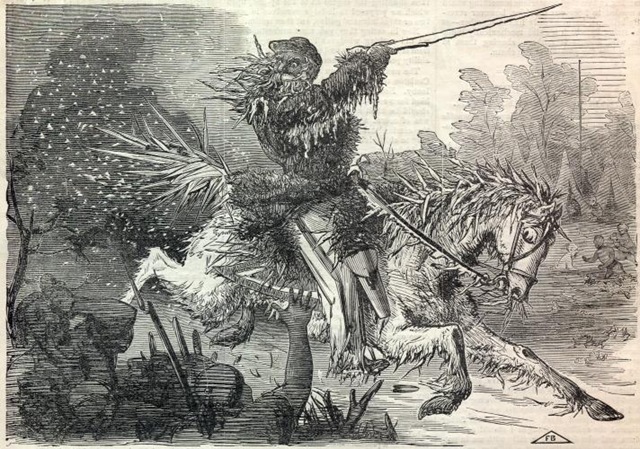
19th-century-jack-frost-cartoon


That’s what the weather man calls it. Personally I like my drizzle lukewarm but there doesn’t seem to be a menu option for that. The drizzle is a fact the way a marching band is a fact. There’s not much you can do about it. You just have to absorb it.

What is freezing drizzle? It’s “sleet light”. It’s failed snow. It’s the weather of homesickness and furtive glances and abandoned machines.

I want to walk outside and shout: “Screw You Freezing Drizzle!” How hopeless the enterprise! The marching band is playing Broadway favorites. Its halftime in a very boring football game. The Marching Drizzlers can’t hear a thing I say.

The Drizzle is a darkling phenomenologist. It says there is no “I” contingent with the self; it says that reality is naked and shapeless. Face it, its a boring professor.

It’s a pain in the ass.

**

I appear to be decidedly “not” in a holiday mood. Capitalism has killed my seasonal sentiments. I’m despising Xmas music. I’m feeling like Sid Vicious. All I want to do is play a Sex Pistols record backwards and snarl in the crown of a freezing tree.

**

What’s wrong with me? Why did I laugh yesterday when I heard that Macy’s escalator caught fire in New York?

**

Drizzle laughs at our dreams of salvation.

Drizzle waves the blown trees in the gypsy’s faces.

Drizzle gets inside us, like a dark membrane.

Sound of grind stones, sound of broken windows.

**

O the alter procession of the drizzle. Its sad boats filled with dried flowers…

**

Save your chestnuts on the open fire and Jack Frost nipping at your noses. I’ve got the king of drizzle here. He sings of the abyss and of people lost. He doesn’t have a recording contract…

He is real and he says that he’d cold cock Santa Claus if he gets in the way…


S.K. 

Of Dumbo and Ganesh

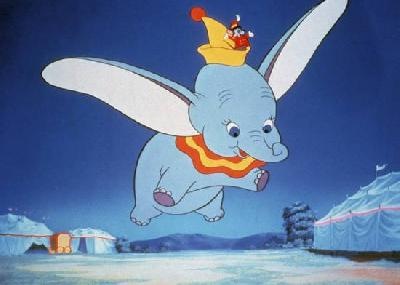
Dumbo the Flying Elephant ganesh


A Swedish poet I know once said that dogs know more about darkness than we do and I thought that was true for I was twenty something when I heard the remark and when you’re young and you hear something symbolic you tend to think you’ve heard truth. Dogs of course don’t care at all about darkness–they’re not delicate creatures, which is why their noses are machines of insubordinate, cognitive persistence. Dogs don’t give a rat’s ass about darkness and they don’t care about manners. This is why I like them.

I blame urban life for making people sentimental about animals and that’s a big story and there’s not time today to delve into the matter but I’ll argue that only city dwellers will go to a movie about anthropomorphized talking deer and only city dwellers will think that a flying elephant with ears for wings is worth paying to watch.

A friend in California called me the other night while he was out for a walk. He reported a Disney Dumbo was all lit up in someone’s yard. I was immediately irascible. “If only it was Ganesh” I said, and then I went into a riff about why India is beating the snot out of America in economic terms–“they have Ganesh, we have Dumbo,” I snarled.

This lead to a debate of sorts. Ganesh is both nurturing and tricky, has pockets of deception. Dumbo is just nice. People in India don’t have to pretend they’re nice all the time. Americans are stuck with this hopeless imperial sentimentality about themselves. The rest of the world thinks we’re stupid.

Then my friend said: “But Dumbo has a soul, man. He has a soul.”

That stopped my pepper pot tirade. I had to admit that my pal had me there. Dumbo is all loyalty, decency, steadfastness, and compensatory heart, for indeed all the other creatures make fun of his ears. I realized then that Dumbo is a “super crip”–a disabled person who overachieves. He’s a sort of beneficent victim.

And so of course Dumbo is a perfect holiday ornament. Why the hell not?     

Let us proclaim the mystery of faith.


S.K. 

The Laws of Thought

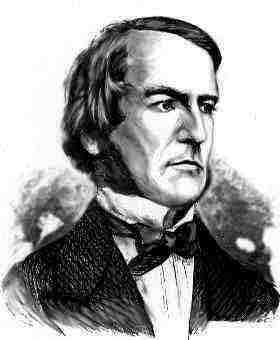
Image of George Boole


George Boole’s book concerning the laws of thought was published in 1844 and many have observed that the first inklings of the computer are to be found within its pages. In essence Boole observed that in algebraic terms every set has something in common with “the empty set”–a neat, paratactic formalism that later became known as “Boolean Algebra”.

I remember taking a course on Boolean Algebra as a college sophomore and in that same semester I read and re-read James Joyce’s novel Finnegans Wake and somewhere in the midst of that concantenation of steam and mechanics I rose up and stopped being an indifferent youth. I saw that James Joyce was the counter-punch to Boole’s idea and I sensed that Boole’s thinking, if reduced to a social value, represented a narrowing of symbolic values–what I would later understand as the birth of statistics and the associated insurance industries and government sanctioned intelligence tests and so forth.

When you’re 19 years old and wildly myopic and you’ve discovered that the ticking relays of Big Brother are traceable to the prior century you look for people with whom you can talk about the matter. I found a guy I’ll call “Lars” because he looked like a Swede, tall, pale, vaguely blond, always wearing a shabby, wool overcoat. Lars liked to talk about ideas so we’d drink coffee and carry on until the small hours of the morning discussing the 19 century intersections of industrial and social institutions and the emergence of writers like Baudelaire and Whitman. I loved talking about ideas so much that I didn’t notice that Lars was a malcontent. He was actually a kind of Nazi. He had German war trinkets in his dorm room and he even had a Luger in his desk. This was sufficiently disturbing to me that I began to avoid old Lars outside of the classes we took together. I saw that disliking the associated modern industrial applications of statistics in the development of a social order was not the same thing as a fidelity to reactionary nihilism. George Boole indeed! George Boole with his empty set balancing a proposition–dogs and men both experience fear. Dogs and men know no fear at all. And all those ticking relays.

1844 was the year in which Samuel Morse sent the first electrical telegram from the U.S. Capitol to a district railway office in Baltimore, Maryland saying “What Hath God Wrought?” Tick tick tick with the relays.

1844 was the year in which Friedrich Engels and Karl Marx met for the first time in Paris.

In 1844 Gustav Erik Pasch invents the safety match. Charles Goodyear vulcanized rubber. Britain produces three million tons of iron.

All the seeds of world war one are planted.

And Friedrich Nietzsche was born that year.

Tick tick tick go the relays.

And so reading George Boole was a bit like sitting on the dark side of a railroad car. I decided to change my seat. Avoid Lars. Read books. Read books.


S.K.