Brava, Senator Mikulski

We have today received the following press release:


SENATOR MIKULSKI INTRODUCES BILL TO STRIKE TERMS “MENTAL RETARDATION” AND “MENTALLY RETARDED” FROM FEDERAL LAWBOOKS
“Rosa’s Law” honors young girl whose brother said, “… what you call people is how you treat them.

WASHINGTON, D.C. U.S. Senator Barbara A. Mikulski today introduced “Rosa’s Law,” a bill that will eliminate the terms “mental retardation” and “mentally retarded” from the federal law books. U.S. Senator Michael B. Enzi (R-Wyo.), Ranking Member of the Health, Education, Labor and Pensions Committee, is the Republican sponsor of the bill.

Under Rosa’s Law, those terms would be replaced with “intellectual disability” and “individual with an intellectual disability” in federal education, health and labor law. The bill does not expand or diminish services, rights or educational opportunities. It simply makes the federal law language consistent with that used by the Centers for Disease Control, the World Health Organization and the President of the United States, through his Committee on Individuals with Intellectual Disabilities.

Rosa’s Law replicates a law recently adopted in Maryland. Senator Mikulski first heard about the state law from Rosa’s mother during a roundtable discussion about special education held in Edgewater, Maryland. Due to requirements in the Individuals with Disabilities Education Act (IDEA), each student who receives special education services at public schools has an individualized education program (IEP) that describes the student’s disability and the special education and services that child will receive. Rosa has an intellectual disability – Downs Syndrome – and so was designated as a student with “mental retardation” in her IEP, giving way to people at the school referring to Rosa as retarded. Senator Mikulski promised Rosa’s mother that if the bill became law in Maryland, she would take it to the floor of the United States Senate.

“This bill is driven by a passion for social justice and compassion for the human condition,” said Senator Mikulski, a senior member of the HELP Committee. “We’ve done a lot to come out of the dark ages of institutionalization and exclusion when it comes to people with intellectual disabilities. I urge my colleagues to join me to take a step further. The disability community deserves it. Rosa deserves it.”

“Mental retardation” and “mentally retarded” are terms commonly used in federal laws, including the Individual With Disabilities Education Act, the Higher Education Act, the Elementary and Secondary Education Act, also known as No Child Left Behind, and the Rehabilitation Act of 1973.

“We know now that words have meaning, sometimes far beyond what we intend,” added Senator Enzi.  “Therefore, we must be very careful about the way we describe the people we see every day, including those with disabilities, or those who are undergoing treatment for a variety of health issues.  Unfortunately, the federal government has not dropped this term from our laws and it still appears in the regulations and statutes that come before our legislative bodies and our courts. I am pleased to have this opportunity to join my colleague from Maryland, Senator Mikulski, in introducing Rosa’s law.  I would like to thank her for her leadership and her commitment on this issue.  Simply put, this legislation will make an important change in the words we use to refer to those with intellectual disabilities.  It is a much needed change in the law that is fully deserving of our support.”

When Rosa’s Law was being considered by the Maryland General Assembly, Rosa’s 13-year-old brother, Nick, successfully testified on her behalf for a substitution of mentally retarded with intellectual disability. He explained, “Some people say they are just words, and it’s not going to make a difference if we just change the words. Some say we shouldn’t worry about the words, just the way we treat people. But when you think about it, what you call people is how you treat them! If we change the words, maybe it’ll be the start of a new attitude towards people with intellectual disabilities. They deserve it.”

“Senator Mikulski’s bill is a most welcome and necessary step in ending the pervasive discrimination against the 7 million people living with intellectual disabilities in this country,” stated Peter V. Berns, the Chief Executive Officer of The Arc of the U.S. “With federal adoption of the term ‘intellectual disability’ perhaps our society and others will begin to understand the legitimacy of the condition and treat those living with it in a more respectful fashion.”

The Arc is the world’s largest community based organization of and for people with intellectual and developmental disabilities. It provides an array of services and support for families and individuals and includes over 140,000 members affiliated through more than 780 state and local chapters across the nation. The Arc is devoted to promoting and improving supports and services for all people with intellectual and developmental disabilities.

Rosa’s Law has garnered support from six additional cosponsors from both sides of the aisle, Senator Sherrod Brown (D-Ohio), Senator Benjamin L. Cardin (D-Md.), Senator Lamar Alexander (R- Tenn.), Senator John Barrasso (R-Wyo.), Senator Richard Burr (R-N.C.), Senator Judd Gregg (R-N.H.), Senator Tom Harkin (D-Iowa), and Senator John Thune (R-S.D.), as well as more than 30 national organizations to date: http://mikulski.senate.gov/_pdfs/Press/Organizations.pdf.

A copy of the Dear Colleague letter circulated by Senators Mikulski and Enzi is available here: http://mikulski.senate.gov/_pdfs/Press/RosasLawDearColleageLetter.pdf.

Senator Mikulski’s full floor statement is here: http://mikulski.senate.gov/Newsroom/PressReleases/record.cfm?id=319975.


11/24/2009
CONTACT
Rachel MacKnight (Mikulski)
202-228-1122
Steve Wymer (Enzi)
202-224-3193


S.K.

While Administrators Slept, An Alum Noticed


From The Inclusion Daily Express:


Capital Alumnus Demands ADA Compliance
(The Capital Chimes)
November 23, 2009
COLUMBUS, OHIO– [Excerpt] While much of the University focuses on Thanksgiving break and final exams approaching, one man is focusing on making campus a more accessible place.

About two months ago, 1970 Capital alumnus Robert Lortz began to contact various members of the administration regarding the accessibility of campus.

The issue arose in February, when Lortz attended an economics conference, where a reception in Schumacher Gallery was held.

“I immediately noticed the inaccessibility in the Blackmore Library,” Lortz said. “Soon after, I made a call to the alumni association, and began writing to the President’s office and the Provost’s office.”

Lortz also has multiple technical issues with the University, mainly from the 1992 Americans with Disabilities Act (ADA).

Entire article:
‘Hoppin’ mad’ alumnus demands ADA compliance

http://www.InclusionDaily.com/news/2009/red/1120a.htm

[Editor’s note: The Americans with Disabilities Act was signed into law in July 1990, not 1992.]

Shhh. Its Early

222_Steve_Nira


It is too early for the field mice who live under my garage to have noticed us. And it’s too early for the day’s miscast personnel, nattering hooligans, half-assed bureaucrats and self-serving politicians to have discovered that we’re about. At present only the machinery of the house, the steam pipes and weight bearing joists know of our existence. And the loyal dog. The dog has noticed. She has awakened with the sure knowledge that her people are fair wondrous without a speck of clotted evil in their souls. And just now I like to think my dog is right. I’m a pretty good guy. It’s too early in the day to consider the ironies and all the darkling confoundments of the super-ego. Let us stay quiet just ten minutes longer. Let’s be quiet together.


S.K. 

The Stupefaction of Values

In his op-ed column concerning health care reform in today’s New York Times David Brooks writes:


“The bottom line is that we face a brutal choice.

Reform would make us a more decent society, but also a less vibrant one. It would ease the anxiety of millions at the cost of future growth. It would heal a wound in the social fabric while piling another expensive and untouchable promise on top of the many such promises we’ve already made. America would be a less youthful, ragged and unforgiving nation, and a more middle-aged, civilized and sedate one.

We all have to decide what we want at this moment in history, vitality or security. We can debate this or that provision, but where we come down will depend on that moral preference. Don’t get stupefied by technical details. This debate is about values.”


I love it when conservatives employ national metaphors for their clumsy hands are inevitably all over the place, like men who have awakened in a pit of fire ants. Brooks believes that America will pay so much for health care that we will become a less youthful and vital nation. Presumably he thinks we are still, in economic terms a strapping youngster of a nation state–a Paul Bunyon-like state roaming the hills in search of the Whisky Rebellion. As usual I have no idea what Brooks is talking about save that by metaphorizing America into a neo-Victorian “either-or” sequence of metaphors he manages to delude himself and perhaps more than a few readers (who knows?) that the United States is still a capitalistic rough and tumble “kid” among nations–a rascally, lucre attaining greenhorn who must be freed of pesky social concerns. This is the Victorian hand: reform of any kind will make for a less vigorous state, for the state is solely conceived as a sequence of statistics, all devised to promote the acquisition of capital.

Let us leave aside the metaphor of the body politic and its figuration of prospective wealth. One may be stupefied as Mr. Brooks puts it, for he imagines the moral debate in terms of making a decision about the health of American capitalism versus the business of looking after the health of our citizens. Always this canard from the conservatives. Always this idea that investing in the decency of the nation will cost us so dearly we will be ruined. Always a red herring. Always wrong. Always.


S.K.  

Susan Boyle's Story is Our Story Too

From The Inclusion Daily Express:


Susan Boyle Talks About Intellectual Disability And School Bullying
(The Mirror)
November 18, 2009
LONDON, ENGLAND– [Excerpt] Tormented singer Susan Boyle has revealed for the first time how she was beaten and bullied as a child.

The Britain’s Got Talent star says she was lashed with a belt every day by brutal teachers and cruelly taunted by other kids.

The singing sensation spoke out about her traumatic upbringing in her first interview since finishing her debut album, I Dreamed A Dream.

The LP comes out next week and is already the most pre-ordered of all time, with worldwide sales thought to be well in excess of 100,000.

“I was often left behind at school because of one thing or another. I was a slow learner.”

“I’m just I’m a wee bit slower at picking things up than other people. So you get left behind in a system that just wants to rush on, you know?”

She added: “There was discipline for the sake of discipline back then. But it’s all very different now. I think teachers are taught to understand children with learning disabilities a lot better.”

Entire article:
Susan Boyle: I was beaten every day, reveals Britain’s Got Talent star

http://www.InclusionDaily.com/news/2009/red/1118d.htm

In Motion and at Rest

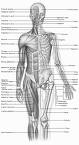
medical image of human body


By Andrea Scarpino

Los Angeles


Zac and I went to Cirque du Soleil last week. Three women contortionists molded their bodies into impossible forms, stood on top of one another’s stomach and thighs, pulled their heads between their legs and flipped. Tumblers were thrown crazy high into the air, walked on stilts and still managed back flips and somersaults without even a wobble. Dancers swung each other around the stage, held each other upside down. Movement. Fluidity. The body can do amazing things, can demonstrate amazing strength and agility. And it can break.

For almost seven years, I couldn’t walk without pain because of a condition now called Complex Regional Pain Syndrome. I like the word “complex”—that’s exactly how it felt. Pain in my foot wouldn’t go away even though I had no injury, no reason to wrap my foot in a cast or have surgery. Just aching pain. From the beginning of fifth grade, I couldn’t play sports or attend gym class. Home from school in the afternoons, I cried. My body was wrought. The doctors didn’t know what to do. My mother didn’t know what to do.

I had my last pain treatment my second year of college. I don’t know why the pain went away. I don’t know why it hasn’t come back. Even though I’ve been able to walk without pain for more than a decade, can do yoga and run and jump around, my body still often feels wrought. Feels like a place that could turn on me again without notice, without reason or provocation. Feels like a place of fear.

That fear is hard to imagine for people who have never lived with pain. The concessions and alterations of your plans, the negotiations of what can be accomplished given a particular day’s level of comfort. This week, I began training for my second LA Marathon. The route is new this year, starting at Dodger Stadium and ending at the Pacific Ocean. I want to be able to finish strong. I want to feel my body carry me, feel as confident as those Cirque du Soleil performers who trust every muscle to do what they want it to do. I like to imagine the strength of those acrobats, feeling that strength and confidence in my own body. I like to imagine being ready to throw myself into the air at a moment’s notice, imagine knowing my body won’t fail. Knowing I can catch myself if I start to waver.


Andrea Scarpino is the west coast Bureau Chief of POTB. You can visit her at:

www.andreascarpino.com

Mind Your Language or I'll Have to Satirize You


The following excerpted article comes to us via the Inclusion Daily Express and it puts me in mind of a couple of things. Years ago when I was a blind kid on the playground I often got bullied. That’s hardly a singular story and heck I’ve even written about it in my first memoir which bears the same name as this blog. I was the kind of kid who had the gift of gab. I know where that came from: both my parents were funny, smart, inveterate story tellers and they certainly gave me their love of language. Just so, when a bully went after me on the swing set I’d tell him what a hairy homunculus he was. And of course other kids would laugh. Years later when I was in college I discovered the delightful fact that ancient Welsh poets used to satirize people, a matter that gained them considerable power at court. These are just some morning thoughts before I head into the hurly-burly day with all its homunculi, hairy or otherwise.

S.K.


Mind Your Language: Words Can Cause Terrible Damage
(Independent)
November 17, 2009
LONDON, ENGLAND– [Excerpt] Racism was rife in the playgrounds of my youth. It seems incredible looking back, but if someone would not share their sweets or lend a few pennies to a friend in need of crisps, they might be mocked as “Jews”. Or even “Yids”. Sometimes, children would go so far as to rub their noses in a “Shylock” gesture to emphasise the point.

It must have been hellish for the handful of Jewish pupils. Thankfully, as we grew older and began to learn the brutal history of anti-Semitism, the taunts dried up. Today, such behaviour is stamped upon. A lexicon of loathsome words has been driven underground as we make faltering steps forward towards a more tolerant society.

So why is it acceptable against people with disabilities? When did they become such a forgotten minority that they ceased to matter in the battle against bigotry? A group so exiled still from mainstream society that it has become acceptable to fling around hateful words such as “retard” and “spazz” without a murmur of disquiet. Not just in the playground, where these words and many more like them are commonplace, but online, in the office, in the home and in Hollywood.

Entire article:
Mind your language: words can cause terrible damage

http://www.InclusionDaily.com/news/2009/red/1117d.htm

Droid?


Some questions, early morning:


Will your mobile phone assure that you’ll be better at dealing with life’s ironies?

“Look! They only have a third of the lifeboats necessary!”

“No problem. My Droid is acquainted with the night!”

Will your mobile phone provide you with a moral center when life’s ironies make finding your morality a bit tricky?

“No! My Droid sez we shouldn’t bomb children and call it collateral damage!” 


Etc.


S.K.

Disability, Poetry, and Local Despair

antique wheelchair


It is a commonplace in academic circles, or more specifically in university English departments to assume that poetry is just the tonic if your life is gray. Now let us be clear and say that for “gray” the professors mean a conventional life. And by this they mean something less clear though seeing as how “conventional life” is a metaphor one can look to T.S. Eliot’s poem “The Wasteland” and see that conventional life is mercantile, filled with spiritual doubt, urbanized, and flooded with bad weather.

Accordingly the English departments believe if you read poetry deeply, and Lo! should you deign to write poetry you will be acquainted with the twin perils of modern sentience and a deep, collective psychological distress–a dual acquaintanceship for which poetry is not quite the solution but it’s the best you can get.

Poetry is the blues and the study of poetry is much ado about the blues.

Charles Baudelaire struck the tone by the mid 19th century by addressing death:


“Verse-nous ton poison pour qu’il nous reconforte!

Nous voulons, tant ce feu nous brule le cerveau,

Plonger au fond du gouffre, Enfer ou Ciel, qu’importe?

Au fond de l’Inconnu pour trouver du nouveau!”

Here is a translation by Richard Howard:


“Pour us your poison, let us be comforted!

Once we have burned our brains out, we can plunge

to Hell or Heaven–any abyss will do–

deep in the Unknown to find the new!


One needn’t be a student of theology to sense the odd combination of anguish, fear and delight that marks Baudelaire’s tone. Modern poetry embraces the relativism of despair, a position tied to novelty–the poet tells the reader to keep moving, keep dancing, anywhere is better than here. The 20th century Swedish poet Gunnar Ekelof puts the matter this way:


“Vad jag menar

vad jag vill

ar nagonting annat

alltid nagonting annat–“


“What I mean

What I want

is something else

always something else–“

(translated by Leonard Nathan and James Larson)


One can go to the library and pull at random books of poems from the shelves and find endless variations of these two quoted passages for after the 19th century poetry is about what I’m going to call “the phenomenological death bed”–that is, mentation, the life of the mind becomes after the industrial revolution a metaphor of death or illness. While all poetry from the beginning of song has contended with death and dying the difference is that modern poetry suggests that to stray from hopelessness is to display a naive innocence. Despair is experience itself, one need imagine no further.   

**

If modern poetry says the life of the mind is immobilized by despair then it follows naturally that the body must become a figure of exhaustion and of paralysis. Corporality is reduced to imprisonment. In a famous poem by the great 20th century Peruvian poet Cesar Vallejo we see the figure of a tarantula that has been badly injured, the halves of its body wrapped around a sharp stone. The poet watches the poor creature with great intensity and writes:


“Con tantos pies la pobre, y aun no puede

resolverse. Y al verla

atonita en tal trance,

hoy me ha dado que pena esa viajera.”


“With so many feet, the poor thing, and still it cannot

solve it! And seeing it

confused and in such great danger,

what a strange pain that traveler has given me today!”


(translated by Robert Bly)


In short, paralysis and the mind are one.  This is a modernist idea. I’m arguing that this figuration does not exist prior to the 19th century. It is no coincidence that disability becomes a profound social and economic problem at precisely the same moment that the modernist poets conceive of mental life as entrapment. By the 20th century the body is entirely a figure of despair. And since as any English department will tell you, figure leads to figure. The body as prison is merely a figure for an eternity of meaninglessness. In a poem by the contemporary American poet Thomas Lux (a poet I admire) we see the post-mortem body offered the appetites of eternity:


“–your non-body gorging

all it ever wanted on earth,

all it ever wanted on earth,

now never hungry,

never sated.”

Just as figure leads to figure, figuration, the metaphorical application of the things blows backwards into the mind: we are bodily without signs of the body’s meaning or the body’s hope. I believe along with Lennard Davis (one of the leading figures in the field of disability studies) that the 19th century created the social narrative of normalcy. This movement toward the veneration of normal height, weight, intelligence, physical appearance, and physical capacity happens as the industrial revolution creates newly powerful nation states. This normative body as ideal body occurs almost overnight in human affairs.

Just so, we can argue (as Davis does) that the impaired body becomes both an economic and aesthetic problem with the advent of the industrial revolution.

What’s interesting is that the body, the broken one, the paralyzed one, becomes the figurative repository of middle class alienation in what is essentially a simultaneous move. Real disability is erased by a newer symbolic one, one that has nothing to do with the ordinary failure of lenses and nerves but is emblematic of spiritual failure in the age of normative economies.

The normal man, not liking his tea and his spoons and rather depressed about it is figuratively impaired.

Now if you go across town to the local school board you will hear parents and school administrators talking, however inelegantly and haphazardly about why their children should not be normal. By this they mean “above the mean” for the collective thinking is all about the 19th century bell curve (as Davis has pointed out rather deftly.)   

The harm in all of this is that children with special needs are figuratively emblematic of spiritual failure in the age of normative economies. The same parents who want extra programs and services for their exceptional children will often argue against tax dollars for exceptional special education. Why? Because the social narrative of normalcy and even our poetry tell us that being broken is simply a matter of spirit. And if you go across town to the university English department you might well hear the same thing, offered a bit differently, but akin in purpose, figuration being what it is. Doesn’t that ailing body represent the modern mind in its collective fatigue? Do not our poets tell us that the seal of despair is a matter of our very bodies? And surely, trapped as we are in this fly to amber figuration of normative metaphor, surely we still must cheer for all who are exceptional at the expense of–well, you know. Of course we oughtn’t say so.


S.K.      


The Ballad of Mr. K


Mr. K was mostly nice

When he walked about his town,

He gave pennies to the beggar

And saluted the nuns.


Of virtue he’d the Times,

For solace a penny dreadful,

Mid-life he didn’t ask for much–

Avoided being hurtful.


Two or more angels bothered him–

He didn’t know how many–

That’s the way of it when you’re dull;

The noggin wants its symphony–  


False notes and prayers and tricks.

“Try to sing it,” he thought. “Sing!”

A metaphysics of life after life

In the age of global warming.


He sang like an orphan all alone,

He sang like a tired gypsy.

He sang with milk and iodine,

He sang ’til he was tipsy.


Mr. K was mostly nice

Even when he had the blues.

He told the angels in his head

Armageddon’s for the brutes.


He sang like an orphan all alone,

He sang like a tired gypsy.

He sang with milk and iodine,

He sang ’til he was tipsy.


He told the angels in his head

Armageddon’s for the brutes.


S.K.