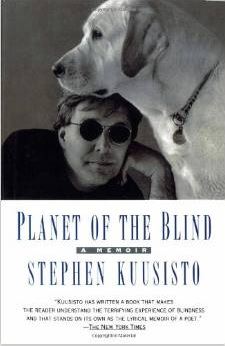
Review: “Patient H.M. A Story of Memory, Madness, and Family Secrets”

Stephen Kuusisto

Book Review:

Patient H.M. A Story of Memory, Madness, and Family Secrets

Luke Dittrich

Random House

While recently rereading Stigma: Notes on the Management of Spoiled Identity by Erving Goffman I was reminded of George Santayana’s observation that “sanity is a madness put to good uses.” Writers who seriously engage with mental illness or disability must necessarily aim for a forthrightness that’s unnecessary for “kiss and tell” biographies. (There’s no pensive candor in The Diana Chronicles by Tina Brown.) Goffman details the circumstances of outliers and with strict passion. Defectives are among us. What does their presence say about the limits of social tolerance and the unspoken rules of normalizing engagement? Goffman notes:

“The attitudes we normals have toward a person with a stigma, and the actions we take in regard to him, are well known, since these responses are what benevolent social action is designed to soften and ameliorate. By definition, of course, we believe the person with a stigma is not quite human. On this assumption we exercise varieties of discrimination, through which we effectively, if often unthinkingly, reduce his life chances. We construct a stigma-theory, an ideology to explain his inferiority and account for the danger he represents, sometimes rationalizing an animosity based on other differences, such as those of social class. We use specific stigma terms such as cripple, bastard, moron in our daily discourse as a source of metaphor and imagery, typically without giving thought to the original meaning.”

Luke Dittrich’s book is about varieties of bias and concerns social class, neurology, madness, and oh yes, family secrets. (If Patient H.M. isn’t quite The Diana Chronicles, it will still hold considerable appeal for Oprah.) Dittrich relates the story of Henry Molaison who underwent brain surgery and lost nearly all his capacity for memory and became an invalid. Moreover H.M. as he was known by neurological researchers spent his adult life as the subject of medical inquiry. (Picture a man deprived of recollection spending his days answering questions in a neurology ward.)

The plot thickens as Dittrich’s grandparents are introduced. His grandfather was Molaison’s surgeon one Dr. William Beecher Scoville who Dittrich tells us: “removed some small but important pieces of Henry’s brain.” Set against Molaison’s post-operative life is another dark narrative—Dr. Scoville’s wife, Dittrich’s grandmother, finds herself committed to the “Institute of Living” formerly the “Hartford Retreat for the Insane.” The book gives a paratactic summary of two main victims and many secondary ones as H.M. was a medical experiment, the story a scandal and therefore ripe for a conspiracy of silence. This is a memoir about cover ups; the suborning of honesty and the destruction of desire. Dittrich notes that when Henry loses his memory he becomes asexual:

“The holes my grandfather dug in Henry’s brain caused many deficits, some brutal and stark, some more subtle. Among the things he lost, according to the scientists who studied him, was a capacity for desire. As far as they could tell, in the six decades between his operation and his death he never had a girlfriend, or a boyfriend, never had sex, never even masturbated. The returning strangers who flitted in and out of his life, the movie stars who flickered on his television, he received them all with perfect neutrality, and they left behind neither traces of memory nor pangs of lust.

“The operation,” one of the scientists who studied him concluded, “rendered him asexual.”

This is a book of stigma—hidings—neither brain surgery nor the asylum ameliorates or softens the realities of of abnormality. The story is familiar enough but Dittrich highlights the gradations of repression necessary if disclosures about mental illness are to be contained both within families and institutions. H.M. is poked and prodded for years at the Massachusetts Institute of Technology without informed consent. Mrs. Scoville undergoes a host of brutal therapies (electro-shock, fever inducing baths, hydrotherapy) without any significant communication with her family—a matter that parallels Dr. Scoville’s indifference to H.M.’s suffering. Is it the destruction of desire or it’s absence altogether we’re observing? In the end Dittrich isn’t so sure. He does tell us that H.M. and Mrs. Scoville are much like the syphilis victims at Tuskegee—clear victims of a post-war medical industrial complex that still haunts the disabled today.

Dittrich’s prose is at its best when he’s either reimagining the past or using a journalist’s lens to show how lives can be reduced and squandered by medical and professional indifference. Less compelling are the moments when he buttresses the book with his own backstory—how he climbed ruins in Egypt—came down from the heights possessed of a desire to be a writer. The  memoir is sufficiently compelling without the well written but sophomoric marginalia.
 

On Talking Too Much on Social Media

My wife (who has a Roman shrewdness though she’s more cheerful than Calpurnia) says I’m posting too much political material on Facebook—she fears both for my wits and my reputation. It’s one thing to be known as a gadfly but really quite another to be seen as a pest. She’s right of course and in my better confessional moments I know I’m an annoying person. I tell myself it’s OK as I’m not intentionally vexatious, or I say I’ve good motives and recite them silently—I believe in civil rights for women, people of color, children, refugees, all the disabled, LGBT, religious tolerance, help for veterans, the poor—it’s a long damned list—animal rights, biodiversity. God help me, I’m also an ardent Jungian who thinks our very planet has consciousness.

It’s a firm list. As Cardinal Newman said: “We can believe what we choose. We are answerable for what we choose to believe.” I know my choices well. I’m also of an age when (again quoting Newman): “You must make up your mind to the prospect of sustaining a certain measure of pain and trouble in your passage through life.” Did you know what fights were proper? Did you accept the consequences? Admit you couldn’t be liked by the ablest, the bigot, the homophobe? You accepted the repercussions. There would indeed be a certain measure of pain. We’re answerable for what we choose to believe, whether we’re religiously inclined or atheists. We’re also answerable for the choices we make when it comes to speaking or not speaking. In an age of calculated victimization, when universal human rights are besieged on all sides, not speaking is a choice but one I fear for which I’ll be answerable. You too.

I so firmly believe this that I’m not inclined to self-imposed modes of sufferance, shrugs, distractions.

My wife is correct: I’m quite likely speechifying too much on social media. But I’m driven by the New Testament especially “the Beatitudes”—

“Blessed are the poor in spirit,

for theirs is the kingdom of heaven.

Blessed are they who mourn,

for they shall be comforted.

Blessed are the meek,

for they shall inherit the earth.

Blessed are they who hunger and thirst for righteousness,

for they shall be satisfied.

Blessed are the merciful,

for they shall obtain mercy.

Blessed are the pure of heart,

for they shall see God.

Blessed are the peacemakers,

for they shall be called children of God.

Blessed are they who are persecuted for the sake of righteousness,

for theirs is the kingdom of heaven.”

Gospel of St. Matthew 5:3-10

Cornel West once wrote: “Never forget that justice is what love looks like in public.”

I’ll take disapprobation over silence.


Small Life, Soul Takes Comfort…

It’s a little life we’re after, minnows in a pond, a donkey standing beside a ruined house, oddities of chance, but always with hints of revelation. Most will miss it—the sure knowledge that discovery is small and not altaic. The poet says, “let’s be small together,” and the sweet soul takes some comfort.

Emily Dickinson wrote:

How happy is the little stone

That rambles in the road alone,

And doesn’t care about careers,

And exigencies never fears;

Whose coat of elemental brown

A passing universe put on;

And independent as the sun,

Associates or glows alone,

Fulfilling absolute decree

In casual simplicity.

When the soul’s diary tends to smallness and insignificance it also turns toward aloneness. We were children alone looking into the shallows. We stood at windows and drew our names on the chilled panes. If we were lucky no adult came along to say we were dirtying the glass. There were no exigencies, no arbitrary pressures to absorb or assuage.

A small life is absolute decree. It’s enough. And as the soul knows this, it grieves for the adult who it must accompany; it sorrows; hurts because she’s compelled to go to human resources meetings, endure the social frostbite of grownup politics and all their mordant habituations. How many meetings have I attended where I’ve thought: “there isn’t an ounce of life in this room” and wished I could don the mantle of the universe and fly to independence? Well, too often to count.

A little life. The magnanimity of less and less. Soul says—Once I aspired to tallness like the oak…now it’s magenta seeds I’m after…

Emily Dickinson again: “My best Acquaintances are those/With Whom I spoke no Word”

Small life needs nothing of the tongue or ventriloquism. Finger at a window…


The Bully Next Door

Conventional wisdom holds that bullies of the schoolyard variety grow up to be workplace tyrants. Doubtless some do, but the evidence for a clean bully-path from kindergarten to the board room isn’t terribly compelling. In fact most little bullies grow out of it quite naturally having discovered the advantages of socialization. The ones who don’t become school district superintendents. (Note: when I say school district superintendents I mean the entire dairy industry.) One more tip of the hat to CW: it’s said that bullies are insecure types. I don’t have statistics at hand, but it’s a good guess most are not uncertain or self-conscious since these dynamics require comic irony. Bullies are angry. Grown bullies are still angry. They’ve never had a molting period where their nursery rage finally falls off. (Imagine you could hear such a thing—you’re standing with a loosely affiliated group when you hear a clunk and a common enough looking guy with a man bun says: “Thank God! My toileting anger just dropped!”) Forgive me. It’s no joke, this business of unrepentant intimidators failing to grow up. From hate groups to fraternity parties, from fringe occupiers to vulgar staff meetings one sees the un-remediated and intolerant waving their arms. What interests me, and hence the motive for this disquisition, is when in America did adult bullying become fashionable, or more precisely, when did it again become voguish, for we know slavery and indentured servitude were built on bullying—so much was this the case, Thomas Jefferson’s family was eager to portray him after his death as the nation’s only “kind master.” The United States was founded on industrial scale bullying. Cruelty was always taught by school and plough. But when did it become OK to carry on in the public square as though one’s poorly individuated potty training and sand box bitterness over swiped toys is admissible as a component of civics?

Silly. Of me. I’m disabled; my people were always being locked up just for how they looked or sounded; abused; catcalled; reduced to beggary; shelved; squashed; abandoned; branded. The tragedy of disability stories is consistent with tragedies written large across the American landscape. (And we’re the osmosis minority—we factor into every marginalized group. Native Americans have never had good health care or rehabilitation services; just to try find wheelchair repair in the inner cities.) A “big lock up” depends on the creation of, the ready availability of, bullies. I mean we should be clear. In these United States we’ve consistently had machinery for bully manufacturery, and more insidious is how we learn to shrug it off. In his classic novel Fahrenheit 451 Ray Bradbury wrote:

“Why aren’t you in school? I see you every day wandering around.”

“Oh, they don’t miss me,” she said. “I’m antisocial, they say. I don’t mix. It’s so strange. I’m very social indeed. It all depends on what you mean by social, doesn’t it? Social to me means talking to you about things like this.” She rattled some chestnuts that had fallen off the tree in the front yard. “Or talking about how strange the world is. Being with people is nice. But I don’t think it’s social to get a bunch of people together and then not let them talk, do you? An hour of TV class, an hour of basketball or baseball or running, another hour of transcription history or painting pictures, and more sports, but do you know, we never ask questions, or at least most don’t; they just run the answers at you, bing, bing, bing, and us sitting there for four more hours of film-teacher. That’s not social to me at all. It’s a lot of funnels and lot of water poured down the spout and out the bottom, and them telling us it’s wine when it’s not. They run us so ragged by the end of the day we can’t do anything but go to bed or head for a Fun Park to bully people around, break windowpanes in the Window Smasher place or wreck cars in the Car Wrecker place with the big steel ball. Or go out in the cars and race on the streets, trying to see how close you can get to lampposts, playing ‘chicken’ and ‘knock hubcaps.’ I guess I’m everything they say I am, all right. I haven’t any friends. That’s supposed to prove I’m abnormal. But everyone I know is either shouting or dancing around like wild or beating up one another. Do you notice how people hurt each other nowadays?”

The passage always takes my breath away. The Fun Park! To bully people around! Just picture the damaged kiddies, drunk with ragged enforcements and funneled pedagogy out on a spree. It’s just good clean fun. In fact, bullying is popular entertainment of a certain type. Zan. W. Zack, a young writer who’s written a good deal about coming of age as a gay teen writes: “Bullying builds character like nuclear waste creates superheroes. It’s a rare occurrence and often does much more damage than endowment.” This is superb! We’re best served when we see bullying has no consistent upside even as metaphor. Despite it’s wide spread and accepted narrative place it’s analogous to toxic waste. TW is not much of a plot driver.

**

I’m forced to admit that like many born in America after the Second World War and who grew up in the Sixties I’ve always imagined our nation was making firm social progress. Even when there was plenty of evidence to the contrary I stuck to this. When the ethically moribund presidential campaign of George Herbert Walker Bush was racializing the mom and pop-ism of the white body politic I didn’t see it for what it was. One must believe in aberrations when the times turn poisonous—I honestly thought the Willie Horton commercial was an anomaly. When Barack Obama was elected in 2008 I actually believed it was proof that we were better than Lee Atwater or Karl Rove allowed.

It’s true, we’re not entirely a nation of bigots and twerps. But we’re more accepting of ugly behavior just now than at any time since the fifties. Bullying is increasingly a passable standard, held aloft like a Nazi guidon, bragged about, excused by media, indulged by apparently well off white people. Bullying is sweeping like wildfire, jumping ditches, flashing in schoolyards, workplaces, political rallies, youth hockey leagues, even in churches and non-profit organizations. We may not yet be wholly a country of bullies but we’re tending that way which leads to a question: what happened to reproof? Is admonition dead? It’s tempting to feel this—though harder to defend the claim as the opposite of bullying is disclosure and the smart phone stands, if not as an ideal, a serious corrective.

We have more bullies now. I can’t allow myself to think it’s an anomaly.


Disability, Human Resources, Inclusion, and a Greek Table or Two

Disability, the noun is agentive, connoting a set of facts. The “D” word is never still on the page or slow in the air. One may speak a word like philosophy or zoo with certainty, and yet, ipse dixit, the “D” word differs from these examples as it is a neologism. Moreover, unlike philosophy or the zoo, the “D” word came into existence without spiritual provenance or natural science which means it has fewer possible attributional meanings, less of depth psychology about it. Disability always, from the beginning, meant one couldn’t work. It’s the written or spoken dingus of capitalist suspicion. Disability rights activists must always prove they have value. In a real sense, dis-activists must be philosophically inclined, as must all who care about human rights.

We’re writing and speaking always for our lives. Accordingly I don’t like the word inclusion. The very word suggests one can come in—suggests architecture—come in “here”—be in the room. Few who toss the word around know it comes from the Latin for “shut in” and it originally meant to be confined. It’s a terrible word and represents little of advantage. And yes, “inclusion” has no agency since it’s a tight little word like “track”  or “evaluate”—it’s not a warm word at all. One supposes words have provenance still. You can look them up. I neither believe I’m disabled, nor am I included. I’m certainly never nourished by either word.

Now if you’re a human resources representative or a college administrator you’ll think me daft (without knowing the ableism inherent in the term) as I cling (desperately) to the notion that how we talk about ourselves matters, not merely as a dynamic of respect or correctness but in terms of imagination. Human Resources is a repulsive term. It suggests looting. “We drained that resource alright, and heh heh, nowadays, you can just force the employee out afterwards, when he’s flat as a stingray—and we don’t even have to give him a pocket watch!”

How about “Human Stewardship” or “Advantage?” Nah. Just kidding. After all, as the “D” word tells us, value is ambiguous and conditional.

Which brings me back to “inclusion” which is always conditional. One prefers a word like guarantee—a hyphenated word that means participant, welcomed, maybe even ingrained. I’d rather be fully a part of a table than be a crumb on it’s surface.

Ahem. E.M. Forster (who should have known better) wrote: “The main facts in human life are five: birth, food, sleep, love and death.”

Forster forgot tables. The poor sleep at tables. If they’re lucky they eat at tables, give birth on tables, even die on them among the forks.

The Disabled. Tabled. Never at the right one. The culture table. Heavy. Of massive wood.

If they’re lucky the table fits wheelchairs; provides ample space beneath for guide dogs; there’s a place for your assistant or interpreter.

Mostly never the right one. Infelicitous. Crabbed. In Human Resources Land (a terrible board game) the table is a diminished fact. The profit motive is more important than the table. One writes: “And yet sometimes it is all I can do to stand or sit before a table. Merely arriving almost kills me.”

The table—the first reasonable accommodation. We had to get the food higher than the snouts of dogs. We had to coin the word “sit” both for the dogs and ourselves.

**

A deaf man sits at a table. Beside him is his interpreter. Opposite: two job interviewers.

Job interviewer #1: “If we hire you, what accommodations will you need?”

Deaf man: “It depends on the job you offer me.”

Job interviewer #2: “We’ll get back to you.”

This is the table as portcullis. The table turned on its side.

**

The table I always wanted: a place for the antithetical meal—no dominant cuisine.

Disability is a tableaux, a tabula, a treatment of tables, since the “D” word undermines the furnishings. Here is my Platonic table: shifty but of original form which is to say protean. The gods are always changing shapes.

**

After every meal the Greeks slid their tables under their beds.


Disability, Higher Education, Inclusion, Oh My…

Why is the rhetoric of diversity and inclusion at universities invariably so wooden and dead one would rather succumb to the prolixity of self help manuals? Give me Leo Buscaglia over prose exhorting the building of individual competencies or better, let’s imagine collective talent and free students (and staff) of the corporatized idee fix of the happy happy individual. If we’re to be honest we should admit universities are competitive and structurally opposed to whatever is meant by inclusion. (I like Paolo Freire’s sense of it, grass roots, promoting literacy for all, but on the American campus the term seems to mean—“tag along” as if we’re all going for a nice walk and you’ve been invited, lucky you.)

Lucky you indeed. It’s estimated that almost three quarters of disabled college students fail to graduate. What was it? The food? Must have been the chow. Yes, inclusion stops at the classroom door; stops at the inaccessible website; stops when the disability services office posits there are just a few hoops you have to jump through to get accommodations and you better follow the procedures exactly or your semester will go down the drain faster than your costume jewelry. Structurally speaking disability is to inclusion as mice are to kitchens.

At most universities and colleges disability isn’t included under the rubric of diversity. As a former administrator once said in my presence: “we don’t want people to know we have learning disabled students, it will affect our rankings.”

Talk about “Typhoid Mary”—disability might be catching! But back to the rhetoric. Consider the following, a fairly typical “letter” which a prospective college student must give to a physician in order to receive accommodations on campus:

Please provide the following information under separate cover and on practice letterhead. The authorized release of information is to include but not be limited to the following:

1. Presenting diagnosis(es) utilizing diagnostic categorization or classification of the ICD or DSM IV. Diagnoses should indicate primary, secondary, etc., and significant findings, particularly in respect to presenting problems.

2. Date the examination/assessment/evaluation was performed for the presenting diagnosis, or if following the student for an extended time, date of onset and date of an evaluation of the condition that is recent enough to demonstrate the student’s current level of functioning.

3. Tests, methodology used to determine disability. PLEASE do not send copies of the student’s medical records.

4. Identify the current functional impact on the student’s physical, perceptual and cognitive performance in activities such as mobility, self-care, note taking, laboratory assignment, testing/examinations, housing conditions/arrangements. Is this condition temporary? If temporary, what is the expected length of time to recovery?

5. Describe any treatments, medications, assistive devices/services the student is currently using. Note their effectiveness and any side effects that may impact the student’s physical, perceptual or cognitive performance.

6. Recommendations for accommodations. Explain the relationship between the student’s functional limitations and the recommendations.

7. Credentials (certification, licensure and/or training) of the diagnosing professional(s).

This information is kept confidential except as required by law.

**

Again, the prose above is standard boilerplate. It’s what’s for breakfast. If you have a disability and want to go to college you’ll need to be medicalized and sanitized. This is what passes for accommodation language at matriculation for most university students. Get a doctor or a psychologist to affirm you are indeed disabled—moreover, ask a medical professional to articulate “for you” what you will need in order to succeed in higher education. The falsity of the claim—that a standard MD or Ph.D. knows much about disability and it’s circumstances is nearly laughable but not quite. Inclusion is in the balance. Let’s see your disability certificate kid. Let’s see what it says we “have to” do for you. Do you feel included? What’s that? Not quite? Perhaps you have a bad attitude.

A campus that’s inclusive is accommodating because it’s classrooms, it’s digital domains, it’s syllabi, it’s assignments, it’s library, all are “beyond compliance”—which in turn means no one should need a letter from a doctor or a specialized office with its reliance on “treatments” and “functional impacts” and “cognitive performance” and the like. This language by its very nature is not inclusive nor is it meant to be—it’s designed to weed out students who might be tempted to fake a disability, because lord knows, maybe extra time when taking a test will give certain underachievers an advantage. I know of no other area of diversity where one’s provenance and authenticity must be vetted and confirmed.

BTW, as a blind person I can attest that your average ophthalmologist knows next to nothing about how a person may live and function with a blinding eye condition. Hence question number 6 above is wholly inadmissible.

There is a distemper in higher education where disability is concerned, something that’s out of step with the best thinking in architecture, software, pedagogy, even environmentalism. Meanwhile, if you’re a student or faculty member with a disability you can be excused if you believe that being on campus is like attending a musical where the singers and musicians genuinely dislike you.


Blue Grief, Unforgettable: The Later Poems of Georg Trakl

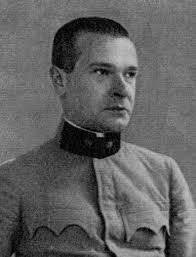
Georg Trakl in military uniform

I have for some time been in possession of a ragged copy of Twenty Poems of George Trakl, translated by James Wright & Robert Bly, published by The Sixties Press in 1961. I bought the book around 1972 when, at 17, I was discovering poetry, though discovering isn’t quite right as I was very ill and close to dying from anorexia, and poignant as it may seem, poetry was showing me a bridge back to life. It was fitting that one lane of that bridge would be Trakl, who saw battle in the first world war, attempted to shoot himself, and wrote Wittgenstein for solace. I remember reading these lines of Trakl’s with amazement:

In Hellbrun


Once more following the blue grief of the evening 

Down the hill, to the springtime fishpond—

As if the shadows of those dead for a long time were

hovering above,

The shadows of church dignitaries, of noble ladies— 

Their flowers bloom so soon, the earnest violets

In the earth at evening, and the clear water washes 

From the blue spring. 

The oaks turn green

In such a ghostly way over the forgotten footsteps

of the dead

The golden clouds over the fishpond. 


Note: this personal essay will shortly become a book review, but not yet. I must describe the 17 year old reader who found these lines—who read them with one functioning eye aided by a magnifying glass, read them in a hospital. The boy was experiencing his own ars moriendi but he knew how to concentrate. Everything was clear to him. Outside his window Boy Scouts raised and lowered the flag mornings and evenings and he thought of how clean and noble they were and he thought of ghost-patients hovering in shadows and the bright cruelty of springtime roses. He thought of the hospital as a palace of sorts with its high court and ceremonies. He was improbably alive in blue April.

Georg Trakl’s work has never left me. In the forty plus years since I first read his poems with their aching precision—with images carrying tone, width, height, shade, blood, majesty, and despair—I’ve read many volumes of his work, necessarily in translation, always marveling at his mastery of immanence—of his abiding sense that souls and gods are invariably present in a fractured universe. These figures are as hopeful or abject as we are, as lost as we are, steeped in griefs as we are. For all his expressionistic and idiomatic imagism, Trakl is perhaps the greatest realist of all, for he feels the wounds of saints and ancestors as well as the living and renders the phenomenology of sorrow in lines that are unforgettable:

Black frost. The ground is hard, the air has a bitter taste. Your stars make unlucky figures.

With a stiff walk, you tramp along the railroad embankment with huge eyes, like a soldier charging a dark machinegun nest. Onward!

Bitter snow and moon.

A red wolf, that an angel is strangling. Your trouser legs rustle, as you walk, like blue ice, and a smile full of suffering and pride petrifies your face, and your forehead is white before the ripe desire of the frost; or else it bends down silently over the doze of the night watchman, slumped down in his wooden shack.

Frost and smoke. A white shirt of stars burns on your clothed shoulders, and the hawk of God strips flesh out of your hard heart.

Oh the stony hill. The cool body, forgotten and silent, is melting away in the silver snow.

Sleep is black. For a long time the ear follows the motion of the stars deep down in the ice.

When you woke, the churchbells were ringing in the town. Out of the door in the east the rose- colored day walked with silver light.


The lines above were translated by Robert Bly and James Wright, two American poets whose own work was influenced by what came to be called “the deep image”—a term meant to describe imagery in poetry that is as improbable and often disturbing as the psyche itself. It’s certain that poets of the 20th century like Trakl or Lorca, just to name two masters of starkly expressionistic verse were concerned with images both from dreams and waking nightmares.

“A red wolf that an angel is strangling.” One thinks of Lorca’s famous “arsenic lobster” falling from the forbidding skies of New York—the human soul, the body, both are petrified before the dead and dying towns and villages of a barbarous century. Lorca again:

In the sky there is nobody asleep.  Nobody, nobody.

Nobody is asleep.

The creatures of the moon sniff and prowl about their cabins.

The living iguanas will come and bite the men who do not dream,

and the man who rushes out with his spirit broken will meet on the

street corner

the unbelievable alligator quiet beneath the tender protest of the

stars.


Nobody is asleep on earth.  Nobody, nobody.

Nobody is asleep.

In a graveyard far off there is a corpse

who has moaned for three years

because of a dry countryside on his knee;

and that boy they buried this morning cried so much

it was necessary to call out the dogs to keep him quiet.


—from “City That Does Not Sleep” translated by Robert Bly


Peacetime never came following World War I. Lorca and Trakl wrote poems with strictures and pins in their hearts. Modernity couldn’t sustain the innocent. In literature the theme may have started with Dostoevsky but in poetry it became a sustained animadversion by the Twenties and Thirties. Nobody sleeps on the earth. The dead cry out. The hawk of God eats even refractory hearts.

Now a new edition of Trakl’s poems has been published by a small press in Syracuse, New York: Selected Late Poems of Georg Trakl, translated by Bob Herz, Nine Mile Press. (Disclosure: I am the co-publisher of Nine Mile Books and Nine Mile Magazine.) In a life as brief as Trakl’s (he died at 27) is it fair to say all his poems were last poems? Perhaps, but in his openhanded introduction Herz makes clear Trakl’s approach to language became phenomenologically resistant to custom—the rhetoric of war—and he embraced, in the hardest possible time, a purifying aesthetic:

Heidegger has a beautiful essay—really a lecture—on Trakl and language in which he talks about the naming and calling functions of the poetry, by which he means that we hear the naming and calling of the poem in our physical space, but the poetry brings the things named and called no nearer to us. What comes near to us is the presence of things in language, a “presence sheltered in absence.”      

Our appreciation of the optic-world is steeper or richer outside of first sensation, a tenet of early phenomenologists.  In Trakl’s poems we feel keenly the meaning or content of experience must be distinct from what we see. In bringing forward Trakl’s late work Bob Herz provides the opportunity for readers to gain a new appreciation for the lyric crisis of early 20th century poetry and what I’ll call for lack of a better description, the reverse-intentionality of Trakl’s poetics. As Herz points out Trakl’s poems exemplify swings of consciousness in which the world is at once achingly clear and simultaneously remote—a moral man must essentially reside in the unaffiliated space of imagination. Things are not what they seem. Things are what they seem.

Herz’s translations are evocative, accurate, and convey Trakl with perfect transparency:


Hohenburg


No one in the house. Autumn in all the rooms;

Moon-bright sonata

& the awakening edge of the twilit forest.


You always imagine the white face of man

Far from the turmoil of time;

Over a dreaming shape tending the green branches,


Cross & evening;

His star embraces with purple arms the one who makes sounds

Climbing up to uninhabited windows.


Thus the stranger trembles in his darkness

& quietly lifts his eyelids over a distant human shape;

There is the silver voice of the wind in the hallway.


You can order Selected Late Poems of Georg Trakl, translated by Bob Herz at:

http://www.ninemile.org/nine-mile-book-series.html

I Can’t Go on Beating Nixon

I grew up in a household of ideas, especially political thought. My father was a US-Soviet Ph.D. from Harvard and through him, even though blind, I read deTocqueville, Thomas Paine, and Trotsky. Some days it’s a wonder I grew up to believe in anything—cant being so serviceable, so slick. By 16 I understood in a familiar way Robert Conquest’s observation: “The behavior of any bureaucratic organization can best be understood by assuming that it is controlled by a secret cabal of its enemies.”

One can get away with a lot in the service of passion. When I was much younger I assumed it was enough (“it” being a political life form) to root against Nixon. Everyone I knew said he was a Fascist, but of course even the Students for a Democratic Society had trouble explaining this view. This kind of self-congratulation was the moral fault of my generation and perhaps it remains so. I think about this as a disabled academic. I’m on the fringe as it were, a blind professor. I’m not necessarily recognized as either competitor or citizen in the struggle for power, and I lament this until again I think of Mr. Conquest’s observation that: “We still find, especially in parts of academe, the damaging notion that everything is a struggle for power, or being empowered, or hegemony, or oppression: and that all competition is a zero-sum game. This is not more than repetition of Lenin’s destructive doctrine. Intellectually, it is reductionism; politically, it is fanaticism.”

Fanaticism is a terrible word. But it derives it’s authenticity as much from cant as from principle.

In a disability context, very few people believe the disabled should be shoveled up and buried (though some surely do) but the words are easy. When I read the so called manifesto of the man who murdered 19 disabled people in Japan last week I thought of how easy his rhetoric was. If everything is a struggle for power than Donald Trump must surely be correct, whoever has the best words wins. The best words are reductionist. In a zero sum game the cripples have to go.

When I was 17 I thought Nixon would disappear and then the world would be clean. Then I read Hiroshima by John Hersey and that was that.

Everything is a struggle for power, perhaps not in the way Conquest came to understand it. But he wasn’t wrong to understand that when human rights are reduced to rhetoric we’re doomed.

“Culture has completed its work when everything is a sign,” wrote William Gass. This is the most terrifying sentence I know.

I’m struggling in this election season, not because Hillary Clinton is a neocon or Trump is a small “f” fascist, but because American politics has no sufficient discourse against the struggle for power—which is to say it’s devoid of ideas. This was not always the case in the United States. Even if you opposed Ronald Reagan (as I surely did) I understood his position on the Soviet Union and the American economy. To have a position, however soppy, is still to believe in democratic opportunity. I give Reagan that. I always have. But now, only Hillary resists reductionism and that to me is a reason to remain awake at night.

I worry about the most vulnerable both at home and abroad. Only Hillary Clinton stands for the dignity of the disabled and the dignity of all those who are not, shall we say, persuaded by resentment of skin pigment.

Late Capitalism. What a headache. Getting rid of Nixon wasn’t remotely enough to manage the cabal of our enemies. Military Industrial Complex indeed.

The Man in the Moon Principle

In a short time I will enter the day, a tunnel looming with telephones and bullets. I live in Syracuse, New York and there are many bullets. But just now I’m  keeping a kernel of faith under my tongue like a pomegranate seed or my first dime from the Tooth Fairy. Disabled, I know the Tooth Fairy is a patron saint—she gives you small change when you lose something from your body. She’s related to the Man in the Moon who’s a cripple, who started out in Scotland gathering sticks (it’s good work for cripples) and did it so well he ended on the moon. If you’re sorrowing, look up, a very old arthritic man still stands up there.

My wife has entered the day ahead of me. She’s running a load of laundry. I can hear the machine making it’s horse cart sounds, clip clop. A water pipe clicks behind a wall. Very soon I too will become practical. I will vacuum dust and dog hair. I’ll read the scurrilous headlines. I will worry about my friends—many of them living on the edge, fearing that in their crippledness, blackness, redness, gayness, their gender, oh it’s a long list, that they will be yet again, today, this very morning once again targets. Christ, send us another Tooth Fairy if you’re not planning to come back. Buddha, drop some pearl teeth on the path this morning where I’ll walk my dogs.

**

Sometimes in the airport, though you’re simply blind, they meet you at the arriving airplane with a wheelchair. All you wanted was a sighted companion to help you find your connecting flight. They insist you sit in the chair. You have a dog. You don’t need the chair. You explain this. It becomes a tangled supra cultural mess. Eventually you have to walk away, going fast with your dog, as guide dogs go fast, just the two of you speeding into the unknowable shopping mall airport because, after all, a third rate sighted companion is no companion at all. And you find your way. It just takes a little longer. The point is, and it’s a Man in the Moon affair, for I believe he picked up sticks and gave them to orphans who took them home—fires are a matter of neighborly spirit, they are the first act of communitarian life—the point, you travel into the tunnel of a day and there are a thousand good samaritans for every doofus. In my personal idiom, I call this The Man in the Moon Principle.