Of Deformity: Homage to Francis Bacon


“Therefore all deformed persons are extreme bold — first, as in their own defence, as being exposed to scorn, but in process of time, by a general habit.”


–Francis Bacon “Of Deformity”


1.


The pregnant emptiness. 


Morning, color of shipwreck. 


Without leaving the present, or the condition prior to entrance, our spine was always curled like a fetus. 


2.


Ignominy, jewels of perdition strung together. 


3.


The eyes are nudists. The eyes have no philosophy but they cry to be entertained. 


4.


Boyhood: all lapsus linguae. 


Even now I keep a mortal house with no inhabitants.


5.


Last night I cracked a window and my hands shook as they often do. The body, the dark, the raising–what? I saw how literalism and futurism are of little value when you’re crooked. 


6.


The broken body is fire. Das Lebend’ge will ich preisen/Das nach Flammentod sich sehnet


Walked the neighborhood, slowly, in the way of the crippled, but I was really in the cave of phantoms–


Playing a part, spiritual body, no singular life


Bones full of warnings


7.


Routine, dismal, bored with gathering. 


A cripple reads too many newspapers. 


8.


Canary on the terrace filled with excess. His narrow throat of destiny.


Of deformity, knowledge is specific, enters the man like seeds.


9.


Incarnation is iconoclasm.  The crooked man throws ashes.


Advances across borders. 


10. 


Desperately rocking like a cart loaded with coal.


That men are pre-formed is beyond dispute, but the method is unknown.


Breasts: A Natural and Unnatural History by Florence Williams

By Andrea Scarpino


Here’s the thing : no one wants to talk about breasts, at least not without giggling or pointing or making jokes. We all seem to adore them—children, women, straight and gay men alike—but when it comes down to actually having a conversation about them, things get pretty wonky pretty quickly. 


I know this as fact. When talking about my now two-decades-long struggle with breast pain, I’ve watched listeners shift uncomfortably in their seats, watched doctors cover their smiles—and worse, laugh heartily without trying to hide their laughter. Even my mother changes the subject pretty quickly. Breasts may be just another body part like arms or legs, stomachs or livers, but they carry so much metaphorical and symbolic weight that we can’t ever seem to understand them as such. 


And here comes a book dedicated to all things breast : their evolutionary history, our fascination with them, their double-identities as baby feeding machines and sites of sexuality, their illnesses, their ability to absorb and store chemicals. Florence Williams can’t escape from breast jokes and giggles, of course, but that may be part of the book’s charm : she knows her subject matter is uncomfortable, and she gives us permission to laugh—I mean, we’re going to anyway. 


As expected, much of Breasts is dedicated to breast cancer, which has grown at a rate that should alarm us. And in that, I learned I’m lucky to have made it this long cancer-free, what with my early onset puberty, extensive exposure to radiation as a child with physical disabilities (x-rays, MRI machines), extensive soy consumption (a vegetarian since my teenage years), extensive exposure to chemical pollutants (in virtue of living on our heavily polluted planet), no pregnancies. 


But much of Breasts also glances sideways at our construction of disease. According to Williams, it was 20th Century surgeons who pathologized small breasts, even developing a term—micromastia— which they likened to a deformity. The same goes for menopause; Williams writes that drug companies invented “a new pathology called menopause in the same way the surgeons had invented one called micromastia.” All the better to sell us implants and hormone replacement drugs! The social construction of illness at its finest! 


And much of the book helps make sense of how complicated our biology really is, how sensitive breasts are to our environment, which helped our species survive (keeping babies alive even through times of famine, for example), but which now, given our high rate of pollution, threatens our survival. As Williams makes clear : as go the breasts, so goes humanity. And breast health isn’t looking very rosy. Inuit women’s breast milk is so toxin-filled it could now “technically qualify as hazardous waste,” more and more men are developing breast cancer and at younger ages, more girls are entering puberty earlier than they ever have before. 


And more and more people are like me—without cancer but still struggling with “unspecified endocrine disorders” and “other signs and symptoms of the breast” (diagnoses from my medical files). Our Earth—we’ve really screwed it over. And in doing so, we’ve screwed over our breasts, our bodies, our future as a species. Or we haven’t—the science linking breast diseases to toxins, Williams makes clear, isn’t as cut-and-dry as we would like it to be. 


Still, there is much to fear from all the toxins we’ve created and pumped into our Earth, all the toxins we pass on to our babies in the womb and through breast milk, all the toxins we eat and drink and breathe. And there’s much to fear, I’ve learned from reading Breasts, in not understanding breasts as well as we should. They’re not just body parts, Williams makes clear, but sentinels. Warnings.
Of Autism, Parenting, and Staring

We at Planet of the Blind love this piece by Laura Shumaker about parenting and autism. Here’s how it opens:


I saw a woman at the gym the other day that I really wanted to avoid.

I used to see her a lot when Matthew was small. It seemed she was always there when he was bolting away from me at the grocery store, the swimming pool, the park. She watched me as I tackled Matthew before he wandered into the street, and while I tried to defuse a big bad meltdown. She was always sitting right behind us in church while Matthew flapped and tapped and giggled. Her pale blue eyes followed us everywhere and her frown was constant.


An Advocate for Students with Disabilities Imagines His Ideal College

Mr. Stromer, a student at the New York City Lab School for Collaborative Studies has cerebral palsy and is one of eight high school seniors  the world blogging about their college searches for The Choice. 

A majority of students with disabilities in New York City public schools do not graduate. I have a responsibility to make the most out of my college process and journey so that I change things in the future and redefine what it means to have a disability.

I am excited to share my journey through the college process with you
http://thechoice.blogs.nytimes.com/2012/09/14/envelope-please-bryan-stromer-1/

On Behalf of the Association for Feminist Anthropology: The Right to Breastfeed


The Association for Feminist Anthropology Executive Board of Elected and Appointed Members, 19 September 2012 Memorandum

The Association for Feminist Anthropology Executive Board consisting of elected and appointed members (the AFA Board) voices its concern for what appears to be a censure of breastfeeding and a lack of recognition of parental needs on academic campuses and in the wider society. Such problems have a long history, but recently were highlighted in the situation of an assistant professor of anthropology at American University who breastfed her baby during a class meeting.

As feminist anthropologists, we contend that: 1) breastfeeding should not be stigmatized or hidden from view, and indeed should be considered a basic human right; 2) breastfeeding is not inherently unprofessional or distracting, and increased recognition of how the demands of infant care, and of breastfeeding in particular, shape the challenges parents face in the workplace is crucial for improving conditions for all families;  3) childcare needs on campuses tend to marginalize and create obstacles to parents of all genders seeking educational and career mobility as students, faculty, and staff;  4) campus needs for childcare, including services to care for sick children, deserve more consideration by institutions, unions, and policymakers.

We urge others to join us in using this incident as a ‘teachable moment’ that fosters critical analysis and education by feminist anthropologists and others, and promotes political mobilization.


The AFA Board is sending this statement out through AFA social media platforms and other outlets, including an EBlast to the entire AFA membership when that format is next available at the beginning of October. For further information, please contact Jane Henrici, Ph.D., President, Association for Feminist Anthropology, afapres@gmail.com


Late September, Afternoon Thoughts


Attention to detail is, to the unconscious, like a starving mule–morsels of the day enhance darker appetites. 


“Please,” says the mule, “hurry with the twilight.” 


When sunset finally comes, the sweet grass of dream feeding gets eaten at last. 


Stuff I think about in meetings. 


Day night, our hooves prancing…


Late September Morning, First Thoughts


The little dog, marking his territory in a neighborhood of big dogs–a bit like academic poetry, but cleaner. 


Leaves in the maple across the street, deciding. 


I want to keep my dignity in the last garden. Wonder if I can do it.


Most reports of famous people’s last words are false. Apparently Oscar Wilde died thirty five times. 


I want to jump into the ocean again.


Here comes the king from last night’s dream, still carrying the cake.


Christopher HItchens, arguing women aren’t funny: there’s such a thing as having too much fun and not enough. 


Freud: “Where Id was, there shall ego be, it is reclamation work, like the draining of the Zuyder Zee.” 


What the little dog knows: meaning is new, or not at all.


Plato’s ideal state requires the abolition of the family, and probably little dogs, and most certainly poetry. What’s left? Oaths and cigars. 


Little dog, here’s a sketch of my heart in its crystal box.


Now, all the combat hardened soldiers of my unconscious are feeding their firebirds.


Coffee. Please. Afterwards I will change into my direct contrary.


Disability and the Man in the Moon

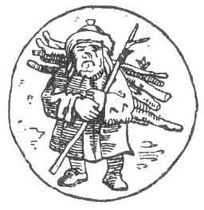
Man in the Moon Carrying a Bundle of Sticks


Few remember today that the man in the moon was sent there for stealing sticks. He is also associated with thorn bushes and in some legends he actually steals thorns. Sometimes when I’m walking alone late at night with my guide dog I think about him, our old probationer standing in the arid climes. I wonder if he got away with a few sticks under his shirt. Additional versions of the tale suggest that his crime wasn’t so much stealing sticks but that he stole them on the sabbath. You see how this goes. Thorns, sticks, theft, holy days–the man in the moon is the story of poverty. In this way its also very likely the story of disability, for who would steal sticks on Sunday but the hunch back, the deaf man, the half blind woman, gathering fire wood when no one is around to watch, to point and make jests. This is hardly an idle supposition. Disability has always been the story of ostracism and this is why the exceptions matter. Meantime, the man in the moon with his cleft palate and his gnarled hands was picking up god’s dropped branches hoping to sell them or, perhaps, host his very own fire. Five, six, pick up sticks. Last night, walking with Nira, her harness jingling, and no one about, I felt deeply affected by my brother on the moon. I stopped on the sidewalk and said a little votive poem for him. Bring your moon near the earth and make men mad. Shine right in our faces friend. In any event, walking in public with my meager eyes shut from fatigue, my excellent dog navigating in the dark, I think of the long history of people like me.       

Ending Violence Against Children with Disabilities

http://srsg.violenceagainstchildren.org/story/2012-09-13_538


WUNRN


SRSG CALLS FOR ENDING VIOLENCE AGAINST CHILDREN WITH DISABILITIES – IMPORTANCE OF SECURE, PROTECTIVE ENVIRONMENT


13/09/2012  – SRSG Santos Pais participated in a roundtable discussion on children with disabilities during the fifth session of the Conference of States Parties to the Convention on the Rights of Persons with Disabilities, alongside with Government representatives, namely Ms. Hendrietta Bogopane-Zulu, Deputy Minister of Women, Children and People with Disabilities of South Africa, UNICEF and civil society representatives.

In her presentation, SRSG Santos Pais stressed the very widespread pattern of violence endured by children with disabilities, acknowledged positive and encouraging progress in preventing and addressing incidents of violence and highlighted strategic recommendations for future action.

Ms. Santos Pais identified five key areas to secure a protective environment for children around the world including investing in early childhood development and education; promoting public awareness, capacity building of professionals working with and for children, enacting in all countries strong legislation to ban all forms of violence against children, including within the home, and universal ratification and effective implementation of core human rights treaties including the Optional Protocol to the Convention on the Rights of the Child on a Communications Procedure, adopted in December 2011 by the General Assembly.

Moreover, SRSG Santos Pais recognized the decisive contribution children and young people can make to this process of change.

“We should work together to put in place the right conditions to enable children with disabilities to participate and act as real partners in our important reflections in future sessions of this  important conference of States Parties.”

________________________________________________________


Message from SRSG on Violence against Children on the International Day of the World’s Indigenous Peoples

09/08/2012 – The past years have been marked by a strengthening of the rights of indigenous peoples, including the rights of indigenous children. Together with other international standards, the Convention on the Rights of the Child and its Optional Protocols remain a crucial reference in this regard. The new third Optional Protocol to the Convention on a Communications Procedure will allow children to bring complaints to the United Nations Committee on the Rights of the Child. With this new instrument children, just like adults, will have an access to international human rights bodies.

The Protocol has a special significance for indigenous children since it strengthens their ability to seek justice in case of violation of their rights, including when incidents of violence take place.

Despite these important developments, the gap between international human rights instruments and their implementation remains wide and challenging. Still too often, indigenous children live in extreme poverty, suffer from poor health and face inequalities in accessing and enjoying education. Moreover, indigenous children are oftennot covered by birth registration efforts. These conditions make them highly vulnerable to violence, abuse and exploitation. Exposure to violence, marginalization and social exclusion erodes their identity and sense of self-esteem and compromises their ability to seek advice and benefit from services of quality.

The United Nations Study on Violence against Children urged all States to promote non-violent values and awareness-raising, and to promote change in attitudes and behaviour that condone violence, perpetuate stereotypes and allow discrimination against children. I see a great potential in indigenous media in promoting the protection of indigenous children from violence; at home, in schools, places where children work, institutions and communities, as well as in our societies at large. Indeed, international instruments have little meaning if children, their families and people working with and for them are not aware of children’s rights and the available means to protect them. Indigenous media can help fill this information gap!

Let’s work together to create a sustainable environment for indigenous media and build a better world for indigenous children!

__,_._,___