A Letter to Boy Blue

In Helsinki, Finland, during my childhood I first understood people can be vicious. I was a small boy and climbing stairs in the old apartment building near the harbor–holding my dad’s hand, climbing, the steps curved like inside a lighthouse, my blindness talking to my feet. You understand–this is an early memory, 1958 most likely. An old woman approached us coming down from above and seeing me said in blue blood Swedish (for she was a member of Finland’s small Swedish speaking minority): “Tsk, Tsk, barna blind…” Tsk, tisk needs no translation, even to a boy. I was a blind child, and there, on that stairwell, in the curving darkness, I received my brand–was branded. My father ignored her by shrugging and we kept climbing.

“Even a minor event in the life of a child is an event of that child’s world and thus a world event.” The words are Gaston Bachelard’s and I’ve puzzled over them for years. My minor event, the naming of my blindness took place in the Scandinavian winter on a dark stairwell and I absorbed some very unrefined ideas about physical difference and human worth–knew them instantly–but how could this ever be a world event? As I see it after all these years dear blue, there are two ways Bachelard can be right. The first is that the old woman’s contempt becomes a cathected and insupportable incitement, the seed of what Carl Jung would call a “complex” thereby draining my life of self-esteem, maybe even stealing my curiosity. The second is this small, nearly infinitesimal occasion turns me to making things. In both scenarios Bachelard is correct. In both cases a child’s world grows upward and outward and influences many people over a lifetime.

One day I wrote a poem about my boyhood incident.

“No Name For It”

Start with a hyphenated word, something Swedish—
Rus-blind; “blind-drunk”; blinda-flacken; “blind-spot”;

Blind-pipa; “non-entity”, “a type of ghost.”
En blind hona hittar ocksa ett korn;

“The fool’s arrow sometimes hits the mark.”
(That’s what the Swedish matron said

When I was a boy climbing stairs.)
She pointed with a cane:

Tsk tsk,
Barna-blind; “blind-child.”

Her tone mixed piety and reproof—pure Strindberg!
It echoed on the stairs, barna-blind—

“Blind from birth”;
En blind hona hittar…

The blind child’s arrow….

**

Dear Blue: I wasn’t really a blind child at all, but one of the ghosts who rang Strindberg’s doorbell. I see this now but only through the poem. Strindberg imagined spirits were ringing his doorbell, saw them in the ambient light at twilit windows–things a blind child would know as facts rather than fancies. So in my private life, I’m a practical joker without doing a thing. I ring the old man’s doorbell with nothing more than a glance. I’ve hidden myself in the bushes. I will leap out when the lights go dark at his windows. I shall invade his solitude by means of the newly invented electric doorbell. I will do all this with nothing more than a glance.

Do you understand, Dear Blue, one night some thirty years ago, I met a drunken man in a bar in Estonia. He was very old. He claimed to have been a childhood prankster who tormented Strindberg. I thought then, and think now, how beautiful and sweetly unclear the facts are. I think how the unconscious works by means of animal faith. We go forward and upward by means of trust and laughter. I’d have tormented the old play write if I’d had a chance. Instead I grew up with a blind child’s arrow, a different trick, for I hit things askance and often produced a slanted music–an effect adagio and almost wrong though the credulous mind embraces it after all. Blue, I like Beethoven’s last string quartets. I like broken windows in abandoned country houses. I like crows on telephone wires and Boolean Algebra and rain in winter. I like whispers. I’ve always liked whispers.

My Boston-Irish Mother and Bill Russell

I’m calling from Heaven my mother’s laugh
As that was the best of her—half wild
It always rushed out
While bigots stood unaware
And bullies swayed half asleep
How she loved Bill Russell—
Johnny Most on the radio
“Get ‘em Bill, get ‘em!”
And then—
“He’s a total fucking genius!”
When he retired
And kept fighting for civil rights
She said: “he’s a total fucking genius!”

Green feathers in memory…

Green feathers in memory—transatlantic shipboard, 1958, old woman’s hat

**

Snow, apple branches, sky gone gray, the neighborhood quiet

**

What’s winter for? To remember ocean going hats…

**

So many dreams vanish at sunrise—this is why I love December darkness

**

“The days are like angels in blue and gold, rising up untouchable above the circle of destruction.”

    —Erich Maria Remarque

      All Quiet on the Western Front

**

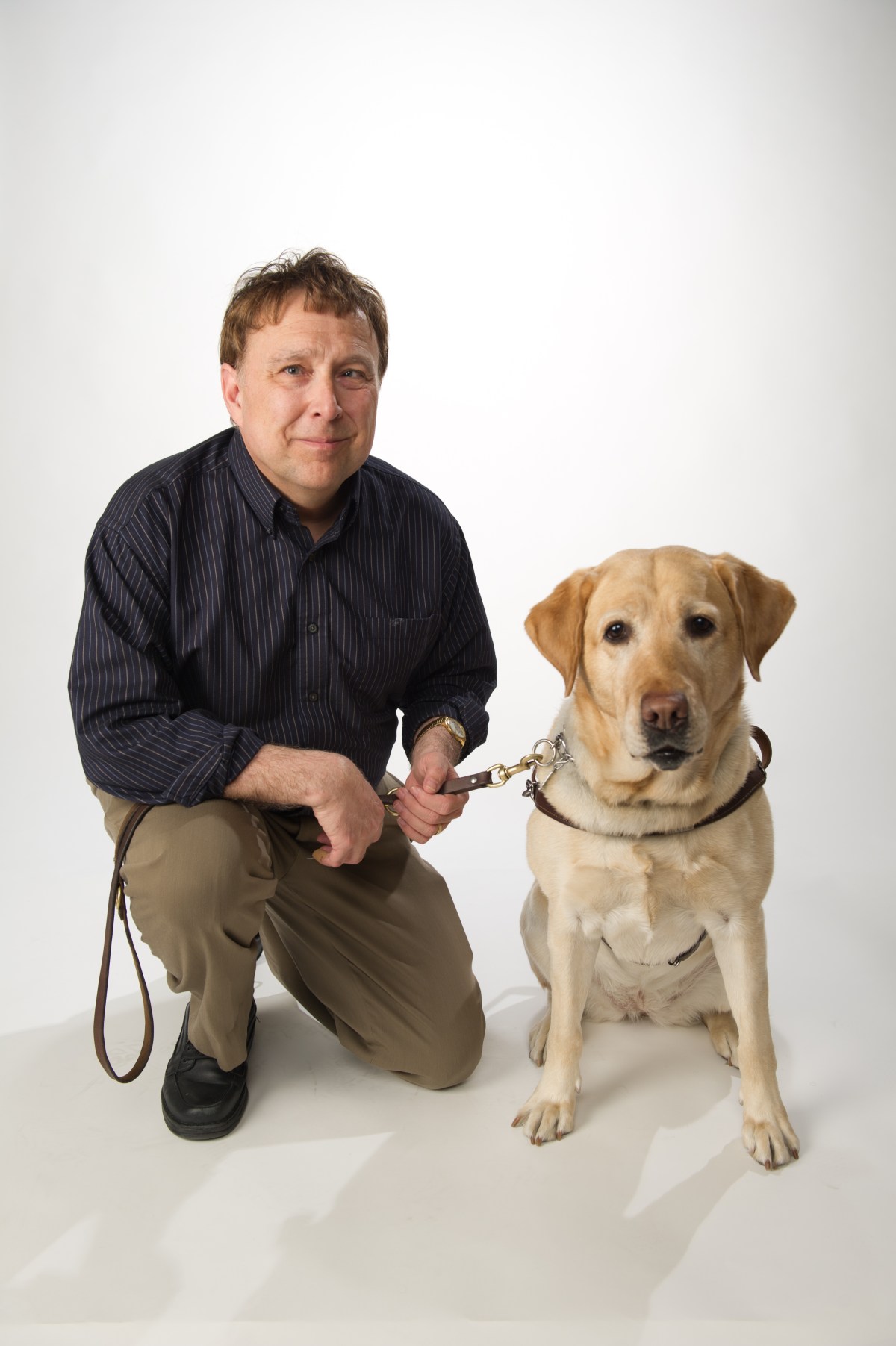
Guide dog Corky Corky stepped into the gondola first. I let her go. Then I stepped down ever so carefully. What a tenderness I felt just then. Man. Dog. Water. Faith. How far we’d traveled for that gentle sway.

**

We floated down the Grand Canal. Our gondolier said we were passing beneath the Rialto Bridge. I hugged my Labrador as we floated under the Ponte della Liberta.

**

I thought: “how much beauty can one man hold?”

We drifted past the Palazzo Grimani di san Luca.

**

I wondered of course what Corky was seeing. I hoped she was watching a bird that flew and flew.

In the end it’s all about motion in the sky.

There was a light surge of waves.

Ableism in the Arts

Ableism is everywhere but it gets a special pass in the arts community. This is because many in the arts believe the apparently broken body has nothing to do with multiculturalism. The disabled are just medical problems.

In fact, when you “talk back” about this you’ll often be labeled as a malcontent. That’s how ableism works. I’ve experienced it multiple times in my life of poetry and advocacy. The Associated Writing Programs conference has for years been a disability horror show, though I’m told it’s getting better. When I brought up their problems with access some twenty years ago I was treated with contempt. OK. It’s what’s for dinner. I’ve gotten very good at spitting it out.

I’ve served as a panelist for the New York State Council on the Arts. I’ve seen organizations, non-profits, looking for money who say they’re not disability accessible but there’s a bathroom next door. I’ve seen poetry groups say their reading venues are not currently accessible to disabled people as if this is OK, as if it’s 1950.

Aren’t those cripples supposed to be in iron lungs somewhere out of sight?

Wheelchair users probably don’t care about poetry anyway. I think I saw a movie about it. I think Tom Cruise might have been in it.

And don’t let yourself think universities are any better. Auditoriums everywhere have steps for the visiting reader. No ramps. Bring this up and once again you’re the malcontent.

I’ll never forget my last visit to The MacDowell Colony where I listened to artists demeaning disability over dinner. One fellow who was working on a project involving queerness in comics announced that as a high school teacher nothing was worse than teaching the special needs students.

When I objected to the ableism, you guessed it, everyone stared at me.

Later in that same residency Michael Chabon gave a speech in which he announced that the MacDowell Colony would never be some “blind” again when considering graphic novel applications. He liked the line so much he said it twice. And there I was, sitting there with my guide dog.

Ableism is rampant among artists.

This is like saying there are crickets in the grass but frankly what’s troubling is the degree to which arts groups continue to willfully leave out the disabled in their activities.

The latest instance I’ve encountered as a group calling itself “The Brooklyn Poets’ which has remodeled a second floor walkup social space on Montagu Street.

I’m certain they had other choices of venue. They chose this space because frankly they liked it.

Disability access is always someone else’s issue in the arts.

Trust me on this. I’m not a malcontent. Nor am I bitter. The disabled however are BIPOC, queer, trans, Asian, African, Indian; they’re your neighbors, your sisters and brothers, your children, and yes, worthy of inclusion and respect. Of course the law says so. But the law is easy to avoid.

If you avoid the ADA you’re really no better than Donald Trump who said “why have Braille” in Trump tower. We all know they won’t be coming in here.

Assertions

Sometimes I need to check into a hotel alone just to weep

**

There was madness in my family but I didn’t know it

**

Laughing at the underprivileged is a sport in the United States

**

Hang it all Robert Browning

**

Talking to the blind horse

**

Churchill, London radio broadcast (1941):

I see advancing upon all this, in hideous onslaught, the Nazi war machine, with its clanking, heel-clicking, dandified Prussian officers, its crafty expert agents, fresh from the cowing and tying down of a dozen countries. I see also the dull, drilled, docile brutish masses of the Hun soldiery, plodding on like a swarm of crawling locusts.

**

Vlad Putin’s head looks like a small pear with two wasp holes for eyes

We told ourselves a story…

    —note to the reader: you can rearrange these lines to                    suit your own taste

We never caught a glimpse of its head
We only saw its tracks
We said it lived in the woods
In truth it went every place
It owned the minutes
Alright anyway etcetera
The young thought it was old
The old said it was young
The fires out in space said nothing
The bleeding pinpoint of here and now said nothing
The winged angel fell into a shabby Parisian courtyard
So much can neither be written nor kept inside
We have such thin wrists; such brittle feelings
Everyone wants this month to hurry
It was a monster alright
Despite what you may hear
It spoke when it wanted to
It was power in circulation

Rethinking Certain Trends in the Lyric Essay

Montaigne: “I have set myself no other end but a private family one’ ”

From the beginning the essay was designed to involve the reader as a Peeping Tom. The question is why? Because Montaigne was writing for literate people who possessed, however incompletely, a newfangled capacity for comic irony. The private family turns out to be unreliable, the furniture is wrong. In other words the reader must supply the larger world.

From the start the essay was built from the premise that there is no ideal reader. There are only readers.

I distrust essayists who, in every line, attempt to typecast their readers. What’s wrong with many “lyric essays” is they presume to enjoin readers to share an arid conspiracy of aestheticism. The reader is no longer trusted to supply the larger world of irony but is inveigled to hop aboard the writer’s sense that literacy is itself problematic.

There. I’ve got that off my chest.

Once, a famous lyric essayist (who has dined out on his prominence regarding same) told me my writing was “too experiential”—said it without irony—really an ableist assumption since disability is often my subject. I trust my readers to recognize that disability is in fact a rich way of knowing. I refuse to tell them what they ought to know; I trust the ironic capacities of my readers—the experiential irony of the crippled body and mind.

When I write lyric “bits” or fragments they are propulsive and inviting for whoever would stray there. The private family furniture is wrong, the people unreliable, and the readers does indeed get to supply the larger world. I like my readers. I know how they suffer too.

Apology

You must understand I’ve broken many things
Life is DNA and accidents
Even my words are busted oars
If I knew what to say
I’d let you know

The snake talks in my ear
Knows which road to take
What to eat, who to trust
Says: equal the tipped loss
Our book lies open in the storm

On Disability and Nostalgia

Nostalgia is almost impossible for people with disabilities. “Oh for the good old days of the iron lung!” “The asylum was grand, especially the little cookies.” My childhood played out before the Americans with Disabilities Act and it was a horror show. I still harbor rancor for a famous professor at the University of Iowa who said if I was blind I shouldn’t be in his class. That happened in 1984. When I complained to the chair of the English department he said I was a “whiner.” You can see why I distrust sentimental longings for the past.

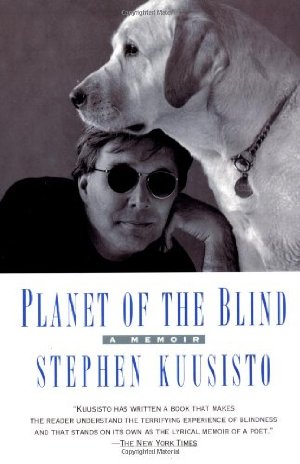
What would disabled nostalgia look like? In my first memoir “Planet of the Blind” I describe an 18th century rural freak show in which a group of French villagers force blind people to play musical instruments they’ve never encountered. They were made to wear oversized paper spectacles. See the hilarious stumbling blind!

Maybe disability nostalgia would be the school for the colored blind in West Virginia; maybe it resides in the vast American electro-shock industry.

If you fast forward you come to today. The Rotenberg school is still in business zapping autistic children to make them behave. Flashback: what sorts of beatings occurred at the schools for colored blind and deaf? Forward again: did you know that only on in four disabled students who start college actually graduates? How can this be in an era of civil rights and good technology? Smells like institutional ableism around the campus fountain.

I liked the film “Crip Camp” because it seemed to me to be the first instance of crippled nostalgia and by god we need to remember the good things. But the film broke my heart because it reminded me of how 80 per cent of the disabled remain unemployed in the US, a number that’s consistent around the world.

Here’s an assertion: today’s disability activists and artists will make nostalgia possible. OK. It’s a wish.