The Black Jimmy Carter


It used to be Bill Clinton was the first black president. I never entirely understood the appellation as Clinton, while still in the throes of a hot primary race for the Democratic nomination back in 1992, “took a powder” and let a profoundly mentally disabled black man be executed in the state of Arkansas—a matter that every decent minded person found rightly appalling.

I first heard the “black Jimmy Carter” business from right wing blogs like townhall.com but now, without using the term the remnant newspaper progressives are lining up to declare President Obama ineffectual. Yesterday’s Frank Rich column in the NY Times is a case study in the art. Rich argues that Obama has lost his compelling narrative; that the campaigner who stood for youth and change has become muddled or muffled somehow and accordingly the president’s popularity is dropping in a calamitous freefall. He points to a score of likeminded prognosticators including Jon Meacham at Newsweek and Ken Auletta at The New Yorker.

What interests me more than the spindrift alarmist game of liberal minded editorialists is the fealty of their opinions, as if Washington or New York “insiders” are (ARE) the nation—and by turn they may declare the supernatural fate of Thebes. They’re all Tieresias and they’re all seeing Jimmy Carter where three roads meet. And what interests me more than pile-on liberal prophesying is that this ought to be necessary at all. (One understands the world of Sophocles and the role of the Sphinx, but really, who needs a sphinx, small “s”?)

When FDR was in the White House he had the unimaginable luxury of a healthy national newspaper industry, and even luckier, a local newspaper industry that still believed in writing about national affairs by contextualizing them in local terms. FDR was merely popular because of his radio chats, he was actively the recipient of a local press that wanted him to succeed.

Since we no longer have a local press to speak of (or where we do, it takes its national news prefabricated from Washington and New York) we can’t root for the president as a people, not in the way our fathers and mothers could when Franklin and Eleanor were fighting “big money” in DC and were, for all their efforts, labeled traitors to their social and political class.

Those of us who have disabilities are generally mindful that Barack Obama has been steadfast and rather brave about insisting that Washington do something progressive—nay, moderately progressive about the human crisis in health care. I still believe that’s worth rooting for and if President Obama has common sense he will go on fighting despite the quisling reportorial and opinion class that’s looking for dolorous gibberish of no consequence.


S.K.

The Angry Feminist

By Andrea Scarpino

Los Angeles


A couple of weeks ago, my friend Chris gave me an Eve Ensler piece called “Fur is Back” about a woman who is angry. Angry at how women are treated around the world, at patriarchy, at American Imperialism. Angry that when you mention the terrible things that go on, you’re not very fun anymore, you ruin the party. You’re just angry. That old stereotype: the angry feminist.

But I was raised with parents who took anger seriously. My father and grandmother once had such a terrific argument that they threw eggplants and tomatoes at each other. My father wasn’t afraid to tell you when he was angry, and while that sometimes scared me or hurt my feelings as a child, the truth is, I learned that anger is healthy to express, that sometimes we need to rage a little bit in order to be honest with one another. That after anger is through, we can come together again, our relationship just as strong. My mother, too, can articulate her anger in great detail, and especially when I was little, used it to fight for me against school systems that weren’t accommodating, against doctors who didn’t take me seriously.

So when conflict arises, I run straight into it, try to figure it out, work through it. And it feels good, that puzzling. Even when it doesn’t. And yet, I think most Americans would prefer not to show anger, would prefer if women especially didn’t show it. Would prefer not to acknowledge it. Which has made me feel very lonely at times—that girl at the party bringing down everyone. Insisting on a movie’s sexism when everyone else just wants to laugh, insisting on looking for problematic undercurrents and bringing them up to everyone’s distaste. As Ensler writes, I am the person who, for some reason, has to see it, say it, and make everyone aware. And later, and I am ruining the party, embarrassing my friend.

But I think, when confronted by racism, by sexism, by any sort of discrimination based on a body’s weight, ability, color, genitalia, by any sort of mistreatment, oppression, anger is the appropriate response. Sadness, too, frustration. But anger is what motivates us to act, to picket, to write our senators, to work for presidential elections. It can be empowering, successful. It can be an agent of change, help us better the world. So I would like to reclaim anger, reclaim its expression, encourage people who are uncomfortable with anger to sit with it for a while, to see how it can work in their life. Instead of turning our backs on anger, trying to brush it under the rug, I would like to harness its creative potential, its ability to help us see ourselves and the world around us more clearly.

As Sister Joan Chittister, a Benedictine nun, wrote, Anger is not bad. Anger can be a very positive thing, the thing that moves us beyond the acceptance of evil.

And William Saroyan: Try as much as possible to be wholly alive, with all your might, and when you laugh, laugh like hell and when you get angry, get good and angry. Try to be alive. You will be dead soon enough.

Andrea Scarpino is the west coast Bureau Chief of POTB. You can visit her at:

www.andreascarpino.com

Paint Your Nose

Auden wrote: “It takes little talent to see clearly what lies under one’s nose, a good deal of it to know in which direction to point that organ.”

Well yes, but the observation is much more interesting if we substitute “paint” for “point”–in which direction shall you paint your nose?

I will paint my nose pointing south. My nose, my canvas, my lady at the prow…

Here: I’m painting a nightingale on my nose; not Keats’s nightingale, but Shelley’s. (A distinction for English majors perhaps?)

Now I’m painting a circus, the world’s smallest. The lion tamer has fallen asleep in the cage…

O what will happen?

Let’s keep painting.

My point? I love Auden; but like all poets he generalizes and forgets things. In the quote above he’s saying something important about art, namely you can have details galore but you need to make use of them or its just a lonesome game of Scrabble.

But I think the game of Scrabble must go on while you race into the unkown. Today I’m painting my nose all the way across Italy. I will make an old woman laugh to see such sport. I will be painting my nose with the world’s smallest brush. 

Right there on the street. No cops in sight.

Let the world go to hell. I’m painting my nose which I’m told was my mother’s nose, and her mother’s before…

I’m painting something Melville would have seen in passing, something on scrimshaw, something from mornings at sea.

How beautiful it is to make no sense and have an audience in an otherwise busy locale.


S.K.

Without Stars


We might say as Auden did the stars are all indifferent

But now, past fifty I don’t know, the conceit may turn

From a life of cheer as the poet had good drink


& those who loved him; we may call the stars unfriendly

When we are snug at home, the fire banked

Our Paschal lamb with pepper, the wine dark.


We might say we are more loving and be true

As love is to sky a small advantage

& love-me-not is the name of its tune


Which stars cannot know.

Here’s a succession of rooms,

Dresses & trousers, our heaped books;


The ailanthus we hope to plant come May—

In the garden we’ll be powerless,

Ailanthus cannot grow


Until the leaves are strong

& we would

Be more loving


If we but knew the words.

Still I will call the stars unfriendly

Only when I’m far from home.


S.K.

GOP? Medical Dictionary Explains it All

When I published a polite Op Ed about disabilities and public rhetoric in the Des Moines Register I did not expect to receive hate mail. My opinion piece simply argued that if Sarah Palin, Rahm Emanuel, or Rush Limbaugh want to talk seriously about people with disabilities they may well want to read up on the subject. Of course this was a silly thing to have said. I might as well have said: “People should stand on their heads in lightning storms” for all the perfervid and toxic reaction.

One of the readers of this blog wanted to know what the hate mail looked like. I cant’ bring myself to reprint it but suffice it to say that I was accused of all that is indecent and called names that even my buddy Hieronymous Bosch wouldn’t use. It doesn’t matter of course. But the anger deriving from the modest suggestion that people should read more is alarming and I think symptomatic of a nascent Fascism that’s overtaking the right.

Here’s an entry from an online medical dictionary that I think tells us a good deal about our friends in the GOP: 


screaming/cursing syndrome = syndrome resembling the sham rage of animals, seen in
patients with bilateral lesions of the inferomedial and anterior parts of the temporal
lobes. The pathology is usually trauma or herpes simplex encephalitis. The patient
reacts to every stimulus with extreme belligerence, screaming, cursing, biting, and
spitting.

I always suspected the old elephant of having herpes simplex encephalitis. The poor creature got it from Nixon and not Goldwater.


S.K.

Today’s Des Moines Register


I have a guest column in today’s Des Moines Register entitled “Disability in the Crosshairs” –an editorial in which I gently suggest that Sarah Palin, Rahm Emanuel, and even Rush Limbaugh (all of whom have deigned to speak publicly about disabilities—though in differing ways) should collectively learn more about the subject. I recommend some useful books on the history of disability in these United States.

Perhaps it will come as no surprise that within minutes (literally) of this post’s appearance I began receiving electronic hate mail. This “did” surprise me for my piece in the Register is entirely moderate of tone and I even go so far as to suggest that the Palins may indeed wish to be useful advocates for people with disabilities—a matter that I take quite seriously.

What’s clear (& again “no surprise” eh Mr. Cogito?) is that the hydro-cephalic (or is that hydra-cephalic?) right wing has spun completely out of kilter like an old washing machine, thumpa-bumpa-thumpa-thumpa, ripping out its own hoses, hurtling itself with no more sentience than a sandstorm—all to say that we’ve now descended into a period when one can’t even “kindly” mention the merest possibility that the Praetorian Guard might, just might want to read about a subject.

Silly me. 

Here are a few more books I’d recommend to Mr. Limbaugh, Ms. Palin,  and yes, Mr. Emanuel:

Making the Social World: The Structure of Human Civilization by John Searle—brand new from Oxford University Press.

New Seeds of Contemplation by Thomas Merton

and see also “The Beating of Isaac Woodward” at the Disability Studies blog at Temple University:


http://disstud.blogspot.com/


Enough. Must take walk.


S.K.

Elegy for the Middle Brow


Durer's engraving of Philip Melanchthon 1526Three Finger Brown Andrea Doria  Liberty Dime carusovictorad


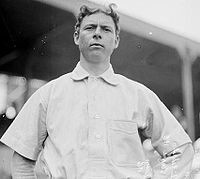
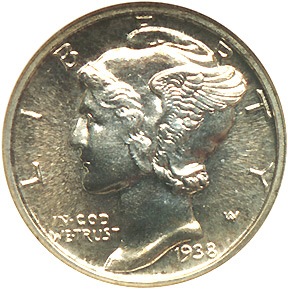
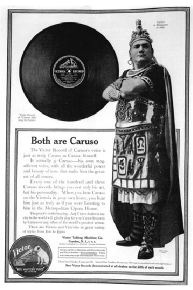
I’m not certain this is true (the way I know that the Andrea Doria sank or that Three Finger Brown triumphed over missing two fingers to be a successful baseball pitcher in the early years of the 20th century or that the poet Wallace Stevens’ wife Elsie Kachel posed for the figure of Lady Liberty on the “Mercury Dime” or that that Enrico Caruso single handedly brought the arias of Verdi to rural people or the way I know the lyrics to “Mairzy Dotes”) and with all due floridity, I’m unclear about the matter, but I believe the United States has now officially lost “middle brow” culture and has dropped into the phrenological cellar. I take no pleasure saying so.

I don’t like saying that things were once better. In general I’d rather have my teeth out than adopt this perfervid and quasi-reactionary position. Would rather have someone bind my feet…

By the mid ‘60’s America was precisely middle brow. Those of us who were old enough to sneer back then sneered. We watched television and heard Eric Sevareid intone that democracy in the U.S. was still intact; (“Thank God,” my father said. “The hymen isn’t broken.”) We saw William F. Buckley Jr. interviewing Allen Ginsberg (“He is the Hippie’s Hippie; the contrarian’s contrarian—in appearance he will  wear his hair long until others do and then he shall cut it…”) We listened as Leonard Bernstein explained by the Kinks and the Beatles had classical talents.

I never thought I’d be nostalgic for those days.

But I am.

Back in the old times Middle brow was a term of contempt—designating a vaguely wasteful largesse, the ill advised notion that one could raise up the proles.  

Ah for those days.

Nowatimes we’re in the post-prole era when even the vanguard organs of cultural reception can print sentences like this one:


“The title of Jonathan Lethem’s new novel suggests a cityscape that is both unwell and bedeviled by repetition.”

The sentence is is by Charles Baxter, an otherwise stolid novelist and short story writer. The mixed metaphors are both a tooth ache and a soil erosion of sensibility.


The problem is that sensibility, once a high brow ideal, then briefly a brass ring of the hopeful middle brow, is now like one of those quaint artifacts retrieved from a time capsule. “Look! Here’s a lock of Nellie Melba’s hair!”


Alors!


S.K.