What does it mean to have not seen, and then see? Put aside the neurology of brain function and think of beauty hidden behind a cloudy screen. Think of the blind man or woman as an ancient Chinese courtesan who sits all day behind a draped terrace. The world outside passes: the silhouettes of birds go by; you see a strange flittering darkness; the sunset comes; you see something like a failing lamp. When the moon rises over the willows you go out walking, feeling your way, and you are navigating by means of remembrance.  

But seeing anew you are no longer wandering the planet by memory. When guide dog Vidal and I walked Mannerheim Street in Helsinki we followed the vines of memory. Here is the botanical garden; here’s the city museum with its old copper doors; a path through lilacs. Now, seeing things, I discover the sighted world is more insistent and fast than the reveries of blind dream-walking. Was the world always this fast? My skin quivers, a stray piece of paper blows across the sidewalk at my feet. I want to get down on my hands and knees and grab it. I want to hold it up to the light and read with my one eye the letters that probably signify nothing. The blind self would imagine a written plea from a far island. The sighted man sees it’s just the gibberish of our economy. Up the street he goes. A teenaged boy on a skateboard flips backwards, falls on his ass, his Ipod flies into the air, his arms and legs are busy as a hundred men. His skateboard lands in a fountain. Vision tells me there’s a world unaffected by the self. I can’t tell you how thrilling this discovery is. I feel like Ralph Waldo Emerson, though without his visionary immanence–I’m not crossing the park and seeing something cosmological, instead I’m seeing the frosted leaves in early autumn and a boy flying.  

I look out over the forest of maples. The primacy of colors in October is flat out killing me. The red is an arrow that strikes me in the seat of my sentiments. I think heaven must be red. Heaven must be nearer. A red maple leaf has fallen on soil and it is the downward tip end of eternity. God help me! How do seeing people live this way? 

I see that the color red is the magnifying lens of god. I have to sit down. 

I see that all the colors in the world stand against locality–there can be no “local” because colors take it all away. A girl walks by with the world’s most perfect green hair. She is a citizen of no country. 

Now an old man comes down the street, a kind of scrawny angel, pushing a bent bicycle. He’s a war veteran and his medals are flashing in the sun. Compared to him everyone else in the world is motionless. 


Truth/truth(s)

By Andrea Scarpino 

I went to the tanning salon. I know—skin cancer. I’ve read the pamphlets. But sometimes I need a little sun. Sometimes I need to feel more heat on my skin than the Great White North provides.


And I thought about truth(s), little t, big T. I lay in the tanning bed and thought about Emily Dickinson’s, “Tell all the Truth but tell it slant—” About how it’s a great party trick to tell a philosopher you don’t believe in Truth (big T)—except then you’re stuck with a philosopher for hours while he tries to argue you into believing. That’s what they do—philosophers—argue a poet to death. The heat of the tanning bed. I thought about truth/Truth. About telling it slanted. About brokenness.


Here is a truth: we’re broken. The stars broke open. The universe broke open. Everything continues to break. The project of poetry and the project of philosophy is the same: make sense of the breaking. But the poetry I love believes in tenuousness: this is true. And this. And this other thing. It tells the truth—a truth, one truth—while understanding a bunch of other truths circle overhead, just outside, clamor to come in. 


Sometimes, I watch myself talking with other people. Like I’m watching a movie, I can see myself concentrate to smile at the right time. I can see myself lean forward or back. Into or away. I grew up with an alcoholic parent—I think that teaches you that reality is constructed, that there is no Truth. Because what an alcoholic parent understands and remembers as truth is hardly what anyone else in the family remembers or understands. I think it also teaches you to step outside yourself, to watch what is happening carefully and closely at all times. To watch yourself move through whatever else is happening. 


In the tanning bed, I thought of lying on the beach with the sun’s full strength on my skin. I thought about the ocean. I could smell its saltiness. Couldn’t I have been there, on the beach, in that moment? Couldn’t I have written as if I were? Reality, broken. Truth, broken.


And the last two lines of Dickinson’s poem: “The Truth must dazzle gradually/ Or every man be blind—” Blindness as metaphor—truth too hard to look at directly, to stare deeply into. Truth that will take your breath away—as well as your sight. A tired trope, disability as metaphor. But I love Dickinson’s sense of breaking—even “dazzle” feels on the verge of collapse.


I watched myself, in that tanning bed. I stood at the door of my locked room and watched the bizarreness of the scene—pretend sun, pretend coffin, woman pretending-to-be-somewhere-else. Thinking about truth/Truth. Breaking. Truth broken open, reassembling itself.


I went to the tanning salon to think about truth, little t, big T. To feel sun on my skin. To get skin cancer. I went to the tanning salon to think about poetry and philosophy, their projects. I went to the tanning salon to remember Dickinson. And the universe broke open. And I watched it. 


Poet and essayist Andrea Scarpino is a frequent contributor to POTB. You can visit her at:

www.andreascarpino.com

Chancellor Katehi: What Happened to the Agora?

Like everyone who lived through the sixties and who has seen the detestable video footage of campus police at UC Davis and Berkeley I find myself wondering how it can be that college administrators seem to have learned next to nothing from the recent past. At Davis, Chancellor Katehi called in the constabulary because students were camping on the quad. Let’s review. No classes were being impacted, buildings weren’t being shut down, no violence was evident, and students were expressing themselves. By calling in the campus police Katehi turned the Greek agora into a site of confrontation without imagining intermediate and educational possibilities for resolving the situation. In this regard I can use my own father’s presidency at the State University of New York at Albany as an interesting example. In 1969, at the height of the Viet Nam war, students occupied the administration building where my father’s office was located. As the day wore on they came up the stairs and took over the president’s office. 


Trust me, my father had plenty of advisors who told him to call the State police. He did no such thing and instead drew on his academic background (his Ph.D. from Harvard was in US-Soviet relations) and turned the occupation into a seminar. I think they sent out for coffee. A hostile situation turned into a symposium on militarism, imperial power, the history of nation states, the military industrial complex, and the evident problems of the cold war. The talk lasted all day. Eventually students began leaving. They had been heard, they were treated to a substantive discussion about the issues, my father suggested lots of books they could read. He invited them to come back. 


My dad died in 2000 at the age of 80. Shortly before his death he lamented to me that higher education was corporatizing at an alarming rate. What happend to the agora? 


The Dickensian Condition of the Mentally Ill in America

Editorial: Neglect Is Abuse
(News & Observer)
November 17, 2011

RALEIGH, NORTH CAROLINA– [Excerpt provided by Inclusion Daily Express] Someone needs to be called to account for the disgraceful way in which the state of North Carolina cares for, or doesn't care for, prisoners with mental illness. An internal review, conducted by two prison system nurses, of Central Prison's mental health unit cited some shocking conditions. 

They include some prisoners kept in "therapeutic seclusion" in cells without being allowed to come out for meals or recreation time and in highly unsanitary conditions. Such isolation, or solitary confinement, is considered dangerous for those who suffer from paranoia and other mental disorders. Their conditions can worsen in such circumstances.

An additional problem noted in the report was that in one case, an order to let an inmate into the day room apparently was ignored, meaning he spent 78 days in his cell.

And the living conditions in terms of filth were appalling, with a stench of urine (according to the report) and just generally unsafe conditions.

This is not acceptable.

Entire editorial:
Neglect is abuse

http://tinyurl.com/6lp3eqy

T


Haiku


I love the poets who can look at a thing & tell you all about it.

I am not that kind of poet. The hornet at the window is just a hornet, even as he fights the spider. 


I put an empty cup on the table. I call the sunrise a holiday from dreams. 


I am not clever though I know a good deal about remorse. 


There are five crows circling in the fallen leaves.  They have nothing else to do  

but to walk in rhythm with their appetites. 


As a friend of mine might say, there’s nothing perfect here that I know of. 


A scattering of clouds arrives from the east. I am glad they are clouds & not ideas.


Bullying People with Disabilities: A Shameful Sign of the Times

In The Guardian, a venerable British newspaper we read that 80 per cent of children in the UK with developmental disabilites are bullied and that many of them fear going out in public or attending school. In 2009 the Equality and Human Rights Commision in Britain undertook a survey and hearings to address the terrible scourge of discrimination against people with disabilities. They found, among other things that pwds were four times more likely to be victims of crime than non-disabled citizens and that disabled young people were most likely to be at risk. Here in the US the problem is just as large and the evidence to support this is everywhere. One can read hair raising narratives over at the Facebook page devoted to stopping disability bullying. If you simply Google the matter you will read page after page of material on the subject. Over at Disaboom (one of POTB's favorite disability sites) one can read practical suggestions about how to handle bullying and more. At Disaboom you can learn about the particular dynamics of disability bullying but the following is generally useful:

"Children with visible and invisible disabilities are significantly more likely than their peers to be the victims of bullying behavior. The type of bullying experienced often differs according to the child’s disability.

Children with visible conditions, like cerebral palsy and spina bifida, are more likely to be called names or aggressively excluded from social activities. Children with learning disabilities report higher rates of teasing and physically abusive victimization. Obesity has also been linked to higher rates of bullying. Overweight girls are especially vulnerable to physical forms of bullying.

Children with special needs are not exclusively victims of bullying. Research suggests that children with ADHD are more likely to demonstrate bullying behavior than their typical peers. Impulsivity and a lower tolerance for frustration are characteristics of this disorder that are also associated with bullying. Peer relationships are often extremely difficult and complex for children with ADHD. They need support and supervision to practice healthy social interactions with others. Whether victim or perpetrator, school bullying impedes learning and stunts the development of a healthy self-esteem." (See Disaboom link above.)

The disclosure of the bullying of a girl with special needs in Washington Courthouse, Ohio this past week has kept me half awake since I heard about it. I was that kid. I was treated poorly by classmates and some teachers. I know what its like. I will never forget how the hot blood of shame and fear feels as it courses through one's nether parts.   


On Bullying a Girl with Special Needs in a Nice Little Town

Hidden Recordings Show Teachers Bullying 14-Year-Old Student
(Today Show)
November 15, 2011

WASHINGTON COURT HOUSE, OHIO– [Excerpt provided by Inclusion Daily] When a 14-year-old special needs student in Ohio told her father she was being bullied at school, he figured it was something that many teenagers endure. 

Then he realized it was his daughter's teachers doing the bullying. 

After being told repeatedly by school administrators that his daughter was lying about being harassed and bullied, he outfitted her with a hidden tape recorder under her clothes. For the next four days, she recorded a series of abusive and cutting remarks from a teacher and a teacher's aide at Miami Trace Middle School in Washington Courthouse, Ohio.

The father, Brian, and his daughter, Cheyanne (their last names were withheld in the interview), appeared on TODAY with their attorneys Tuesday as snippets from the secret audio tapes were played.

Entire article:
Teachers caught on tape bullying special-needs girl

http://tinyurl.com/7maxd57


Uncle Theory and the Human Body

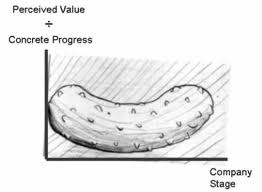
Pickle theorypickle theory


Uncle Theory decides the body is simply an idea, a reflection of a hand in a puddle. He imagines there’s a human body inside every snowflake.  

After his morning exercises he imagines two bodies inside every snowflake. Even old Uncle Theory likes naturalistic pornography. 

He lights a cigarette in his imagination as the first snow falls. “Now,” he thinks, “It’s time to write that textbook.”


BBC E-mail: Life as a disabled person in Africa

I saw this story on the BBC News iPhone App and thought you should see it.

** Life as a disabled person in Africa **
A new documentary film, Body and Soul, shot in Mozambique tells the story of day-to-day life for three young disabled people – showing the many challenges they face, but also their determination to get ahead.
< http://www.bbc.co.uk/news/world-africa-15759683 >

** BBC Daily E-mail **
Choose the news and sport headlines you want – when you want them, all in one daily e-mail
< http://www.bbc.co.uk/email >

** Disclaimer **
The BBC is not responsible for the content of this e-mail, and anything written in this e-mail does not necessarily reflect the BBC’s views or opinions. Please note that neither the e-mail address nor name of the sender have been verified.

Sent from my iPhone