Social Construction

Robot Ninja


By Andrea Scarpino


“Whoa, look at that leg,” the boy at the airport said. He was watching a man with a prosthetic leg walk to the gate to board his plane. The boy’s eyes were wide and his voice full of awe.

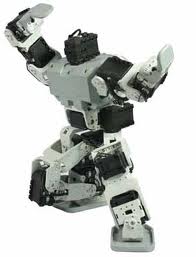
“That man has a robot leg,” he said to his father. “I’ve never seen that before. That is so cool.” The father looked as well, said, “Yeah, that is really cool.”

And in that moment, I understood more fully than I ever have before that disability is a social construct. Because for that boy, there was nothing “wrong” with a prosthetic leg—or with someone who needs to use one. I’m pretty sure the word “disabled” didn’t enter his mind. He saw a robot—and he thought that robot was worthy of awe.

That’s something I think a lot of people don’t understand about disability. That we define it, both individually and as a society. We choose its parameters. We choose what “counts” as disability. And we can choose to shift our definitions at any time, to see them through different lenses. We can choose to understand a prosthetic leg as a limitation and/or as a cool robot.

Last week, I sat half asleep in faculty meeting when my university’s ADA coordinator gave a presentation about complying with ADA regulations. I perked up immediately—and immediately felt my heart race. ADA compliance was framed as something faculty needs to do so that pesky students with disabilities don’t sue us. Indeed, the presentation began with a story of a student who had sued a university for appropriate accommodations—and won. The longer I listened, the more irate I became.

Because accommodation shouldn’t be presented as a financial drain or “going out of our way” for the squeaky wheel. It is a matter of social justice, of valuing every person for who she is, for listening to every person’s needs and working our hardest to meet them. In a way, it’s a type of consensus decision making, of not just allowing every person’s participation in the system, but encouraging it. Of being clear that we all benefit from the inclusion of people unlike us. 

So, with the provost in the room, with the university president in the room, I raised my hand. And I tried very hard to control my voice as I spoke. But I was angry and that was pretty clear. The next day, the provost told me I had rattled our ADA coordinator—I think he used the word “intimidated.” And I guess I’m sorry about that—she was just trying to do her job. And she doesn’t have a background in disability or Disability Studies, I’ve since learned.

So I guess I’ll reach out to her this week. I guess I’ll try to help her understand my anger. I guess I’ll try to be clearer about how disability—like gender, like race—is socially constructed. About what that really means. About the boy in the airport, how he didn’t see a prosthetic leg as a problem, a potential lawsuit, a potential financial burden. As something to be “fixed” or ignored, swept out of sight. How he just saw it as really cool. A “robot leg” he called it. And he said it with awe, with admiration. 


Andrea Scarpino is a poet and essayist and a frequent contributor to POTB. Check her out at:
www.andreascarpino.com

Disability and the Winter Cricket

Cricket


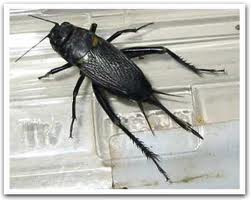
I felt the lurch and halt of his song, end of summer. He was beautiful like the crack in a window, but unseen. I think he was in my basement. Imagining his mood is a human attribute–the cricket is sad or lonely, understands dying, or, joyously goes about his business. He is my cricket with his loose abandonment. He is persistence. 

He knows something about the shadows of forests immeasurably older than human beings. In every century he has been broken. Listen to his legs, like the seething sound in a shell. 


SK 


Love on the Farm: Another Crip Poet

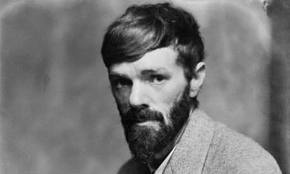
D.H. Lawrence


This morning I find myself in the mood for D.H. Lawrence. His poems. 


What large, dark hands are those at the window

Grasping in the golden light

Which weaves its way through the evening wind

     At my heart’s delight?


Ah, only the leaves! But in the west

I see a redness suddenly come

Into the evening’s anxious breast–

    ‘Tis the wound of love goes home!


From “Love on the Farm”


I love the pre-Raphaelite moodiness of Lawrence, and his vaguely gnostic sentimentality. He had a serious disability (tuberculosis) and lived his moments riding on the back of the black, stuttering heart. That he was a poet of autumn is undeniable, until you factor in he was a poet of winter, spring, and summer.  He wrote too many poems. Most are no good at all. But Kenneth Rexroth collected the best of them in a “selected” poems which you still can find in your old civic library if you’re lucky.  


The Senate Committee on Health, Education, Labor, and Pensions is considering the Elementary and Secondary Education Act (ESEA), which provides funding for public schools nationwide.

Access to quality education is a critical civil right, so we’re working hard to make sure that any bill Congress passes and the President signs on to contains strong, effective protections for students with disabilities.

Bullying interferes with student’s education and makes school a hostile place; students with disabilities are far more likely than their peers to be bullied, and are losing out on the education that is their right. We’re fighting to make sure the Senate includes requirements that school districts to create policies that prevent bullying and harassment. But we can’t win this fight without you.

Please call your Senators and ask them to include an anti-bullying provision in ESEA.

Democrats
Tom Harkin (IA) – 202-224-3254
Barbara Mikulski (MD) – 202-224-4654
Jeff Bingaman (NM) – 202-224-5521
Patty Murray (WA) – 202-224-2621
Bernie Sanders (VT) – 202-224-5141
Bob Casey (PA) – 202-224-6324
Kay Hagan (NC) – 202-224-6342
Jeff Merkley (OR) – 202-224-3753
Al Franken (MN) – 202-224-5641
Michael Bennett (CO) – 202-224-5852
Sheldon Whitehouse (RI) – 202-224-2921
Richard Blumenthal (CT) – 202-224-2823

Republicans
Michael Enzi (WY) – 202-224-3424
Lamar Alexander (TN) – 202-224-4944
Richard Burr (NC) – 202-224-3154
Johnny Isakson (GA) – 202-224-3643
Rand Paul (KY) – 202-224-4343
Orrin Hatch (UT) – 202-224-5251
John McCain (AZ) – 202-224-2235
Pat Roberts (KS) – 202-224-4774
Lisa Murkowski (AK) – 202-224-6665
Mark Kirk – 202-224-2854

Crossing October River


Autumn is in full bore and the leaves are coming down. I traveled yesterday and said to a friend that I must be crazy because I love the darkness of rain in the fall. I think it must be some atavistic cultural memory, something from my peasant history. I take care of my ox in the growing rain. I sing to my dog. So what the winter is coming? I have my animals. Meanwhile, in the heavens, the moon is preparing for snow. The wild geese fly against the wind.  

The poet Theodore Roethke once wrote: “What’s winter for? To remember love…” I think autumn is to remember the rightness of being alive, it’s proper proportions. Rain at the windows and the willow tree swaying are a marvel. We bring the last of the flowers inside and arrange them. We take care of the imaginary ox in the barn. We worry in a small way about the crickets. Dark night, the clouds black as the roads and in the morning the catalpa tree hangs its heavy head. Strange to say I feel good. Come spring no one will recognize me.


S.K. 


NYTimes: Scientists See Promise in Vaccine for Malaria

In case you are looking for an optimistic story on an ordinary Wednesday, here’s a fine article from the health section of the NY Times:

From The New York Times:

Scientists See Promise in Vaccine for Malaria

A GlaxoSmithKline vaccine now in clinical trials protected nearly half of the children who received it from bouts of serious malaria, researchers reported.

Sent from my iPad

Wind Tossed Dragons

Kenneth Rexroth Wearing Al Capone's suit

When I was 17 and suffering from anorexia–a factor of disability and depression, I was given the gift of Kenneth Rexroth’s poems. To this day his “One Hundred Poems from the Chinese” occupies an important place, both in my imagination and on my bookshelf. Rexroth’s “Complete Poems” (available from Copper Canyon Press) is a must read for anyone who cares about American poetry and intellectual independence. 

Today I must travel on business and I will carry this poem with me. This is Rexroth’s translation of an ancient Chinese poem by Hsieh Ngao: 


"Wind Tossed Dragons"


The shadows of the cypresses

On the moonlit avenue

To the abandoned palace

Weave in tangles on the road

Like great kelp in the depths of the sea.

When the palace was full of people

I used to see this all the time

And never noticed how beautiful it was.

Mid-Autumn full moon, the luminous night

Is like a boundless ocean. A wild

Wind blows down the empty birds’ nests

And makes a sound like the waves of the sea

In the branches of the lonely trees.


Every noun is an image, and every image is a possibility. That’s a revery. Let us all take reveries on the road.


S.K.  


Disability and the Toothache


The proper phrase is “toothace in the soul”–Emily Dickinson’s description of our human spirits in this high gravity world. We all face delimitations of our bodies, plus aging, disappointments, setbacks, social lonesomeness (different from “loneliness” for it is more imagined). If I knew a way without this consciousness I would tell you. 


Disability is that toothache raised to a power. Unfashionable to call it suffering but enough to say It’s without easy assimilation. One may think of disability, any disability as a kind of phosphorescent blindfold: at once brilliant and impenetrable. What it feels like on the inside is not the pathos of intellectual life but a steaming fuse of a million cultural negligences. We cannot celebrate the body that ages. We can’t imagine it’s languages in the West–instead cover it over or turn away. The toothache pours from the radios and steams on the internet. It hangs in the disorderly world, inflated by the winds of reactionary advertisements for normalcy. 


I long for the allure of disablement with all its ellipses. Spirit relieved of pejorative and alienating metaphor. The world was heavy with gravitas but we all could dance. 

SK