Disability and the Hanging Vines

  Cheeta-tarzan_685761c

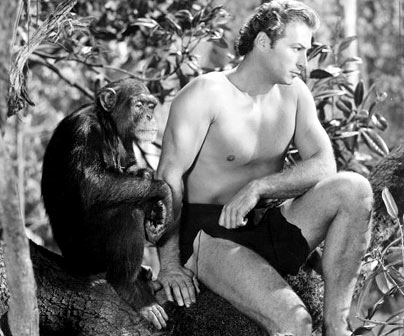
Remember those old Tarzan movies? Tarzan would swing through the trees and when his vine reached its arc, lo and behold another vine would appear. That’s a thing you won’t see in nature. In order to pull off the effect Hollywood had a “Vine Man” off camera, a man of precision, like the page turners who sit beside pianists. You see, Tarzan had a reasonable accommodation. If you’re job is to yell and swing, half naked through branches, you’ve got to have a paid assistant.  

My point, such as it is, is that the American workforce can stand to learn a great deal about the history of accommodations–not merely as they relate to people with disabilities, but as a sign of progressive and utilitarian teamwork. The prevailing notion that a person with a disability is a singular defective “unit” who requires something extra runs counter to the history of human work. Just ask old Tarzan. 


S.K.   

 

Disability and the Haiku Master

Basho

On the day my mother died I found myself so overwhelmed with grief and all the miserable details of planning her funeral that I stopped everything and made up a haiku.

Here’s the gist of it:


My deodorant and my

Prozac are working overtime

Just now…


Though this haiku did not solve my problems it did evoke my mother’s salty, colorful sensibility and more than anything that’s what I needed on that terrible day. 


Disability carries its own dans macabre–stigma, alienation, insufficient benefits or accommodations, the heavy burdens of self-advocacy. Some days one feels like the snail climbing Mt. Fuji–there’s a beautiful, steady, earnest hopelessness about the enterprise of enduring. I think like the haiku form of verse, disability is at once both clear and vague–by this I mean the outlines of human worth are evident in every action undertaken by a person with a disability, and, just so, the way forward is all too often hard to see. The season now must be spring or summer, the wheelchair girl is singing. 

That’s a blindness haiku and true as a poem can be. It’s the bare outlines of human value we celebrate in the short poem and which we celebrate in our dailiness. The latter depends on evident consciousness: who are you, who are you just now? 


Just three days old,

The moon, and it’s all warped and bent!

Friend, take my cane.


SK


Stutterer Speaks Up In Class; His Professor Says Keep Quiet

Reader's note: We have not been watching Keith Olbermann lately, but perhaps Ms. Snyder could be nominated for "worst person in the world"?

SK
(New York Times)
October 10, 2011

RANDOLPH, NEW JERSEY– [Excerpt provided by Inclusion Daily Express] As his history class at the County College of Morris here discussed exploration of the New World, Philip Garber Jr. raised his hand, hoping to ask why China's 15th-century explorers, who traveled as far as Africa, had not also reached North America. 

He kept his hand aloft for much of the 75-minute session, but the professor did not call on him. She had already told him not to speak in class.

Philip, a precocious and confident 16-year-old who is taking two college classes this semester, has a lot to say but also a profound stutter that makes talking difficult, and talking quickly impossible. After the first couple of class sessions, in which he participated actively, the professor, an adjunct named Elizabeth Snyder, sent him an e-mail asking that he pose questions before or after class, "so we do not infringe on other students' time."

As for questions she asks in class, Ms. Snyder suggested, "I believe it would be better for everyone if you kept a sheet of paper on your desk and wrote down the answers."

Later, he said, she told him, "Your speaking is disruptive."

Entire article:
Stutterer Speaks Up in Class; His Professor Says Keep Quiet

http://www.nytimes.com/2011/10/11/education/11stutter.html


Killing the Jobs Bill the Old Fashioned Way

Now that the GOP has (in the words of the New York Times) committed “economic vandalism” by killing President Obama’s jobs bill I want to disclose that I’m reminded of Mark Twain’s observations about the German language. All you have to do is substitute the Republican party: 

“Surely there is not another language that is so slipshod and systemless, and so slippery and elusive to the grasp. One is washed about in it, hither and thither, in the most helpless way; and when at last he thinks he has captured a rule which offers firm ground to take a rest on amid the general rage and turmoil of the ten parts of speech, he turns over the page and reads, "Let the pupil make careful note of the following exceptions." He runs his eye down and finds that there are more exceptions to the rule than instances of it. So overboard he goes again, to hunt for another Ararat and find another quicksand. Such has been, and continues to be, my experience.” 

It was Twain of course who said: "There is no distinctly native American criminal class, save Congress."

BBC E-mail: Tablets become Braille keyboard

I saw this story on the BBC News iPad App and thought you should see it.

** Tablets become Braille keyboard **
A team of US researchers has invented a keyboard for touchscreen devices such as smartphones and tablets.
< http://www.bbc.co.uk/news/technology-15272091 >

** BBC Daily E-mail **
Choose the news and sport headlines you want – when you want them, all in one daily e-mail
< http://www.bbc.co.uk/email >

** Disclaimer **
The BBC is not responsible for the content of this e-mail, and anything written in this e-mail does not necessarily reflect the BBC’s views or opinions. Please note that neither the e-mail address nor name of the sender have been verified.

Sent from my iPad

High Ed, Disability and Fresca

Fresca-vs-squirt---second-rate-snacks-lrg

Have you ever been called “second rate” because you have a disability? I have. This has happened over and over again. I recall a professor in graduate school who said that if I needed extra time to complete an assignment because of my blindness, I shouldn’t be in his class. That was in 1984, six years before the adoption of the Americans with Disabilities Act. Even so, the behavior was illegal under Section 504 of the Rehabilitation Act and I pushed back.  First I went to the department chair. He was a crony of the professor in question and accordingly told me that I was a “whiner and a complainer”–that old “ableist” canard, so easy to toss off. Then I went to the Dean who promised action and then did nothing. Finally I hired a local attorney who extracted an apology from the University. 

Throughout my adult life I’ve gone to employer after employer only to experience the nominal designation of the “second rate”–my deep need for functioning assistive technology has been repeatedly such an enormous problem at the 4 universities where I’ve taught that I can’t begin to narrate all the indignities, incompetencies, rationalized inattentions, and all around ugly deportments of the bureacracy. “What? You want a computer that talks and works at the same time? By God man! You’re asking for alchemy!” Most recently my request for a laptop running Kurzweil and JAWS took a month and repeated emails to accomplish. And here's the deal: when higher education can't manage a simple accommodation it delivers that old name tag: “second rate”. By not solving the problem the hierarchical dynamics of ableism are a defacto position. 

Doing better means achieving something more than assuring the professional and dignified delivery of accommodations for people with disabilities. It requires a vigorous affirmation of the term “nothing about us, without us” and it means demanding full equality and respect for people with disabilities from all the offices of higher education. Unfortunately, as Lennard J. Davis has remarked, there’s a lingering ableism within neo-liberal circles, one that progressive faculty and administrators don’t generally recognize. I agree with Lenny Davis that the failure of higher education to incorporate disability into a broader framework of campus diversity is a good part of the problem. When an institutilon can imagine that people with disabilities are to be accommodated by special segregated offices and that's the whole of the matter, you are simply reaffirming a victorian (small v) assumption that the cripples belong in a special place–certainly they don't belong in the agora.

When academic leadership tackles the implicit systemic inattention to disability equality very good things can happen. Meanwhile, some days, I feel like Fresca as opposed to Sprite.   

S.K.

National Federation of the Blind and Penn State Resolve Accessibility Complaint

Press Release: Baltimore, Maryland (October 11, 2011): The National Federation of the Blind (NFB) and The Pennsylvania State University (Penn State) announced today that they have reached an agreement that will resolve a complaint filed against Penn State by the NFB with the United States Department of Education, Office for Civil Rights.  There was no admission of any wrongdoing.


Penn State has agreed to continue implementing a strategy to make all electronic and information technology systems used on its campuses fully accessible to blind students, faculty, and staff.  The information technology systems covered include course management systems, Web sites, classroom technology, library resources, banking services, and more.  University Spokesman Lisa Powers said that Penn State strives to maintain strong academic leadership and has a long record of providing equal access to educational information and services for all students, faculty, and staff.


Dr. Marc Maurer, President of the National Federation of the Blind, said: “Universities must commit to making sure all of the technology that they use is accessible to blind students, or else the blind will be left behind in education and denied opportunity.  We are pleased that Penn State, one of the largest and most recognized public universities in the country, has agreed to take additional steps to create an environment of equality in which blind students can pursue their educational and career aspirations without unnecessary barriers.  The National Federation of the Blind hopes and believes that the steps that Penn State is taking will set an example for colleges and universities throughout the nation.”


"For more than twenty years Penn State has provided assistive technologies to students, faculty, and staff," Powers said.  "We will work with the National Federation of the Blind and the Department of Education, Office of Civil Rights, to put in place the additional technologies, procedures, and ongoing policies that will help us continue meeting our strong commitment to access.”


The university has had a number of policies and programs in place to help individuals with disabilities, such as a classroom note-taking service, textbooks and course materials in electronic format, technology assistance, and adjustments in testing procedures, to name just a few.  The university has a longstanding policy of providing reasonable accommodations to anyone requesting assistance.


"We can always do more," Powers said.  "In addition to any continued adjustments to our policies, we also are working with our outside vendors to see if their products and procedures can be adjusted to meet the needs of our students."


Russlynn Ali, assistant secretary for civil rights, with the U.S. Department of Education, said: “Colleges and universities have specific legal obligations to provide students, faculty, and staff with disabilities the same benefits, programs, and services.  This office is committed to working with complainants and institutions to ensure that the important nondiscrimination provisions of this nation’s laws are enforced and implemented.”


The panic of the plutocrats

What’s going on here? The answer, surely, is that Wall Street’s Masters of the Universe realize, deep down, how morally indefensible their position is. They’re not John Galt; they’re not even Steve Jobs. They’re people who got rich by peddling complex financial schemes that, far from delivering clear benefits to the American people, helped push us into a crisis whose aftereffects continue to blight the lives of tens of millions of their fellow citizens.

via lancemannion.typepad.com

We admire this "take" by Senor Krugman…

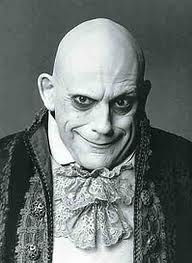
Bedtime with the Addams Family

Uncle Fester


“Tell the story again, Uncle Fester, about the Tea Party!”

“Well Okay kids, but this is the last time. Then you have to go to bed!”

“We will, Uncle Fester!”

“The Tea Party hated people with pre-existing medical conditions and people with disabilities. They thought that God had made a mistake when he made those types and  figured if God had made a mistake, well, then it should be perfectly Okay for those people to eat out of dumpsters and live in cardboard boxes.”

“That’s a Great Story, Uncle Fester! We’ll go to bed now!” 


Swan of Tuonela


Swan of Tuonela


1.


Lake of the dead, Finnish underworld. What to say? Ex cathedra, walking Runerberginkatu, late April, me & Tim.


We were walking, me & Tim. 

He, translating Faulkner into Finnish.

I, translating Saarikoski into Norte Americano–making Marxism into sock puppets. 


We were, in short, both crazy. & I had Tuonela

On the brain–flat lake, silent swan gliding among souls.


Helsinki, almost spring, Reagan on the shortwave…

Little gingerbread houses with their lights on at dusk…


+/- East/West propaganda divided by 19th century communalism

For we were still naive in those days, there was still a Berlin wall in those days,

Derrida’s Grammatology; Egyptian grammar in those days…


We were walking, me & Tim, taking Pablo to a toy shop–little boy six years old 

Fresh from school, Nordic afternoon, he just wanting a kite.


Sometimes I don’t know how to tell it. 

The boy wanted a kite. His father & I, some kind of victory

Complete with Trotsky at the parade

“in summer with the furniture outdoors”…


2.


The two of us on the street 

Smoking cigarettes, laughing, Pablo by now among the spinning tops.

“I see,” I said just there, for Tim was speaking about the arts of desire,

Too many for enumeration, one has to nod–

“What we call reality is an agreement 

 people have arrived at 


to make life more livable.” (Louise Nevelson)

“I see,” (reflex, nodding, punctuated with a Marlboro.) 


Appeared there between us a man

Face white as bone–skin–

His veins standing out.

(Later I would say

The oldest man I ever saw.)


“Why do you say you see?” 

Then said it again, eyes troubled

Shaking his finger,

“You don’t see, you understand!” 

“You understand!”


& we looked to each other

But he was gone,

mid-block, big city

Vanished–

We looking up & down…