My Life as an Honorary Wretch

Alert icon

Uploaded by stateart on Mar 9, 2011

"Lightning Rods": Larry, Tracy, Harvey & Pascal take to the road to promote the new documentary "Wretches & Jabberers" by Gerardine Wurzburg. The gang meets up with Stephen Kuusisto, author of "Planet of the Blind". He interviews Larry and Tracy about the journey they took while making "Wretches & Jabberers" and shares a few insights of his own about his disability.
For more information about the "Wretches & Jabberers" tour, to sign up for our newsletter or see extra footage from the film, follow us on Facebook at "Wretches & Jabberers" or visit our website: wretchesandjabberers.org!


S.K.

Project 3000 and Post-molecular medicine at the University of Iowa’s Institute for Vision Research

Institute for Vision Research U of Iowa newinherited


In my memoir Planet of the Blind I wrote that “on the planet of the blind no one needs to be cured”—an assertion which stands as a serious affirmation of the civil rights of people who are blind and visually impaired. Indeed, in the field of Disability Studies one of the most important contemporary ideas has been to assert that the medical model of disability is often demeaning to people with physical differences. The medical model holds the implicit argument that those who cannot be cured are nothing more than failed patients—an essentialist view of medicine which has lead many physicians to pursue physical perfection for their patients and to eschew the needs of those who can’t be repaired. The field of Ophthalmology has been particularly attached to the medical model. Many blind and visually impaired people can relate stories of encounters with eye doctors that reveal their physicians’ magnified neglect of patients who by their very condition represent the failure of medicine. It is astonishing to hear how ubiquitous the phrase “I’m sorry, there’s nothing more we can do for you” really is when blinding eye diseases are being discussed. “I’m sorry, there’s nothing more we can do for you” is a multiple debilitation for it’s a phrase that says you are not to come back to the doctor’s office; you are not valuable in fully human terms; that the only valuable people are the ones who will see 20/20 after their measly cataracts are removed with the mini handi-vac they use in the back room.

The phrase also is designed to disguise the fact that the eye doctor doesn’t know anything about blindness services and rehabilitation strategies. This is ophthalmology as the ultimate silo. And if you’ve traveled as much among blindness activists and their friends as I have over the past 15 years you will surely know that I’m not exaggerating when I say that this “go away’ rhetorical impulse is both wide spread and enervating. You have just been told that you’re no longer part of the world and worse, you’ve been told that the world is only for perfect people. “I’m sorry, there’s nothing more we can do for you” means: “You’re blindness scares the living daylights out of me.” We could of course speculate all day about why ophthalmology has developed this provincial and narrow view of blindness, charting our discussion with historical footage from the annals of medical history. But for the sake of argument let’s say that the etiology of blindness has not been well understood by medicine until comparatively recent times. The advent of what is now called “post-molecular medicine” is changing all aspects of medicine and it is certainly transforming the field of ophthalmology. Let’s consider the work that’s being done at the University of Iowa’s Institute for Vision Research. The IVR is dedicated to research and treatment of macular degeneration, glaucoma, retinitis pigmentosa, and related degenerative diseases of the eye. A major focus of the Center is the development of gene-directed therapy for eye diseases.

One of the diseases the IVR is researching and which has yielded the most intriguing results is LCA or Leber’s Congenital Amourosis. This research program is called “Project 3000”. Here is the description from the website:

LCA is an inherited form of blindness that is usually apparent shortly after birth. In most cases, affected children are otherwise completely healthy but a subset of children do have other problems such as learning disabilities, autism, seizures, or kidney disease. At least fourteen different genes are currently known to cause the disease and as a group these genes are responsible for about 70% of all cases. There have been some very exciting developments regarding treatment for LCA. Years of research led to treatments to restore vision in animals with similar disorders and last year (2009) the first human clinical trialsε met with similar success. It is expected that more treatments will soon be ready for testing in human beings and for most of these treatment trials knowledge of the disease-causing gene will be important.

Here is an article from the Wall Street Journal describing the collaborative work on LCA gene therapy that’s being done by the University of Pennsylvania and the U of Iowa:

http://online.wsj.com/article/SB125640173237005925.html

Here is a video link showing the dramatic results of gene treatment in a boy born blind with LCA—a before and after video demonstrating his new found ability to see objects and to navigate an obstacle course:

http://online.wsj.com/video/new-treatment-for-blindness/DC0C6699-953E-436E-909B-8A992021651B.html

The discovery of the genes that cause LCA and the availability of useful tests for disease-causing alterations in these genes are both so new that most affected individuals are currently unaware that such testing exists. Project 3000 seeks to identify every person in the United States affected with LCA and offer them state of the art genetic testing on a nonprofit basis through the John and Marcia Carver Nonprofit Genetic Testing Laboratory at the University of Iowa. For affected families who lack health insurance, philanthropic donations will be used to reduce the cost of the testing.

Project 3000 has five major partners

A project of this magnitude will require many partners. The five groups that have joined forces thus far are:

clip_image002ζ

1st Touch Foundationη

clip_image003θ

The Boston Celticsι

clip_image004κ

The Foundation for Retinal Researchλ

clip_image005μ

The Foundation Fighting Blindnessν

clip_image006ξ

The Carver Nonprofit Genetic Testing Labο

Project 3000 has five major goals
  • Provide hope.
    Many individuals affected with Leber’s Congenital Amaurosis have been told directly or indirectly that "there is nothing that can be done to improve/restore their vision." Project 3000 intends to reverse this message and make it clear that there is much that the 3000 individuals with LCA can do as a group to help combat this disease.
  • Provide accurate information.
    By collecting some basic clinical information from thousands of people affected with LCA, doctors will be able to learn how each genetic subtype of LCA behaves over time and will be able to use this information to give newly diagnosed individuals and their families more accurate information about what to expect.
  • Find the remaining genes.
    The genes responsible for about one third of LCA cases remain to be discovered. Scientists believe that by gathering samples from the hundreds of individuals affected by LCA whose genes have not yet been discovered, that they will be much more likely to find all of the remaining ones.
  • Find cures.
    Trials of new treatments for LCA will require access to individuals affected with specific genetic subtypes of LCA. Even the most common genetic types of LCA occur in less than 300 people in the United States. Project 3000 seeks to identify as many individuals as possible with each genetic subtype so that clinical trials will never be slowed by a lack of affected individuals.
  • Make a genetic test for LCA available to all who might benefit from one.
    Many insurance companies are currently unfamiliar with the value of genetic testing for LCA. By encouraging thousands of individuals with LCA to seek payment for their nonprofit genetic tests, Project 3000 intends to demonstrate the value of such testing to doctors and insurance companies across the country. As a result, genetic testing will become part of the "standard of care" for LCA in the United States.

As an advocate for blind folks and as a scholar of Disability Studies I would like to return to the opening of my remarks by saying that no one should feel the need to be cured as a template or marker of human value. Indeed the onus (such as it may be) is on medicine to understand human individuality and the gradients of physical differences. I believe firmly that this revolution is underway. As my colleague Dr. Edwin Stone says: “blind people need to go to the eye doctor for general ophthalmological care—blind eyes are still important eyes”.

One day Ed said to me:

“The evangelical disabled person might adopt the attitude, ‘Why do I need to be cured? I’m fine as I am,’ while the evangelical curing person might adopt the posture, ‘Why spend any resources on figuring out ways to accommodate visually disabled people? We ought to spend time trying to cure them,’” “It’s grossly inappropriate that these two concepts are so separate. There’s no reason we can’t pursue both—aspire to reduce blindness through surgical or medical treatments, while simultaneously being sensitive to the needs of people who are visually impaired and working to help them in every way possible.”


S.K.

This Instant

By Andrea Scarpino

The plane hits turbulence and your head jerks forward suddenly, waking you from sleep. Glasses off kilter, eyes not yet focusing. And there, sitting peacefully in the next aisle, your father. Checkered dress shirt, suspenders, glasses case in his front pocket. Gray hair. Nodding in his sleep. Your father.

The last time you flew with him, you also sat across the aisle, watched as he shared his airplane snack with a teenager flying alone. Wondered at that generosity. The only other time you remember flying together, the flight attendants called for volunteers to give up their seats. You were 6 or 7 years old, and you remember being afraid they’d make you get off the plane, but your father explained no, you had tickets, you were guaranteed the flight.

And here, awake on the plane suddenly, your head jerking forward, you’re sure you see your father next to you. Except, of course, he’s dead. Has been for close to four years. Your eyes draw into focus—another older man. Same style of dress, same curly white hair. But not him.

And you feel such sadness, then, not just that your father is dead, will always, now, be dead, but that you couldn’t convince yourself a few minutes longer that it was him. That you couldn’t remain the rest of the flight in that half-asleep state believing you were returning home from a trip with your father. Like when you first wake up from dreaming about him and you almost smell his breakfast toast and butter, almost smell his Folgers coffee. And you want to stay forever in that moment, believing he’s in the kitchen eating his breakfast like he always did.

This is the cruelty of grief—it doesn’t let you forget but it also doesn’t let you fully remember. You can’t be with the one you grieve, but you can’t be without him either. The cruelty, but maybe also the grace? For those moments on the plane, those moments waking up, he is alive, or as alive as he can be now that he is dead.

Wendell Berry says, “The question before me, now that I am old, is not how to be dead, which I know from enough practice, but how to be alive, as these worn hills still tell, and some paintings of Paul Cézanne, and this mere singing wren, who thinks he’s alive forever, this instant, and may be.” This instant on the plane, waking up from sleep. This instant, he’s alive. Of course, you would prefer he stay alive more than the seconds it takes you to wake up. But you’ll take it, this instant. It has to be good enough.

Andrea Scarpino is a poet and essayist and a frequent contributor to POTB. You can visit her at http://www.andreascarpino.com

Wretches and Jabberers Live

In the U of Iowa’s Black Box theater listening to autistic activists Tracy Thresher and Larry Bissonette–the stars of the new film Wretches and Jabberers. Seeing and hearing their words about living with autism is rocking the room full of scholars and students. I like to think the day is coming when people with nonspeaking disabilities will be properly understood as our neighbors–our fellow citizens without stigma. Today the U of Iowa community is taking a modest but firm step on the path to recognizing people with autism as being fully autonomous human beings. Amen!

S.K.

Iowa City is Mannionville for a Day

Popular blogger ‘Lance Mannion’ to speak at UI March 7

David Reilly, known online as political and cultural blogger “Lance Mannion,” will speak at the University of Iowa at 1 p.m. Monday, March 7. His talk, “Literary Writing in the Second Digital Age: Blogging, Tweeting, and the Public Square,” will take place in the Gerber Lounge, Room 304 of the English-Philosophy Building.

Reilly is a UI Writers’ Workshop fiction alumnus (MFA ’85). His blog, http://www.lancemannion.com, has emerged as regular reading for journalists and politicians, including Paul Krugman of the New York Times, James Wolcott of Vanity Fair, Barack Obama, Bill Clinton, and Hillary Rodham Clinton.

Reilly will discuss with UI Professor of Nonfiction Stephen Kuusisto the current scene in “literary” blogging and the rapidly changing role of electronic publishing. The presentation is expected to be of particular interest to students interested in e-writing, journalism, cultural affairs, or the intersection of literature and pop culture.

This free, public event is sponsored by the College of Liberal Arts and Sciences Perry A. and Helen Judy Bond Fund for Interdisciplinary Interaction, the Department of English, the Nonfiction Writing Program, the School of Journalism and Mass Communication, the Writers’ Workshop and the International Writing Program.

For more information, contact the English department at 319-335-0454.

Wretches and Jabberers

Monday night, I’ll be attending a screening of a new documentary, Wretches & Jabberers.  It’s sort of a travelogue.  But with an unlikely pair of guides.

via lancemannion.typepad.com

Lance Mannion is in Iowa City for tonight's screening of "Wretches and Jabberers" and a talk with moi this afternoon on blogging and literature. Who says we're provincial out here?

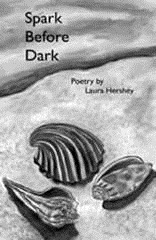
Announcing the publication of Spark Before Dark Poetry by Laura Hershey

clip_image004


We have received the following announcement from Robin Stephens and we want to share the news…

S.K.

Announcing the publication of Spark Before Dark Poetry by Laura Hershey

Laura Hershey’s new chapbook, Spark Before Dark, includes a wide selection of poems exploring life and language through sharply focused multiple lenses of disability, feminism, and queerness.

Reviewers are moved and energized by Hershey’s work. "These are poems to sustain and inspire," notes Ellen Bass, poet and Lambda Literary Faculty Member. 

"The poems in Spark before Dark are not ‘about disability.’ They are about life in a complex world,"  writes Jim Ferris, poet and Chair of Disability Studies at University of Toledo.

Poet Jenny Factor describes Hershey’s work as "linguistically-potent" writing that allows the reader to "feel her voice intimately inside us as a real and sympathetic presence that made us braver and smarter. Laura Hershey’s sinewy, elegant, and whipsmart poems, stuffed with humanity, are here in your hands. Buy this book. Read this book."

Laura Hershey was a Colorado-based writer, poet, activist, and consultant, as well as a 2010 Lambda Fellow in Poetry. She was nationally recognized for her activism and advocacy on a wide range of disability rights and social justice issues. Her poems and essays explore many diverse topics, including body, nature, community, activism, and social justice. She earned a Master of Fine Arts in Creative Writing from Antioch University Los Angeles, and a Bachelors of Arts in History from Colorado College.

Her poems appeared in numerous anthologies, including Fire in the Soul: 100 Poems for Human Rights, Bigger Than the Sky: Disabled Women on Parenting, and Pushing the Limits: Disabled Dykes Produce Culture; and in journals such as Wordgathering.com, Bumbershoot, Calyx: A Journal of Art and Literature by Women, Gertrude, Shakespeare’s Monkey Review, Trillium Literary Journal, Kaleidoscope, The New Internationalist, and Sinister Wisdom. Forthcoming work will appear in drunkenboat.com and make/shift.

Hershey’s articles and essays were published in U.S. News & World Report, National Parks, Ms. Magazine,  the Denver Post, Topic, off our backs, Waccamaw Journal, and New Mobility, among many other publications. In addition to her own blogs at LauraHershey.com and cripcommentary.com, Hershey wrote the Life Support blog for the Christopher and Dana Reeve Foundation’s website at www.spinalcordinjury-paralysis.org/LifeSupport. Her work in progress included a book of essays about disability, personal assistance, and independence.

Laura Hershey and her partner Robin Stephens adopted their daughter Shannon in June 2010. Laura passed away after a brief illness on November 26, 2010.  More of her work can be found at www.laurahershey.com and on her memorial page at www.laurahershey.com/memorial

Spark Before Dark will be released in June 2011. Finishing Line Press determines the number of books printed based on pre-sales, so please order your copy by April 12, 2011. Order online at www.finishinglinepress.com/NewReleasesandForthcomingTitles.htm (scroll down to Spark Before Dark by Laura Hershey). The price of the book is $12 plus shipping.
Disability is Childhood All Grown Up, But Correctly

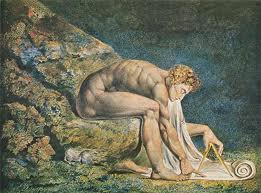
William Blake


I have been thinking for a long time now about disability as the prelude to metaphor. Of course this is a political act—a bit of street theater on the page. For everyone wants disability to be a symbol of something, even those with disabilities themselves give in to this enterprise. The deaf community loves to stand for deep culture; machismo is raised to a higher power in wheelchair rugby; blind people like to impart extra-sensitivity as a compensatory gift. Why not? The world robs you of your proper mirror. You make a new one.

But what if people with disabilities are simply people? That is, that is, that is…what if they are funny or sad or lonesome or talented because they are human souls? Well of course they are human souls. You don’t need the incunabula to draw this on your chalkboard or your IPad. So lets say our problem is the body itself. We demand that our bodies stand for something. You don’t have to be Michel Foucault to know that metaphors of embodiment and the construction of prisons and hospitals were codetermined. And so the crippled body must stand for weakness and weakness must stand for the chill of dying. When this metaphorical rubric is complete It is time to lock up the weak. Bad social metaphors are poetry without grace. Yes, bad poetry can hurt men and women. Have you been to Milan to see the anorexic, blow dried skeletal girls parading cutaway clothing? Beauty is “almost dying”—the new post-modern version of the chill of dying—lucrative dying, money changes the metaphor of the ars moriendi into something so sexy you would tear the ghost out of your own face to join it. What am I talking about? I’m stating the obvious: all metaphors of embodiment are traps. I’m also saying that art can be an unreliable lover if you are a person with a disability.

I have friends who cannot speak. They are all talented and shrewd. And people run away from them. I can attest that all human beings are slaves to embodied metaphors. You will miss out if you don’t know my friends. But you will also miss out if you’re a person with a disability who must imagine life as a symbolic, heroic distinction. Freedom is just another word for stepping outside of embodied life as a metaphor. This sounds so easy. One could conjure up Nancy Reagan (Oh wait, she’s not dead yet, sorry.) “Just say no to metaphorical embodiment!”

Alright. So you want to live like any decent animal. Let’s say that successful people with disabilities are steepened and tested by adversity but instead of being bitter (like the average American victim who appears over and over on TV talk shows) they are filled with wonder—still possess what William Blake called innocence. And let’s say that for experience they have the knowledge that nothing with the body is what it seems. That is childhood properly grown.

It is awkward to speak or see without metaphors. See how odd the body is? Do you see its minor but true technicalities? Can you just let it be?


S.K.


Pegassus, Interviewed After Years

Pegassus

Tell me your name again? My name is Pegasus. What do you do? I fly although I’m a horse—in this way I represent poetry. And how did you get your start? I ate some poems by Pindar: they were called “Odes”. Where did you find these Odes? They had been dropped among the hot, fragrant sage bushes that grow on Mt. Ida. What happened after you ate them? I became ex-ophthalmic, felt a shivering in my shoulders—as if ice was in my neck—and my breath became sweet and then my feet left the ground. Did this worry you at all? No for I was faster than the quick leaves off the Sycamores, faster than the clouds of superstition, quick as the syllabic crickets I’d always admired.


S.K.