Ode to a Good Friend

Gnezdaemail05


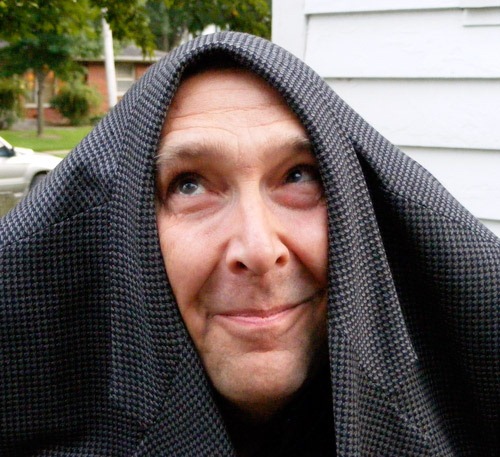
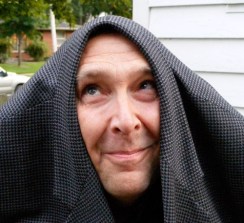
The photo above is of my friend Eric Gnezda. Eric is the kind of person who, meeting someone for the first time, sees hope there before him instead of a face. Don’t get me wrong–he’s not a rag picking Christian. He’s no dime store evangelical. The guy is an American. This means that he’s crazy. He loves the Bill of Rights. Loves Thomas Jefferson’s political nobility. And sure, the poor sonofabitch is a Cleveland Browns fan. So he loves irony too. Why not? Being American doesn’t mean you have the right to success. It’s the land of underdogs as Jefferson had hoped. God bless the Three Stooges and Lieutenant Columbo. God bless Flippo the 1960’s TV clown of Columbus Ohio…

I hope you’ll visit Eric’s website. Everyone I know needs to be reacquainted with progressive sentiment in this mad nation. “Niinko?” as the Finns would say. “Isn’t it so?”


S.K.


The Orgone Tabernacle Choir

IMG00001-20091208-1542


“Close to the road we sit down one day.

Now our life amounts to time, and our sole concern

The attitudes of despair we adopt

While we wait.”

–Antonio Machado


Someone has written an essay on riddles, itself a series of riddles; the sentences growing smaller like Russian dolls within dolls. I was winding the stem of my watch. I was reading the essay when the mechanism broke: the stem came away in my hand. A magpie walked over the lawn, stopping here and there to pick at its feathers. A hint of rain was coming on the southern wind. There was the sound of far of laughter among strangers. Then there was silence. I remembered a poem, something to do with the suspended air in Robert Browning’s study; minute after minute of stillness, a faint perfume about the curtains.

**

I found a diary once, the handwritten notes of a Finnish soldier who had hidden himself in a stranger’s house during the Winter War. The house’s owner had fled because the Soviets were advancing. But somehow the Russians never came. In turn, the soldier remained in the abandoned farmhouse, listening to the sounds of deep winter. Roof beams creaked. Branches scratched at the windows; he heard imaginary animals in the snow. Then the writing stopped. The majority of the pages in the notebook were empty. I’d found it on a table at a Helsinki flea market . I bought it. Later I lost it when I moved across the United States one summer.

**

I receive a letter from a stranger who writes that he’s going blind. He sees things as if he’s staring through a drinking straw. “I went to the Dunkin’ Donuts to buy a pound of coffee. I was on my way home from church—it was one of my first solo trips with the white cane. I thought I’d get some coffee for my wife. I stood in line and waited my turn. I held the blind man’s cane in my hand. Then I saw a kid standing behind the counter—he was right in front of me and gesturing for the amusement of the cashiers. He was forcing an illusory head down on his crotch—my head—I didn’t know what to say. So I said nothing. Just ordered my coffee. I stared straight into his face with my drinking straw. He was mouthing it: “blow me!” And I managed to withhold any trace of expression. Someone brought the bag of coffee and I turned away.”

**

The Platonic riddles and the Freudian riddles; Thanatos opens his hairy wings.

The Platonic riddle: Who can we imagine standing outside the cave?

The Freudian riddle: Who can we imagine stands inside the cave?

And either way life is cruel and short.

**

Outside the window where I am currently staying there is an orange tree. Tiny wasps fly through the Spanish Moss and circle very delicately in the shadows like falling seeds. I can see this because with one eye I am able to get up close and by staying still I am allowed to glory in the motions of these half transparent, almost molecular dragons there among the oranges.

I am lonely, I am lonely, I am best so…

Life is simple. Keep writing.


S.K.  

Justice For Sale

disabled_vet03


“Justice Scalia, who is sometimes called “the Justice from the Tea Party,” met behind closed doors on Capitol Hill to talk about the Constitution with a group of representatives led by Representative Michele Bachmann of the House Tea Party Caucus.”

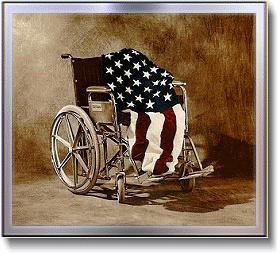
Today’s excellent NYTimes editorial on the refusal of Supreme Court Justices to recuse themselves from cases where they have vested interests is well worth reading. From a disability rights perspective the matter is of particular importance given the Supreme Court’s dismal history when it comes to enforcing disability rights, particularly in areas of employment discrimination. When the court argues in favor of state’s rights they are arguing in favor of employers and businesses against the rights of individuals. From a disability advocate’s perspective I will always remember Justice Scalia opining that making a court house accessible for a person in a wheelchair was essentially a matter of cost rather than one of rights: "It’s enough that the cost would be excessive. So saying that so many handicapped students can’t get into schools means nothing at all." (Here Scalia argues that analogies between court house inaccessibility and the lingering inaccessibility of our nation’s public schools means nothing because this is an economic argument and not a civil rights issue.)

People in the disability rights community can’t properly defend themselves without recognizing that justice is for sale. We at POTB believe that the NYTimes call for a recusal mechanism and a financial disclosure process for Supreme Court Justices is long overdue.


S.K. 


In the Kingdom of Insecurity

Jobless Men Keep Going


We applaud the NY Times for its editorial response to NY Governor Andrew Cuomo’s budget proposal. As the Times points out:


…Mr. Cuomo’s refusal to consider any new taxes, or even extend a surcharge on the state’s highest earners, means that his budget — his first — is harsher than it needs to be with the heaviest burden borne by some of the most vulnerable citizens.


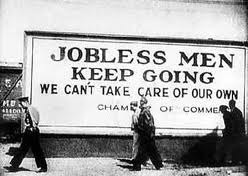
When American leaders strip money from education and social programs they are refusing to insure the nation’s future.

Perhaps Mr. Cuomo can sell New York State? He could start piecemeal by selling Long Island to the Dutch who have plenty of cash and have long been interested in getting back to Oyster Bay.


S.K.

Why the Tea Party Doesn’t Like Disabled People

Disability Discrimination

(Reader's note: I am republishing this blog post. The issues it mentions remain critical)

It began with histrionics about putative “death panels” in President Obama’s health care reform measures. (Which did not exist…)

Then it took on steam with Sarah Palin’s declaration that her youngest child (who has Down’s Syndrome) would be put at risk by the President’s plan.

The metaphorization of disability is easy to do. Exemplifying disability as raw victimhood is very easy to do.

Of course the difficult thing is to fight for benefits and social programs for our nation’s neediest.

The Tea Party (which has many different threads) has one essential signature: it reprises classic American Social Darwinism.

Michele Bachmann’s war on veteran’s benefits is a case in point. You see, helping those who have fallen and can’t get up just encourages them to be dependent.

This is the core belief of American Social Darwinism (which differs from its British origins with a fiercer dog-eat-dog rendition of Capitalism)—here is a brief description of the movement:


Social Darwinism applied to a social context too, of course. It provided a justification for the more exploitative forms of capitalism in which workers were paid sometimes pennies a day for long hours of backbreaking labor. Social Darwinism also justified big business' refusal to acknowledge labor unions and similar organizations, and implied that the rich need not donate money to the poor or less fortunate, since such people were less fit anyway.

In its most extreme forms, Social Darwinism has been used to justify eugenics programs aimed at weeding "undesirable" genes from the population; such programs were sometimes accompanied by sterilization laws directed against "unfit" individuals. The American eugenics movement was relatively popular between about 1910-1930, during which 24 states passed sterilization laws and Congress passed a law restricting immigration from certain areas deemed to be unfit. Social Darwinist ideas, though in different forms, were also applied by the Nazi party in Germany to justify their eugenics programs.

See: http://library.thinkquest.org/C004367/eh4.shtml

**

Of course one of the things that makes the United States the great nation that it is is that you can’t metaphorize people for long. Demagogues can get away with it for brief periods but then Americans say, “But wait, that’s my neighbor and friend they’re talking about!” This is precisely what is happening now. Rep. Bachmann’s steely proposition that wounded warriors can get along just fine without their current levels of support underscores the Spenserian dynamics of what they imagine budget cutting to mean. Bachmann did not propose cutting the corporate welfare that powers the engines of arms manufacturers or ship builders. This is because the issue is not about trimming government spending. It’s about imagining certain human beings as less fit to be served at the table of culture.


**

I recognize that from an academic standpoint these matters are relatively pedestrian. But the big media in the United States has given the TP a free ride on their neo-social Darwinism and that’s got to come to an end. There are real lives in the balance. Genuine people. Heroes.

A college student said to me not so long ago that he had no problem with veterans and the like (I think he meant people with disabilities) getting benefits but that guy in the wheelchair on the corner who is begging, well, ahem, he shouldn’t be getting any government handouts.

And there it is. Social Darwinism in the age of the Twitter. But it’s still about weeding. About imagine society as an English garden. No real lives need apply.


S.K.


Thanking our Friend The Goldfish

Steve Kuusisto Posing as Marty Feldman


We were honored to read that Diary of a Goldfish has named Planet of the Blind “one” among many fine disability blogs. Goldfish’s full list offers a marvelous “Who’s Who” of disability rights activists and writers who are pushing the online presence of people with disabilities. Several years ago I wrote a special section of Disability Studies Quarterly devoted to blogging. Here is what I said on that occasion:


“Therefore all deformed persons are extreme bold — first, as in their own defence, as being exposed to scorn, but in process of time, by a general habit.”

–Francis Bacon “Of Deformity”

Perhaps no word carries more weight in the field of disability studies than the verb “to claim” for “claiming disability”is to demand intellectual accountability from a set of ideas. In her groundbreaking book “Claiming Disability” Simi Linton presents a contemporary version of the Elgin marbles, a bas relief for our times:

“We have come out not with brown woollen lap robes over our withered legs or dark glasses over our pale eyes but in shorts and sandals, in overalls and business suits, dressed for play and work–straightforward, unmasked, and unapologetic) We are, as Crosby, Stills, and Nash told their woodstock audience, letting our "freak flag fly." And we are not only the high-toned wheelchair athletes seen in recent television ads but the gangly, pudgy, lumpy, and bumpy of us, declaring that shame will no longer structure our wardrobe or our discourse. We are everywhere these days, wheeling and loping down the street, tapping our canes, sucking on our breathing tubes, following our guide dogs, puffing and sipping on the mouth sticks that propel our motorized chairs. We may drool, hear voices, speak in staccato syllables, wear catheters to collect our urine, or live with a compromised immune system. We are all bound together, not by this list of our collective symptoms but by the social and political circumstances that have forged us as a group. We have found one another and found a voice to express not despair at our fate but outrage at our social positioning. Our symptoms, though sometimes painful, scary, unpleasant, or difficult to manage, are nevertheless part of the dailiness of life. They exist and have existed in all communities throughout time. What we rail against are the strategies used to deprive us of rights, opportunity, and the pursuit of pleasure.”

Linton’s description of people with disabilities describes the insistence of disability studies scholars to reclaim public space, and by so doing,to re-shape the dailiness of life. Yet reading her description of the movement she could as well be describing the medium we have come to call “the blog” or “the blogosphere” for certainly there is a new medium for the transmission of ideas and it too is “gangly, pudgy, lumpy, and bumpy”. At the same time, web logging has given disability activists a means to find one another and to find a voice to express not despair at our fate but outrage at our social positioning.

With this issue of Disability Studies Quarterly we want to introduce the blog as a new forum for disability advocacy and public engagement. Writing online is simultaneously brash, phlegmatic, idealistic, dogmatic, creative, reasoned,and vituperative. The blog is at once a forum for seasoned writers even as it offers entrance to public discourse by those who are new to publishing. It is not too optimistic to characterize the blog as an equalizing force when one considers how infrequently disability is discussed as a social construction by the traditional press. In his recent collection of essays Bending Over Backwards, Lennar J. Davis notes that even progressive political journals like The Nation will often refuse to publish editorials or articles that are concerned with disability. Progressive opinion journals are, it would seem, no better at claiming disability than their conservative counterparts.

The web log is part notebook, part opinion magazine,half public speech, half the stuff of privacy. It is shrill, uninformed, sober, giddy, and in the right hands, a medium of inquiry. One thinks of Charles Dickens’s description of the writer as being an “ink stained wretch” for like the dailiness of journalism the blog demands constant attention: noteworthy bloggers often have hundreds, if not thousands of readers who expect fresh material each morning. In turn the blog allows for conversations between writer and reader as well as offering a cyber space “agora”—a very public space for argumentation, agreement, truth telling, and occasional lying. The blog is not journalism after all, though many writers in the field are amateur sleuths, and can weigh their topics with the skill of Montaigne.

Our aim with this section of the Disability Studies Quarterly is to create what used to be called a “roundtable discussion” in which we explore a range of topics with disability bloggers.

What kinds of digital communicative practices are being explored and invented by people with differing abilities?  What new kinds of texts are they reading and creating?  What is the relation between these practices and disabilities studies? How do concepts-such as "writing," "text," "author," "rhetoric," "literacy," change in digital landscapes that involve people with different abilities? In what ways have digital and multimodal technologies enable new forms of communication among different disabilities studies communities?  How do issues of digital access, materiality, or economics affect our understanding of disabilities studies within and outside the university? What is the relation between new and old communication medias in the context of disabilities studies?  How do new communicative practices change or inform our attitudes toward traditional scholarly texts in disability studies and established conventions–and vice versa?

It is entirely possible that these questions are too ambitious for the current moment. Disability bloggers are still newly gathering in the electronic version of Dr. Johnson’s18thcentury tea house. We are presently engaged in fast conversations. Yet it is clear that the multi-media electronic web log has emerged as a powerful and dynamic contemporary force in the disability community, both in the United States and around the world. The editors of DSQ felt that the time was right for a preliminary conversation in print about the social and intellectual dynamics of web logging.

Some of our bloggers choose to remain anonymous both in their daily postings and in this issue of DSQ. Others are willing to disclose their names though they are better recognized by the names of their sites: “The Gimp Parade”; “Wheelchair Dancer”;“Diary of a Goldfish”; “The Ampu-tee”; just to name a few. Like the names of the sites, the bloggers are fresh, insistent, darkly funny, and working with equal measures of irony and those declarations that are too often withheld for the sake of decorum. The web log is not, it turns out, a genteel media. When one adds to the broadside format the compl
ications of symptom and the
traps of bodily identity we see how complicated the art of claiming disability must be. Having access to the agora is both a rite of citizenship and the means to expression. Disability bloggers may use speech synthesis programs, vocalization programs, custom pointers, Braille displays,or portable devices designed for blind people on the go. These bloggers will inevitably agree and disagree about the traditional issues that are discussed in the town square but they will also bring to their discussion a further awareness and commitment to disability advocacy. When we consider the long history of social isolation that has surrounded the experience of disability we can sense the remarkable opportunity that is at hand.


S.K.

 

Directory Links Wounded Warriors, Families to Resources


disabilities_250x251


We have received the following press release from the American Forces Press Service. We at POTB applaud the creation of a National Resource Directory for wounded warriors. Getting reliable information about disability services is difficult in these United States largely because of our nation’s vast size and its decentralization. This directory will help many people


S.K.


By Elaine Wilson
American Forces Press Service

WASHINGTON, Feb. 3, 2011 – From benefits and compensation to education and training, an online directory is providing wounded warriors, veterans and their families a direct connection to thousands of state, local and national resources.

"There’s so much information on the Web right now, it’s nice to have one place to access all of the content, the services, the information you need," John R. Campbell, deputy assistant secretary of defense for wounded warrior care and transition policy, told American Forces Press Service. "It really permits the service member and family the ability to get information directly."

The Defense, Labor and Veterans Affairs departments created the National Resource Directory — located at http://www.nationalresourcedirectory.gov/ — to link wounded warriors, service members, veterans, their families and caregivers to nationwide resources that support recovery, rehabilitation and community reintegration, Campbell explained.

Toward that end, the directory contains information on a broad range of topics, including benefits and compensation, education and training, employment, caregiver support, health, housing, and transportation and travel.

With such a vast amount of information, Campbell said, a considerable effort went into creating user-friendly navigation tools to help people pin down resources quickly, whether it’s local grassroots efforts or national-level initiatives. People can search for a resource or program by subject, state or territory. A recent addition is a state widget that people can customize and embed in home pages, blogs and other sites. Once there, the information is updated automatically.

New programs and resources are added to the directory as quickly as agencies and organizations can roll them out. Experts always are working to ensure they’re hitting on the hot topics for troops and their families, Campbell noted, and as a result, the site is constantly evolving.

Campbell cited veteran homelessness as an example.
The U.S. Interagency Council on Homelessness is working with the Veterans Affairs and Housing and Urban Development departments to eliminate homelessness entirely by VA’s goal of 2015.
The directory has devoted an entire section to homelessness, featuring resources that offer everything from emergency housing to employment assistance.

Spouse employment is another area of growth on the directory, Campbell noted, particularly with new programs and resources in the works. The Labor, Commerce and Defense departments and the Small Business Administration, for example, are working with the business community to expand career options for spouses. Officials will ensure new spouse employment resources are added to the directory as they arise, he said.

While officials always are on the lookout for new information to post to the directory, feedback from troops and their families plays an integral role in keeping the site current, Campbell said. The site includes an easy-to-locate section where people can submit resources for consideration or pass on praise for outstanding service.

"We’ll take that resource and, if we find out it’s a good one, we’ll put it up," he said. Officials verify each resource before posting, he added. A nonprofit organization, for example, must be in good standing with the Better Business Bureau before it can be considered for the directory.

"That’s the idea: to make it easy, make it efficient, make it valuable," Campbell said.

To further that effort, he said, a mobile version of the directory will launch in the spring for smart phone users.

"The target audience is younger service members and families," he added. "We’re really excited about that."

Campbell said he’s received great feedback on the site, and is encouraged by a vast improvement in visitors, which he attributes to word of mouth. In the last quarter of 2010, the site’s unique visitors jumped by 115 percent, he said.

"We’re continuing to get reinforcement that we’re doing the right thing," he said.

Biographies:
John R. Campbell

Related Sites:
National Resource Directory

Disabled American Veterans Decry Wrongheaded “Heartless” Budget Cuts


DAVSealReflect

“If Rep. Michele Bachmann (R-Minn.) wanted to make a name for herself by proposing to cut funding for veterans health care and disability compensation, she has succeeded. "Such an ill-advised proposal is nothing short of heartless," according to Disabled American Veterans Washington Headquarters Executive Director David W. Gorman.
"It is unconscionable that while our nation is at war someone would even think of forcing our wounded warriors to sacrifice even more than they already have," Gorman said. "Their injuries and disabilities were the result of their service to the nation, and our nation must not shirk its responsibilities toward them. How do you tell a veteran who has lost a limb that he or she has not sacrificed enough? Yet Rep. Bachmann wants to do just that."

We at Planet of the Blind applaud Director Gorman for his eloquent response to Rep. Bachmann’s deliberative grandstanding. This semester at the University of Iowa I am teaching a distance learning course on disability and wounded warriors in film and literature. Each day my students learn about veterans who return to the U.S. with complex disabilities: head trauma, blindness, loss of limbs, PTSD—and far worse, “poly-trauma” which is a fancy way of saying someone has more than one disability. One cannot imagine how Rep. Bachmann can conceive of cutting health care an disability compensation for veterans in a time of war. We can only imagine that Rep. Bachmann has never read a book. In fact this supposition seems more likely when one considers the nonsensical arithmetic of the Tea Partiers. In fact cutting spending on health care for veterans would actually increase the deficit. But of course understanding this requires what Huck Finn called “book learning” and we’re certain Rep. Bachmann doesn’t have time for that. 

From the Disabled American Veterans Website:

“The 1.2 million-member Disabled American Veterans, a non-profit organization founded in 1920 and chartered by the U.S. Congress in 1932, represents this nation’s disabled veterans. It is dedicated to a single purpose: building better lives for our nation’s disabled veterans and their families. More information is available at www.dav.org.”


S.K.