Dear Allan, We're Still Down Here, Trying to Reteach Things Their Loveliness…

This is essentially a long letter to my father Allan A. Kuusisto. Allan has been gone for nearly 15 years. He died without warning on Easter Sunday just after walking his black Labrador. He fell dead in the hallway outside his apartment from massive heart failure. He died as some say they’d like to die: no frightful diagnosis, no lingering, withering battle. There’s much to be said for this view of dying but I’m certain my father wouldn’t have agreed because he was a stoic Finn who would have fought to the last and found poetry in the fight. 


Dear Allan: There’s a lot on my mind. Your favorite American poet was Galway Kinnell. Galway died two weeks ago. You once said to me as we walked the shore of Seneca Lake in Geneva, New York: “Galway is both sentimental and tough. I like that.” You thought of Kinnell as an honorary Finn. 


Here is a poem by Kinnell you loved:


Saint Francis And The Sow


The bud 

stands for all things, 

even for those things that don’t flower, 

for everything flowers, from within, of self-blessing; 

though sometimes it is necessary 

to reteach a thing its loveliness, 

to put a hand on its brow 

of the flower 

and retell it in words and in touch 

it is lovely 

until it flowers again from within, of self-blessing; 

as Saint Francis 

put his hand on the creased forehead 

of the sow, and told her in words and in touch 

blessings of earth on the sow, and the sow 

began remembering all down her thick length, 

from the earthen snout all the way 

through the fodder and slops to the spiritual curl of the tail, 

from the hard spininess spiked out from the spine 

down through the great broken heart 

to the blue milken dreaminess spurting and shuddering 

from the fourteen teats into the fourteen mouths sucking and blowing beneath 

them: 

the long, perfect loveliness of sow. 


You especially loved the lines: though sometimes it is necessary/to reteach a thing its loveliness…


**


There is a lot on my mind that brings me to my father. 


Though I’m trying to abjure sentimentality I must admit its better side—the courteous and kind nature of our emotions. My father could be courteous and kind, qualities that stood him well in his career as he was a college president in the late 60’s and throughout the 70’s. 


When students at the State University of New York at Albany occupied the administration building, he didn’t call security; didn’t send a corporate lawyer to meet them; but instead crossed everything off his calendar and sat down with them. He sat with them for three full days. He turned the protest into a seminar. He negotiated but also taught. He listened without any pretense he was too busy to hear their concerns. 


Here’s a photo from that time. Allan K is at the lower right. He’s holding his reading glasses in his right hand, and talking directly with students. The year was 1969. Notice the absence of security officers.  


Kuusisto SUNY Albany


Dear Allan: It seems today’s college Presidents are often less interested in the kind of direct relationship with students that you cultivated. I think senior academic  officers nowadays are afraid of almost everything—frightened about the bottom line; afraid of their donors; eager to slash services and programs without genuine transparency; and perhaps worst of all—like the last Emperor of China they’re hidden behind layers of bureaucrats. 


Dear Allan: I’m not sentimentalizing you. You had your weaknesses. You were often kinder to other people’s children than your own. But jeez, you were raised by a Lutheran minister during the depression. You shoveled railway tracks as a teenager. What the hell do I know? 


Here’s a poem I wrote for you, though you died before the book appeared:


Viaticum


1


The Tao of walking, say, the American roadside,

Though it won’t be leisure brings you out.


It’s money that walks us through the beach grass.

There are broken devices here…


2


When he was a boy

My father shoveled railway tracks.


Later he called it misery mud —

A good word in Finnish.


The funny thing was, he’d say,

I used to shovel up people’s teeth.


And I mean regularly.


Excerpt From: Stephen Kuusisto. “Only Bread, Only Light.” iBooks. https://itun.es/us/1017I.l


**


Dear Dad: The spruce is bluer than twilight, takes blue far with prescience, as trees do

though saying it gets us thrown out of class, as I was, back when, back when the smart tree

took me in, bluer than a small boy’s blue which was blue enough, sweet as his blind fingers,

for the tree was sweet as well as wise and as I say, took me in, just as trees do, as trees will sometimes do and for nothing. 


Dear Dad: they told me to draw with crayons, a skier, and I drew the tree. 


Thanks for your blue, far with prescience. I hope the smart tree has taken you in. I hope Galway is there. 


Yours,


The Kid


A Letter to the Chancellor of Syracuse University

Dear Chancellor Syverud:

Marcus Aurelius famously said: “Never esteem anything as of advantage to you that will make you break your word or lose your self-respect.”

I’m mindful of this as we face together a critical moment at Syracuse University. Events are now unfolding in respect to the treatment by the administration of the students who go by the name THE General Body, circumstances that call into mind the quote above.

You hold in your hands the worth of our collective dealings and associations with students and the respect of our university.

By sending the university’s Chief Counsel to disseminate overtly threatening letters to the students occupying Crouse-Hinds Hall you have chosen to take engagement with the students in a direction many faculty find deeply troubling. I am one of these professors.

Just two days ago I wrote on my blog, which has a national audience, that its time for students to take a leap of faith and trust your administration. You and your team have negotiated seemingly with good intentions. Up until now.

Now you are turning a difficult and painful moment into something that sends many on the faculty the feeling our university is about to undermine the truthfulness of its promises and the respect we hold dear in the public square.

I urge you to re-engage with the students and renew your commitment to resolving matters with care and not threats.

Sincerely,

Stephen A. Kuusisto
University Professor
Director
The Renée Crown University Honors Program

THE General Body at Syracuse University Needs to Take a Trust Break

IMG 0033

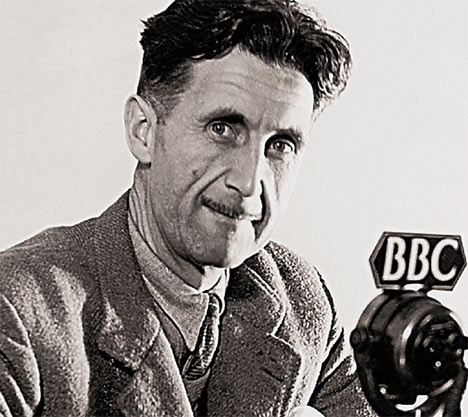
Photo of George Orwell, speaking into a BBC microphone.


If you make enough mistakes you’ll have a substantial life but only if you spot the mistakes. As THE General Body’s protest at Syracuse University seems to show no sign it will come to an end anytime soon I want to offer some ideas about living a life of good mistakes. I’m an expert in this area. My favorite writer, Kurt Vonnegut Jr, once told me he was the world’s foremost authority on tooth fairies. I’m the genius of blunders. 


Make no mistake about it: I’m not saying THE General Body has blundered in its righteousness.  Far from it. Students occupying Crouse-Hinds Hall have done a profound service for the SU community by demanding better mental health services, ADA compliance on campus, more financial aid for our best minority students, an expansion of services for rape crisis, restoration of the women’s advocacy center, and a commitment to transparency and engagement by the university’s trustees and administration. THE General Body has also demanded other crucial things—clean energy investment, greater student input about the future direction of the university—in essence calling for a commitment to democracy. No blunders anywhere. 


But as the king of blunders its time for me to stick my neck out. To echo Kurt Vonnegut: I think there are plenty of hopeless ideas going around. One is that Kent Syverud, Chancellor of Syracuse University is unmindful of diversity. In truth he has committed his life to championing inclusion. He has defended affirmative action. Kent Syverud is not the enemy of inclusiveness he’s being made out to be. This is a careless mistake. 


The problem with careless mistakes is they become canonical. If THE General Body paints Chancellor Syverud as being opposed to campus diversity it can then create an alternative reality, one where no one in authority can be counted on. I remember the Sixties and the specious phrase: “don’t trust anyone over thirty”. 


Now the administration also has made mistakes. Placing a construction fence outside the protest? A blunder. Treating the occupation as merely a “negotiation” rather than an opportunity for education—a genuine campus wide “teach in” with faculty and administration and students— that was a blunder. Students have been made to feel like the enemy while presenting their demands. I for one would never have sent the university’s chief counsel out to meet the students “first thing”. Blunder blunder. 


But now what? THE General Body is invested in the idea that Chancellor Syverud is not trustworthy. I think this is a terrible mistake. “Ah,” you say, “but Grasshopper, haven’t you already said you’re the king of blunders? Why should you be heard at all?” 


You’ve got me. I make mistakes. Often I make them because of my passionate intensity. But I also know a good mistake depends upon thorough recognition. 


THE General Body needs to recognize three things straightaway: 1. Media notoriety is addictive but not always productive. 2. The Chancellor is likely more reliable and trustworthy than you think. 3. Since I said “likely” the advantage is yours. The Chancellor must now demonstrate he can be trusted. I believe you can count on him. Yes, I’m just a blundering writer. But I don’t think I’m making a mistake by saying THE General Body can count on Kent Syverud to faithfully communicate with students while pressing for reforms. If these developments do not transpire the blunder will be the administration’s and clearly observable. But for now I think THE General Body should decamp and give the Chancellor the chance to demonstrate his integrity. I think he has a lot more of it than he’s being given credit for. 


What's Wrong with the Guide Dog Schools, Part Two

IMG 0245


Photo of Stephen Kuusisto with his second guide dog “Vidal” a yellow Labrador retriever. 


I wrote just days ago about the bad behavior—the execrable behavior of several guide dog school administrators and its been interesting to see (behind the curtain, as it were) responses from people who work in these programs and who cannot speak for themselves. They have expressed gratitude for my public outcry.


The poet Wallace Stevens wrote, famously, “the world is ugly and the people are sad” but if he could be here today he might write, “the world is ugly and the people are terrified” as the business of biz has become aggressively heartless in a new and sinister way.


For over 70 years guide dog schools in the US have assured the safety of blind people. Their job (as advertised) has been to provide professionally trained dogs to blind men and women. They have done that job very well. One reason they’ve been successful—in fact, the chief reason, is that senior guide dog trainers (who understand profoundly the complexities of blindness and the complications of dogs) have been central to every facet of “the work” as they themselves like to call it. “The work” requires years of apprenticeship, learning alongside veteran trainers; wearing blindfolds in traffic; living with blind students while wearing a blindfold; learning the hundreds of ways people can become blind; understanding the social and cultural obstacles faced by disabled people; and learning how to work with clients who have multiple disabilities. All this while walking thousands of miles in rain and snow and during heat waves. All this while learning everything there is to know about dogs and traffic and how to handle danger. 

The seniority system has always been one of the standout features of “the work” because younger guide dog employees, prospective trainers, and even administrative and housekeeping staff can learn almost daily what the older trainers know. “The work” is about accumulated knowledge. In many respects guide dog schools, like colleges and universities, are involved in knowledge production. 


While guide dog trainers are not well paid, they have always been able to count on having a career. Let’s be clear: the “career” is about knowledge and empathy and a profound awareness of disability in all its myriad forms. 


By reducing retirement benefits; summarily dismissing senior staff; and pretending that these things are necessary in order to serve the blind, the new style administrators and Wall Street directors of the guide dog schools are destroying the morale and undermining the security of people who have given their “all” for blind people. 


The guide dog schools have plenty of money. These heartless management ideas come from the current corporate driven management idee fix—that reducing investment in employees is good for the bottom line. But I say this is hogwash. And I say the very idea—the very adoption of Bain Capitalism where guide dog employees are concerned puts the blind at risk. 

I can say these things because I’m not afraid. The guide dog schools may well put me on a “do not admit” list and prevent me from getting another dog. But I can live with myself. I can’t live with the knowledge that guide dog trainers are now working in fear for their very livelihoods.   


I can’t reveal the narratives I’ve heard from guide dog trainers, but I assure you their stories would break your heart. 


The King of Sweden Might Be Your Neighbor

I once wrote a poem making fun of the King of Sweden. Of course because it was a poem, the king never really appeared—only ideas about the king materialized. Political fictions are often sentimental and doubly destructive because of it. For most of America’s history the President of the United States has been a cruel and ugly man. When the prez isn’t sufficiently cruel and ugly the people get restless. They know what to expect. Decent presidents tend not to fare well: Woodrow Wilson; Jimmy Carter; Gerald Ford come to mind. Try looking up “kind American presidents” via Google. You’ll discover that a California schoolgirl has genealogically linked all US presidents as descendants of King John of Britain. (King John was the bad guy in Robin Hood, FYI). 


The notable thing about American domestic politicking is that we hate decency in our commander in chief. Give back the Panama Canal, we hate you. Talk about a “kinder, gentler nation” and we lampoon you. Fight for health care and we’ll never give up vicious slanders. None of this of course is new in America. What is new is the increasing respect the press corps has for the implicit idea that being an asshole is a proper, indeed necessary credential for leadership. I assure you the press didn’t always think that way. In fact the press actually rooted for decency in 1933, applauding Franklin Roosevelt’s efforts to save the country. Today the press would say he’s a traitor to his class, or worse. 


True management, whether in government or higher education requires moral principles but you wouldn’t know it by the slavish abeyance of the press to the idea that cruelty, greed, and contempt are requirements for leadership. 


BTW: even King John wouldn’t get elected today. He signed the magna carta. 


What's Wrong with the Guide Dog Schools?

Photo of Stephen Kuusisto with his second guide dog “Vidal” a yellow Labrador.


Its not easy to be an advocate for human rights because the engines of neo-liberalism smog the village square. I think history will show this is an age of ruinous acquiescence, a time when its easier to prefer convenience over complexity–a hint of Al Gore here–truth is always inconvenient.

Recently some of the schools that train guide dogs for the blind, non-profit agencies all, have adopted the Bain Capital model of employee management, laying off vital staff (translate “older” and “experienced” if you like) and several have chosen to reduce staff retirement benefits by shelving long standing retirement plans for 403B packages–plans designed for churches and non-profits. Almost no one can actually retire on a 403B plan–they're essentially “cafeteria” plans that allow employees to put aside money from their pay checks in a temporarily non taxable and limited investment fund.

There are roughly twelve guide dog schools in the United States and all are charities. Each breeds and trains dogs for the blind. Because 80% of the blind are unemployed (even twenty five years after the adoption of the Americans with Disabilities Act) the guide dog schools provide dogs to blind clients free of charge. The cost of a guide dog is guess-estimated to be around $40,000 per unit–that is, per finished product–a successful dog and person team. It's expensive work. Puppies must be bred, then raised until they're old enough for training at about a year and a half. Training requires 6-8 months of consistent, daily work by professional guide dog trainers who teach dogs how to navigate country roads and inner city traffic, all the while encouraging each and every dog to trust its instincts and recognize it must often think for itself and countermand its human partner's orders.

Guide dog trainers have demanding jobs: they work in rain and snow. They walk thousands of miles a year. Moreover they undergo a long and poorly paid apprenticeship with a senior trainer to master the rare skills necessary both to train exceptional dogs and work with blind people. When they finally become guide dog trainers after years of brutally hard work they're still paid rather poorly. The average guide dog trainer makes a salary roughly equivalent to the earnings of a high school teacher. But the rewards of guide dog training are great. You work with dogs, help people, and change lives for the better.

In former times a guide dog trainer could imagine having a career. Although they were poorly paid, they could count on a solid retirement plan. In general guide dog schools valued veteran employees who possessed long experience working with the blind and their dogs.

Enter neo-liberalism: “capitalism with the gloves off” as Robert W. McChesney calls it.

Two years ago “The Seeing Eye” (the oldest guide dog school in America) suddenly fired over twenty long time employees–trainers, field representatives, even a veterinarian. The fired staff didn't even have time to clean out their desks. They were simply told not to come back.

Following suit, “Guide Dogs for the Blind” a famous school in California eliminated staff. Later, after protests, employees there were reinstated.

If you're blind and travel with a guide dog you count on veteran staff: folks who know the complex and challenging circumstances of vision loss and safe mobility. Additionally you want to be assured those who work with you–support you–are being taken care of.

Now “Guiding Eyes for the Blind” –the guide dog school from which I've received three guide dogs, and where I once worked, where in fact I played a role in hiring some extraordinary people, has announced summarily, without warning, they're eliminating their retirement benefits plan in favor of a second rate 403B.

In this digital age with its “Instant Karma” public relations administrators can say almost anything. When I posted my dismay about Guiding Eyes treatment of its employees, one PR person wrote on Facebook that the new retirement plan was long studied and it was necessary to ensure that guide dogs can be provided free of charge to blind people.

The guide dog schools I've mentioned have combined endowments in the neighborhood of 700 million dollars. I'm not convinced cutting veteran staff and making it harder for people to achieve a career is necessary at all. What I am convinced of is that the justifications of neo-liberalism have become the narrative template of management in our time. Everything should be lean and mean.

The alumni of the guide dog schools can't really protest. They're not cash paying customers like college alums. Many guide dog users fear criticizing the schools will hurt them–they'll be branded as “difficult” or “disloyal” or “uppity”.

Right now I'm finishing a book about guide dog life for Simon and Schuster. I've been a loyal and upbeat spokesman for the guide dog movement for years, appearing on national TV and writing widely on the advantages of traveling with a professionally trained dog.

I fear for my friends who train the dogs. I dare to say so.


Self Interview, November 6

There are so many things I cannot say. My smallness is actually comforting. Sometimes as I meditate I grow smaller and smaller.

I love it when wise people laugh.

There is little else to go on.

**

I have a gizmo, looks like a cooking implement, an egg whisk, but its a kind of forked device, and you rub it over your scalp. The thing is so soothing. Now I’m trying to do this with my mind.
Its the inner fork I’m after.

Laughter.

**

Jesus said: A new command I give you: Love one another. As I have loved you, so you must love one another.

He should have added, share the scalp fork…

**

I love you little dog. I love you maple tree. I’m here now. I know what to worship, just this minute.

Don't Try This at Home

When doctors don’t know what you have–you know, “the thing” that bends you low, makes you sweat, causes you to entertain prayer, forces you to jump up and down like a mechanical toy from the 19th century, they call it an “idiopathic” condition.

Now of course there are different kinds of not knowing when it comes to the body. There’s not knowing and there’s not knowing. I hope this clears things up.

I have one of the commonest idiopathic ailments and you might have it too: I fucking itch all over. We’re not talking a minor league, Sunday school itch–the kind Huck Finn had when they told him not to scratch in church–that ain’t idiopathic my friend. We know why Huck was itchy. In fact studies have shown that ministers, preachers, priests, rabbis, zen masters, imams, and school teachers can cause itching by doing nothing more than moving their eyes. There’s a scientific term for this. Preachers who make you itch just by looking at you are known as ohptho-idio-paths, which is an elevated way of saying you break out in hives because they really don’t fucking like you.

There. I’ve dropped two “f bombs” in three paragraphs. But this reflects how serious idiopathic itching is. The doctor doesn’t know why you itch. You just boil all over with purgatorial pins and needles, with no part of your body unaffected.

You might be allergic to wine. Maybe food. Maybe air pollution. Agribusiness. Laundry detergent. But when you live without these things as an experiment, sequentially, sober, starving, hiding in the cellar, stinking so badly the dog won’t come near—nothing changes. You itch like an electrified sponge.

In my case the thing that most helps is an over the counter generic drug called loratadine–an antihistamine that’s commercially marketed as Claritin. When I take it the itching is vastly reduced. I stop tearing at my skin. I even get some sleep.

So why then did I spend last night “not taking it” and playing a game of mind over matter? Why did I lie on my bed of fire and send brain messages to every part of my straining body?

The answer? It’s the Lutheran Olympics. It’s a Scandinavian thing.

Brain to feet: “C’mon guys, can’t we all just get along?”

Feet to brain: “Captain, the engine room’s on fire and the door’s locked!”

Brain to hands: “Now just stop that! Grow up!”

Hands to brain: “Help! The tarantulas have escaped! They’re in our mittens!”

Other parts of the body have requested anonymity.

Please don’t try this. We are, as they say in TV land, trained professionals.

My Guide Dog is Licking the Floor

I'm in the airport sandwich shop. Guide dog Nira is doing her best imitation of an ant eater. If you're a long time guide dog user you tend to let these moments of crumb archiving simply occur rather than make a big deal out of it. It's OK. Three crumbs under the table and she's done. This is a good rule for life in general. Three crumbs. Everyone.