Professor Weary’s Castle

“When we are tired, we are attacked by ideas we conquered long ago.”

― Friedrich Nietzsche

Everyone is tired at the local university. A middle aged professor of English stands at her office window and sees down-clad students shuffling in snow, their backpacks like outer space life support systems, and she recalls a line from a novel by Anita Brookner, something to the effect that “Rachel at forty stood at her window and considered how literature had ruined her life”–that was nearly it…

Everyone is tired.

A graduate student in philosophy, still half a boy reads Haruki Murakami’s Dance Dance Dance:

“Unfortunately, the clock is ticking, the hours are going by. The past increases, the future recedes. Possibilities decreasing, regrets mounting.”

He underlines it.

Across campus the STEM building is nearing completion. It has yellow glazed tiles on its outer walls, which causes it to resemble a pottery kiln turned inside out. Despite its barbarous skin the humanities faculty envy it.

Fatigue and discontentment in the humanities. Stop. Old fashioned telegram. Stop.

“No man is rich enough to buy back his past.” (Oscar Wilde)

Less and less funding for the fine arts. Stop.

**

The Dean of Liberal Arts reads the website of a conservative think tank on higher education which argues the humanities have lost relevance (butts in seats) because they no longer teach good, time honored verities, as, for instance, they did when it’s authors were young. “No student reads Shakespeare any more,” they complain. “Students don’t read Plato anymore,” the report says. Instead they take courses with titles like “Post-Colonial Queerness in Anglophone Africa” or “Crippled Ecologies of Post-Capitalism”–the subtexts of which are about what’s wrong with culture and never what’s right.

Poor Dean! He’d like to respond but hardly knows where to begin.

He writes a small note for later use. Says: “after a century of industrial warfare and genocide the critique of dominant narratives becomes the work of conscience”–but he doesn’t send this anywhere. Doesn’t want to offend certain trustees.
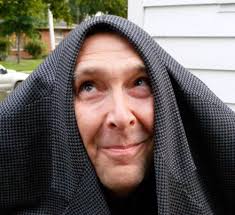
The Man with a Brand New Guide Dog Named Corky Encounters Free Range Christian Superstition

I didn’t want to inspire anyone. I said it aloud to Corky. “Let’s avoid Tiny Tim,” I said. A dog is a dog and doesn’t see the need to be anything else. I had to laugh. A dog is so happy in her skin. How many people can you say this about? “Hello, pleased to meet you, I’m merry in my skin.” If only our days played out this way. “Hey, Joe, I’m cheery in my flesh, how about you?” Poor us. Poor upright boys and girls, all of us damaged by physical education classes and the assorted bad ideas of churches, Freud, and broadcasting houses. “Let’s skip Tiny Tim,” I said to Corky because it was clear after just a few months of guide dog travel that we, the two of us as a unit, were unconditionally stirring to strangers and casual acquaintances. It became obvious when we were approached by doe eyed holy roller types—who’d grown up watching Jerry Lewis telethons, who’d absorbed a thousand sermons about the blind, all of whom need the grace of God—wanting to touch us, pray for us, or at the very least, tell us how uplifting we were. Riding the subway in Manhattan, the 4 train from Grand Central to Union Square, and feeling good, feeling really good, Corky tucked safely under the seat, oh feeling good, a woman seated across from us said: “You and your dog just gave me some Jesus!” There we were! Corky was Bob Cratchet, and I was crippled Tim, riding his father’s shoulders, a vision of Christ’s mercy. And I wanted to say, “I’m cheery in my flesh, how about you?”

These interruptions occurred so often I began to worry about it. When would it happen? Did it always manifest when I was uncommonly happy? Did it only happen when my mind was occasionally blank?  These I saw were the wrong questions. Culture ain’t what you think it is, it’s just what it is. Corky and I stood for nothing other than brokenness to loose cannon Christians. On a bus one day a woman said loudly: “Can I pray for you?” I couldn’t help myself and said very loudly: “Yes, Madam, you may pray for me, but only if together we raise our prayers for all the good people on this bus who have trouble brewing in their DNA, whose cancers are aborning even as we speak, whose children have gone astray through substance abuse, who are even now feeling lost in a sea of troubles, let us pray, all of us together for our universal salvation.” I clutched the woman’s arm with feverish intensity. The bus pulled to a routine stop and she jumped out the door. Passengers applauded. “Don’t take it personally,” a woman said to me then. I smiled. But how else to take it? The blind man either needs salvation or he’s a sign of grace. Can’t a fellow simply say: “I’m cheery in my flesh, how about you?”

I asked Edward, an Episcopal priest, what he thought of the Tiny Tim-Jesus complex as I’d come to call it. We sat together on a park bench in Ithaca, soaking up the first real warmth of spring. The bees had come out. Corky was chewing on a bone at our feet.

“Many Christians don’t like the body,” he said. “That’s how they understand the crucifixion. They think the human body is the throw away part of Christ. And of course that’s utterly wrong: the body of Jesus is, as Dietrich Bonhoeffer said: the living temple of God and of the new humanity.”

“In effect,” he said, “every body is the body of Jesus. Which means each body, whether its broken or not is a true body, imbued with spirit, and not a sign of want. There’s a beauty to the diversity in the body of Christ.”

“So why are there so many predatory prayer slingers who want to mumble over me?” I asked.

“The insecure ye will always have with ye…” Edward said.


Anna Stubblefield and Facilitated Communication

stevekuusisto's avatarPlanet of the Blind

By Ralph Savarese

As someone who has written a lot about the communication predicament of nonspeaking people with significant motor impairment (particularly autistics), I have held off commenting on the Stubblefield case because I continue to believe that it is a very poor vehicle for talking about a range of important issues: from the efficacy of certain forms of augmentative communication, to the sexual rights of disabled people, to the role of race in the study of cognitive disability, to so-called “standards” of academic publication. (Disability Studies Quarterly printed an article that was co-authored by Ms. Stubblefield and Mr. Johnson—some scholars are now calling on the journal to withdraw it.) While I sympathize with what appear to be Ms. Stubblefield’s intentions and while I have no problem imagining that Mr. Johnson is intellectually competent or that he both consented to and actively desired sex, I question her judgment—especially with…

View original post 1,795 more words

Papas Can Be Piggy, by Georgie Wood

Disability is everywhere, even in a throw away line by Paul McCartney…

stevekuusisto's avatarPlanet of the Blind

Back when I was a sullen teenager who lived his life by smoking marijuana in the attic while playing sixties pop music over and over without respite I absorbed lots of chatte by my favorite recording artists. I’ll bet you  did too. I absorbed these little “bits” without apparent discernment. Case in point: Paul McCartney’s little throw away line on the album “Let It Be”one can hear him say as he prepares to sing the title song and as the tape is rolling” Papas can be Piggy, by Georgie Wood. And now I’d like to do “All the Angels Come.”  (Reader’s note: you can’t hear this on the link I’ve provided, you have to play the album.)

I’ve been carrying that little bit of brio ever since. I can hear Mr. McCartney’s falsetto and I’ve even upon occasion tossed off the line myself as though I’m having a minor…

View original post 182 more words

From the Toxic Toad Department

I remember reading an essay by Christopher Hitchens where he mentioned that Edmund Wilson understood why Alexander Woollcott’s personality didn’t appeal to everyone. It’s a British observation, one few Americans recognize, at least not immediately. Americans say: “Like me, like my dog.” The English are less encumbered.

As a blind man I want to be liked. I had a rough go as a boy. That this desire is wholly unreasonable is often difficult for me to grasp. If I say I’m appealing then this must be so.

But of course it isn’t so. My disability is pre-defined by ableist metaphors and practices. I arrive, as it were, pre-disliked, like pre-stressed furniture. Accordingly I’m refreshed by the toughness and determinacy of others. I’ve always loved this quote from William S. Burroughs:

“I am not one of those weak-spirited, sappy Americans who want to be liked by all the people around them. I don’t care if people hate my guts; I assume most of them do. The important question is whether they are in a position to do anything about it. My affections, being concentrated over a few people, are not spread all over Hell in a vile attempt to placate sulky, worthless shits.”

Sulky, worthless shits. Nice. Today I’m rather clear. My personality doesn’t appeal to everyone.

I am not entirely American.

It intrigues me of course just how many people in the United States will cheer for a man who is a worthless shit. And this is not a British “thing” but rather something Kurt Vonnegut Jr. put his finger on some forty years ago. I’ll have to paraphrase him, but the gist of his observation is that Americans are fond of saying: “If you’re so smart why ain’t you rich.” A vile man with deep pockets is invariably held as a wise fellow by your average downtrodden American prole.

It’s possible in the US to be a toxic toad and still be widely admired. We’re not the only nation where this is the case, but as far as I know we’re the only country where people will say, “Have a nice day,” while burying their despair, holding their noses, and voting for a mobile bag of vomit.

What do we think of ourselves? Not much apparently. Thoreau put it this way:

“See how he cowers and sneaks, how vaguely all the day he fears, not being immortal nor divine, but the slave and prisoner of his own opinion of himself, a fame won by his own deeds. Public opinion is a weak tyrant compared with our own private opinion. What a man thinks of himself, that it is which determines, or rather indicates, his fate.”

Winter


—after Pablo Neruda

They spoke so often of the dead

in my family, so routinely—like weather

or a request for milk—

that a strange thing happened.

One night my father

recalling men

who’d flown with him

in the war—pilots

who’d vanished—

wept, as one must,

and a bee lifted drowsily

from the fire.


Greyhound Settles with the Department of Justice Over ADA Violations

Greyhound Lines to Resolve ADA Violations


February 8, 2016

Source: U.S. Department of Justice (DOJ)


Under the terms of a consent decree filed by the Justice Department today, Greyhound Lines Inc., the nations largest provider of intercity bus transportation, will implement a series of systemic reforms to resolve allegations that it repeatedly violated the Americans with Disabilities Act (ADA). Greyhound will pay $300,000 in compensation to certain passengers with disabilities identified by the department and will retain a claims administrator to compensate an uncapped number of additional passengers who have experienced disability discrimination.


The consent decree, pending approval by the U.S. District Court for the District of Delaware, resolves the departments complaint that Greyhound engaged in a nationwide pattern or practice of violating the ADA by failing to provide full and equal transportation services to passengers with disabilities.

The alleged violations include failing to maintain accessibility features on its bus fleet such as lifts and securement devices, failing to provide passengers with disabilities assistance boarding and exiting buses at rest stops; and failing to allow customers traveling in wheelchairs to complete their reservations online.


“The ADA guarantees people with disabilities equal access to transportation services so that they can travel freely and enjoy autonomy,” said Principal Deputy Assistant Attorney General Vanita Gupta, head of the Justice Departments Civil Rights Division. “Todays agreement marks a major step toward fulfilling the promise of the ADA, and we applaud Greyhound for entering the consent decree.” “We are fully committed to ensuring equal access to all opportunities society has to offer, including transportation services,” said U.S. Attorney Charles M. Oberly III of the District of Delaware.


Under the terms of the agreement, Greyhound – which serves more than 3,800 destinations and more than 18 million passengers each year across North America – will compensate several classes of passengers who faced barriers because of their disabilities. Through a claims administrator, Greyhound will compensate individuals who experienced barriers based on disability during the three years prior to todays filing. There is no cap on the number of individuals who may submit claims or on the total amount to be disbursed by Greyhound through this process. In addition, Greyhound will be required to pay a total of $300,000 among specific individuals identified by the department who experienced ADA violations. Greyhound will also pay a civil penalty to the United States in the amount of $75,000.


In addition, the agreement mandates that Greyhound implement a series of systemic reforms, including the following:


list of 5 items

  • hire an ADA Compliance Manager;
  • require all employees and contractors who may interact with the public to attend annual in-person training on the ADA;
  • provide technical training to all employees and contractors on the proper operation of accessibility features of Greyhounds fleet;
  • report every three months to the department on its compliance efforts; and
  • ensure that persons with disabilities can make reservations for travel, and lodge disability-related requests, through its online booking system.

list end


Individuals who experienced disability-related discrimination while traveling or attempting to travel on Greyhound buses during the previous three years may be eligible to receive a monetary award. The claims administrator for the fund will be posted on Greyhounds website, and on the departments Disability Rights Sections website at www.ada.gov following entry of the consent decree by the court. Questions about making claims should be directed to the claims administrator.


To read the consent decree and complaint, please visit www.ada.gov

For more information about the ADA, call the departments toll-free ADA Information Line at 800-514-0301 (TDD 800-514-0383) or access the ADA website at www.ada.gov


To read the Greyhound Consent Decree visit:


http://www.justice.gov/opa/pr/greyhound-lines-resolve-americans-disabilities-violations


The Darkling Book

Open your hands, here comes a book. Pretend for the sake of the soul its an orphaned book, some hand me down. Perhaps it’s a prison book. Certainly you weren’t planning to read it. But it’s a printed volume and it’s all you have. Outside rain batters the windows.
 
 This was the original circumstance of literate people. Without privilege of choice one simply had to read a hand me down book. It was as true for Shakespeare as it was for Lincoln or Malcolm X.
 
 The creative writing business (of which I’m a product) presumes both choice and leisure as coefficients to the act of reading. Accordingly few American writers read as though their lives depend on it. But what I call “darkling reading”–the reading we do when life is constrained, when we’re isolated by poverty or disablement, by race, by refugee status, this is separate from matters of taste or what’s called “canon formation.” The darkling book is what’s at hand and it’s what you’ll make of it.


 – Posted using BlogPress from my iPad

Farewell Jeb Bush, Hello Again Ira Glass

I am greeting the announcement of Jeb Bush’s withdrawal from the Republican presidential campaign with more than passing sorrow–a term I never use lightly but it’s apt in this case since Jeb is the only GOP candidate who cares about disabled Americans. Be assured: the rest of the pack wishes ardently that the lame and the halt will go away.
 
 The GOP’s only remaining narrative concerning disability is the US is filled with fake cripples who right now are stealing from good old you and me–a story that received considerable traction two years ago when the redoubtable radio hipster Ira Glass rebroadcast (without journalistic fact checking) a spurious story from Planet Money asserting that phony social security disability claims are officially out of control in America. The provenance of the story hardly mattered to Glass, who, when confronted with its falsehoods simply declared himself a journalist and shrugged. It mattered not at all to the doyen of “This American Life” that the tale was largely the dream child of a notorious rightist think tank, or that the outright falsehoods contained in the broadcast might do tremendous damage to the disabled.
 
 Falsehoods about the powerless play well in the GOP.


 – Posted using BlogPress from my iPad

Ubu Trump

Sounds like Trump?

“The central character is notorious for his infantile engagement with his world. Ubu inhabits a domain of greedy self-gratification.”

—Jane Taylor on Ubu Roi

Alfred Jarry’s woodcut of Ubu Roi…

**

Watching the spectacle of Donald trump one is reminded of the opening of Neil Postman’s book Amusing Ourselves to Death:

“We were keeping our eye on 1984. When the year came and the prophecy didn't, thoughtful Americans sang softly in praise of themselves. The roots of liberal democracy had held. Wherever else the terror had happened, we, at least, had not been visited by Orwellian nightmares.

But we had forgotten that alongside Orwell's dark vision, there was another – slightly older, slightly less well known, equally chilling: Aldous Huxley's Brave New World. Contrary to common belief even among the educated, Huxley and Orwell did not prophesy the same thing. Orwell warns that we will be overcome by an externally imposed oppression. But in Huxley's vision, no Big Brother is required to deprive people of their autonomy, maturity and history. As he saw it, people will come to love their oppression, to adore the technologies that undo their capacities to think.

What Orwell feared were those who would ban books. What Huxley feared was that there would be no reason to ban a book, for there would be no one who wanted to read one. Orwell feared those who would deprive us of information. Huxley feared those who would give us so much that we would be reduced to passivity and egoism. Orwell feared that the truth would be concealed from us. Huxley feared the truth would be drowned in a sea of irrelevance. Orwell feared we would become a captive culture. Huxley feared we would become a trivial culture, preoccupied with some equivalent of the feelies, the orgy porgy, and the centrifugal bumblepuppy. As Huxley remarked in Brave New World Revisited, the civil libertarians and rationalists who are ever on the alert to oppose tyranny “failed to take into account man's almost infinite appetite for distractions.” In 1984, Orwell added, people are controlled by inflicting pain. In Brave New World, they are controlled by inflicting pleasure. In short, Orwell feared that what we fear will ruin us. Huxley feared that what we desire will ruin us.”

**

America is now fully a cartoon culture. We have cartoon families, cartoon immigrants, stick figure women, logos for cripples, cartoon news shows, and of course, the cartoon web.

In a cartoon society issues of oppression—the forces of oppression—no longer need to correct and punish deviants, for “these people” are fully written off like Goebbel’s schoolbook cartoony jews.

Everyone is a cartoon.

And because people know it, even the least literate, they suspect they are the victims of a joke.

This is Donald Trumps signature line. That America is a joke.

Building a wall to keep out the Mexican hordes is both a Fascist party line and a crowd pleaser. Just watch! They won’t be laughing at our wall!

This book is about the possibility that Huxley, not Orwell, was right.”