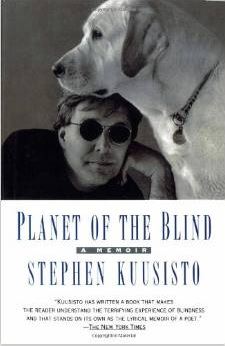
The wind has not loved me, never has, old particulate father, busy body. He’s in my blind face alright. With his extravagant liquors. His jeweler’s brush. Bragging he has no material possessions. My numb friend. Telling me how futile are my necessary green mortal hopes. Once, on the big lake, I shook my first at him. Told him to stay away from my shadow. Said I was happy with my shameful life. I fought him off alright. But wind has all the chips. Knows when we encounter the approach of twilight we’ll ache for his lullaby for we fear the leaden dusk. Consolations from the heartless are better than none.
Month: February 2016
Dog. Man. East 61st St.
A woman approaches me on East 61st St. in Manhattan. “My dog died,” she says. “Oh dear,” I say. I know about this. I do. She’s attracted by my guide dog and a switch has tripped in her grief gizmo and all she can think about is her loss. If I was walking with a white cane she wouldn’t have said a thing. “My poor dog died,” she says again, as if saying it once wasn’t sufficient to convey the awfulness of the story. And I’m frozen on the sidewalk. This isn’t the first time. For years strangers have invaded my happy thought bubble to share their dog death stories.
She starts to cry, this stranger, and she reaches out. “Can I touch your dog?” she asks, half weeping, half speaking. The process has taken just a few seconds. I’m reminded that four seconds can be immense. Satan fell from Heaven to Hell in just that time. I understand we’re having an unplanned and wholly unscripted spiritual moment. I can’t allow myself to freeze. A decision must be made. If you have a guide dog you’re not supposed to let strangers touch her (or even friends for that matter.) A working dog is doing just that. It’s not looking for love in all the wrong places. When you’re at home, voila, the harness comes off, and love is all the rage. But not on the sidewalk, not at a street crossing. You’re a team, the two of you, a survival unit. That’s just the way it is. “Yes,” I say, “you can touch my dog.”
And this woman, this strange weeping woman, drops to her knees, pushes her tear streaked face into my Labrador’s face, my surprised dog, and she actually moans.
There are so many corners to grief. So many lofty defeats inside each of us. So many exhaustions, facts, deserts, infinities, unexplored planets.
The non-existence of a dog has incited a vast, soft, exploration here, beside a row of parked delivery trucks outside the Hotel Pierre on a windy autumn day with dead leaves flying in circles like butterflies returned from the after life and she’s weeping into my dog’s thick fur.
“I’m sorry,” I say, “but we have to go now.” And I back up. Corky looks at me, as if to assess how far the grief has traveled. I think she wants to know if I’m OK.
I tell her to go forward. We move away. We enter the silent invasion of the future.
I think of her often, this woman, who loved her dog, who is drowning in the stone pool of her loss.
I think of the dismal routine of New York City or any city.
I think of the unselfish nature of chance encounters.
Old Man Cliche Takes Out a Personals Ad
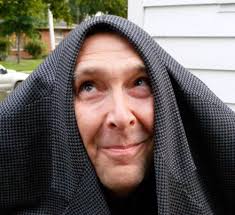
One day you find you’re a cliche. For one thing you’re old, and though people say things like “sixty is the new forty” and “you’re only as old as you feel” the truth is, you’re not susceptible to the old optimisms. You console yourself, say things like: “I’m not a quisling cliche—like Ronald Reagan who foreswore his progressive youth to be a corporate shill and a commie hunter. No, I’m still left of center, and probably more left than your average reader of The Nation. And then I remember I’m a cliche, for I’m old now and therefore out of touch.
It happens. You’re no longer interested in pop music, though you think Kanye West’s new album “The Life of Pablo” is pretty interesting. And you don’t give a shit about novels with titles that start” “The Girl Who…” though you like George Eliot more than you can say, and once you went all the way to Highgate Cemetery in London to place flowers at her tomb. You also put flowers on the steps of Karl Marx’s tomb. And for good measure you put some at the grave of Beatrix Potter. (Highgate is a one stop devotional place.)
No, you’re a cliche, old as dirt, darkened by the smudges of a thousand fingers, wounded by all the razor-y tongues, discrimination, listless committees, and the bloviation complex—advertising, military spending, random doorbell ringings from religious zealots, elections rigged, corruption like fluoride in the water, or lead.
You became a cliche the honorable way. You lived. You tasted the morning air and found it promising. You smelled the turds and leather of a policeman’s horse and thought it was good because you were nostalgic, you thought there was a time of honor, somewhere back there, until you remembered the three principle pogroms in Russia, how they inspired the Prussians, how the Prussians inspired the Arabs, and now the policeman’s horse doesn’t smell good and you shake your fist because the world has stolen your childhood joy. And you can’t blame it on Freud or Paul deMann or even PeeWee Herman, though you’d like to. You’d like to blame them. But then you’d sound like an old man. “You kids get away from those magazines, you’ll get the pages all sticky!” You’ll sound like Paul Krugman. What could be worse.
Last night you dreamt you were in a beautiful hotel. It was very white. Everything was clean.
Then, in the way of dreams, people you didn’t like turned up. They crowded into your room. Even in your dreams you can’t get away with purity. Your frigging dreams are soiled. You’re a cliche alright. You’ve turned into Saul Bellow’s Herzog. Your antediluvian cane has blood and feathers on its tip. You want to wake up from the dream but of course you can’t. When you do wake up your feet are tangled in the sheets. The real sheets are not as white as the ones in your dream.
You’re a cliche. You don’t believe Bernie Sanders any more than you believe Noam Chomsky. You’d never want Noam Chomsky to take care of your dog. Bernie might be OK with your dog but you kind of doubt it.
You’re a cliche. You trust people based not on intangibles but in terms of what you can see without an intermediary text. I’ve a friend who is doing everything he can to help rebuild Syracuse, New York, one of America’s poorest cities. He also pushes poetry.
I trust people like that.
I no longer trust people who use the word “revolution” seventeen times per hour.
On Electability
A few days ago I posted some opinions on Facebook, arguing vehemently Bernie Sanders can't be elected despite the overwhelming enthusiasm of his supporters. My view isn't driven by polling and Sanders supporters have pointed me to public opinion findings showing Sanders doing well against Trump or Cruz. As Huck Finn would say, “I don’t take no stock” in these polls because I've been through so many democratic (small “d”) disappointments. I’m skeptical of wishful thinking. I bitterly recall how Jimmy Carter lead Reagan in the polls until just a month before the election; remember Mondale leading Reagan by double digits and losing dramatically after he argued for a tax hike; remember perhaps most sadly how Ted Kennedy failed to oust Jimmy Carter—I saw Kennedy’s campaign the way Bernie people view their candidate's effort now, as a push to restore the Democratic party to its liberal roots. Carter after all, was the man who pushed neoliberalism to the forefront of our politics, so much so Reagan had only to pick up where Jimmy left off. I’ve always voted for the most liberal wing of the party. I voted for Jesse Jackson, preferred Paul Tsongis to Bill Clinton. I’ve no dispute with Bernie and his supporters, save that I sincerely believe he can’t win. I think so because middle Americans (who do not think as I do) will never vote for a man who proposes more government regulation and higher taxes—even if those taxes are part of a beneficial vision of single payer health care. It’s possible they might vote for someone like FDR but Roosevelt was a genial plutocrat, the kind middle Americans trust. Sanders is not FDR, which means at the core he likely won't get the broader votes he'll need to defeat the GOP.
When I say this I'm told with confidence the right will batter Hillary Clinton just as much if not more so than Sanders and I'm sure this is true but Clinton has the potential and even the likelihood of getting some of the business vote, a thing that FDR managed and which is essential for any candidate hoping to reach the White House. Saying so does not make me a neoliberal quisling or a cynic.
 Posted with Blogsy
Napkin
After everything I’ll love less of the world
as if it were already behind me
as if after so much blind life
not seeing true stars
or the face of my wife
I’ll call close to me her breath
(which is the lullaby of all humble discoveries)
and so I will go out.
I think the going will be green
sadly joyful, satisfied.
The Flowering
This was a tangled day, one of those turns around the sun that feels like a week though I can’t put your finger on exactly why. I spoke to a student who believes in human rights and wants to research the ways and means for intellectually disabled people to live with self-determination.
i attended a largely depressing meeting but accomplished a small good as a result. I made a lonesome foreign student happy by letting him pet my guide dog. I walked home uphill in the bitter cold of February. And the day went by without glory. I’m a day older. As the poet Robert Bly once wrote: “so this is how my life passes before the grave.”
Early, before morning got started I thought of my mother who as a little girl believed she could step out of a row boat and walk on the water lilies. She stepped right out and sank straight away. I often think how beauty is best when untested. An abstract beauty, unpronounced, enacted only in the mind is often superior to our actions. This is the kind of knowledge that makes one smile instead of laugh; whisper instead of shout. Sometimes it feels like a defeat knowing the loveliest imaginings are best when they’re not enacted.
Such thoughts come close to an achievement concerning envy—that foregoing a bolder beauty one might be gently happy, as when lying in a field of yellow, flowering weeds.
Climbing Trees While Blind
Some days when I think about disability I feel the need to hold my head. Of course this isn’t a new thing—I’ve been clutching my noggin since early childhood. If you’re like me and you were disabled as a kid you know all about early despond. And if you’re especially like me you learned to use humor to your advantage starting early. I remember when I was about six years old a bully approached me on the playground. His name was Grimes. Nobody knew what Grimes’ full name was. He was just “Mean Grimes”. People said he was mean because his father made him work all day digging a cellar under their house–it was just Grimes down there with a shovel and a flashlight. When he came out he was mad as a hornet and everyone tried like hell to stay away from him.
The first thing you should know about Grimes was that he smelled like wet earth. He spent so much time under his house that he stank and because his parents didn’t care how he looked or smelled, he was essentially a moving mound of dirt. Back in those days no one paid much attention to things like that. Nowadays the school would probably send somebody to Grimes’ house to talk to his parents but not back then. I used to sit next to a kid who smelled like manure and he had hay sticking out of his socks. That’s the way it was. And sure, maybe because I was blind I noticed the smells and sounds more than other people. I can’t say.
Oh but poor Grimes! Now that I think about it I see he was more miserable than I was. My only problem was I couldn’t see. But I had some friends and a great family. My dad didn’t make me dig a basement. In fact my father read to me every night from smart, funny books like The Adventures of Tom Sawyer. He’d even do the different voices. My dad could do a very scary “Injun Joe”. Now, all these years later I suspect Grimes parents might not have been able to read. Hindsight has its advantages. I can feel sorry for Grimes.
But anyway, he did go after me on that playground by the abandoned swings. I recall thinking it was strange no one else was around. But of course that’s the way it always is with bullies— they know how to pick their spots.
“Hey Blindo!” Grimes said. He leaned close and his breath smelled like Juicy Fruit gum. (To this day I can’t stand the smell of Juicy Fruit.)
“Hey Grimes,” I said. “To what do I owe this inestimable pleasure?” (I was always using words like “inestimable” even in the second grade. Let’s be honest: rascals love lingo.)
Grimes grabbed my coat. He said something that I can’t repeat and spit a wad of Juicy Fruit in my face.
“I’m going to make you eat this dirt!” he said.
(Grimes always carried mud in his pockets so he could force kids to eat it whenever he found the right victim.)
We were on a playground in Durham, New Hampshire. The year was 1962. I had thick glasses and I was smaller than my classmates. Grimes was as big as a barn.
“You will eat this,” he said.
“It looks good,” I said. “Hey Grimes, have you ever eaten an acorn?”
Grimes held his dirt carefully before him like a little pillow.
“An acorn?” he said.
“Yeah, they’re just like peanuts, really good, that’s why squirrels like them. You want one?”
“Sure,” he said. He held out his other hand and I dropped a neatly shelled acorn into his palm.
“Go on Grimes, its yummy!”
Grimes ate it. Then he turned red, and I mean red, not beet red or fire engine red—he was red as an unkind boy with his mouth swollen shut. Acorns are among the bitterest things on earth. And of course I only knew this because I’d tried one. As I said, I was a solitary kid. I spent a lot of time in the woods. Those were the days when kids could still go to the woods.
Grimes was incapacitated. I don’t think he ever bothered me after that.
I still recall the thrill of my discovery. That language could render a nemesis harmless was rousing.
I didn’t do a little dance. I didn’t brag about the matter. But I was a more powerful boy after that.
Other kids could tell I was different, not just because I couldn’t see but because I could talk. I was fast. I loved words. I laughed a lot. Kids are smart: they can tell who has the power of invention within their group.
I became a kind of “Pied Piper” in our neighborhood. I talked kids into doing all kinds of stuff. My cousin who was only a year younger than me rode his bicycle blindfolded and he was pretty good at it until he rammed a tree. He got up quickly and dusted himself off and tried it again. And one day we even got Grimes to try it. I asked him how tough he thought he was and he said “plenty” and we put the blindfold on him and yelled “go!”
He wobbled uncertainly, his front tire wildly skewing and for a moment it looked like he’d fall but then he straightened and pedaled with a beautiful sense of urgency as if by going fast he would defeat any unseen obstacles in his way. For a while he was amazing. We cheered. We saw that there was a remarkable improbability to the whole thing. The biggest bully in town was riding a bicycle while pretending to be blind. He was pedaling hard. I wondered if he was trying to ride right out of his customary life—I didn’t know of course but it was a good guess.
Grimes rode in big looping figure eights. He was absurdly upright. His elbows waggled and because the bicycle was too small his knees pointed out and the whole thing looked precarious but he went on and he never hit anything though he came close to an enormous rose bush and he barely cleared a bird bath. He rattled over the grass and displayed an ungainly superiority and we could all see he was afraid of nothing.
And that’s of course how Grimes and I became friends. Appearances to the contrary, we saw we were equally brave and we taught each other how to have some fun. One day Grimes convinced me I could climb the tallest tree in our vicinity and I did and by God I felt richly alive up there where the leaves were all so close and you could hear the wind.
And then there are the days I want to hold my head. Disability is not always funny. If you’re a disabled student in college you know a good deal about the structural oppression in higher education. If you’re trying to get a job you know how little disabled employees are valued.
But you climbed a tree with Grimes. Don’t forget it.
Disability and the Yellow Heart
In disability there are innumerable obstacles to having what we often call an empowered life–Helen Keller comes immediately to mind. When she sought admittance to Radcliffe College she was compelled to demonstrate her literacy and endured tests designed to prove her written words and her inner life were not her own. How could a blind-deaf woman who used an amanuensis to communicate have an authentic and self directed capacity for language? In Keller’s case her natural talent with language was so far beyond the skills of her “teacher” Annie Sullivan, the matter was settled, if not quickly, speedily enough.
My reception as a blind writer who can speak has been less onerous than Keller’s though it’s not without its cringe worthy moments. During an interview for a teaching position at a major American university a writer-professor in their creative writing department asked how I could write so clearly about the world if I can’t see? Aside from its borderline illegality the question revealed how little some contemporary writers understand what language does at its most fundamental level. That all nouns are images had never occurred to my questioner, a well regarded fiction writer who presumably should have recognized what I said next: “I say strawberry, you see a strawberry; I say battleship, you’ll see it. Whether I’ve seen the poxy thing has no bearing on your reception–this is why poets were believed magical in ancient times.”
Literary language is often as much about the unseen as the seen. Accordingly Milton was the right poet to describe the vaults of hell. But what’s more interesting is the evident and often mysterious joy that comes from sensing the unseeable or unnameable in our reading. Joy is not always or invariably concerned with custom. Pablo Neruda, who spent many years alone as a young man traveling with the Chilean foreign service wrote:
I grew accustomed to stubborn lands
where nobody ever asked me
whether I like lettuces
or if I prefer mint
like the elephants devour.
And from offering no answers,
I have a yellow heart.
In literary consciousness solitude is always instructive. Filtered through Neruda’s imagination it’s both figuratively improbable and unforgettable.
If disability means one thing in particular, at least in my case, it’s been a strict schoolmaster of loneliness. You won’t see it. But like Neruda I too have a yellow heart.
The Guide Dog Moon Unit
Not long after a guide dog enters your life you see how little the public knows both about service dogs and disability in general. The two discoveries are what’s called “a paratactic reading” in literature—it means two pages have been placed side by side for comparison.
I was on a cross town Manhattan bus when a man smelling of incense and marijuana sat next to me. Instantly I remembered how I loved both those fragrances when I was in high school. When I was 17 I surrounded myself with cheap pot and sugary incense. The man’s odor threw me into memories of solitude and it didn’t feel good. Everyone knows the sensation. It happens anyplace. Old perfumes on the street…
The man (who said his name was John) asked if I ever gave drugs to Corky. It was actually more an assertion than a question. He said: “Man I bet you can really get that dog stoned!” Both love and loss always reveal their furies and I then made a relational mistake, assuming I could parlez vous with King John the Medicine Man. You don’t need a guide dog to make this mistake but I was discovering it helps.
“No, John, I’d never give weed to my dog,” I said. “She’s my eyes,” I said.
“She’s not your eyes,” he said.
“What do you mean?” I replied.
“I’m talking about your inner eye, man!” Then he said: “What kind of a blind guy are you?”
“You blind have inner sight,” he said.
“Your dog has inner sight too,” he said.
“You two need to get together man!”
“We ARE together,” I said. “We go everywhere side by side.”
“You’ve got to know your dog’s inner sight,” he said.
“Here,” he said, and he put a reefer in my hand.
“Smoke that with your dog,” he said.
“Thanks,” I said. What else could I say? I pocketed the joint. I knew I wouldn’t smoke it. I was beyond that sort of thing. Maybe I could “gift” it to someone. Maybe I’d just throw it away.
“Look,” I said. “my dog needs her wits. We have a good relationship without weed.”
“No, no!” he said. “You have a big moon inside the two of you, you’re both walking it, you need to go there.”
Angry White Dudes who Aren’t Quite Abiding
I was scanning The Huffington Post when I came across a piece entitled: “Why I’m an Angry White Guy.” I didn’t read it. I’ve enough anger from a life of disability discrimination to fill an abandoned shopping mall in Detroit.
To be clear: I don’t believe angry white men aren’t entitled to vent. I’m all for venting—that’s what a free society is all about. Vent White Guy! (Though you’re really pink for the most part.) Go on, vituperate Bro! Go get ‘em! Us black, queer, womanish, and/or crippled types have been howling throughout history. If you want to sing in the beastly opera, come on in.
But I know you don’t want to join the chorus of the disenfranchised. You’re angry because them Indians, them Negroes, them women who refuse to stay home, them pesky disabled, all them atheists and abnormal types have pushed you into a corner, an imaginary one yes, but a corner you fervently believe in nonetheless.
American anger is circumstantial and always in the air. We’re meant to be angry. Democracy depends on discontent. Every citizen has sand in her oyster. If you’re alert enough you’ll know what truly ails you. Our venting white guys are not awake, not in a true sense, though they feel things. They are, as John Lennon once said: “doped on religion, and sex and TV…” It’s hard to be angry at the right targets when you scarcely know who’s pockets are being lined with the advertising dollars that mediate and extend your unhappiness.
Liberals don’t understand the Venting White Guys. They blame Fox News for brainwashing them, or Reagan for letting them into the town square by inflaming long suppressed white intolerance and evangelical suspicion. I used to believe this as well, but then I revisited the Know Nothing Party, and the spiteful rhetoric of campaigns long past and saw that really, there’s nothing new under the sun.
Liberals also say that it’s all Lyndon Johnson’s fault for pushing civil rights—that his greatest triumph fractured the Democratic party forever—a fracture that Nixon took full advantage of; that the GOP has capitalized on ever since. This is also not true. This premise relies on the idea that racially intolerant Southern Democrats were somehow valuable as rank and file soldiers in the endless fight for the White House. In truth, had the Democrats campaigned avidly for diversity, rather than seeing it as a third rear wheel on the tricycle, they’d have been unbeatable consistently. Obama understood this potential.
Angry white men are mostly 11 year old boys who’ve gotten large. They think the dark kid next door is going to steal their lunch money. They like girls but only if they’re malleable. They hate their parents (the gummint, as Huck Finn’s father would say), they love to parade around in their Duck Dynasty Sweat Pants.
But they’re a fact, like candy or coconuts. Trump has them drooling. Ted Cruz also.
If the Democrats want to be a national party, and not a faintly national party, they’ll work tirelessly both to expand their reach within historically marginalized communities, but also in the ruined suburbs. Bernie blames Wall Street. Hillary says she’s for jobs and progress. Neither alone is convincing enough in my view to offset the widening unhappiness of 11 year olds.
Bernie is closer to the gestalt.
 Planet of the Blind