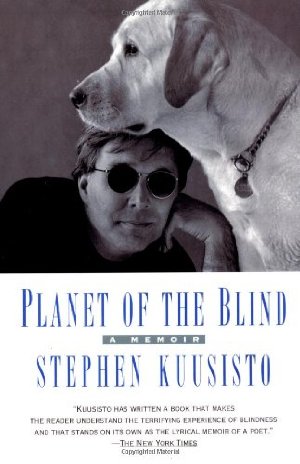
The ADA @ 30: “Pollux and Castor”

I want you to help me. I don’t want your help. The push-pull of disability, the Pollux and Castor, a civic constellation. “Help me,” doesn’t mean we need you able bodied citizens to become Boy Scouts who escort us across streets; doesn’t mean “pity us” or by turns imagining we’re somehow inspiring. Thirty years after the ADA “help me” means picturing new ways of doing things. It also means accommodations for the disabled are reasonable so let’s stop pretending otherwise. 

“Who pretends otherwise?” Why would anyone be opposed to providing the disabled with reasonable accommodations? What is a reasonable accommodation? Let’s look:

Title I of the Americans with Disabilities Act of 1990 (the “ADA”)(1) requires an employer(2) to provide reasonable accommodation to qualified individuals with disabilities who are employees or applicants for employment, unless to do so would cause undue hardship. “In general, an accommodation is any change in the work environment or in the way things are customarily done that enables an individual with a disability to enjoy equal employment opportunities.”(3)

See: https://www.eeoc.gov/laws/guidance/enforcement-guidance-reasonable-accommodation-and-undue-hardship-under-ada#intro

Perhaps no bigger transformation in the lives of the disabled has ever happened. The very idea that it’s reasonable to modify basic workaday structures and appurtenances was radical and remains so. Few people understand that disability is a product of the industrial revolution with its vast reorganization of labor. The advent of dark Satanic mills lead to the valuation of labor ready bodies. The factories of the 19th century redefined the value of bodies just as they exacted standards of physicality. What’s the Castor to the factory’s Pollux? The asylum. The disabled were stripped of civic and economic value in the early 19th century. Rather than modifying the work environment why not warehouse those with physical or neurological differences? 

We shouldn’t forget what a radical concept “reasonable accommodation” truly is. It is reasonable to provide the blind with Braille signage or technical adaptations. It’s reasonable to provide a bank clerk with lupus a tall stool to sit on and modified work breaks. Reasonable to provide deaf employees with supportive technology. The provision of these things does not induce undue hardship. They’re not expensive. As a blind employee I can’t demand my own jacuzzi on the roof. I can ask for a talking computer. 

I say that reasonable accommodations are revolutionary and they’re the antidote to pity. 

This begs the question “why would any employer fight reasonable accommodations?”

Consider most recently the story of Dominos Pizza which cried foul when a blind customer demanded that their website and phone app be usable by those with vision impairments. I want to streamline this: the blind use screen reading software to access digital sites. In turn websites need to be written with the proper coding to allow the computer or phone to talk. This is really simple. I kid you not. Making an app or website accessible to the blind costs next to nothing. 

Dominos took their umbrage and hostility all the way to the US Supreme Court. They lost. Turns out even the pro-business Supremes saw through the ruse: Dominos website is in fact a public space and most therefore be accessible. Moreover, Domino’s spent more money fighting the blind than they’d ever have spent making their website and app friendly for the blind, Reasonable means reasonable. 

When a business fights the ADA its resistance generally speaks to why the law had to be adopted in the first place. In shorthand: it’s easy to include the disabled in the workplace. It’s inconvenient for some to have to think about it. Reasonable accommodations are not inconvenient, They do require imagination. I know of an agricultural studies  student who used a wheelchair. Her university easily modified a tractor so she could ride it. With imagination and a can do spirit you can do almost anything where disability is concerned. And yes,  the tractor modification was cheap. 

Another way to put this is I don’t need help crossing the street. I do need help using your bank machine if it’s  not blind friendly. Only unimaginative built environments trigger my need for assistance. I don’t want your help. I want to use the damn device. 

Dominos argued that the blind could call up their stores and have staff read them the menu options. Imagine that. Why does the app exist? So you can do it yourself. I’ll just say that if you call a Domino’s, tell then you’re blind, and ask them to read their entire menu and the prices they’ll hang up on you.  

The ADA @ 30: “The Happenstance Blues”

So forgive me for starting with a grayness but as I recently joked with a paralyzed friend, “I feel like a battered old fish with many dents in his flesh”—the context—that it’s not probable I’ll see the advances I’d hoped for when the Americans with Disabilities Act was enacted over a quarter century ago. I’m old enough to be feeling what academics call accidie, a weariness, and if I’m not defeated I’m suspicious. 

Shorthand: we haven’t gotten far enough, and daily the news is incontestable. The “fish conceit” is what can happen to believers and how not to become the fish is the story (mine and yours) since disability bias surrounds us. (Bias is a story with many chapters like Bocaccio and knowing it never renders comfort, though if you’re a bigot you may enjoy schadenfreude. I once had an “iffy” friend who practiced “vengeance fantasy”—as he said, seeing his enemies staked out in the Colosseum with lions chewing at their entrails, etc. He’d rub his hands and imitate Charles Laughton: “how do you like your God now, Christian?”)

Bias is a variorum edition. My spotty pal really meant what he said—if he’d had his way he’d have fried you in oil. Everyone has his own grayness. Discrimination, personified, wants us to join the Centurions, at least inside, and its first sign is indifference. In my experience street theater is one way to resist it. 

Thirty years ago when I was a Fulbright Scholar in Helsinki, Finland I went one night to a gritty, working class bar where I was accosted by a wildly drunken laborer. Everyone was painfully drunk–that manly near death atavistic Viking berserk hallucination of everything, and I thought: “all these years, so many wounds, so few praises.” That was when a man I did not know turned to me and said: “You are a Jew!” “You’re right,” I said, since I was young and in love with poetry, “I am a Jew!” It was the first time I’d ever felt the pins of anti-Semitism, I, a Lutheran with a long beard. He reached for me then but missed and grabbed another man. “You are a Jew!” he shouted. “No, it is I,” I said, “I am the Jew!” But it was too late. They were on the floor and cursing, two men who had forgotten the oldest notion of them all: in Jewish history there are no coincidences.

Kurt Vonnegut would say, “bias is a clunker” and though it must be taken seriously, if you’re one of its chapter headings having a shield of irony becomes essential. You’re a cripple. You don’t belong in here. Don’t belong on this website, on this campus, don’t belong in a customary place of business. For years I used to carry custom made stickers depicting the universal disability access symbol inside a red circle with a line through it. I’d paste them on the doors of inaccessible restaurants and academic buildings and the like. I really need to get more of them but I can’t remember where I they came from, and as I say, I’m in danger of weariness. Dear young Cripples, I’ve been fighting a long time. Thank God for ADAPT. And don’t stop fighting. But don’t stop laughing either. As the great disability writer and activist Neil Marcus says: “Disability is not a ‘brave struggle’ or ‘courage in the face of adversity’…Disability is an art. it’s an ingenious way to live.”

Once while I was teaching at The Ohio State University I was invited to a meeting with a dozen faculty and former astronaut and Senator John Glenn. We discussed the future of digital teaching. Afterwards I boarded a Columbus City bus only to face a woman who loudly asked if she “could pray for me”. She assumed blindness was a sad matter—or worse—a sign I needed spiritual rescue. My guide dog shook his collar. Suddenly I felt wickedly improvisational. I stood up, grabbed the overhead pedestrian bar, and announced loudly so every passenger could hear: “Certainly Madame you may pray for me, but only if I can pray for you, and in turn pray for all the sad souls on this bus—souls buttressed on all sides by tragedies and losses, by DNA and misadventures in capitalism, for we’re all sorrowing Madame, we’re all chaff blown by the cruel winds of post-modernism. Let us pray, now, together; let’s all hold hands!” She fled the bus at the next stop. Strangers applauded. 

Improvisation allows us to force the speed of associational changes, transforming the customs of disability life. Disability Studies scholar Petra Kuppers writes: If the relations between embodiment and meaning become unstable, the unknown can emerge not as site of negativity but as the launch pad for new explorations. By exciting curiosities, by destabilizing the visual as conventionalized primary access to knowledge, and by creating desires for new constellations of body practice, these disability performances can attempt to move beyond the known into the realm of bodies as generators of positive difference. 

The polarizations, magnetic fields of crippledness are generators. It is not true that rebellion simply makes us old. We’re old when we give up.

And yet…the fights before us are promising to be both rewarding and very hard.

I have the happenstance blues. They’re both accidental (aleatoric) and whatever is the opposite of accident, which, depending on your point of view might have something to do with the means of production, racial determinism from same, or all the other annotated bigotries of the culture club.  As a disabled writer I know a good deal about the culture club. 

Now back to my happenstance blues…

I’m right here. I’m terribly inconvenient. Blind man at conference. Blind man in the lingerie shop. All built environments are structured and designed strategically to keep my kind out. My kind includes those people who direct their wheelchairs with breathing tubes, amble with crutches, speak with signs, type to speak, roll oxygen tanks, ask for large print menus or descriptive assistance. I’m here standing against the built geographical concentrations of capital development. I’m here. I’m the penny no one wants anymore. My placement is insufficiently circulatory in the public spaces of capital. Which came first, the blues or the architectural determinism that keeps me always an inconvenience?

Capital creates landscapes and determines how the gates will function. Of course there was a time before capital accumulation. It’s no coincidence the disabled were useful before capitalism. The blind were vessels of memory. The blind recited books. Disability is a strategic decision. Every disabled person either knows this or comes a cropper against the gates when they least expect it.

What interests me is how my happenstance-disability-blues are exacerbated by neoliberal capital accumulation. For accumulation one must thing of withholding money from the public good or dispossession, which is of course how neoliberal capital works.  

Here is geographer David Harvey in an interview, talking about just this:

Accumulation by dispossession is about dispossessing somebody of their assets or their rights. Traditionally there have been rights which have common property, and one of the ways in which you take these away is by privatizing them. We’ve seen moves in recent years to privatize water. Traditionally, everybody had had access to water, and [when] it gets privatized, you have to pay for it. We’ve seen the privatization of a lot of education by the defunding of the public sector, and so more and more people have to turn to the private sector. We’ve seen the same thing in health care.What we’re talking about here is the taking away of universal rights, and the privatization of them, so it [becomes] your particular responsibility, rather than the responsibility of the state. One of the proposals which we now have is the privatization of Social Security. Social Security may not be that generous, but it’s universal and everybody has part of it. What we are now saying is, “That shouldn’t be; it should be privatized,” which, of course, means that people will then have to invest in their own pension funds, which means more money goes to Wall Street. So this is what I call privatization by dispossession in our particular circumstance.

At the neoliberal university and all its concomitant conferences, workshops, and “terms abroad” (just to name some features of higher ed where my own disability has been problematized) the provision of what we call “reasonable accommodations” under the Americans with Disabilities Act is often considered to be in opposition to accumulation. For instance: I was asked to teach a term abroad in Istanbul. When I pointed out that Istanbul isn’t a guide dog friendly city and that I’d have trouble with the traffic and requested a sighted guide accompany me there, I was told this was too expensive. Think about it! One additional human being to keep me from getting run over was too expensive! The “term abroad” was actually designed to accumulate capital, right down to the lint in each student’s and instructor’s pockets. I decided to avoid getting run over and didn’t go.

Privatized culture means everything, including your safety is your own responsibility. I’m in mind of this. I’m not fooled.

When Trayvon Martin was murdered I wrote about gated communities and the intersection between a black teen’s death and disability exclusion. I opened my piece this way:

I know something about being “marked” as disability is always a performance. I am on the street in a conditional way: allowed or not allowed, accepted or not accepted according to the prejudices and educational attainments of others. And because I’ve been disabled since childhood I’ve lived with this dance of provisional life ever since I was small. In effect, if you have a disability, every neighborhood is a gated community.  

I also wrote:

…as a person who travels everywhere accompanied by a guide dog I know something about the architectures and the cultural languages of “the gate” –doormen, security officers, functionaries of all kinds have sized me up in the new “quasi public” spaces that constitute our contemporary town square. I too have been observed, followed, pointed at, and ultimately told I don’t belong by people who are ill informed and marginally empowered. Like Trayvon I am seldom in the right place. Where precisely would that place be? Would it be back in the institution for the blind, circa 1900? Would it be staying at home always?

I concluded:

There’s a war against black men and boys in this country. There’s also a backlash against women and people with disabilities and the elderly. The forces in all these outrages are the same. The aim is to make all of the United States into a gated community. On the one side are the prisons and warehousing institutions; on the other side, the sanitized neighborhood resorts. I hear the voice: “Sorry, Sir, you can’t come in here.” In my case it’s always a security guard who doesn’t know a guide dog from an elephant. In Trayvon’s case it was a souped up self important member of a neighborhood watch who had no idea what a neighborhood really means. I think all people with disabilites know a great deal about this. I grieve for Trayvon’s family. I haven’t been able to stop thinking about him and will never forget.

I have the happenstance blues and they’re a function of design. Differences, and the welcoming of differences require architectures and expenditures of inclusion. It costs money to include the outsiders. You might have to train security guards, authentic ones to protect Trayvon and Stephen. Imagine if they were able to live in peace, share their stories, and spend their money in your neighborhood. (One can’t forget Trayvon was found dead with skittles and a can of soda, the smallest reckonings of teenage happiness…)

Just as accumulation by dispossession involves the creation of labor-free territories, local dispossession requires the devaluation of the individual.

If nothing else, the ADA @ 30 says the cripples have value. 
The ADA @ 30: “Lock ‘Em Up!”

When talking about disability let’s acknowledge how wide the subject is. Celebrating the ADA @ 30 let’s reflect on the carceral states of America where jails are the largest psychiatric facilities in the nation.

Two new books highlight this crisis. I recommend “Waiting for an Echo” by Christine Montross and “Decarcerating Disability” by Liat Ben-Moshe.

“Intentionality” is the word of choice when talking about writing—what does the writer want to instill in us? I can’t speak for Montross or Ben-Moshe but their books prove the “school to prison pipeline” is a crisis for Black people and people of color, many of whom are disabled—and yes also for disabled whites. The mentally ill, people with learning disabilities, autists, people struggling with addiction, all are frequently imprisoned rather than being given reasonable treatment and a chance at life.

Ben-Moshe writes: “disability and madness are largely missing from analysis of incarceration and its resistance” which means in turn:

“When disability or madness is present, it is conceived of as a deficit, something in need of correction, medically/psychiatrically or by the correction industry, but not as a nuanced identity from which to understand how to live differently, including reevaluating responses to harm and difference. This is not only a scholarly omission but also a real danger to the lives of those most marginalized, especially when many proposals for reform risk increasing surveillance over those already heavily impacted by carceral sites and logics in the United States.”

One may think of the prison complex in the United States as a collective “unreasonable accommodation” a matter that undermines the broader health of the body politic, for no one gets well in prison. In fact people get worse. Ben-Moshe writes:

“The Bureau of Justice Statistics reports that in 2005, more than half of all prison and jail inmates had a mental health problem. The reported prevalence of “mental health problems” among the imprisoned seems to vary by race and gender. White inmates appear to have higher rates of reported “mental health problems” than African Americans or Hispanics; 26 however, African Americans, especially men, seem to be labeled “seriously mentally ill” more often than their white counterparts. It is also reported that, in general, incarcerated women have higher rates of “mental health problems” than men. 27 Gender expression that does not match people’s genitals (as this is the main criterion for the sex-based separation that is the prison system) compounds these factors and leads to a psychiatric diagnosis and/or placement in solitary confinement in the name of protection.”

Excerpt From: Liat Ben-Moshe. “Decarcerating Disability.” Apple Books.

Christine Montross, writes of a psychotic patient named Henry who is left untreated and is eventually extracted from his cell and placed in solitary confinement, then adds: “In our nation’s correctional facilities, detainees who become assaultive are typically sent to administrative segregation—a punitive form of solitary confinement known to exacerbate symptoms of mental illness”

We take the sick to jail and make them worse. Thinking of the ADA @ 30 is not, should not be, a matter of fireworks and glib speeches.

Montross: “If these mentally ill detainees become assaultive or are unable to follow police instructions or jail rules, the manifestations of their symptoms lead to harsher punishment, longer periods of incarceration, and lost years of their lives. In precisely this way, our overcrowded correctional facilities become inundated with the psychiatrically ill, straining our prison system and draining money from state coffers.”

It’s hard to celebrate the ADA when our disabled fellow citizens are in the gulags.

It’s almost impossible to celebrate while we imprison adolescents with disabilities and then dehumanize them. Montross describes a meeting with prison administrators:

“We attend a meeting with psychologists, teachers, social workers, correctional officers. We’re given a chance to ask questions.

“What’s the most severe punishment that can be leveraged against a boy held in this facility?” I ask a psychologist.

“He can be sent to segregation,” she says, noting that the practice of solitary confinement exists for incarcerated children just as it does for adults.

“For how long?” I ask.

“Up to a year,” she says.

Take the developing brain of an adolescent. Fourteen, fifteen, sixteen years old. Put him in seclusion for a year. He touches no one. Is touched by no one. He yells out, perhaps, or he stays silent, but he interacts with no one. His meals are pushed at him through a slot. We know that isolation changes and damages the adult brain. What about the effects of segregation on the still-developing brain of a child? And a child who presumably has already lacked the foundation for good decision making, has acted with extraordinary impulsivity, has perhaps enacted terrible trauma and perhaps also endured terrible trauma? What then?”

What then, indeed?

Ben-Moshe underscores the prisons are in fact disabling mechanisms: “the prison environment itself is disabling so that even if an individual enters prison without a disability or mental health diagnosis, she is likely to get one—from the sheer trauma of incarceration in enclosed, tight spaces with poor air quality and circulation; to hard labor with toxic conditions and materials; to circulation of drugs and unsanitary needles as well as the spread of infectious diseases, some of which result from environmental toxins related to the sites on which prisons are built; to lack of medical equipment and medication, or at times overmedication. Add to these factors placements in inhumane conditions, such as solitary confinement (which are especially pervasive for gender-nonconforming, trans, and queer or gay incarcerated people, supposedly for their own protection), and the various impairments that come with aging in prison as a result of prolonged sentencing policies, and the debilitating nature of imprisonment cannot be denied. Trauma is incredibly pervasive in carceral settings, and the trigger and disabling cumulative effects of strip searches (especially on those who experienced sexual violence previously, which is the majority of those held in women’s prisoners) leads feminist abolitionists to understand them as state-sponsored violence against women.”

We are a nation that practices severe institutional violence and concerted disablement as matters of policy.

The ADA @ 30: “Limerick”

I wrote a terrible limerick last night. It was disgusting. Needless to say it can’t be shared. It didn’t have race or women or disabilities in it; just a man with his nether parts. The point is, when you’re disabled you need humor to get by. Yes Lou Reed was right, you need a bus load of faith; but a snarky joke, even when unshared does wonders. 

Mel Brooks said something like “tragedy is when I cut my finger; comedy is when you fall in an open sewer and die.” That’s how my private cripple comedy works. The shop owner who refuses to admit me and my guide dog falls into a man hole but in my version he doesn’t die—he lives for all eternity with Richard Nixon who wears Bermuda shorts and black phlebitis compression socks and pushes a beach comber’s metal detector muttering, “Jesus, Spiro, I know it’s here somewhere, we’ve got to find it before Ted Kennedy shows up!” 

I’m not talking about disability standup or performativity.  This is the inner life; the engine room. Disabled we face micro aggressions; macro; put downs; eye rolling; outright contempt from the abled. Or worse, we get their treacle: the “you’re so inspirational” pity party shit. And if that’s not bad enough, we get the disabled themselves who make a big deal out of running the marathon because after all they’re super cripples. The media buys it every time. Meantime the ordinary disabled are unemployed. Behind every story about the long distance runner with his guide dog are 100 blind people without work. 

Down in the stifling engine room of self survivorship it’s always like those submarine movies where pipes are bursting because a depth charge has gone off and gritty sailors are smacking everything in sight with wrenches. This is one of the reasons I love submarine flicks: they’re about the inner lives of the disabled. We get it together under pressure. The other reason I love those movies is because the sailors almost always get revenge. 

Years ago I worked at a famous guide dog school. I discovered that one of the most influential members of the board of trustees, a blind man, actually hated the blind and he was loud about it. He called them “mooches and leeches” meaning the clients who received guide dogs free of charge (a necessity since 80 per cent of the blind remain unemployed even today) were just “takers” and therefore were unworthy of respect. The man is dead now. He was briefly famous. He became a federal judge. He absolutely hated the disabled. My engine room was flooded every time he opened his mouth. One day I imagined him tied to a stake in the Roman Coliseum, lions circling. This helped some. But when I pictured him as the emperor Augustus things were funnier. Augustus spoke disparagingly to common men who were dressed in cloaks and ruled that only toga clad men could enter the forum. He said, pointing to the elect: “Behold them, conquerors of the world, the toga-clad race of Romans!”

So I pictured old “mooches and leeches” in hell sporting a toga, waving a white cane and shouting at winged rats. 

The cripple comedy engine room is a tough place. The disabled experience a lot of put downs. When they come from another disabled person—one who’s done well in life—it’s just intolerable. Alas there are bullies everywhere. 

I tend to consign people to imaginary hells. It’s the oldest literary trick in the book. Every year I reread a little Dante. You can’t read a lot of Dante because then you’re stuck down there. 

I like it when the submarine surfaces. 

“What” you may ask “does this have to do with the thirtieth anniversary of the ADA?”  Plenty. A free people are able to embrace their culture and that means craft. Synonyms of craft include flair, gift, genius, cunning. 

When you laugh at oppression you’re no longer the court jester, the funny cripple who pleases the king. You’re tough, shrewd, and you know how to employ your wrench. Another word for this is comfort, as in self acceptance. I’ll close with a quote from comedian Josh Blue who has cerebral palsy: “The thing about my comedy is that I’m so comfortable with my disability that you don’t have a right to be uncomfortable, if I say something that’s hard in my life but put it in a way that maybe you have not thought of, and I’m laughing at it, it gives you the ability to laugh at the same thing within yourself. I feel like every person has a disability in some way. Whether you’re dyslexic or Republican or whatever.”

The ADA @ 30: “Superego Freedom”

My mother was an alcoholic and not a functional one. Her life was marked by drawn curtains, broken fingers, phantom pains and prescription drugs which, mixed with scotch tended to make her psychotic. When I was a college freshman and no longer living at home she stalked my younger sister around the house clutching a knife. My sister took refuge in a locked bathroom and waited it out. By dawn our mother was asleep on the living room floor in a tangle of shoes and bottles. This story is in no way singular—my sister and I are just tiny dots in the ocean of abused children. The story of my adult life has been the relentless pursuit of self-acceptance, forgiveness, emotional intelligence, and compassion. I think forgiveness and compassion are different as forgiveness can be merely political and compassion is more concerned with lovingkindness.

I work with people who don’t necessarily like me. Chances are good you do too. You may be tougher than I. You might not care about the ghosting malevolence of the workplace, the soiled superegos of competitively unhappy souls who turn up in every meeting, warehouse, classroom—or for that matter even in leisure spaces. Me? I tend to care too much about the opinions of others. This is because the long emotional after effects of my upbringing make me prone to a knee jerk impulse to fix things. If people are ugly I think it’s my job to improve them.

That’s of course its own addiction. I’ll solve your problem. Get you another drink so you won’t hit me. Disguise the damage to the best of my ability. I’ll make excuses for you. I’ll imagine your unhappiness is my fault.

Until one day I don’t. One day after attending Al Anon and undergoing some excellent therapy I decided my mother was on her own.

Nowadays I attend to my own esteem though not without set backs. There’s a senior professor at the university where I work who went out of his way to sabotage me behind my back—an ableist, smug, privileged “shyte” as the Irish would say. I don’t think I can forgive him and I certainly can’t imagine offering lovingkindness.

I know this is what I should do.

I’m a lefty Episcopalian.

Then it dawns on me: I can let him go like a pigeon one has restored to health. Out the window he goes with a sparkle of feathers. He soars through tangled clothes lines. I shut the window. Turn up Mozart on the radio.

Lovingkindness is letting the bird who once shat on you find his own way.

What does this have to do with the Americans with Disabilities Act @ 30? This is for all us cripples: your civil rights are not subject to the whims of others. What you think of yourself should never be influenced by the unhappy souls who turn up all around us. 

All Used Up

“Well,” said Uncle History, “you can’t go back to the woods,” by which he meant the forest of the imagination. “We’ve been ruined,” he added. Then he got specific: “the Troubadour poets; castle walls, mechanical nightingales…all that la di da!” He meant it too. “The cafes, the wounded-ness songs; paving stones under your feet, walking home from dances.” Then he took a swig of clear liquor and you could see sunlight through his bottle—the label read, “no purpose for a poem, no purpose for words….”

Bus Going Somewhere (True Story)

Once aboard I tuck my guide dog under the seat, her paws safe

For I take care of her, our pact, she watches cars I watch her toes, 

When a woman, a stranger, a person entirely unaccustomed to the blind

Leans close, rustling something in her hands I know not what 

And says “I’d have to kill myself if I was you.” I think she’s got flowers. 

She kneads the cellophane, breathes hard. “Oh I already did that,,”

I say. “I used to be you in the far flung spindrift galaxy 

Called the Black Eye. I rode a bus with hot house flowers 

And hey diddle diddle one day I couldn’t take it anymore

So now I’m a blind man beside you on a boppity bumpity bus.”

Yes in case you’re wondering, I smile. 

She gets off at the next stop.

The ADA @ 30: “Beauty and the Built Environment”

When thinking about the Americans with Disabilities Act we talk about the built environment. The term indicates the where, what, when of humanly constructed public spaces. Where do you need to go? Can you get there? When will you get there? 

What does access mean? If you’re a wheelchair user in New York City these questions are steepened by the most commonplace things—for instance the subway system is not accessible by elevators in most locations. Moreover the few elevators which do exist are usually out of order. 

This is the ADA @ 30: still largely ignored in our nation’s largest cities although the disabled are promised a better future. Plans released a year ago by the New York Metropolitan Transit Authority propose creating forty new accessible subway stations. That’s ten percent of the total number of stations but it would represent an increase over the measly 25 per cent currently available. But seasoned disability rights activists know how this goes: the funding disappears before the ink is dry; delays force trade offs. Meantime no one fixes the existing broken elevators. 

The built environment needs creative thinking now more than ever. By making public spaces user friendly for all we create more than good train stations or schools—we challenge ourselves to embrace broad functionality and dare I say it—beauty. In a recent essay noted disability activist Steve Wright says: 

“There are some great designers who serve wheelchair users and other people with disabilities, but it is amazing how many plans I’ve reviewed — even for complete streets aimed to calm traffic and serve all — that have needlessly introduced multiple barriers to people with disabilities.

That is why I am calling on all professional organizations that impact the built environment to celebrate the ADA. Millions of their members can be inspired to build beautiful, graceful, human-scaled design that will make life more equitable for people who have mobility, sight, hearing and intellectual disabilities.”

As a poet who has a disability and who’s taught creative writing for years, I recognize Steve Wright’s brand of cheerleading. How many times have I extolled the joys and satisfactions of imagination? Think of the movie “Dead Poets Society” where John Keating, played by Robin Williams, practically turns himself inside out to inspire his downcast prep school students. I too have climbed on my desk, made the sleeves of my sweater into moose antlers, declaimed poetry with munificence as if I was a prince in a land of fairy tales. So I know hope when I see it. Be inspired to build beautiful, graceful, human-scaled designs. Try writing a little poetry. These things won’t hurt you. 

The ADA offers an opportunity, especially as we consider rebelling the infrastructure of the United States, to create inviting spaces. Not spaces where the disabled have to fight to get in. Not grudging accommodations. Not the threadworm second rate “improvements” that forget wheelchair access in the very auditorium which now has a ramp but no place for a real wheelchair—not the unpainted wheelchair lift in a thousand campus buildings across the US—those wheelchair lifts they were “forced” to put in, hence resented. Let’s end public spaces clouded by resentments. 

Steve Wright, again:

“We are living in the most partisan, divisive and frightened time in our nearly 250 years as a nation. Everyone has his or her idea of how we can begin to unify, heal, come together. Mine is to celebrate the ADA in the spirit of equity for all.”

The ADA @ 30: Thinking of Rousseau

Jean Jacques Rousseau had a dog named Sultan who accompanied him to England when his life was threatened in France. Poor broken Rousseau with his malformed urinary tract, cloying hypochondria and hot paranoia–also poor in cash, resolutely poor in friendships. Sometimes we think we understand him–we, the descendant cripples–those who spent fortnights alone in childhood and more than once. We who occupied our attentions with flowers and seeds. Rousseau had the triple whammy: his mother died when he was very young, then his father ran away. He was forced to learn the baleful adolescent art of beseeching strangers for protection and love. He was easily tricked into churches and bedrooms. And he was easily discarded. The cripples understand this.

No wonder he discarded neo-classicism for what others would call the romantic. No wonder Shelley and Byron adored him–passions of betrayal and resolution always feel the most authentic. Rousseau’s enemies substituted “savage” for “authentic” and prided themselves for calling him “uppity” which is of course what is generally done to passionate cripples. Small wonder Rousseau took up the matter of social consent among the governed.

Sultan lead him into the English countryside where he seldom encountered another soul. I love knowing this. A dog can stir and extend solitary human concentration which is the reward of stigma, but you must understand it in a canine manner–pay attention to what’s here and here; not yesterday; never tomorrow; and yes, a dog looks the other way when you take from your pocket a handful of French seeds and push them into British soil.

What does Rousseau’s depression and malformed urinary tract have to do with the Americans with Disabilities Act? We’re in a mood of celebration! We can do both. Consider the opening to Rousseau’s Reveries of the Solitary Walker which is in fact one of the first disability memoirs: 

“So here I am, all alone on this earth, with no brother, neighbour, or friend, and no company but my own. The most sociable and loving of human beings has by common consent been banished by the rest of society. In the refinement of their hatred they have continued to seek out the cruellest forms of torture for my sensitive soul, and they have brutally severed all the ties which bound me to them. ”

He was in fact disabled by malformations of his nether parts and he had profound depression. Being a liminal figure owing to these conditions he was caste out by the congealing engines of 18th century normalcies. On this the aristocrats and the bourgeoisie could agree—the salon, the atelier, the coffee houses were not places to be troubled by the inconveniences of broken embodiments. Having a troubled body meant staying away—meant the asylums and hospitals. It meant living in  the poor houses.  Good bodies meant public bodies. Rousseau’s solitary journeying on foot is disability journeying. He was Basho, a travel weary skeleton. 

Poor Roussea! He had inherited disorders, porphyria which lead to abdominal pain and vomiting; acute neuropathy, muscle weakness and seizures; hallucinations, anxiety, paranoia—and as if these weren’t enough he had cardiac arrhythmias.  He was by turns aggressive, provocative, contrarian, and yes, he was always ill. 

Today in the disability arts community we talk of disablement as epistemology. We know that altered physicality and neurodiversity offer unique and valued ways of thinking. What’s different now from Rousseau’s time is that “with” the ADA the disabled are not as easily caste aside, and though this can be done (one thinks of all the micro aggressions the disabled invariably experience even now, arguing for accessibility, making their point for inclusion and respect against structural ableism) it’s no longer possible to lock the gates of Geneva on that annoying cripple. 

On the subject of micro aggressions much of the Reveries of a Solitary Walker tells of the slights and the disdain Rousseau absorbed and encountered. He was in fact an unpleasant man. I too some days am an unpleasant man. Human rights and their advocacy demand it. Seldom does progress develop for polite societies. But I’ll add also that in Rousseau’s time there was no language for depression—the term itself comes from an age when treatment and acceptance are commonly understood. Instead it was called “melancholia” and it was considered a form of madness. You don’t have to read Foucault to know what happened to the mad though why shouldn’t one recommend it? In any event Rousseau lived in an age when mental illness was believed to be a moral failing. This sub-Cartesian idea has never gone away. 

So as we celebrate the ADA @ 30 let’s remember how it protects and defends our outlier minds and bodies. Let’s not depreciate how crucial this is. Our solitary walks or “rolls” in our chairs are a matter more of recreation than enforcement, at least where the law is practiced. And may the global adoption of disability rights make this so around the world. 

I’ll let Rousseau have the last word:

“Always affected too much by things I see, and particularly by signs of pleasure or suffering, affection or dislike, I let myself be carried away by these external impressions without ever being able to avoid them other than by fleeing. A sign, a gesture or a glance from a stranger is enough to disturb my peace or calm my suffering: I am only my own master when I am alone; at all other times I am the plaything of all those around me.”

One might say, post-ADA, we’re playthings no more. 

The ADA@30: The River

They go down to the rivers, the myth makers and killers. So what’s your approach to the stream? Thinking broadly can the law be the Danube or Mississippi? The essential question: was it written with hope or enmity? I say the ADA was written in hope. I say there’s some enmity “in there” oil slicks on the water, like the proviso that America’s churches don’t have to be accessible; the word “reasonable” as it pertains to accommodations—as if any request for accessibility assistance is inherently suspect. Accommodations are just what they sound like, the Archimedean thing, simple levers. 

I say the ADA is a river. I say we should sing Pete Seeger’s Clearwater song. I say the ADA is all of us—even you who don’t think disability applies at all to your life. The life you now inhabit takes twists and turns. And so your life is also like a river, one with vows bubbling just under the surface. I say the ADA is a river. I say you should look under the surface of your own life. 

I like these lines by the Polish poet Czeslaw Milosz: 

Leaning on a cane at sunset

I may resemble a gardener 

Who has planted and reared a tall tree.

I say don’t think exclusively of the ADA as a set of regulations. Think of it as the river of new beginnings. 

Yes we need to care for our river. There are those who would pollute its waters—have done so, continue to think of ways to foul it. 

But hear the counsels of the inner eye and see the river.