On Sulking

d3cd6-6a00d8341dbac353ef0162fdbe2ef3970d-pi

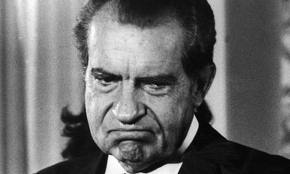
Photo of Richard Nixon, scowling.

When I was eleven years old I fell onto a pricker bush. It’s hard to say how I did it, but I was impaled on hundreds of thorns. My sister who was six at the time, and my cousin Jim who was maybe nine, fell to the ground laughing as if they might die. I begged them for help which of course only made them laugh all the harder. I remember tears welling in my eyes and their insensible joy. I also knew in that moment they were right to laugh—that I was the older kid, was a bit bossy, disability be damned. I was the one who told my sister and cousin what to do. Now I was getting mine. My just deserts. In the end I tore myself from the monster shrub and stormed into the house. I sulked while they continued laughing outside.

Now sulking is an interesting thing. The word comes from the mid 18th century, from the obsolete word “sulke” which means “hard to dispose of” and is of unknown origin. In general I love words that have unknown origins.

The verb “to sulk” means “to be silent, morose, and bad-tempered out of annoyance or disappointment.” The most famous instance of sulking in literature is in opening of The Iliad where we see Achilles sulking in his tent, refusing to fight with the rest of the Greeks. In America where there’s a lot of sulking, perhaps the most famous sulker of all was Richard Nixon, who said in a press conference after losing the gubernatorial election in California that “you won’t have Nixon to kick around any more”. If you’re a sulker you can’t deliver the Gettysburg Address.

In this way, successful sulkers know the cave of hard dispositions must be visited but only for the briefest of repairs—like a toilet on a moving train.

At eleven I pulled those damned prickers out of my arms and legs, my neck. I asked for no help.

And as a disabled kid this was always the way of things. I remember the day a substitute teacher (who must have been all of 20) made fun of my blind eyes in an eighth grade math class. “Who are you looking at?” she said, with what today they call “snark”—and my “Lord of the Flies” classmates burst into laughter. I got up and fled the room.

I sulked. All alone. I knew a good place in that school. In the bomb shelter. I wept among empty aluminum water cans with radiation logos stenciled on them.

After that I reported the teacher. Sulking has power if you know when to quit. Achilles knew.


Don’t Tell ‘Em You Can’t See, Just Go On Out There…

There are landscapes inside us. Introverts know it. Artists see them. When you’re blind these lands are persistent and strange: where you’ve been and where you might go become fanciful. I see the meadow where a little girl played a flute for me when I was four years old. We were in Finland. I was the blind kid who saw only colors and shapes. The meadow was the girl’s music; music was sky. I whirled around birches in buttercup light. Whenever I hear a penny whistle I think of yellow air and a yellow girl. Many of my blind friends report the same thing: the spaces before us and the spaces behind are rich and alive within. We navigate by memory and creativity.

Going forward, walking blind in the world requires something more than memory or imagination. This ought to be self evident but it wasn’t always so with me. Why this should be the case is almost silly but so much is foolhardy in our lives and why should blind life be any different? Here’s the shorthand. I didn’t want to be blind. I didn’t like being the kid who was judged unfit to play with other children or attend public school. It’s hard to imagine as I write these words at the age of sixty what the world of my childhood was really like. In the 1950’s and ’60’s disabled people were not routinely a part of civic life. Sometimes those days feel like a long time ago and sometimes they don’t. Even today fitting in is hard for disabled people wherever they may live. Each disabled person works in her or his own way to change the world by insisting on social acceptance. Fifty years ago the fight was much harder.

As a boy I had a lot of time alone. Other kids wouldn’t play with me because I was essentially the victim of parental instruction: “don’t play with the blind kid, he might get hurt.” Nonetheless, some children were nice to me. They’d come to my house and hang out. When I was around seven years old my neighborhood pals Gary and Sally, who were both the same age, figured out I was excellent at “hide and seek”.  They’d search high and low for me, often failing at the task. The visually impaired kid didn’t mind hiding in the dank, abandoned bomb shelter under Sally’s basement. Once I crawled inside a ruined upright piano, pulling the top lid down over me. What was so bad about cramped darkness?

I may have had a blind identity but I was tough and sometimes I was a rascal. When bullies made fun of me I’d really work them over. One day for instance, on the playground behind the school a huge kid named Grimes went after me. Nobody knew what Grimes’ full name was. He was just “Mean Grimes”. Rumor was he was mean because his father made him work all day digging a cellar under their house–it was just Grimes down there with a shovel and a flashlight. When he came out he was mad as a hornet and everyone tried like hell to stay away from him.

The first thing you should know about Grimes was that he smelled like wet earth. He spent so much time under his house that he stank like a wet construction site and because his parents didn’t care how he looked or smelled, he was essentially a moving mound of dirt. Back in those days no one paid much attention to things like that. Nowadays the school would probably send somebody to Grimes’ house to talk to his parents but not back then. I used to sit next to a kid who smelled like manure and he had hay sticking out of his socks. That’s the way it was. And sure, maybe because I was blind I noticed the smells and sounds more than other people. I can’t say.

Oh but poor Grimes! Now that I think about it I can see he was more miserable than I was. My only real problem was I couldn’t see. But I had some friends and a great family. My dad didn’t make me dig a basement. In fact my dad would read to me every night from smart, funny books like The Adventures of Tom Sawyer. He’d even do the different voices. My dad could do a very scary “Injun Joe”. Now, all these years later I suspect that Grimes parents might not have been able to read. Hindsight has its advantages. I can feel sorry for Grimes.

But anyway, he did go after me on that playground by the abandoned swings. I recall thinking it was strange no one else was around. But of course that’s the way it always is with bullies— they know how to pick their spots.

“Hey Blindo!” Grimes said. He leaned close and his breath smelled like Juicy Fruit gum. (To this day I can’t stand the smell of Juicy Fruit.)

“Hey Grimes,” I said. “To what do I owe this inestimable pleasure?” (I was always using words like “inestimable” even in the second grade. Let’s be honest: rascals love lingo.)

Grimes grabbed my coat. He said something that I can’t repeat and spit a wad of Juicy Fruit in my face.

“I’m going to make you eat this dirt!” he said.

(Grimes always carried mud in his pockets so he could force kids to eat it whenever he found the right victim.)

We were on a playground in Durham, New Hampshire. The year was 1962.  I had thick glasses and I was smaller than my classmates. Grimes was as big as a barn.

“You will eat this,” he said.

“It looks good,” I said. “Hey Grimes, have you ever eaten an acorn?”

Grimes held his dirt carefully before him like a little pillow.

“An acorn?” he said.

“Yeah, they’re just like peanuts, really good, that’s why squirrels like them. You want one?”

“Sure,” he said. He held out his other hand and I dropped a neatly shelled acorn into his palm.

“Go on Grimes, its yummy!”

Grimes ate it. Then he turned red, and I mean red, not beet red or fire engine red—he was red as an unkind boy with his mouth swollen shut. Acorns are among the bitterest things on earth. And of course I only knew this because I’d tried one. As I said, I was a solitary kid. I spent a lot of time in the woods. Those were the days when kids could still go to the woods.

Grimes was incapacitated. I don’t think he ever bothered me after that.

I still recall the thrill of my discovery. That language could render a nemesis harmless was rousing.

I didn’t do a little dance. I didn’t brag about the matter. But I was a more powerful boy after that.


Other kids could tell I was different, not just because I couldn’t see but because I could talk. I was fast. I loved words. I laughed a lot. Kids are smart: they can tell who has the power of invention within their group.

I became a kind of “Pied Piper” in our neighborhood. I talked kids into doing all kinds of stuff. My cousin who was only a year younger than me rode his bicycle blindfolded and he was pretty good at it until he rammed a tree. He got up quickly and dusted himself off and tried it again. And one day we even got Grimes to try it. I asked him how tough he thought he was and he said “plenty” and we put the blindfold on him and yelled “go!”

He wobbled uncertainly, his front tire wildly skewing and for a moment it looked like he’d fall but then he straightened and pedaled with a beautiful sense of urgency as if by going fast he would defeat any unseen obstacles in his way. For a while he was amazing. We cheered. We saw that there was a remarkable improbability to the whole thing. The biggest bully in town was riding a bicycle while pretending to be blind. He was pedaling hard. I wondered if he was trying to ride right out of his customary life—I didn’t know of course but it was a good guess.

Grimes rode in big looping figure eights. He was absurdly upright. His elbows stuck out and because the bicycle was too small his knees pointed out and the whole thing looked precarious but he went on and he never hit anything though he came close to an enormous rose bush and he barely cleared a bird bath. He rattled over the grass and displayed an ungainly superiority for we could all see that he was afraid of nothing.

And that’s of course how Grimes and I became friends. Appearances to the contrary, we saw we were equally brave and we taught each other how to have some fun. One day Grimes convinced me that I could climb the tallest tree in our vicinity and I did and by God I felt richly alive up there where the leaves were all so close and you could hear the wind.

Disability is like all other features of life, it has a thousand ironies. I could be rascally and assertive as a kid but I had a huge problem, a family problem. “All happy families are alike; each unhappy family is unhappy in its own way.”

When I got to college and read Leo Tolstoy’s famous quote I nodded vigorously. My problem was my family’s rule book.

The rule book was essentially my mother’s invention. She was a classic American Yankee—a native of rural New Hampshire. When she was only eight her father left her alone on the family farm for three days. He gave her a pistol and said if anyone came, she should shoot first and ask questions later. She grew up fierce, independent, and wildly impatient. She didn’t suffer fools and hated all authority figures. I don’t recall her ever taking no for an answer. Where blindness was concerned this was a blessing and a curse.

The up side was my mother was an advocate. If her boy was blind, so what? He would do whatever other kids did and he’d go to public school and not a school for the blind. She had a vision of inclusion.

The down side was troubling. It was her trouble, and I had to live with it. In short my mother thought I should be allowed in public, a radical idea at the time. But she also thought I should try, whenever possible, to pass as a sighted person. Post World War II America was not comfortable with disability to say the least. The prevailing opinion was that disabled people were profoundly unfortunate—disability was ruinous. Polio commanded the public’s attention. Life magazine displayed photos of children in iron lungs. Blindness was also believed to be a dreadful calamity.

The blessing? I was to be “out” in the world.

The curse? My mother’s example carried the expectation I’d never admit I was blind.

In grade school I had a little desk at the front of the class, situated close to the blackboard so I might see what the teacher wrote with her squeaky chalk. In fact I could rarely make out what was written.

Essentially, the blind part of me was starved. I wasn’t offered Braille or lessons in how to safely travel on the streets.

Back to the blessing. I’ll call it furtive recklessness. I walked across the hand rail of a high bridge, heel to toe, just to prove it could be done, showing sighted kids I was afraid of nothing. And I learned to plunge into brilliant sunlight without knowing what was before me.

People grow in strange ways. In my case I learned both confidence and shame. Blindness was defeat in the Yankee rule book. I’m sure there was a chapter in there called “If You Don’t Say the Word It Will Go Away”.


Of course this isn’t true. But if you pretend it’s so you can learn to live poorly.

Nowadays I know there’s more than one way to be blind. My pal Leo has no peripheral vision. He sees as if through his own periscope. He’s the commander of a private submarine–the USN Leo—and though his sighted options are limited, they’re still fair. He sometimes drives his car in a gated community in Arizona largely because he can still do it. And though he’s looking through a tube, the day is glossy and brilliant as a an old Kodachrome. Leo will tell you that while blindness is not always a preferred experience it’s often more interesting than sighted people suppose. For some of us the colors are beyond compare.

Another friend–Karen–runs daily through a field in Nebraska though she sees only light. But the light is so gold, so dappled and evanescent that her description makes you want to cry. The average sighted person can learn from her how daylight spins between brown and yellow tonic, the drafts she drinks between the clock and the sun. Just run beside her.

Sight is an immoderate thing, never static. It is, perhaps, the dearest sense. The flickering light of a fire, shadows on a hearthstone; the laughing element of sun on water; early morning eastern skies; the cold and steady light at mid ocean–many blind people know these things. These days more blind people see something of the world than is commonly understood.

We understand more about blindness today than we did in 1962. The days of my boyhood represent the era of calamity. If America understood blindness at all, it was by way of “The Miracle Worker”—the movie about Helen Keller and her teacher Annie Sullivan staring Patty Duke and Anne Bancroft. No one who watched that film would have imagined blindness as ordinary, unremarkable, and potentially beautiful.

“Don’t tell ‘em you can’t see,” said my mother. “Just go on out there…”


Praise to Disability Rights Fighters Around the World

Last evening I attended the U.S. International Council on Disabilities (USCID) second annual gala on the eve of the International Day of Persons with Disabilities. The event was held at the Embassy of Finland in Washington, DC and was hosted by H.E. Kirsti Kauppi, Ambassador of Finland to the US. At the gala there was a special presentation of the Dole-Harkin Award to Senator Kelly Ayotte of New Hampshire. Additionally we honored Kalle Konkkola, Chair of The Abilis Foundation of Finland. Special Guests included Senator Harkin and Senator Robert Dole. Corporate sponsors included AT&T, Google, JP Morgan Chase & Co., Mitsubishi Electric America Foundation, National Organization on Disability, New Edition Consulting, Incorporated, The Bowen Group, and Alston and Bird.

Former senators Harkin and Dole played critical roles in the passage of the Americans with Disabilities Act and in their respective retirements have continued fighting for the adoption of the CRPD (the United Nations Convention on the Rights of People with Disabilities). The global fight for disability rights both in the United States and abroad is far from done. Even this morning the wait staff at the Shoreham Hotel in Washington made a stink about my guide dog. The daily experience of disability goes from joy to degradation very quickly. Every disabled person knows this.

Accordingly its particularly important that the hard work of promoting and sustaining disability rights–which are human rights, affecting women, children, refugees, people from every nation–be engaged by advocates and governmental and corporate allies alike.

At the USCID gala we heard from Senators Harkin and Dole about the early fight to create and adopt the ADA. Both men alluded to the current erosion of bi-partisanship in US politics. Certainly had current conditions been extant 25 years ago, the Americans with Disabilities Act would never have passed. The Dole-Harkin Award was presented to New Hampshire Senator Kelly Ayotte for her bi-partisan effort to promote adoption of the CRPD. She is one of the few Republicans to have done so,

It is of course not easy to be disabled. But it is harder facing social and architectural obstacles. Interestingly the Finnish Embassy is both beautiful and fully accessible.

That’s the world everyone should fight for.

– Posted using BlogPress from my iPad

On Not Liking Thomas Jefferson, But Refusing to Throw Him Away

images-10

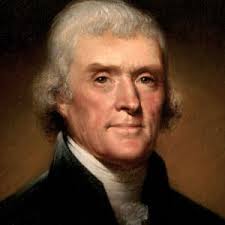
(Portrait of Thomas Jefferson)


Why do I not like Thomas Jefferson and why should you care that I don’t like him?

First let’s get some things out of the way. Thomas Jefferson held  slaves. They were  property. And there’s evidence he may have fathered children with Sally Hemings who was chattel, and who had no consent.

While there is also some evidence Jefferson may not have fathered children with Hemings, what matters is the hypocrisy of the founding generation of America’s leaders, for whom the principles of freedom and equality could be easily erased when it came to slavery.

The hypocrisy is America’s own for no other nation prior was ever founded overtly and sequentially around human rights. We did it. We own it. When Americans fail we are greater failures than the people of other nations.

It is right to hold Thomas Jefferson to this standard: “We hold these truths to be self evident: that all men are created equal”—he owned it, he failed, we failed, and in many respects, where human rights and individual liberty are concerned we continue to founder. Foundering is not a decidedly American thing. All nations fall flat when it comes to equal protection under the law and guarantees of human rights—there never has been a perfect country and quite likely there never will be—but America declares itself, if not perfect, sufficiently noble of vision and unselfish of governance to believe we can become perfect. We are a more perfect union.

So as a professor teaching a course on Thomas Jefferson at Syracuse University, I say I do not like his essential hypocrisy. His refusal to free slaves at Monticello (notice I do not say “his” slaves, for rhetoric should be precise) constituted a de facto guarantee African-American citizens would never have the same opportunities as whites. Our nation’s banking systems, our means of inheritance, the origins of our universities, all stood on racism. Jefferson didn’t stand alone in this heinous affair. Madison, Adams, even Hamilton all profited from slavery, even as, in Hamilton’s case he argued against the ownership of human beings.

How can I possibly like our third president?

I can’t.

I only care about his writing hand. I care that he wrote this: We hold these truths to be self-evident, that all men are created equal, that they are endowed by their Creator with certain unalienable Rights, that among these are Life, Liberty and the pursuit of Happiness.–That to secure these rights, Governments are instituted among Men, deriving their just powers from the consent of the governed, –That whenever any Form of Government becomes destructive of these ends, it is the Right of the People to alter or to abolish it, and to institute new Government, laying its foundation on such principles and organizing its powers in such form, as to them shall seem most likely to effect their Safety and Happiness.

I like “unalienable” because it means rights can’t be given away.

I like it that governments are instituted among men to secure life, liberty and the pursuit of happiness. Whether those old aristocrats knew it or not, they adopted the most radical idea in all of history in that hot Philadelphia summer.

A government that stands for “life” “liberty” and the pursuit of happiness, that believes people are created equal must grow, must assert the rights of everyone, and must never be excused for failing to secure the safety of all.

I know post-modernists who believe the Enlightenment must be dis-articulated owing to colonialism, white privilege, and even a suspect rationalism. Of course the irony remains. It’s the Enlightenment that allows for free thinking.

But it’s not the Enlightenment that created the United States. Not precisely. I believe it was Jefferson’s pen.

One of my favorite poets, William Butler Yeats wrote: “I have believed the best of every man. And find that to believe is enough to make a bad man show him at his best, or even a good man swings his lantern higher.”

Where is Jefferson given Yeats’ optimism and evident irony?

Thomas Jefferson asked us, all of us, by means of his quill pen, to believe the best of every man. This is the American irony of ironies: we will all make bad men show themselves at their best and encourage the good to swing their lanterns higher.

I don’t have to like him.


Heart, Let Us Reason Together

–after Donald Justice

Heart, why do you break constantly, like a dripping faucet? Would a plumber be your proper therapist, wrapping you in tape, delicately turning you with a micro wrench? I’m certain this isn’t the case as surgeons haven’t figured you out and they’ve been trying since Asklepios.

I fell down a flight of stairs once. The experience was just like living with you.

A cruel professor told me I couldn’t be in his class because I was too blind. You were no help, you simply shattered, the way you do, like a frozen glass candle stick dropped on the floor.

Denying me an accommodation an employer once told me I wasn’t competitive enough to work for him. You flew into the closed windows like a bird trapped in a barn.

Even now after years of you, with your fickle and extravagant betrayals, I know nothing about you.

I recover. Walk into the lake in April when others won’t swim. I fight for things I can’t achieve.

But often I do it while you’re in a thousand pieces on the floor.

This is my loyalty to you—I persist in honor of your defects, for at least you feel something.

At least you knew enough to wail.


The Wisdom of Sadness as Thanksgiving

An article crosses my sightline (as it were) proclaiming gratitude is the key to human happiness.

The trouble with this proposition is of course the word “key” since it suggests a host of fantasies about contentment or well being, the most principle being that it has a physical location, something like a bank vault. You can find your own sub-rosa fantasies. Phallic, capitalistic, old or new testament.

This morning as I work on my second cup of coffee I see gratitude is a rum game—part of the self-help pop psychology mantle of Puritan saccharine ash that fell over America long before the United States existed. Gratitude in the American sense has always meant, “we’re grateful to not be savages” and therefore it’s no more complex than the football player thanking God on TV for letting him score the winning touchdown. We’re grateful we’re not losers.

Oprah, Dr. Phil, their televised progeny—all tabloid psychologists say we should not be losers.

Being a loser means letting others dictate the terms of your quest for joy, dignity, autonomy, truth, etc. So in addition to finding the key, you’re supposed to be independent, like an American cowboy once you’ve found it.

As the poet Robert Bly pointed out in his book The Sibling Society, Americans now have the emotional lives of 11 year olds and the media does everything to assure no one ever grows up. Aging in true psychological terms means admitting sadness, even welcoming it. Pablo Neruda put it this way:

give me 

your black wing,

sister sadness:

I need the sapphire to be 

extinguished sometimes and the oblique

mesh of the rain to fall,

the weeping of the earth…

**

In this way I shall be grateful for sadness.

I will walk in the new snow grieving for refugees across the globe.

I will remember on Thanksgiving my Native American brothers and sisters, my Latino friends, my black pals, my crippled posse, the liberated, sexually free people I love, all of whom struggle daily just to survive in the neo-Puritan coal mine that “is” America.

Grateful for ambiguities, nuance, depth psychology, post-Colonial verities, the thirst for justice.

Grateful to know what side I stand on.

Grateful to have so many many richly diverse and beautiful people in my patchwork tribe of adults.

Grateful to the animals who allow me into their worlds.

But I shall be grateful for the wisdom of sadness.

Disabling the Academy

I am reposting this from a year ago. It remains true.

stevekuusisto's avatarPlanet of the Blind

Each day the university disables itself. Note, the university does not “crip” itself. Systematic conceptual alienation requires a ruling class. And no irony please.

Let those with disabilitieswho labor in higher education not acidulate the drink. Thomas Paine wrote:“Independence is my happiness, and I view things as they are, without regard to place or person; my country is the world, and my religion is to do good.”

The disabled university is ubiquitous. I’ve traveled to hundreds of schools. Here are the things I’ve seen (and recently):

Segregation of disability. “Specialized” offices of disability services where the tainted students must appear like scofflaws. (The environment matters: at the University of Iowa the disability services center is in the basement of a dormitory. If it’s hard to find maybe people won’t use it. Oh. There’s no way out from the basement in case of a fire. Hmm. Let’s have a seven year…

View original post 562 more words

A Blind Poetics

I set out to stand on poetry, like the aerialist who walks on a wing. I saw others had done it. James Wright and Li Po, Emily Dickinson sometimes, when the light was right. I learned you could walk the thinnest ledge provided the light was right. Poetry could be thread. Of course. It was always nothing more than thread. Penelope was Homer. Of course. (In ancient times the blind were known as weavers…) And so I walked on delicate strings, navigating on guttural sounds and stertorous breaths. Poetry and your feet. The lungs in between.

**

Small wonder I can walk in the dark. Small wonder I can walk with a dog who watches for me.

It is all just poetry on a flimsy wing. And the heart like a bird in a granary. But high up, eyelashes transmitting bone thoughts, you are someone at last. Not the reader of magazines. Not the telephone talker. You are the riff of gravity which is not diagrammable but is a living curve of joy.

**

Now I’m old. Still on the wing. Learned how to fly long ago.

Compared to me the wind is sad.

I Don’t Want to Buy the World a Coke

People dying for all the usual reasons: God, real estate, and wantonness. But since the Spanish American War, the United States has injected its own brand of imperial blundering into region after region. If you look to history for confirmation of US colonialism as a stabilizing influence you will not find it. I’ve often thought that instead of chanting for world peace Americans who care should be chanting for regional stability—it sounds less dreamy, and in truth it would be a slap at the CIA. Our entire foreign policy is based on inflammation.

I don’t want to buy the world a Coke. I’d prefer to give it Advil.

Meantime I think of the possible newly disabled…violence creates them…

Disability can be found everywhere in history once you learn to look for it. President Lincoln’s depression lead him to abandon the White House for several days. When he returned he unveiled the Emancipation Proclamation to his startled cabinet.

Lincoln’s moodiness allowed him to reflect on the value of life and on what was right. That’s Lincoln’s story. Not all who are bi-polar have the moral qualities of Lincoln. And not all depressed people ask themselves what the nature of suffering can teach them. Yet after a certain age one finds this caste of mind is important. What does it mean to feel my heart is ripped out and is now under my shoe? The proper tears, those mixed with luck, tell us to walk for a time because weeping can be a map. Maps, all maps, are born of agonies. One sees disability wisdoms are not often or probable in textbooks. Look for the stains at the paper’s edges.

As a poet I like the margins.

There are so many minutes for which no proper names exist. Deep in the night I carved my name on a seed. Now I’ve awakened outside the broken temple.

Mr. Lincoln I am sad this morning.

I’m thinking of these lines by Cesar Vallejo, the great Peruvian poet:

“There are blows in life so violent—I can’t answer!

Blows as if from the hatred of God; as if before them,

the deep waters of everything lived through

were backed up in the soul … I can’t answer!”

(translated by Robert Bly)

Oh I can’t answer but I’m searching the corrugated quick of the page.

Mr. Lincoln…


Disability, Ludwig Wittgenstein, and Corn Flakes

I think of Ludwig Wittgenstein some mornings. Isn’t that odd? He occurs to me very early.

Usually it’s this quote that pops into my waking noggin:

“Death is not an event in life: we do not live to experience death. If we take eternity to mean not infinite temporal duration but timelessness, then eternal life belongs to those who live in the present. Our life has no end in the way in which our visual field has no limits.”

Oh I like this for lots of reasons. As a visually limited man I admire the temerity of the utterance, insofar as all humans have some kind of visual limitation. Wittgenstein posits the power of imagination to declare anything, and then, with a smear of logic, to cement an idea into consciousness. I suspect this is how he survived the trenches in WW I. And I know for certain its how the disabled survive. Look at the nouns:

Death. Event. Life. Experience. Eternity. Duration.

In my sophomore year of college I was fascinated by Boolean algebra. In mathematical logic, Boolean algebra is the “branch of algebra in which the values of the variables are the truth values true and false, usually denoted 1 and 0 respectively.” (See Wikipedia.)

The quote above is pure Boolean logic. One may easily draw a Boolean equation for the proposition eternal life belongs to those who live in the present. Then there’s a leap—Wittgenstein says our visual field has no limits.

If eternity = timelessness then the present (time) also equals timelessness. Good.

If timelessness is related to mindfulness (we take eternity to mean not infinite temporal duration) then the operations of mind become our vision. Hence our visual field (anyone’s) has no limit.

You can see where the poet in me would like this. You can see where the blind person in me also admires it.

As logic it is unimpeachable. The trick is to live it.

Early. Wittgenstein for breakfast.