Soul Maker, Blind.

painting1

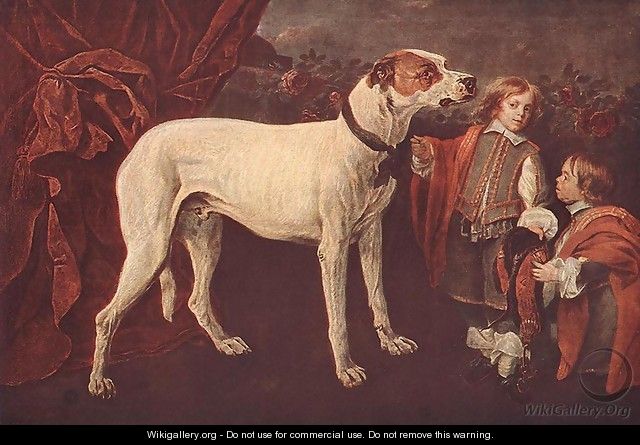
(Image, Jan Fyt’s oil on canvas, “Big Dog, Dwarf, and Boy”

When I was fourteen years old and struggling with vision loss, my mother, who was by then a heavy drinker met me at the door of our house. I was returning from junior high school, hoping desperately to find safety after seven hours of bullying. All I wanted was my own room. I could picture in my mind’s eye my cave with its short wave radio. Nowadays I know the mind’s eye is the work of the soul but I didn’t know it then. I only knew retreat.

My mother clutched a burning sofa cushion. “I don’t know how I did it,” she said. “get out of my way!”

She ran across our suburban lawn with the blazing thing held at arm’s length, and for some reason she wouldn’t drop it. She staggered from place to place until flames singed her hair and then she flung the cushion into a neighbor’s hedge where it extinguished itself but continued smoldering, sending up smoke signals.

That wasn’t the day my soul went dormant but it was a gradient point on the arc of withdrawal. As a disabled teen I was learning there were no safe places. We find, by necessity, locations where our souls can retreat, and after practice, we learn to take these guarded, hermetic spaces wherever we go.

In 1969 my job was to endure by stamina. Be blind, but don’t be blind, be something sort of blind, but not really blind blind. Be some kind of defective sighted person, but not really defective, just moderately less broken. Or whatever.

Blindness became a tortoise like affair. My blind soul held its breath in a shell.

**

My mother was always wasted by mid afternoon. She had several types of drunkenness as most alcoholics do. There was the giddy vaporous intoxication born of desperate merriment—she’d dance alone to music only she could hear, quite literally. Then there was the drunkenness driven by what I came to call her misery gauge—I pictured a glass indicator on a submarine—pressure outside was building. She also partook of vengeful drinking, the kind Richard Nixon did in his last days as President, a mumbling paranoid imbibing. She was brilliant, darkly ingrown, beautiful, and damaged in a hundred ways.

If I was lucky, she’d be asleep by 4 pm, stretched out on the living room sofa with curtains drawn, highball glass on the floor, one shoe off and one shoe on. I’d go straight for my room and my radio, door locked, then strip off my torn shirt—for daily bullying always meant the death of a shirt. I’d lie on the floor and listen to short wave radio. There was a station from Belgium that played Duke Ellington. For some reason, though everyone I knew listened to the Stones or Beatles, something in Ellington felt right to me—complex, buoyant, I didn’t know what to call it, but I could easily luxuriate in it.


**

Because my father was an academic, and apparently less guarded than my mother, who never talked about my eyes, he told a friend just how little I could see. He came home one night with a cardboard box containing a dozen sealed mason jars—his colleague was a scientist of some kind, and the jars held dark specimens floating in formaldehyde. The idea was that I could hold the jars close to my one good eye and see things.

Alone in my room in a circle of lamp light, I held the first jar close to my face. A white human fetus floated in a viscous brown liquid, trailing its umbilical cord. The jar was so near my left eye my eyelashes brushed the glass, and owing to my unsteady hands the fetus turned gently, that gentleness of the drowned, until its face was straight opposite my cornea. It had grey veins across its temples and a determined frown. I thrust the jar back in the box. I wanted to go downstairs and tell my father to take it away but he was fighting with my mother and I shoved the whole collection into the back of my closet behind a heap of shoes.

After that, alone at night, I’d lie in bed knowing the fetus was in my closet, suspended in its soup with its little face all closed up.

**

I wanted to grow my hair long like the Beatles guitarist George Harrison. In school I was a mark. Boys stole my glasses, pushed me into walls and lockers, shoved me on the stairs, ripped my clothing, all because I was the blind kid and you know, the deviant is the oldest fair game of all, a thing I could feel all the way down to my spleen. Long hair would save me. Long hair is a feature of the soul but I didn’t know it exactly. I knew it with inexactitude, which was the way I knew everything. Hair would save me. Duke Ellington would save me. Maybe someone from Belgium would save me.

My mother was painfully drunk when I came down from my room after hours alone with the Belgians. Before I knew it, she had me by the hair and was dragging me across the kitchen.

“You look like a fairy,” she said.

“What’s a fairy?” I asked. I had no idea.

“A faggot!” she said.

I didn’t really know what this meant either but she was blowing whiskey vapors and clutching my hair and poking at my skull with scissors.

I pushed her. She fell backwards still waving her shears and fell into a large plastic trash can. Because she was a drunk and hated domesticity she long ago had decided a full sized garbage can was perfect for the kitchen, you didn’t have to empty it daily, and of course it stank and now she was falling into it.

I should say it’s quite possible she’d have fallen into the trash without my help as she was always unsteady on her feet, even when sober, but especially when smashed.

The can tipped over as she fell backwards and the lid popped off and together she and the can had a rendezvous and there she was, covered with mire and ashes and waving the pruning scissors and howling. She’d broken her elbow. I was the inciting factor. In the weeks that followed I was the one who broke her elbow.

It was my soul that did it. Soul clap your hands. Grow your hair. Know the touch of unfriendly hands.

**

In my room I listened to talking books from the Library of Congress. Those were the days when the books were on long playing records. I had a government issued gramophone, a squat, grey, heavy machine that played the disks at slow speeds.

I played Ray Bradbury’s Fahrenheit 451 that year. I was in love with Bradbury. He is of course a good person to love with you’re 14.

From the gravely recording I heard:

“Everyone must leave something behind when he dies . . . Something your hand touched some way so your soul has somewhere to go when you die . . . It doesn’t matter what you do, so long as you change something from the way it was before you touched it into something that’s like you after you take your hands away.”

After hearing this I thought a great deal about touch and the inner life. Again, I didn’t know what to call it.

What would be like me?

What thing would I touch and impart myself into?

What could I change by my very touch?

One mustn’t think for a moment that teenagers don’t know these things.

**

If you are lucky you have a dog. I had a golden retriever named Honey who knew me. If you’re lucky you know the dog knows you.

She knew me. I walked her in the unbearable sunlight that hurt my eyes. I called her into my room where she lay beside me as I read my recorded books. She sailed around the world as I read Moby Dick.

She was with me as I read Gulliver’s Travels.

I held her dear face in my hands.

What thing would I touch and impart myself into?

Dogs came to us long ago, and they answered this question long ago. And the soul knew this long ago.

In the Gemäldesammlung in Dresden, Germany,  Jan Fyt’s painting “Big Dog, Dwarf, and Boy” stands as time honored testimony to the superior empathy of dogs. The boy in the painting is not crippled. He even looks a little smug. He’s wealthy. He owns the dog. And the dog, who is large both inside and out, has locked eyes with the dwarf.

If you are lucky. Lucky with dogs. They will know. You will also.

I was raised by dogs.

**

My mother drank herself to death. It took her a long time.

It took her six dogs as I like to say.

I touched every one of them.

And when, as a grown man, I got my first guide dog, I knew just where to put my trembling fingers, in a tiny place, just behind her ear.

Soul meets soul and back again.

Back and back behind the ear.

A softness like no other.


Writing with a Dog Under my Feet

Old post, here reposted, written in Iowa City…

stevekuusisto's avatarPlanet of the Blind

“The sub-cartesian people will drive you nuts

But hooray for those who love their mutts…”

–Ogg of Ancient Schenectady

In the initial position I should admit to being depressed. I have always been depressed. I take medication for it. I work assiduously to overcome the declivities and swells of self-contempt and I ignore the little brother named exhaustion. Some mornings I climb a ladder and climb back down with nothing to show. On occasion I can scarcely leave my house.

The dog under my feet knows all this. She knows my dreams are tuned like the caffeinated mind of Stravinsky. She sees that I am dropping spoons for the music. She gives me good news: no news; nonsense; deferral; not giving a shit…

The best news is the dog’s entire disposition. She accepts you. Doesn’t care that you are merely a botched hominid.

Outside the window in a corn field…

View original post 163 more words

The Portal

I lie down in wet leaves because I believe in empathy, my dead are there, my brother…

Maple leaves, waft of cinnamon, hint of whiskey….


In America you get what you pay for, but spending time on the ground costs nothing.

Here in Syracuse, winter rain, three dead apples hanging in my backyard tree


I picture the bowl of blood and milk I’ll hand to William, my twin who died at birth

As I too slip under grass, heart so full I might just live again…


Nobody Loves You When You’re Blind and Need Books

“Nobody loves you when you’re down and out” John Lennon sang once. That song was on the charts in 1974 when I was a sophomore in college. Though it’s not one of Lennon’s best songs it did make sense to me as a blind student trying to get an education. My blindness was both the “down” and the “out” back then, and it’s still hard today to explain how I got a college education at all, as the obstacles were formidable.

Though I didn’t know it, 1974 was the first year I had something like civil rights. The Rehabilitation Act of 1973 had just gone into effect. A precursor to the later Americans with Disabilities Act, the 1973 law, also known as Section 504, said in plain English:

No otherwise qualified individual with a disability in the United States, as defined in section 705(20) of this title, shall, solely by reason of her or his disability, be excluded from the participation in, be denied the benefits of, or be subjected to discrimination under any program or activity receiving Federal financial assistance or under any program or activity conducted by any Executive agency or by the United States Postal Service. 

Because my college years occurred over forty years ago I was often a solo act—that is, the later cultural advantages of the disability rights movement were not yet apparent. When I needed help I was strictly on my own.

I had no Braille skills; no large print texts; no note takers; and only occasional readers. I did have books on tape and long playing records from the Library of Congress.

What else did I have? A good ear. A great memory. And a capacity to ask important and appropriate questions in classrooms.

These traits are simply characteristic of all good students. But boy oh boy did I need to rely on my own capacities.

Just think of reading Moby Dick on long playing records. Reading Melville that way was roughly akin to taking a real sea voyage.

As I say, I was often on my own. Blindness in college was essentially a voyage aboard the Pequod but with no crew. I had no blind Starbuck; no Queequeg with thick glasses.

Alright. It was worse than that.

Consider the professors who said: “you can’t have extra time to complete this assignment. Sorry kiddo, but education is competitive.” Or the ones who said: “you should take something easy like intro geology.” And the ones who called me a whiner and complainer because I was invariably falling behind.

In those days, a request for an accommodation was unheard of. Moreover, if you had to ask for one, the prevailing ableist impulse was to simply declare the person with a disability as a malcontent or malingerer.

There were no disability services offices. Zero.

And while today’s university administrators and faculty are generally not well informed about disabilities, certainly they are called upon to understand accommodations are part of the game. (I say “generally not well informed” for I hear consistent stories about arbitrary, peevish, and cruel professors who routinely believe their classrooms are “accommodation free zones”).

As for me, somehow, despite all the odds I became a professor at a well known institution of higher learning.

Today the blind have talking computers, iPads with speech, iPhones with scanning and voice capability, electronic texts that can be read aloud with software, and there are laws supporting access to educational materials.

Some days I think I’ve arrived in the golden age. I’m an Athenian in 5th century BC.

Who would imagine that in 2015 blind students and faculty would still be struggling for a foothold in colleges and universities? Yes while most colleges have offices devoted to providing disabled students with accommodations, a clear majority do not take that work seriously enough to incorporate it into how they develop software for learning or how they provide library services in the age of required accessibility. This is true at my own university, Syracuse, where there are no concerted systems to assure that academic materials are available for blind students or faculty.

I know of course because I’ve been talking about this on my campus for over four years.

Some administrators here at Syracuse have grown weary of me. Unable or unwilling to address the accessibility failings of the university, they have let me know in rather unsubtle ways, that I’m a malcontent.

I am of course no such thing. I’m just persistent. Persistent with a disability and in a job that requires me to utilize and incorporate texts in my research and teaching.

My problems are not “mine” as some in administration would like to have it.

I know there are blind students and scholars all over America who are in my shoes.

My wet, spongy, Melville shoes.

If think if I had a rock band I’d call it “Blind Melville”.

Our first song would be: “Nobody Loves You When You’re Blind and Need Books.”


One Morning in a Diner, Some Twenty Years Ago, with my First Guide Dog “Corky”

I’d always been a big baby where emotions were concerned. All out. Big reaction. Always a fight or flee endorphin rush. If you live perennially on the edge of total dismissal you have a hair trigger. The dog, the dog—who knew—was imparting delicacy to my inner life. I saw it after a few weeks of being together. The emotional rain was gentler. A man, a rather disheveled and clattering old man, someone the locals seemed to know, for we were in the Ithaca Diner, and he was going from table to table chattering with breakfasters, not asking for money, but essentially playing the role of the Id, sassing people, perhaps in ways they required, who could say, but there he was, pressing into each person’s space, piercing the psyches of strangers with his needle. He called a cop “Porky” and an elderly woman “Grandma” as he lurched steadily toward me. “Oh Doggy!” he said. “Doggy doggy doggy!”

Then he said, “What kind of fucking person are you?”

I tried my best Robert deNiro impression: “Are you talking to ME?”

He was not amused.

“A prisoner!” he shouted, for the whole diner was his stage. “This dog’s a prisoner!”

For a moment I felt the rising heat of embarrassment and rejection. Then, as he repeated my dog was a slave, I softened. In a moment of probable combat I stepped far back inside myself, not because I had to, but how to say it? Corky was unruffled. She actually nuzzled my leg. The nuzzle went up my torso, passed through my neck, went straight for the amygdala.

I smiled then. I said, “You’re right. And I’m a prisoner too.”

I don’t know if it was my smile, or my agreement that did the trick, but he backed up, turned, and walked out the door. Strangers applauded.

I’d beaten a lifetime of bad habits. I hadn’t fallen into panic, or rage, or felt a demand to flee.

I sat at the counter, tucked Corky safely out of the way of walking customers, and ordered some eggs. I daydreamed over coffee.

When I was eleven years old I fell onto a pricker bush. It’s hard to say how I did it, but I was impaled on hundreds of thorns. My sister who was six at the time, and my cousin Jim who was maybe nine, fell to the ground laughing as if they might die. I begged them for help which of course only made them laugh all the harder. I remember tears welling in my eyes and their insensible joy. I also knew in that moment they were right to laugh—that I was the older kid, was a bit bossy, disability be damned. I was the one who told my sister and cousin what to do. Now I was getting mine. My just deserts. In the end I tore myself from the monster shrub and stormed into the house. I sulked while they continued laughing outside.

Perhaps I thought, there in the diner, I could live henceforth in a new and more flexible way.

“Is it as simple as this?” I thought. “One simply decides to breathe differently.”

I saw, in a way, it was that simple.

Saw also how a dog can be your teacher. And while eating wheat toast I thought of the Buddha’s words from the Dhammapada:

Live in Joy, In love,

Even among those who hate.

Live in joy, In health,

Even among the afflicted.

Live in joy, In peace,

Even among the troubled.

Look within. Be still.

Free from fear and attachment,

Know the sweet joy of living in the way.

Arsenic Boutique

Back home from three days in Manhattan. Crummy old stink town, filled with ersatz shopping mall street front high end dollar sucking stores and black stretch sport utility vehicles blocking every cross walk, and mobs of police on every corner. I swear the city is malodorous in a new way—odor of Trump. Then I spent ten hours trapped in JFK, my flight home endlessly delayed. Finally got back to Syracuse late last night. My guide dog Caitlyn held her pee in the airport like a drug addict.

I used to love New York. I mean really love it. Now, at sixty, I feel an alarm in the city akin to what Lorca felt when he attended Columbia University back in the twenties. Lorca was so horrified as he walked around he imagined arsenic lobsters falling from the skies.

God Almighty. As the folk singer Greg Brown sang: “America will eat you up.”


Waving Thor’s Hammer in New York

Always someone in the rain with a hammer. That’s working life. And the wind, which has no politics, adds its blank cruelty. No theory can explain this, though Carl Jung tried. His essay on Job is still the greatest analysis of unjustified suffering and the uncaring cosmos. But a man or woman, even a child, must wave a hammer in rain. And the disabled wave two hammers. In this way, I’ve always thought of the disabled, my friends, as “Thor”—my pal Bill with his wheelchair has at least two hammers. My friend X who is blind and angry has five or six hammers. And they move about in rain. Navigate with insistent and pure energies. Thor’s hammer, which was made by the dwarves, according to Snorri, has the lightning on the inside where it truly counts.


I've been in New York City for the past two days. The city is a hard place for the disabled. I must find strangers to hail cabs for me because taxi drivers won't stop for guide dog users. You go into unfamiliar shops where the staff won't talk to you. This is not just customary rudeness it's disability rudeness. In other words the famous New York fuck you is doubly good if a cripple is around. The shopkeeper thinks: “I have to deal with assholes all day long and now what, I have to deal with you too?” Two nights ago in Macy's I asked a staff person to help me find the men's section. When we got there she looked at a salesman and said: “I had to bring him here. Now he's yours. “


He's yours all right. He's one of you. He's your brother. He is useful because he has Thor's hammer. He can turn ordinary minutes into legends. This morning, for instance, he saw a policeman talking gently to his horse. Two creatures quietly feeling useful.


History, the Most Important Meal of the Day

Well here we go. Eating history. This morning I ate the Council of Trent. After hundreds of years it still tastes like mercury and toe nails. You, my reader, unknowing perhaps, are also eating the past. Leadbelly: “I could not eat my breakfast, the blues were all in my bread…”

Up early, eating the past. I break off a crust. A child is dragged from his mother, sold into slavery.

Take another bite. The child grows up to be lynched. There’s even a town named for the event: Lynchburg.

In truth you don’t decide to eat the past. Leadbelly is correct. It’s already in the bread.

Gandhi knew this. His hunger strikes were more complex than people ordinarily understand.

Sometimes you just have to get acquired tastes out of your mouth.

Sometimes you have to stand on one leg and weep.

Auden said: “Evil is unspectacular and always human, and shares our bed and eats at our own table.”

But evil is also what we eat.

It cannot be digested, only incorporated. This is why Derrida invented Gram-otology.

One spends a life picking through the unsavory ingredients.

This morning I’m eating history cold and with no sugar.

On Neoliberal Wellness

Neoliberalism. Wellness programs. Cutting medical services. Teach the workers they’re responsible for their personal maintenance. If they get sick, well, this is America, so they’re out of luck.

I’m pretty tired of hearing about wellness. We have cancer causing chemicals in our produce; heavy metals and pcbs in the local lake; firearms in the hands of violent people, but wellness, that’s on your hook.

Don’t expect to learn of your own worth in public or private schools. They won’t teach it to you.

The aim of neoliberalism is to keep everyone in a state of hungry self-contempt.

Kenneth Rexroth once wrote: “The mature man lives quietly, does good privately, assumes personal responsibility for his actions, treats others with friendliness and courtesy, finds mischief boring and keeps out of it. Without this hidden conspiracy of good will, society would not endure an hour.”


I like that phrase, “the hidden conspiracy of good will” as it underscores the need for self reliance and the rejection of social lies.

Another Rexroth quote I like:

“I write for one and only one purpose, to overcome the invincible ignorance of the traduced heart. […] I wish to speak to and for those who have had enough of the Social Lie, the Economics of Mass Murder, the Sexual Hoax, and the Domestication of Conspicuous Consumption.”


On Sulking, Part Two


Yesterday I wrote a post on sulking. A friend wrote to say that I left out the down side of sulkers, that they often emerge from their tents in states of rage, prone to violence. The example is Achilles, who of course I mentioned. I also referenced Nixon, who, of course compiled an “enemies list” and adopted policies which lead directly to the wholesale slaughter of innocent people in Southeast Asia. It’s fair to say my poetic rumination on sulking was insufficient to the subject. My pal was correct.

My point, such as it is, is that disabled people are routinely disparaged; that we often must leave the room to repair our wits; that we return again, often wounded but renewed by virtue of patience and righteousness—for what else can I call it—the belief in personal and collective victory? Sulking can be a stage in the nautilus of growing. Or, it’s just Nixon.

I’ve made jokes about Nixon all my days. And in case you haven’t seen it, here I am, “live” at Prairie Lights Books in Iowa City, doing my patented imitation of the Kennedy-Nixon debate.

Sulk on, my friends, and then pack up your tents.