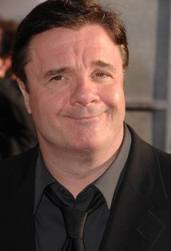
Today is Nathan Lane's birthday!
"I'm still the fat kid from high school who never had a date."
Today is Nathan Lane's birthday!
"I'm still the fat kid from high school who never had a date."
Corvus, small as an eyelash. The leaves of winter scatter on the wind. I can’t call my mother because the gates of heaven are so far from this house.
& the crow, small as a bitten fingernail, flies through my torso.
It goes without saying: no one else sees a thing.
& yes, the day’s geography is before me, the long day.
& I will be walking around with this micro crow deep inside.
I am keeping a secret by stuffing it inside a philsophical imperative. The nomenclature for this is tricky: ethics is only a partial embarcation as the secret both must and must not be revealed. These are the things I think as the day draws down. We must tell each other what we think. We must abjure honesty for the sake of the social contract. The funny man inside me, the one who reads books, who grins decidedly and without manners, he’s laughing himself to the floor. He’s down there now with Gregor Samsa and Philoctetes–figures of such loneliness even mathematics breaks out in sobs just to think of them. Laughter with so many broken teeth. Oh Franz, we live in such a decadent age. Just a clear word…
By Andrea Scarpino

If I learned anything from the US led invasion of Iraq, it is the importance of an exit strategy. But my mother had already taught me in eighth grade about giving people, as she called it, a “graceful exit.” I had asked a very cute blue-eyed boy named Doug to the Sadie Hawkins dance—and by “asked” I mean that I asked his friend to ask him while Doug secretly listened in on another phone line. It was the early ‘90s.
In any case, Doug initially said yes, but then refused to speak to me for the week leading up to the dance—wouldn’t even look at me in history class, where our assigned seats put his desk directly in back of mine. Finally, I told my mother what was happening, and she insisted that I call Doug and offer him a “graceful exit” from the dance, that it wouldn’t be fun for either of us if he didn’t really want to go with me. I called Doug’s friend who spoke to Doug and called me back, sounding very relieved for the both of them when he said Doug would rather not go to the dance. Maybe not the most graceful exit, but for my first attempt at an exit strategy, not bad. (And, let’s be honest, about as sophisticated as our exit strategy from Iraq).
Now I’m on to another scene: an increasingly hostile family situation. I don’t feel respected, basically. And more than “feeling,” I have been clearly told that I don’t matter, that my contribution doesn’t matter. This is incredibly painful, incredibly difficult to maneuver. For now, the benefits of this particular situation still outweigh the negatives, but I can feel the balance shifting, can feel my weariness growing. I can feel that my current fights won’t interest me for much longer.
So I’m beginning to think about an exit strategy. This isn’t easy; some of my income is tied to this situation, and in a terrible economy, when I have so many friends without work, I must tread carefully. But I’m not someone who believes in being miserable if I can help it. I’m not someone who believes in sticking with something that isn’t working year after year.
So I have started brainstorming, started thinking about how best to move forward, started enlisting Zac and close friends to help me think things through carefully, consider as many options as possible. As much as I like to imagine the thrill of making a crazy loud exit—of storming off in a fit of rage, ceremoniously burning important documents on another’s front lawn—the likelihood is that this will be a long, slow exit—again, not unlike our exit from Iraq. But hopefully, more controlled, mindful. Hopefully, filled with at least a little grace.
Poet and essayist Andrea Scarpino is a frequent contributor to POTB. You can visit her at: www.andreascarpino.com
On Behalf Of Imparato, Andrew (HELP Committee)
The U.S. Senate Committee on Health, Education, Labor and Pensions is holding a hearing next week that may interest you.
The Promise of Accessible Technology: Challenges and Opportunities
Tuesday, February 7, 2012 at 2:30-4:00pm
Dirksen Senate Building Room G-50
The hearing will focus on the importance of accessible technology and how this issue is impacting K-12 and higher education.
Witnesses include:
Panel I with Eve Hill, Senior Counselor to the Assistant Attorney General, Civil Rights Division, Department of Justice.
Panel II with Mark Riccobono, Executive Director, Jernigan Institute, National Federation of the Blind
Dr. John B. Quick, Superintendent, Bartholomew Consolidated School Corporation in Columbus, Indiana
Mark Turner, Director, Center for Accessible Media, Accessible Technology Initiative, California State University
We hope to see you there.
If you are unable to attend, the hearing will be broadcasted live online at www.help.senate.gov.
Real time captioning and sign language interpreters will be provided at the hearing.
"My first thought was: hey, I’m glad he recognizes the existence of and need for the safety net," former Obama administration economist Jared Bernstein wrote in a blog post Wednesday. "My second thought was … um … he’s gonna shred it" through his proposed spending restraint."
(See full article at the Christian Science Monitor here.)
From a disability advocate's perspective the problem with Romney's comment isn't merely that it stands for 5 & dime, run of the mill hypocrisy, it's that he imagines that the poor are a static group. When I first heard the interview with Soledad O'Brien I thought of Jesus' assertion: "The poor ye will always have with ye, but…"
I also thought about the early history of Mormonism. Long before Utah became a state the Mormons were progressive, viewing capitalism and its propensity for reducing the individual to commodified instrumentality as being antithetical to the practice of Christianity. In their terrific book A History of Utah Radiaclism John McCormick and John Sillito discuss, among other things, how impending statehood for Utah changed the progressive vision of Mormonism, ultimately leading to a conversion to the acquisition of smackeroos above all else. As Mitt knows, it's easy to shrug off the poor. They don't work hard enough.
But Mitt's idea that there's a social safety net for the poor is wrong. It's already been shredded and what interests me is his casual tone–you see, in his mind he imagines that if only the poor would work a little harder and dress a little better they'd be in Salt Lake City. Under the veneer, Mitt is a very scary man.
An ancient Chinese song, “The Boat of Stars” –but you can still climb aboard. Winter has been drinking my tears & yours. The heavens revolve with stoic purpose.
When you walk the dog you see the boat in the dark, like fireflies in the naked branches.
When Casey Stengel, the manager of the ’62 Mets was asked how he kept his players on their toes he said: “We raise the urinals!”
See this excellent piece over at The Daily News:
– Posted using BlogPress from my iPad

Before his trip, Leigh Van Bryan wrote that he was going to "destroy America".
He insisted he was referring to simply having a good time – but was sent home.
See full story: http://www.bbc.co.uk/news/technology-16810312
 Planet of the Blind