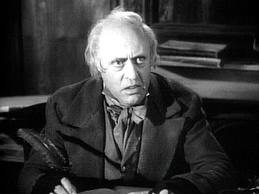
Scrooge's Hidden Disability

Scrooge


The photo above is of Alastair Sim, who remains (in my view) the nonpareil of filmic Scrooges.

Scrooge was of course hard hearted and uncharitable and to the extent that he had a philosophy it was a Benthamite affair and that, as they say, is that. Yet Scrooge’s hidden disability resides in his relationship with Tiny Tim whose visible disability means nothing to the old man until he is forced to look upon the boy’s crutch as a memento mori–for in a probable state of affairs the boy will die. In other words, Scrooge cannot see what is before him but only what is not there. No wonder he was such a good business man! We’ll call this condition hypo-gnostitis, and we shall avow that it’s a particularly virulent condition among people who work in finance or in academia.

The abandoned crutch is what saves Scrooge. What will save John Boehner? 

Here in these terrestrial winter rooms we worry about the poor. We worry about the coming Congress. We saw how the disabled were stripped of cost of living increases in social security when the White House bargained with the GOP to save all those fat cat’s tax breaks. We are steady in our concern that the most vulnerable are about to take a beating.

Will the sight of empty wheelchairs tipped in the snow mean anything to the 112th Congress? Heck maybe we can throw in a few crutches?

Here in these terrestrial winter rooms one tries to keep the harp in tune.

And rather than Christmas songs we love this poem by Yeats:


Who stole your wits away

And where are they gone?


Who dragged your wits away

Where no one knows?

Or have they run off

On their own pair of shoes?


I’ll find your wits again .

Come, for I saw them roll

To where old badger mumbles

In the black hole.


No, but an angel stole them

The night that you were born,

And now they are but a rag

On the moon’s horn.


S.K.  
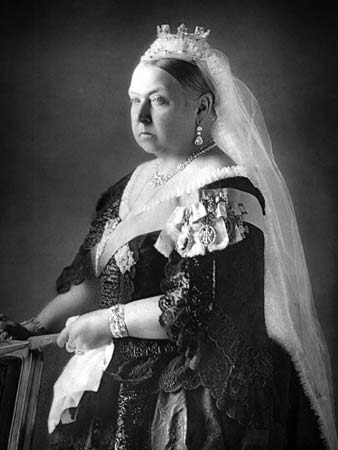
We Are Still Victorians

Queen Victoria       

Of course no one means to be a Victorian except for some cats like John Boehner whose tears on 60 Minutes were entirely sentimental or perhaps Mel Gibson who would like to do some things to women and children that have largely been outlawed since 1920.

I know when I got up this morning I didn’t plan on living in Victoriana. Heck I felt contemporary. After all I own an IPad and a BlackBerry and sometimes I even listen to Dr. Dre.

Alright. I lied about Dr. Dre. But I did watch 45 seconds of his latest video before the misogyny did me in.

I think that when it comes to disability in higher education that even the best among us are still living with a rehabilitation model that is as Victorian as can be.

Special education is, by its own name, a fine example of this cultural segregation and taxonomy.

My own university which can’t provide restrooms that meet basic ADA guidelines and where the student disability office is hidden away in the basement of a dormitory—a location that assures people with disabilities won’t be able to get out if there’s a fire—my own university functions with a neo-Victorian segregationist sensibility, one that does little to champion actual faculty, staff, or students as integrated members of the campus community.

We imagine as the ghostly children of the old Queen that someone else takes care of these issues, someone in the asylum for cripples and mental defectives.

We imagine special education as a consortium of segregated educational activities—a model that largely flies in the face of new evidence about the breadth and range of how people learn.

We imagine that people with disabilities are easily re-engineered into quasi-normalcy without examining what Victorian spigots are still dripping wherever normalcy is spoken.

In general terms we can’t think about disability until we wrestle with the history of our cultural taxonomies and our eugenics driven antipathy to people with mental illnesses or who have communication disabilities.

In general terms we are still collectors of outworn classifications. We have lots of little boxes to put people in. Have you been to the basement of Burge Hall at the University of Iowa?


S.K.


The Orphanage

By Andrea Scarpino

A sandstone building on a hill overlooking the lake, windows boarded up, grass grown high in the yard. Clearly abandoned, graffiti on the walls, one un-boarded window broken out. There’s a story there, I told myself for months, driving past. And there is—an orphanage, opened in 1915, totally abandoned since the mid 1980s, bought and sold by different people with different ideas about how to transform the building after the orphanage closed.

And there are many stories told about the orphanage, that it was a saving grace for parents with too many children and too few resources. That the nuns who ran it were abusive. One often-repeated story tells of an orphan who died after playing outside in the snow. The nuns were said to have left her body displayed for weeks to warn the other children not to play outside. Then there are stories of a group of Cuban children sent to Marquette as their parents fled the Cuban Revolution, of hauntings, strange sights and sounds at night.

Probably, the truth of the orphanage is complex—some children treated well, some abused, some who loved living there, some who hated it. But what interests me most is the building itself, sandstone arches, regal front steps. This building crafted so carefully, a theater with painted ceilings, wooden floors, grand entryways—and then abandoned, uncared for, left empty. It seems emblematic, although I’m not sure of what—American life, maybe, our modern situation, our many gradual declines into disorder.

Because isn’t this what we do? Create beautiful things, structures, ideas—and then let them go to waste, refuse to follow-through. We are so good at the initial creative energy of an idea, the initial excitement of making something happen. But the slow, steady work of keeping it going, moving our work forward. . . that we aren’t as good at. Maybe when I stare at the abandoned orphanage, I’m mourning the fate of so many interesting buildings, ideas, stories, lives—forgotten, fallen into disrepair, given up on. Maybe I’m hoping to hear the stories of those who once lived there, hoping the building still holds some piece of their lives.

Today, a beautiful day. Cold but sunny, snow reflecting sunlight. I’m sitting in the library looking out over snow-capped roofs, sandstone, wood, brick. Ice is beginning to form on the lake. One lone barge trudges along with iron ore on its back. But as I look over the town, I can’t help but focus on the orphanage, barely visible in the distance behind a row of ragged trees. Lovely, really, in its disrepair. Because there’s something so beautiful about failing, about crumbling, becoming overgrown. Tragic, yes, but beautiful too. Complex. The messiness of our lives, our good ideas ending, becoming something new.

Poet and essayist Andrea Scarpino lives in Marquette, Michigan. You can visit her at: http://www.andreascarpino.com

Blind Students Demand Access To Online Course Materials

The following excerpt comes to us via Inclusion Daily:

Blind Students Demand Access To Online Course Materials
(Chronicle of Higher Education)
December 13, 2010

WASHINGTON, DC– [Excerpt] More than 19,000 people have visited a new student union that Arizona State University put up last year to build a better sense of campus community.

Darrell Shandrow, a blind senior studying journalism, can’t get through the front door.

He’s stuck because the new social hub is built of bits, not bricks — a private Facebook application for Arizona State students. And, like so much technology used by colleges, the software doesn’t work with the programs that blind people depend on to navigate the Web.

“Basically, I’m locked out,” Mr. Shandrow, 37, says.

So are many others.

Entire article:
Blind Students Demand Access to Online Course Materials
http://chronicle.com/article/Blind-Students-Demand-Access/125695/

Disability and the Clown Next Door

bozo-the-clown-2


In the old days when everyone was crippled or lived with at least one cripple–in the days before “normalcy” became a hopeless expectation for the good people—well as I say back in those days a clown was just another neighbor. The faces all around were, as the poet Kenneth Rexroth once observed “starved and looted” and life was short. A hundred years ago the average life span in the United States was a smidgen over forty. It was a time of deformities—manifold disfigurements on a grand scale. Diphtheria, small pox, wens, cancers, industrial accidents, birth defects, war injuries, polio, arthritis, a fall from a horse, all these and perhaps thousands more meant that physical differences were legion. One is reminded of the remark by the American journalist Sidney Harris who said: “When I hear somebody sigh, “Life is hard,” I am always tempted to ask, “Compared to what?” The sheer physicality of life has always been a memento mori for the harder thing which is death itself. In this way all disabilities are metaphorical and metonymic representations of dying. No wonder a scary, overdressed Christian woman on a bus in Columbus, Ohio offered (belligerently) to pray for me. (She wasn’t trying to cure me, she was praying for my immortal soul.)

Enter the clown who is a saint if ever thee was one. The clown is Frederic Nietzsche’s front man. “One must never have spared oneself, one must have acquired hardness as a habit to be cheerful and in good spirits in the midst of nothing but hard truths.”

A clown exemplifies his deformities. He dances them up into an inflated, curious, exophthalmic, whirling, farting, giggling parlor trick. Let’s see your dead man try and do this. A true clown smiles to himself before smiling at others. His paint box and the box of patent medicines are one and the same.


S.K.


Disability and the Selves

Sphinx


“You write about disability but aren’t you really writing about the self?” (The question comes from the pesky alter-ego who is ever so busy). “No,” I reply. “We know there is no “self”–people are a collection of performative identities; all are equally authentic or inauthentic.”  

Like a grade school kid the alter-ego has taken apart a Bic pen. He’s making a pea shooter. 

“You can’t dismiss pain,” says the alter-ego. “You’re a visually impaired guy. All the normal people stare at you with their Sphinx eyes–they do this all day long. They pity you or else they’re afraid of you. They make your way “steep” in the world.”

“No one can make you feel inferior without your consent,” I say, quoting Eleanor Roosevelt. “Besides,” I say, “there are no normal people.”

“Well, distracting particulars are to be avoided, eh?” says the A.E..

“Normality is not a particular,” I say. “It’s a universal and painful social lie.”

The A.E. shoots a spit ball at a bust of George Washington. “I think,” he says, “I think that normality is the pursuit of happiness and you’re just a whiner.”

“That’s as may be,” I say, “but physical defects are universal–it’s a high gravity world my friend, and chasing the impossible ain’t my game.”

When all the alter-egos shut up at once, a tremendous amount of energy escapes back into the universe.


S.K.   

The following excerpted article is Further Proof of School Abuse

The following excerpted article is from Inclusion Daily.
Use Of Student Restraints, Seclusions Tops 18,000
(New Haven Independent)
December 8, 2010

NEW HAVEN, CONNECTICUT– [Excerpt] Six-year-old Anthony Wickham weighed about 48 pounds when five adults forcibly restrained him at Plainfield's Shepherd Elementary School. Anthony, a student in the school's Clinical Day Treatment program, was regularly locked in a windowless room that measured four by six feet, a court document says.The allegations sound highly unusual, but Connecticut schools reported using emergency restraint and seclusion more than 18,000 times last year.The state Department of Education cautions that these numbers are preliminary and unaudited. In only one other state, California, are schools required by law to report these incidents to the state. California schools reported about 21,000 "behavioral emergencies" in the same time period in public and non-public schools. California's K-12 public school population was 6,252,011 in 2009. Connecticut's was 563,869."We have a lot of information that they're harmful," Denise Stile Marshall said of restraints and seclusions. Marshall is executive director of The Council of Parent Attorneys and Advocates. She added that there is no research that shows any educational or therapeutic benefit from these practices. Her group did a national report in 2009, Unsafe in the Schoolhouse, that solicited incident reports from parents.

Sent from my iPad

Gleaning Disability Meanings Withal

The stories arrive from every corner: a woman in Japan who has had a stroke is walking with the aid of motorized legs; an American soldier is returning to combat duty with a graphite foot; a blind man in Finland has received an implanted microchip in his retina and he can see large print and the face of a clock for the first time in his life. The changing nature of disability is in fact a cyborg manifestation of our broader human future–soon everyone will be part flesh and part compensatory device.

“What’s that Mommy?”

“That’s a picture of the old days when people just had arms and legs.”

S.K.

Sent from my iPad

Dear John Boehner

What happens to poor people in America when their unemployment benefits run out? Since there is no section 8 housing program for those who can no longer pay the rent where will the long term unemployed go? Or more properly, where do you expect them to go? I ask as one who used to get unemployment benefits, as one who has lived on social security disability payments and has lived in subsidized housing. I ask because I have lived among the poor and while I now have a job and a home I’ve never forgotten the people I met in the meager offices of the state. They were struggling to hang on, clutching children, and many ill clothed as winter was coming on.

Mr. Boehner, I know your answer. For you and your cronies the question is inadmissible.
You believe that the Reagan philosophy of “trickle down” economics is the sufficient explanation and justification for permanent tax cuts for the wealthiest Americans. Never mind there’s no evidence the wealthy use this benefit to invest in job creation–never mind there’s no “trickle”. You know the advantages of rhetoric over reason. In other words it works for you.

I would like to see our ruling classes live among the very poorest in America. In fact I’d broaden this to say that our ruling classes should have to spend time with any of the people whose lives and livelihoods they imagine on the chopping block.

Mr. Boehner, why is it that the rich, who can best endure the chopping block are off limits? Mr. Boehner, you should really spend some time on the street before you speak up.

S.K.

Thinking of Ted Berrigan on the Day of First Snow

For my sins I lived in Iowa City & my heart was dark as poetry itself–
My little heart my raven my common bird of dispositions
Joyful that God is no God to the hearts, birds, poems. The nest box
Of hearts, birds, poems sways up in the ash tree.
The hearts, birds, poems make a place in all weather.
See Picasso: A person, an object, a circle
Are all “figures”; they react on us more or less intensely…
Ted, no gods but walking lightly with tiny silver bells today…

S.K.