Are There No Prisons, Are There No Workhouses?

Why are “these people” still out in public? Do something about it! Get them back in their asylums for God’s sake! Otherwise we’ll be forced to fix the damned sidewalks!

Excerpted article from USA Today via The Inclusion Daily Express:


Sidewalks Become Battlegrounds
(USA Today)
October 27, 2009
JACKSON, MISSISSIPPI– [Excerpt] The nation’s crumbling sidewalks have disabled residents taking their wheelchairs to the streets, a potentially dangerous practice that has cash-strapped cities and disability-rights advocates at odds over how to fix the problem.

Cities across the nation are dealing with eroding sidewalks that do not meet standards set by the Americans with Disabilities Act. Under the ADA, state and local governments cannot discriminate against the disabled in providing “services, programs or activities,” including access to sidewalks.

Although there are no specific statistics on the number of accidents involving wheelchairs in streets, according to the U.S. Department of Transportation’s Fatality Analysis Reporting System, disability was a factor in 617 pedestrian traffic fatalities last year.

Disabled residents here take their lives in their hands getting from point A to point B, says Scott Crawford, a disability-rights advocate.

Entire article:
Sidewalks become battlegrounds

http://www.usatoday.com/news/nation/2009-10-25-sidewalks_N.htm


S.K.

Look Me in the Eye Department

The excerpted article below comes to us from The Inclusion Daily Express. Our nation gleefully supports the bailout of Wall Street fat cats but shuts down vital services for the poor and elderly and the developmentally disabled. This is because they no longer teach civics in junior high. It’s also because thirty years of Reaganite obfuscation has scored the intelligence of politicians, rendering most elected officials nothing more than Social Darwinists.


S.K.


Hundreds Rally For Reversing Budget Cuts
(Columbia Flier)
October 26, 2009
ELLICOTT CITY, MARYLAND– [Excerpt] Pam Matheson spoke at a community rally Thursday night from her wheelchair, her 39-year-old adopted son at her side in his wheelchair.

“Matthew has wanted all his life to be a regular guy,” she told several legislators and more than 250 people who had crammed into Ellicott City Assembly of God Church to protest state budget cuts to developmental disabilities programs.

“He hated being at Rosewood [Center] and they’ve closed it, but now they’re decimating community services,” she said, referring to the $30 million in cuts made since July 1.

“Matthew was given the right to life, liberty and pursuit of happiness,” she said directly to state legislators seated in the front row. “Look Matthew and his peers in the eye and tell them why you’re taking their services away.”

Matheson was one of 17 speakers, some of them with development disabilities, to offer emotion-filled testimony about losing or not having programs they desperately need.

Entire article:
Cuts to programs for developmental disabilities protested

http://www.InclusionDaily.com/news/2009/red/1026a.htm
Related:
Advocates for disabled protest (Baltimore Sun)

http://www.InclusionDaily.com/news/2009/red/1026b.htm

Disability and Halloween

Chief Justice John Roberts


In an effort to be truly scary this year I’m going to Halloween parties as a Normal Person. There’s nothing scarier than a Normal Person and if you’ve ever seen a photo of a fully performative “NP” you know exactly what I’m talking about. (Chief Justice John Roberts of the United States Supreme Court comes to mind–he looks a lot like a “Ken Doll” and he has that wry little “NP” smile that suggests all is well in “NP World” and by God if you don’t think all is well in NP world you should get your head examined. (Yep, that’s all conveyed by a smile. That’s one of the secret powers of the “NP” tribe.)

Of course there are hundreds of horrifying things about NPs. Here’s a brief list:

  • Their shoes. Normal People have really scary shoes. Sometimes they’re called “Bankers Bullets” but whatever you call them they’re shiny as armadillos and the collective unconscious knows that such shoes date from the Spanish Inquisition.
  • Their conversation. NPs say stuff like: “Let’s recalibrate.” Or: “As it was in the beginning.” Lordy! Is that Scary!!!
  • Their book shelves. “Cookouts for Dummies” and “How to White Wash” are standard.
  • Their beliefs: NPs believe in the omnipotence of health and believe that their survival is assured by the lives of others. This is of course the scariest thing of all…

Let others rattle as skeletons or carry on as pirates. I’m going to scare the bejeezus out of people.

Ding Dong! “Oh my God! It’s a Normal Person! What festering cruelty is responsible for this?”


S.K.

Wrong Numbers


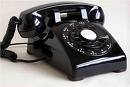
Image of a black desktop telephone


Andrea Scarpino

Los Angeles


When I lived in Columbus, Ohio, I used to get phone calls and messages pretty regularly from an elderly-sounding woman looking for “Bernadette.” No matter how many times I explained that Bernadette doesn’t live at this number, the woman kept calling, sometimes talking with me directly, sometimes just leaving messages on my answering machine. In time, I started to wonder about Bernadette, where she lived, how she knew the woman who called, if she had given the caller the wrong number on purpose to avoid her calls. When the calls eventually stopped, I found myself worrying about both Bernadette and her caller, worrying that maybe one of them had died. In a strange way, these two women I never met had become my friends.

In the past several months, I’ve received a new spate of calls for “Clyde,” mostly from collection agencies and banks. Fifth Third Bank, which is headquartered in Ohio is especially tenacious, calling Clyde about some recent activity on your account dozens of times even though I’ve told multiple agents that I don’t have a Fifth Third account and am not named Clyde.

The first couple of calls, I just found annoying. But after weeks of messages at 6am, return calls, begging agents to take my number off their account, and sometimes three or four messages a day, I find myself feeling more and more protective of Clyde. I have no idea why Fifth Third is trying to reach him, but I assume it’s because his accounts are overdrawn or he hasn’t paid his mortgage—something financially ominous. And their calls have long ago surpassed my definition of harassment. So I find myself worrying about him, worrying that he has other collection agencies actually reaching him, leaving him messages around the clock about his accounts.

And I know it’s silly, but with each additional phone call, I feel more and more like I should do something to help Clyde. Just like I secretly hoped that Bernadette would call one day so we could laugh about the screaming messages her friend left on my machine, I want Clyde to call, to tell me if he gave these different agencies the wrong number on purpose, or if he had my number at one point (it would have been 6 or 7 years ago now) and never updated their files when he got a new number. I want to know if they’re calling because he’s lost his job and has fallen behind on bills, if he has a balloon mortgage, if he lost money in the stock market collapse. I want to know if there’s anything I can do to help.

Strangers, of course, come in an out of our lives all the time and we hardly ever think about them, what they spend time doing, what they eat for lunch. But after someone’s name has been spoken again and again to me on the phone, I’ve found I start to feel an odd intimacy with her. I find myself hoping that Bernadette and her caller are still around and have reconnected over a weekly pinochle game, that Clyde is doing okay and these collection agency calls are a big misunderstanding. And I find myself wondering if once in awhile, we should all call a wrong number just to see who is on the other line, just to connect for a moment with someone totally unexpected and ask about his day.


Andrea Scarpino is the west coast Bureau Chief of POTB. You can visit her at:

www.andreascarpino.com

Why American Higher Education Doesn't Believe in Accessibility for People with Disabilities

The stories come to us from every quarter about colleges and universities that remain inaccessible to people with disabilities. Most recently we’ve received the following excerpted article from Minneapolis about the University of Minnesota. But the stories are legion and the breadth of the problem is wide. You can read the Minnesota article below but our aim in this brief post is to examine the matter. Why should this problem exist at all, given the fact that the Americans with Disabilities Act was adopted 19 years ago? What cultural forces or considerations have allowed college administrators to imagine that civil rights guarantees for citizens with disabilities do not affect their campuses? What allows the regents of the University of Minnesota to imagine that silence is an appropriate response to demands from students with disabilities that the U of Minnesota’s buildings must be made accessible?  Above all else, what is the solution to this shameful situation ?

The short answer to the first question is that violations of Title II of the ADA have been poorly enforced by the Department of Justice, a matter that must be resolved promptly. Title II stipulates that older buildings (buildings constructed before the ADA went into effect in 1990) must be made accessible when these buildings are renovated. So for example, if you renovate a lecture hall in an old building you must make the adjacent restrooms accessible and you must renovate the entrances to the building. Title II does not say that the entire building must be renovated all at once, merely the remodeled areas. The framers of ADA had hoped that this sequential approach to renovation would be a palatable directive–its easier and in some cases more cost effective to make old buildings accessible “bit by bit”.

At the University of Iowa where I teach, administrators decided long ago that ignoring Title II is easy. Recent renovations to our student union’s lobby and hotel restaurant were carried out with no provisions to make rest rooms and associated facilities accessible (things like drinking fountains, telephones, signs, fire alarms, and the like). Indeed at the U of Iowa there is no administrative oversight for this matter–bids are posted for building renovations without any call for accessibility modifications. The building in which I teach, the so-called “English-Philosophy Building” has been renovated from basement to the top floor and it still has no accessible restrooms. Ignoring Title II is easy.

What’s interesting is the degree to which the experience with Minnesota’s regents (who simply have not responded to student requests to make the campus accessible) is replicated “to a T” at Iowa. The apparent prevailing assumption by administrators in higher education is that calls for accessibility are inconvenient and that silence is the best policy. Why not? The Department of Justice has a limited record of ADA enforcement in higher education. While there are cases in which the DOJ has steeply sanctioned colleges and universities for ADA violations (most recently Colorado College and the University of Michigan, both of which had to pay heavy fines and endure embarrassment) these are infrequent incidents. One can fairly imagine academic administrators saying: “Maybe these students or faculty will just go away?”

This matter leads us back to question 2:  what cultural assumptions allow administrations at colleges and universities to imagine that the ADA doesn’t apply to their institutions? We cannot imagine that the University of Minnesota would post signs designating “Whites Only” facilities or signs that say “Colored Entrance”. And yet there’s a cultural “pass” for operating entirely inaccessible academic facilities for “those disabled people”. What assumption or set of assumptions makes this scandalous business possible? Surely having inaccessible buildings is bigotry and surely it’s illegal? Well, yes, it IS illegal. But administrators imagine that this isn’t bigotry at all. The cultural problem is that many college administrators conceive of disability as being somehow separate from the issue of campus diversity, preferring to think of accessibility within the framework of what we might call an old fashioned rehabilitation model of disability. By old fashioned we intend to suggest a Victorian inheritance: this model holds that people with disabilities are public exceptions, rare outside of their asylums and special hospitals, and when they show up in the village square they are only provisionally in public–why, don’t they have attendants or other people to look after them? Isn’t this the way it’s always been? Aren’t people with disabilities quite rare out here in the mainstream? Surely we can continue to think of them as rare exceptions to our body politic? And by extension, surely someone else, some specialized rehabilitation person will take care of the poor unfortunate disabled person who has somehow strayed onto campus? Isn’t there some office that looks after them?

The noted scholar of disability studies Lennard Davis writes in his book Bending Over Backwards a trenchant overview of the academic relativism that consigns disability to Diversity’s basement and argues for the critical importance of disability studies in higher education:

“The fact is that disability disturbs people who think of themselves as nondisabled. While most liberals and progressives would charitably toss a moral coin in the direction of the lame, the blind, or the halt, few have thought about the oppression committed in the name of upholding the concept of being “normal.” Consequently, one of the major tasks of this new field is to determine why this “fact” of disturbance exists, is accepted, and is promulgated. Disability scholars want to examine the constructed nature of concepts like “normalcy” and to defamiliarize them. David Pfeiffer writes that “normal behavior is a statistical artifact which encourages people with power and resources to label people without power and resources as abnormal.”’° Rosemarie Garland Thomson coins the term “normate” to make us think twice about using the term normal: “The term normate usefully designates the social figure through which people can represent themselves as definitive human beings. Normate, then, is the constructed identity of those who, by way of the bodily configurations and cultural capital they assume, can step into a position of authority and wield the power it grants them.”’

Normates thus enforce their supposed normality by upholding some impossible standard to which all bodies must adhere. To further demystify such terms, disability activists have called attention to the routine ways in which language is used to describe people with disabilities. Such activists refer to themselves as “crips,” as in the video documentary by David Mitchell and Sharon Snyder called Vital Signs: Crip Culture Talks Back, and choose words like gimp, geek, deaf and blind over more polite euphemisms. Expressions like “confined to a wheelchair” are being replaced by the more active “wheelchair user.” And expressions that use impairments metaphorically to convey a negative sense–such as “a lame idea,” “turn a deaf ear,” or “morally blind”–are being seen as the equivalent of racial epithets. This obsession with being normal has a history, as I attempt to show in my book Enforcing Normalcy)2 The use of the word normal in reference to physical bodies appeared in English merely one hundred fifty years ago, coinciding with the birth of statistics and eugenics. Before the nineteenth century in Western culture the concept of the “ideal” was the regnant paradigm in relation to bodies, and so all bodies were less than ideal. The introduction of the concept of normality, however, created an imperative to be normal, as the eugenics movement proved by enshrining the bell curve (also known as the “normal curve”) as the umbrella under whose demanding peak we should all stand. With the introduction of the bell curve came the notion of “abnormal” bodies. An
d the rest is history, inclu
ding the Nazis’ willing adoption of the state-of-the-art eugenics funded and developed by British and American scientists, as Martin Pernick points out in The Black Stork.13 The devastating result was the creation of procedures for exterminating deaf and disabled people, procedures which were later used on the Jews, gypsies, and other “degenerate” races. But the Nazis were only the most visible (and reviled) tip of an iceberg that continues quite effectively to drive humans into daily frenzies of consuming, reading, viewing, exercising, testing, dieting, and so on–all in pursuit of the ultimate goal of being considered normal.

Disability studies demands a shift from the ideology of normalcy, from the rule and hegemony of normates, to a vision of the body as changeable, unperfectable, unruly, and untidy. Philosopher Susan Wendell sounds a clarion call that in the end provides a rationale for the disability perspective: “Not only do physically disabled people have experiences which are not available to the able-bodied, they are in a better position to transcend cultural mythologies about the body, because they cannot do things the able-bodied feel they must do in order to be happy, ‘normal’ and sane …. If disabled people were truly heard, an explosion of knowledge of the human body and psyche would take place.”4″

–from Bending Over Backwards by Lennard J. Davis, New York University Press, p. 24

We can argue that “the body normal” is still culturally of considerable importance in administrative circles within American higher education. That disability clouds the picture is entirely understandable. Disfigurement is a terribly problematic matter if the goal on campus is simply to look good (whatever your social background).

Academic accommodations for learning disabilities, special provisions for assistive technologies or note taking or the like are still, to this very day, unconsciously imagined by many administrators and faculty as being somehow a matter of cheating the system.

That accessible facilities are not part of the cultural capital of Normates should not be surprising given the historical exclusivity of higher education. But that the problem of ADA compliance remains IS surprising especially in a time when we are seeing wounded veterans returning to colleges and universities in the greatest numbers since the years following World War II. Clearly its time for the Department of Justice to demand compliance with the ADA in higher education. And its time for regents, trustees, college presidents, and faculty senates to demand that their campuses be audited for accessibility and adopt serious plans for reaching accessibility goals.

The final question and perhaps the most important one is to ask how a college or university can be culturally inclusive for people with disabilities, a matter that if answered properly will take away the embarrassment and distress of having to ask for simple acceptance within the academic community.


The following article was excerpted by The Inclusion Daily Express.


Students With Disabilities Fight For Equal Access On Campus
(Minnesota Daily)
October 21, 2009
MINNEAPOLIS, MINNESOTA– [Excerpt] For student Rachel Garaghty , Scott Hall’s doors are always shut.

University of Minnesota building Scott Hall has multiple stairways and lack of ramps that make it inaccessible for students with mobile disabilities, including those using walkers, canes or, like Garaghty, wheelchairs.

Areas of study located in Scott Hall include American studies, American-Indian studies, African-American and African studies and Chicano studies.

The Disabled Student Cultural Center (DSCC) is lobbying the Board of Regents to put funds toward making Scott Hall accessible to all students on campus — including those with disabilities.

DSCC has approached the board with the issue of Scott Hall accessibility for the past three years, most recently one year ago, but each time received no action, said Garaghty, DSCC’s former programming co-chair and current graduate student,.

Entire article:
Students with disabilities fight for equal access on campus

http://www.InclusionDaily.com/news/2009/red/1021b.htm


S.K.

 

The Impending Sainthood of Dr. No


From the New York Times section on debate and analysis:

“The Vatican announced on Tuesday that it would make it easier for Anglicans who are uncomfortable with the Church of England’s acceptance of women priests and openly gay bishops to join the Catholic Church. The Vatican will set up a formal conversion structure to allow Anglicans to preserve some of their liturgical traditions, including allowing married Anglican priests to remain married after they convert to Catholicism.

What does this announcement say about the Catholic Church and its willingness to grant such flexibility?”

It is our perspective that by inviting the overtly homophobic and misogynistic Anglicans into the Catholic Church the Vatican is simply declaring a its bankruptcy of spirit. Same old same old.

We were more interested in the news that Joseph Wiseman, the actor who played Dr. No in the first James Bond film has passed away at 91. Mr. Wiseman was a talented actor who disdained his role as Dr. No because he was seriously in love with the stage. Mr. Wiseman took a role in a movie that forever branded him and he’s hardly the first actor to have suffered an ignominious semiotic Hollywood scorching. We hope for him a heaven of thespians and singers.

Meanwhile here on Earth we imagine Dr. Julius No is alive and well in the Vatican.


S.K.     

Not Me, No Sir, Nope, Not a Chance, Not Going to be The Grinch, Etc. etc.

I long most days for a voice of unnatural music.

Whether it’s a great tenor or soprano or the voice of Muddy Waters, I need music that bends a bright spear.

So when I turn on the radio and hear country music I want to throw myself onto stones by leaping from a great height.

The other night I couldn’t sleep and I went up and down the dial and thereby scoured the midnight static.

An adenoidal, sullen white boy was whining tunelessly about how he turned out alright despite the fact his mother smoked and drank and they never had seatbelts in the family car and no one in the lad’s fairy childhood was ever forced to wear a bicycle helmet–sweet Christ on a crutch, the fookin’ song went on and on… 

And the voice, the voice, like melting plastic…

This is music to make your blood grow cold. And Americans listen to it and think its poetry.

I wouldn’t begrudge anyone his or her melting plastic.

Not gonna be the Grinch.

It was rather silly of me to turn on the radio.

Once, against all odds, I turned on a daytime television show, one of those talky celebrity chat fests and Lo and Behold there was the great tenor Placido Domingo singing “Panis Angelicus” and I was utterly uplifted both by the song and by the sheer improbability of the situation.

Then they cut to a commercial for Preparation H. Really. No joke.


S.K.  

Naive on Sundays

It is difficult if you believe as do the Jews that History is the simulacrum of God’s thoughts to be by turns a simple man or woman. Scientifically minded people believe in turn that the Cosmos (which we have inherited from the Egyptians and the Greeks) is the template of knowledge. That’s a useful view if you value scientific inquiry. Finally you have the Sweet Metaphysicians–William Blake, Emerson, Whitman, Swedenborg, Jakob Boehme, etc, all of whom imagined that Nature with a capital “N” was the local neighborhood of God and accordingly the sole purpose of life is essentially to keep your eyes and ears open.

Category 2 above suggests that if you study the stars and the creatures in the ocean you will not know much about divinity but you’ll gather a heck of a lot about the experiential digest we call knowledge. I’m a big fan of this category.

But hang on–don’t we need Category 1 if we’re to have things like ethics and civil rights laws? Yes. I’m a big fan of this category.

Alright, but William Blake and the poets are so persuasive! Surely the hand of God is discernible in the darkening beach grasses of Nantucket?  Ah! God is the only suitable explanation for our loneliness, a matter that gives the human imagination all its steep necessity. Can anybody really live without Number 3? Plenty have tried. How did that Soviet “thing” work for ya Comrades?

What’s to do? It’s Sunday and mild, late Autumn sunlight courses through the yellow leaves that hang in the poplar trees outside my window. How do we slow ourselves? How can we secede from the inventions of mind? And isn’t that the work of poetry in the last analysis? The world of poetry says we can be full of admiration for things that are insufficient. And isn’t this the experience of “being” in all its tangled, mispronounced, embarrassing exactitude? Poets are fools. We need them. We need to dunk our bread in the cheap wine along with the greengrocer who shows us that it’s good. We need intimations of our unanticipated moments of happiness. How hopelessly foolish!

Thomas Osbert Mordaunt, a very minor 18th century English poet wrote:


Sound, sound the clarion, fill the fife!

Throughout the sensual world proclaim,

One crowded hour of glorious life

Is worth an age without a name.

For my kopecs, that’s a good Sunday reflection. I shall conduct myself as naively on Sundays as I should wish. I’m going to toot on my fife some business of a crowded and glorious hour.

That’s what’s meant by “rest” I should imagine.

Isn’t Thomas Osbert Mordaunt a fabulous name?


S.K.   

The Secret Symbols of Dan Brown

Last night I watched “Dateline’s” Matt Lauer interview Dan Brown who has written a new thriller about Masonic symbols and evil magic in the corridors of Washington. “Wow!” I thought. “This is almost middle brow!” Now let’s be straight: I’m no cuff shooting academic who holds his head upwards at sharp angles. Hell, I even like “low brow” stuff like The Three Stooges though only when they’re tormenting academics or the rich and of course that means I like “the Stooges” most of the time. 

Silly Moi! That thar interview warn’t middle brow t’all!

Nope Skeezix! It was precisely in the wheel house of Dateline’s motto which you’ll find on their web site: “News stories about crime, celebrity, and health…”

If you have nothing better to do you can go to the interview link above and troll the salt flats of lurid alchemical sophistry that comprise most of Mr. Brown’s rendering of Masonic symbolism and Masonic ideas–matters that he holds are entirely a sub rosa trail of bread crumbs in the forest of conspiracies that “is” America. “Wow!” I thought. “This is almost a 1970’s college conversation with pot heads!”

Yep! I remember those conversations well.

“Hey Man! Have you ever looked close at the Marlboro cigarette pack? Yeah Man! There’s a little key that points east! Yeah Man! That means Lyndon Johnson killed J.F.K.!”

“Wow! Dude! You’re trippin’ me out!”

“Yeah! The Marlboro Man was really L.B.J. and he got the key to the East Coast Establishment after he killed Kennedy!”

If you weren’t in college in the 70’s that’s pretty much the way things went. “Woah! Dude! You’re gonna need a roach clip for that!”

All Matt Lauer and Dan Brown needed was a big, fat Doobie!


S.K.

The Invention of a Spherical God


The Greek God Hermes in flight


1.


For reasons that are difficult to pin down the ancient Greeks one day conceived of their many gods as one and they thought this god was a spherical being. Overnight the old gods and goddesses of Olympus were relegated to a soap opera. The new god was Hermes who was essentially recycled from the Olympian melodrama.

Why was Hermes recycled?

Because he was acquainted with people who were dying.


2.

Hermes was believed to be compassionate. He could also fly. The Greeks always used flight as a metaphor for poetry and philosophy. The winged horse Pegasus was a Greek figure for poetry.

(People who came of age in the middle of the 20th century could see Pegasus flying above the gasoline pumps. The automobile was obviously a new kind of poetry.)

But I digress. Hermes could fly because his physical attributes were more complex than the mere sight of a flying man would have one suppose. His wings represented compassion for terminal illness. 


3.

In effect the Greeks woke up one morning and felt how alone they were. Nothing in the Pantheon spoke to matters of human energy. By this I mean the most basic of questions: how can I best live today?  

Suffering must make sense and sense must reconfigure suffering.

On the day that suffering must make sense the bread rising in the ovens must make sense; the lilies cultivated along the Nile must make sense; the spare and detached trees must make sense; and death also.

4.

Hermes new spherical conception means that the winged god is at the center of the universe and also at its circumference. He is the precursor of Christ who represents a compassionate cosmos and everlasting life. 

The thing that most interests me is how a culture moves toward this view.


5.

Culture is impenetrable as basalt and no responsible scholar can fully answer the “how” questions that mark the turning points in civilizations. But one thing is clear: free people become smarter over time.

Wise cultures move toward compassion, which is, if you will, the barometer of a culture’s intelligence-atmosphere.

6.

The health care debate going on now in our country is about compassion. No more, no less. I believe that Olympia Snowe understood this when she said recently that when history calls you must act–implicitly she was saying that a smart nation sides with compassion.

7.

The spherical god cannot be seen. But you can feel the compassionate geometry of sense and of the call to alleviate suffering.

Olympia Snowe felt it. More in the United States Senate should think more of circles and of Hermes and the mystical geometry of the cross.

Let the nation not conduct itself in the halls of government like frightened beasts.


S.K.