Redeeming the Old News

Ezra Pound said that Shakespeare used 15th century Italian news for his 16th century plays. His point, such as it may have been was that Shakespeare looked to the European continent from the outside and with the benefit of years.

When I think about literary writing and the ink stained wretches who make it I’m often mindful of the fact that the basic principle of literature is the redemption of the old.

Shakespeare’s fascinations with the Comedia del Arte were not directed by a simple reincorporation of plots. He was, after all, and as Harold Bloom has argued, the first writer to create modern characters. Or to put it another way: Shakespeare understood something more than plot–he saw that human beings are both the agents of stylized and of unconscious symbolism. That’s modernity in a nutshell. Hamlet is a play about the human struggle with natural innocence. Poor Hamlet, his innocence robbed, creates a second innocence which is symbolic and yep, it’s beyond his control. Shakespeare was the first writer to conceive that comedy ends badly when we screw around with symbolism. And that of course is not a reincorporation of plot–it’s the world we must live in and negotiate.

Why do I think of this early in the morning over my first cup of coffee? Because I made the mistake of turning on a contemporary talking heads television show on one of the cable networks and heard some loud men arguing loudly that the recent misbehavior of American security guards at the U.S. Embassy in Kabul–carousing with prostitutes and so forth, is just an old story, boys will be boys, especially when they can easily imagine that tomorrow they might get a bullet in their heads, etc.

But this puerile analysis leaves out the matter of unintentional symbolism. In a Moslem country photographs of Americans dancing lewdly with prostitutes is more than a public relations gaffe, it’s a lost battle. Shakespeare would have understood this. Joe Scarborough needs to read more.

Good writing is in fact the delivery system of civilized values. Watching “Morning Joe” this morning I thought of this paragraph by Pound:

“The man of understanding can no more sit quiet and resigned while his country lets its literature decay, and lets good writing meet with contempt, than a good doctor could sit quiet and contented while some ignorant child was infecting itself with tuberculosis under the impression that it was merely eating jam tarts.”

I shall here rest my case.


S.K.

Speaking in a Forgotten Language

“I want to tell what the forests

were like


I will have to speak

in a forgotten language”

–W.S. Merwin “Witness”


I will have to speak in a forgotten language because the blind verbs occupy my sleep.

Did you blind-run? Did you blind-fly?

Yes. But this cannot say it.

Blind-run has a Roman accent;

Blind-flying requires a black horse and soft, sympathetic words from Lapland.

In that forgotten language

Nouns are carved by the light of a red moon…

The lacquer of blindness is finally, also a space in time.

You see how it can’t be done. The words can’t rise

Between your delirium and mine.

Blindness is, in part, a matter of manes and swords…


S.K.

Disability and the Holocaust Remembered

Our friend L. Scott Lissner, the excellent ADA Coordinator at The Ohio State University today sent the following information to a broad audience of e-mail recipients. We in turn pass this along with all due prayerful introspection and memorial thoughts.


S.K.

What became known as the T4 Program, and arguably the Nazi Holocaust  began 70 years ago today.  Hitler’s euthanasia decree, dated September 1, 1939, read as follows:

“Reich Leader Bouhler and Dr. Brandt are charged with the responsibility for expanding the authority of physicians, to be designated by name, to the end that patients considered incurable according to the best available human judgment [menschlichem Ermessen] of their state of health, can be granted a mercy death [Gnadentod].”

This effort began with the  1933 less than six months after Hitler became chancellor with the  “Law for the Prevention of Progeny with Hereditary Diseases” This law established a policy mandating the sterilization  of anyone with suffering from diseases considered hereditary  including  mental illness, cognitive disabilities, physical deformity, epilepsy, blindness, deafness, and severe alcoholism.  The scientific and social basis for Nazi eugenics program was largely imported from the eugenics movement in the United States where laws in twenty-nine states forced  sterilizations on more than 30,000 people between 1907 and 1939.

Forced sterilization and the  systematic killing of the disabled where Germany’s first steps in the Holocaust   The T4 euthanasia program was both a rehearsal and justification for Nazi Germany’s subsequent genocidal policies.  Extended the ideological justification for eliminating the  “unfit” from society to other categories of perceived “genetic” threat to society.  The gas chambers and accompanying crematorium designed for the T4 campaign where later utilized to murder Jews, Roma, Sinti and other undesirable and the architects of the T4 program became key figures at among killing centers of Belzec, Sobibor and Treblinka 

Further Information:

A Teachers Guide to the Holocaust Includes a section on Handicapped: Victims of the Nazi Era, 1933-1945

The Holocaust History Project  Includes the entire text of The Nazi Doctors: Medical Killing and the Psychology of Genocide  Robert Jay Lifton

The Center for Holocaust and Genocide Studies including The exhibition of the “Hospital” in Hadamar,

Crying Hands: Eugenics and Deaf People in Nazi Germany  Horst Biesold

Resistance and Resistance on the Plinth Liz Crow, Roaring Girl Productions

People with Disabilities and the Nazi T4 Program: A Partial Bibliography Brenda Brueggemann

Shouting in my Room for Peace

“Overhead in the deep sky

Of May Day jet bombers cut long

White slashes of smoke. The blackbird

Sings and the baby laughs, midway

In the century of horror.”

–Kenneth Rexroth “The American Century”

**

And so how many more wedding ceremonies and family gatherings will we bomb in Afghanistan? And so who finally counts the number of Iraqi civilian dead after all that “shock and awe”?

And so when the Obama administration talks of a winnable war in Afghanistan who will say enough? Who in this long bloody imperial nightmare calls for peace in Washington? Who will call for peace and finally mean it? Who will have the courage to say that Afghanistan is the hangover of the Cold War and admit that arms will not solve its problems? Who has the conviction for peace? I mean it. Here in a new century of emerging horror I say that in the name of our common humanity, who has the conviction for peace? Let someone step forward in this nation who means it.

I’m so tired of carrying the weight of the innocent dead on my American shoulders.

I’m so tired of Democratic and Republican war mongers. They are the makers of human viscera that hangs from the trees. Joe Lieberman makes me want to throw up.

My nation has killed so many innocent people while performing a political shrug its astonishing that the very bread we eat does not spread wings and flee our tables. Henry Kissinger makes me want to throw up.

My nation has not done enough atoning. The Viet Nam Memorial is just a start. Fox television makes me want to throw up.

Carl Jung once said: “You always become the thing you fight the most.” No wonder we are a nation of torturers and apologists for torture. Glenn Beck makes me want to throw up.

Jung also said: “Man needs difficulties. They are necessary for health.” But health comes with the desire for health. Senator Grassley makes me want to throw up.

My nation is like a neurotic man. Jung again: “The neurotic is ill not because he has lost his old faith but because he has not yet found a new form for his finest aspirations.”

Amen.


S.K.

Ode to Gravity

Laurence Sterne    Dick Cheney


It was Laurence Sterne who wrote that gravity is a mysterious carriage of the body to conceal the defects of the mind. Contemporary Americans might doubtless read this to mean that the subject is physics, but of course we’re talking about an assumed mantle of seriousness especially in social or political situations. Do you see them? Do you see those people who have about them a look of high mindedness and probity? Do you see how they appear to have swallowed a pip?

It’s hard to imagine that a scowling face conceals a dearth of thought, a matter that’s significant certainly, but again nowhere as bad as true defects of the mind. Did you sense that the serious man or woman was concealing a dullness?

I used to feel this way about Dick Cheney whose moue of disgust was eternally marring his features. I used to think about Cheney’s mother, imagining she would say: “Now Dicky, stop that sneering and frowning, you look patently dishonest my dear!”

Of course no one ever said this to the former vice president and I guess he’s done alright for himself. The man’s exposed nature was all one big mistake and the acquired probity of his mouth hid nothing. One may think of Cheney as being projectively defective in a manner that is particular to Americans.

The human face is a language and as a means of communication its trickier than all the tricksters of old mythology. You see, Laurence Sterne didn’t understand Americans.

The assumption of gravity can indeed conceal the defects of the mind, but yes, in these United States the same gravity can forcefully drive home a thousand variants of idiocy that in turn the peanut cracking crowd will have paid good money to receive. Look at your average American televangelist. He, or in some cases, she, will look like someone squirming in the shadow of a cactus, so serious is the face, so grim the set of the jaws.

You see the average American thinks that people who scowl are really really smart. I like to think this is the result of the industrial revolution–the bosses grimaced and the working classes grimaced and after about fifty years of that kind of thing well, you don’t have to be Darwin to figure it out. Americans scowl as a means of protective coloration if you will. And since everyone is scowling (except fashion models and news anchors) it’s impossible to employ social gravitas as a yardstick for stupid thoughts. Another way to put this is that everybody in America has stupid ideas and the grimace is the true embodiment of the social lie that something deep is going on under the surface.

Yes we are living in a limitless sterile complex of bad social ideas but the frowners are getting away with the last of the loot.

My general view is that Barack Obama ought to scowl more. Certainly his press secretary should.

A scowling incomprehensibility is what it’s all about in this forsaken country.


S.K.      

Instinctual Ambivalence and the Heart of Disability

Sigmund Freud     picture of a tornado

1.

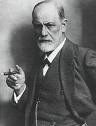
Sigmund Freud argued that the human ego develops in reaction to our tendency to bifurcate the world. We see good and evil; love and hatred; Eros and Thanatos and this split drives us into the ego which is mainly concerned with a possessive orientation toward the things we desire.

Say you want love and voila! Your ego works to drive out all that impedes love. You want a whole body and poof!  The ego, that rocking horse winner, does everything possible to drive out images of aging. The ego, it’s safe to say, has an undialectic sense.

I have lived most of my adult life with these ideas. I first read them in the work of the Freudian historian Norman O. Brown, both in his groundbreaking book Life vs. Death and then again in Love’s Body.

Disability troubles the public nerve precisely because it evades the ego’s ambition to create an undialectic image of the body.   


2.

Over the years I’ve grown increasingly mindful that Freud’s map of the psyche has no place for disability. The ego is striving for possession. The id holds out its serpentine and restricted passions. The superego is entirely interested in its neighbors but largely in terms of envy or schadenfreude. Given this, where would disability fit?

3.

Disability lies outside of ambition and beyond our hidden passions. Freud conceived of physical trauma as repression–the province of the id, but the experiences of people with disabilities show this is not true. Disability is nature itself, as far outside the human mind as a pine tree. One thinks of the Japanese Zen Buddhist poet Basho’s famous poem: “Ah! The pine tree! Another thing that will never be my friend!”

Nothing confounds the ego more than nature itself.


4.

Disability is also nature itself. Another way to think of this is that disability is nature introjected or nature swallowed.


5.

Psychoanalysis thinks of the soul as an illusion. Or more precisely it thinks of the soul as a synonym for the self or the psyche. But the soul is something else altogether. The soul is nature swallowed–the soul is the unruly pine tree and the capricious body introjected and the ego knows damned well that there’s nothing it can do about it.


6.

No wonder the ego hates nature and tries to turn it into a golf course.


7.

The only thing the ego fears more than a tornado is a cripple.


8.

People with disabilities who survive, who don’t become embittered alcoholics or addicted to victimized visions tend to live without the ego’s wilful abstractions. I am of the belief that living well with disability means living without literal mindedness.


9.

Another way to say this is that disability when lived rightly is about possessing symbolic intelligence. This in turn means that one understands that just like nature, all things are in transition.


10.

What’s that you say? Yes. No wonder the ego hates us!


S.K.

Make it Yourself

Ezra Pound

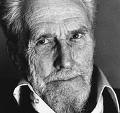
I recall that the poet Ezra Pound remarked that the telescope wasn’t merely a useful idea, it was very decidedly a technical achievement.

I’m in mind of this just now, late Sunday, evening coming on, because I’ve been thinking that contemporary America is in a contagion of ideas–some of them perfectly useful–but seldom are they linked to the technical proficiency suited to the purpose. I remember first feeling this way when Ronald Reagan began prattling about a “star wars missile shield” and in turn co-opted Congress to such a degree that they spent our nation’s precious public education and health care resources on a decadent thought, a thought alone, a thought without techne.

G.E. is advertising its capacities for generating wind power; G.M. is advertising cars they don’t make yet. Imagine if Galileo had followed this plan. My point, such as it is, is that no one would have invested in the telescope had Galileo talked about it in advance of the fact. We are becoming soft on “the fact” or the “thing achieved” and lax by turns in what we will say.

Have we finally become a nation that’s only interested in “the sizzle” as opposed to the beefsteak?

We sure have a lot of sizzle slingers these days.


S.K.  

The Senate as It Stands


Yesterday’s assembly at the Capitol steps, a vast outpouring of joy, tears, prayers, and songs in remembrance of Senator Edward M. Kennedy was not merely proof of the reverence that Capitol staffers felt for the senator, it was also a eulogy for something that is now gone from the United States Senate—a spirit of righteousness for the poor and the downcast.

No one wanted the hearse containing Teddy’s coffin to leave the Capitol for Arlington Cemetery. There was something vatic and possessed of magical thinking in the crowd, as if to say “if only we keep singing we can hold the senator’s spirit right here.”

Crowds are not always correct about the facts. St. Stephen comes to mind. But yesterday’s gathering at the Capitol was right—they were eulogizing a spirit of compassionate purpose that today’s Senate cannot admit and will not hear.

Ted Kennedy, for all his faults, could not be bought by lobbyists and he couldn’t be intimidated by the viciousness of opponents. Today’s Senate will not admit such men or women.

To paraphrase Will Rogers: “We have the worst government money can buy.”

The right wing Senate, today’s Senate, is like a feeble old Sicilian mule being pulled by a rope and prodded with sticks. It’s unable to stand for the weight of the lumber on its back, lumber from which the right wingers and lobbyists will eagerly build houses.

The Senate can’t stand up. The folks in yesterday’s nearly spontaneous assembly on Capitol Hill understand this.

In Sicily when the mule can’t stand, a richer peasant buys it, lumber and all, right on the spot where the animal lies in the street. Don’t ask about the mule…

Like millions of Americans I watched most of Senator Kennedy’s wake, funeral and much of the procession to the cemetery. I felt the greatest sadness when the crowd could hardly let go at the Capitol. And yes, I know why.

Later I heard MSNBC’s Chris Matthews opine (while trying to fill dead air time as the hearse made its way into the cemetery and all seemed impossibly slow as true life “is”) that the younger Kennedys haven’t embraced public office like their elders did. The speculative view was that the younger generation finds meaning in new ways: photography, film making, non-profit activism, etc. etc.

What Matthews didn’t say is that public service, particularly in Washington, and especially on Capitol Hill is now so entirely corrupt that no one possessed of sense and progressive passion can easily think of the Senate or the House of Representatives as being anything other than a place of covetous, polluted money grubbing and disdain.

It’s no wonder that crowd didn’t want to stop singing and let go…

S.K.

Shadow Kisses, Shadow Love: A Brief Essay Late at Night

1.

The title is Heine’s: schatten kusse, schatten liebe

2.

Each of us leans from the shadows of mind into the instant.

3.

I believe it is time to love you.

4.

Stars in the autumn night are indifferent. The crickets last songs are tragic. I write in the margins: “as always” and feel literary.   

5.

Too bad its no conceit when I say everything is a waking dream.


S.K. 

On This Date in History: Beatles Play Last Live Concert

Beatles Candlestick Park


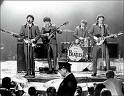
On August 29, 1966 The Beatles played their last live concert at San Francisco’s “Candlestick Park” and then they departed the U.S. never to return as a performing group.

They were exhausted from two full years of constant touring and contending with out of control crowds and stupid reporters asking them what they thought of American women’s legs or whether they felt sufficient contrition over John Lennon’s remark that the Beatles were probably better known than Jesus Christ–a quote that called the right wing yahoos out of their pentecostal holes and as is always the case in the U.S. lead the mealy mouthed press to ask over and over again: “Is it over for the band?”

Its interesting to note that the press in America thought the Beatles were “over” the moment they first arrived in New York in 1964. What stands out when watching footage of Beatles press conferences is just how suspicious the American press was of this shaggy little foursome from working class Liverpool.

No wonder they forsook our shores and went into the recording studio for good.


S.K.