Folk Tale

All morning I sweep the porch because this is the season of wind. In Iowa the grass and trees sound like the ocean and if you wake in the night you can think yourself far at sea. Today I am far at sea. I am rubbing my eyes against the magic of this life. I feel so oddly alive I could cry. Who am I? Who am I? The question has to be asked twice.

It occurs to me that I am influenced by the dogs in my life–not as easy friends, co-denizens of the house–but as shapers of my heart. My first guide dog Corky who carried my shoes to my bedside each morning; my beloved Black Labrador Roscoe who had such faith in Connie and I, who loved us because he saw us as being purely actual, not abstract. My present guide dog Nira who has the devotion of love solidified: she is still teaching me things even today.

And the wind works at the house…


S.K.  

Temporizing about Disability and Other Bad Ideas

The latest issue of the White Cane, a magazine published by the Iowa Department for the Blind carries an article about the 20th anniversary of the ADA that proposes the public is “still afraid” of people with disabilities. When I first saw this I was surprised, as I was unaware that the public is afraid of pwds and I wondered if perhaps I’d been asleep in a magic kingdom these past twenty years, somewhat like Rip Van Winkle–how else could I have missed this “fear and loathing” phenomenon? “Ah,” said my inner Bugs Bunny, “it’s not people with disabilities that the public is afraid of, it is difference of all kinds.” And this is how I tend to think of the matter. Disabilities are just as likely to be a source of anxiety to the non-disabled or temporarily abled (the normates, if you will) as sexual orientation or ethnicity. This is hardly news. What is news–alas, old news–is that there are certain groups within the disability community that insist on an almost tribal importance, as if disability is entirely separate from the human condition “writ large”. This concerns me because in my experience, the people with disabilities who are the most successful are those who see no sectarian divide between their conditions of embodiment and an integrated life on main street.

In general terms I think the blindness communities in the U.S. are susceptible to self-imposed segregation. The National Federation of the Blind and the American Council of the Blind, two advocacy organizations that have long been at loggerheads over tiny differences in how to use a white cane or take advantage of civic opportunities continue to schedule their national conferences at precisely the same time and always over the 4th of July weekend. Think about that. By scheduling their conventions at exactly the same time these groups make certain that there can be no crossfertalization of memberships and no real meeting of diverse minds. But wait! There’s more! By having these conventions over the 4th of July the NFB and the ACB ensure that no one from the rest of society is going to walk in.

Tribalism. Ingrown followings. Hostility to differing views about “how” one might successfully live and navigate with blindness. All these things mark the American organized blind advocacy groups. If the White Cane magazine thinks the public is still afraid of blind people, well, you might start imagining a welcoming message and an inclusive agenda for both the blind and the public. If you’ve been reading this blog over the past couple of years you may remember that it was the Iowa Department of the Blind (the publishers of White Cane) that prevented a woman with a guide dog from taking one of their state sponsored assistive technology classes. That story speaks for itself.


S.K.   

Why I Can't Twitter


First I should tell you that I joined Facebook and discovered that I couldn’t handle it. The number of posts and invitations flattened me like a school board meeting. I even made the mistake of putting Facebook on my smart phone thinking this was a means of keeping up, but the poor phone began coughing and wheezing, so great were the number of announcements–the phone sounded like it was getting “the croup” or more precisely, what they used to call “the vapors” and I had to uninstall the Facebook “app” from my BlackBerry. Then, without announcing the matter, I ran away from Facebook. I haven’t been “on” the thing for months. Occasionally I get messages from FB asking me if I’m still among the living. I delete these. I just can’t stay in the game.


A well meaning reader of this blog has suggested that I should “tweet” but I can’t. I try every day to push the words around, make sense, have some poetry, sing some songs, help those whose ambitions and ideas are worthy of what little help I can offer–and I walk my dog, swim, read books. If I can’t handle Facebook how can I handle the tweeting?


I love technology. But it’s got this three headed Cerberus thing. It has more appetites than a man has soul. My guitar is calling me. Its time to strum “The Worried Man Blues” for a while. Time to turn off the machines.   


S.K.

Moving On

By Andrea Scarpino

Los Angeles


The longest I’ve ever lived in one city is six years—my college years in Cincinnati. My step-dad changed jobs frequently when I was growing up, bringing us to different states, and my mother moved us to from city to city because of school districts. So I think of myself a little bit as a wanderer, someone more interested in exploring new places than settling down in them, always in love with the adventure, the new restaurant or park, the new art museum. I get anxious when I’m in one place too long, when I begin to feel comfortable. I want the thrill of a new discovery.

Having lived in Los Angeles for close to four years now, I’m not sure I’m quite ready to move on. There are still neighborhoods I haven’t fully explored, still museums I haven’t set foot in, restaurants I keep meaning to visit. But Zac has a job offer elsewhere, so we’re going to be packing up this summer and shipping ourselves back across the country, back to the Midwest. I’ll have to shed my West Coast persona and see what develops in its stead.

What I’ll miss in Los Angeles: my friends, the number of book readings and writing events, my yoga teacher, sunshine, running along the beach path three blocks from my apartment, random run-ins with people in The Industry, star sightings, Happy Hour, Californian fusion cuisine, frozen yogurt shops practically on every corner, smoothies and freshly squeezed carrot juice, the weather, ocean breeze. I think I’ll even miss the incredible choreography of highways that moves through and around this city, the loveliness of lanes and lanes of cars moving almost seamlessly amongst one another. I think I’ll even miss earthquakes.

What I won’t miss: plastic surgery faces in the grocery store, the number of tanning salons and manicure places, the cost of renting an apartment, the cost of eating in restaurants, the preponderance of crazy health claims, obsession on thinness and youth, the rush, the hurriedness, how hard it can feel to live in LA, everyone in constant motion, everyone trying to make enough money to survive. How no one talks to you on the street.

Obviously, the good outweighs the frustrating, but as I think about our move, that restlessness grows in me, that rumbling for new scenery, new adventure. In a year, I might be pining hopelessly for Los Angeles, but right now, on the cusp of something that feels big, a job Zac has been working so hard to reach, another move across the country, I just feel hopeful. Full of possibility.


Andrea Scarpino is the west coast Bureau Chief for POTB. Soon she will be our upper Michigan Bureau Chief. You can visit her at: www.andreascarpino.com

Ithaca


I am a boat with its own wind: that’s how it is with me.

When I am far from my house it is no accident.

I hope others will mistake me for a simpleton.

It is easier to think a man a fool

Than to understand him.

Sometimes at sea you have to stand all night.

These thoughts are the keel: that’s how it is with me.


S.K.

Disability vs. Universal Citizens

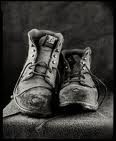
work boots

My new term for disability, or People with Disabilities is “Universal Citizens”. You may take this news with or without irony. Meanwhile, since all people of all races, genders, creeds, orientations, affiliations, or political persuasions will likely become physically “different” as they age I believe that universal citizenship is the proper term. This new way of calling the shots also relieves people with physical differences from the long, twilight hangover of Victorian naming–“disability” is Karl Marx’s term, a designation for people who lacked the physical capacities to continue working in the factories of the industrial revolution. We now live in an age of universal design. Universal citizenship should follow naturally.


I am a universal citizen. I’m as universal as a pair of work shoes standing on a stoop.


S.K.    

Barking at Nuns


Image of nun


My dog barked at a nun yesterday morning. It was early and there was no one about. We were standing under a maple tree and Nira, a yellow Labrador from Guiding Eyes for the Blind was nosing the odors of squirrels and ducks, for we are visiting the campus of St. Catherine’s University in St. Paul, Minnesota and there are lots of squirrels and ducks. Then Nira looked up and saw a dark and flowing robe with a human being hidden inside it, the whole apparatus was moving silently down the sidewalk. And she barked. Guide dogs almost never bark. That bark said: “We are insufficiently prepared for this sight. This wasn’t part of my training. I’m saying this isn’t quite up to snuff, though maybe someone can explain it to me.” Guide dogs are trained in a thing called “intelligent disobedience” and that’s all I’m going to add.


S.K.   

On Being Well


Some years ago when I was working for a famous charitable organization I had the chance to visit with the movie actress Mia Farrow and several of her adoptive children. Mia was giving a new life to some amazing kids who hailed from the far corners of the earth and who also had disabilities. We had some fun together on that morning because I showed the kids how my guide dog “Corky” –a big yellow Labrador retriever, could guide me around obstacles. Soon we were making a long human chain and having Corky guide us all together in a kind of fabulous “conga line”. Some of Mia’s children were blind, others had developmental disabilities. All of us were laughing and following Corky as she made her way around the grounds of the guide dog school.

That memory stays with me because it represents two essential characteristics of living”with” or “without” a disability. Principle One: sometimes it’s crucial to break the rules. Principle Two: We can’t always be healed but we can live well.

Guide dogs are trained to guide only their single human partner. If you’re blind and you allow other blind people to latch onto you for guidance you are putting an unfair burden on the dog. Part of every guide dog’s job is to make evaluations about the combined width of the team. But on that morning with Mia Farrow I saw that Corky could safely give all those kids a lift. The result was a moment of pure momentum and group joy. “Group Joy” is a funny thing. You can’t always count on it. The “rule book” doesn’t have a chapter on this.

Principle Two is harder to think about. We are all hoping to “get well” when we are fighting an illness or a disability. I recently attended a conference on writing and “healing” and heard lots of literary writers talking about how important their creative work was in terms of “healing” from illness. What was fascinating was the way every one of those writers assumed the easy use of “healing” or “being healed” as being analogous to the purpose behind human creativity. This is an old fashioned idea that many otherwise sensible people are still attracted to. Who would want to argue against this idea? Isn’t the goal of every therapeutic encounter to be healed?

Well no, not always. People who have disabilities or who are enduring an intractable illness are often faced with a different challenge, one that defies healing but which requires us to think about being well just the same. As a teacher with a disability who is increasingly researching the ways that culture influences our ideas about “ability” and “disability” I have come to prefer the old metallurgical term “tempering” to “healing” because it suggests that we are getting stronger without denoting a complete physical transformation.

Not every disability can be healed. I learned long ago that being “incurable” and being well are possible. But don’t go looking for this anomaly in the rule book. In effect what you need to do is break the rules that have long been established for how to think of being well. I am for instance the best blind sailor in my family. Never mind that I’m the only blind sailor in my family. I did in fact teach my sighted wife how to dock a boat. There’s no rule book for this.

I should add that I’m not opposed to healing. I believe in curing illness and in eradicating diseases. But I also believe in being tempered by physical difference and that it’s possible to lead a vigorous life. Some ophthalmologists would see me as a patient who represents the failure of their profession. They weren’t taught about how its possible to live well when you can’t see. They don’t know about the human equation that links imaginative direction and the unknown together in joyous motion.

It is interesting to note that the word “disability” didn’t turn up in idiomatic English until the 19th century. The economist Karl Marx used the term to signify people who could not work in the factories. If an economic model of bodily motion is the normative language of physical acceptance in the modern state then it becomes easy to see why the idea that having a disability and living well would be impossible in the mind of the public.

A recent New York Times article highlighted the fact that many of America’s largest companies are now hiring people with disabilities to work from their homes. The internet and assistive software on the pc and the mobile phone make it possible for the disabled to be wonderfully productive workers in today’s economy. What has changed? The rule book has changed. This is why disability studies and the architectural term “universal design” are increasingly linked. I think my guide dog Corky had a good idea: a conga line for all those kids. All of us are going somewhere these days.


S.K.

Walking Uphill in Search of a Fish

Back in the 1970’s many of my women friends used to say: “a woman needs a man like a fish needs a bicycle” and back then I thought the phrase was pretty clever. One day I said to a woman friend that fish need bicycles because they have to stay ahead of surrealism. “There’s nothing worse,” I said, “than being chased by Salvador Dali.”

Nowadays it seems that absurdity has been overtaken by the machinery of big business and politics–and by this I mean “successfully” overtaken, overtaken to such a degree that the fish “is” the bicycle. The poor fish. Fishy fishy fish. Commodified, bleached of imaginative possibilities, stripped of its scales and ironies.

Madison Avenue absorbed the fish, the bicycle, and Salvador Dali’s mustache long ago. Then the schools of religion and of politics followed like bottom feeders, eating the rubber off the tires, chomping on the dorsal fin and the tiny, nearly invisible legs of our fish.

Do you need an IPad? No you do not. Do you need to round up immigrants and deport them from Arizona? No you do not. How are these things connected? America is now swept up in a post-industrial hangover in which people are so thoroughly divorced from the sensible satisfactions of making things, of living in neighborhoods, of understanding what they need and what they don’t, that nearly everyone is susceptible to believing in things–to desiring things they don’t need.

I was put in mind of this last night when I saw that Sen. John McCain had appeared on the Bill O’Reilly show, claiming that illegal aliens are causing traffic accidents in Arizona. McCain presented this as if this is a movement: illegal immigrants acting in consort, like Bolsheviks, wildly plotting to attack innocent Arizonians. “We have to secure our borders,” he said.

No one needs hatred and xenophobia. No one needs an IPad or a talking mop. But if you live in a gated community and you don’t know the locals and you’re insufficiently imaginative, well, you might buy anything that seems like it accords with both novelty and with emptiness.

The entire Tea Party movement and the selling of thousands of objects and ideas we don’t need are connected in a new engine of exhaustion. The scene now is different from McCarthyism or from the anti-establishment fervors of the 1960’s because the rage of the neo-neo-right is built on nothing. They wear the emperor’s new clothes with a brown shirt retro look.   

I want my fish back.


S.K.

Standing for Something: A Brief Essay

I was standing in Milan’s great railway station and found that I wanted to become something else, a mythological bush or tree perhaps. There in that Milanese crowd, clutching my slippery suitcase, a man among thousands, one with an ache at the base of his skull, I saw that I needed to become Daphne. Ovidian Daphne. Formerly a thing of flesh and then a flowering thing. “Bring on the metamorphosis,” I thought. “Gods, help me for once!”

An old woman saw I was talking to myself and she gave me the stink eye. I smiled as if she was a beloved relative. They hate that, the stink eye people. She scurried off bobbing her head like a magpie.

“Oh bring on the disambiguation! Come on, Apollo!”

Standing in that middling and aggressive throng I knew that it would be better to be a laurel tree: a laurel with a soul inside it.

“Let us,” I said, “become vaguely Rabbincal about the matter rather than Greco-Roman.”

“My small metempsychosis, my wee soul wandering should be reversible like a good garment.”

The Rabbins called this “ibbur”—the belief that a soul can occupy a body temporarily, without passing through life and death.

“Alright,” I said. “Right here in this train station I am a laurel with a soul inside it.”

And though no one noticed I felt better.


S.K.