Finnish Study Finds PWDs are Underused Economic Force

Flag of Finland


Finland Employment Study Finds People With Disabilities Are Underused Economic Resource (YLE News) August 30, 2011 HELSINKI, FINLAND– [Excerpt provided by Inclusion Daily Express] As a group, the physically disabled are an underused, significant economic resource, according to a report released by the Sitra Finnish Innovation Fund and VATES Foundation. The implementation of work experience training programs for the disabled could help more people get long-term employment, Jukka Lindberg, Development Manager at VATES, said. Examples from England and Sweden show that work experience and training in the workplace significantly improves employment prospects. However, as a group people with disabilities often don't find their way into employment programs, and Lindberg said the reasons behind this roadblock will be looked at more closely. Entire article: Study: Disabled struggle to find work http://tinyurl.com/3jdcmb3

Old Metaphor Museum

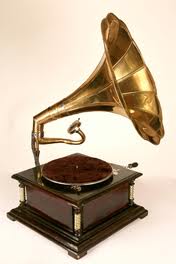
Victrola


A friend was explaining something yesterday and using the analogy of tuning a radio. We laughed as no one tunes a radio anymore, not with a knob, so of course the variability of listening to static is gone. Poof! No more analogy for zeroing in on a problem. This of course made me think of the island of broken toys. It made me think of my grandmother's Victrola. It's been decades since anyone said: "Crank up a song!" 

Human Beings are So Lonely

Guiding Eyes


Yesterday I went to the bookstore at Syracuse University. It was a mob scene because yesterday was also the opening of classes. Entering the store felt like boarding the subway on Lexington In New York City and I crammed and squeezed my way forward and then it happened: a well meaning man wearing a very orange tee shirt raced up, ostensibly to help me, but really he wanted to pet my guide dog. He didn't ask permission, just settled into a loving session which caused Nira to forget that she was "in harness" and on duty. This fellow went on at some length about his own dog, and meanwhile, there among hundreds of people I struggled to keep control of my dear working companion who was in danger of getting out of bounds.

I didn't reprimand the fellow. Didn't tell him that when a guide dog is wearing its harness you shouldn't talk to it or pet it. Didn't explain that this consistency has everything to do with keeping the dog's owner safe from falling on ice or stairs because the dog has decided to get some attention. Didn't explain that "working a dog up" with petting can make it lose all focus. That the reason guide dogs can go everywhere is that long ago blind activists proved that their dogs were impeccably trained. I didn't say any of these things. 

People are lonely. We cover it up with fashion and goo-gaws. We talk our way out of it–almost. And for a moment I saw it there in that crowd. So I just let the whole guide dog thing go. 

I have to remind myself that my own safety is at stake. Empathy stops at the street's edge.


S.K. 

Paul Krugman on the Anti-Science Stance of the GOP: It Should Terrify Us

Jon Huntsman Jr., a former Utah governor and ambassador to China, isn’t a serious contender for the Republican presidential nomination. And that’s too bad, because Mr. Hunstman has been willing to say the unsayable about the G.O.P. — namely, that it is becoming the “anti-science party.” This is an enormously important development. And it should terrify us.

Lest anyone doubt the matter, I'm terrified. Quite. 


S.K.

The Ghost of Ken Kesey

The following comes to us via Inclusion Daily Express


Hundreds Of Psych Hospital Patients Protest New Rules
(Star-Ledger)
August 26, 2011

PARSIPPANY, NEW JERSEY– [Excerpt] Nearly half of the 432 patients at Greystone Park Psychiatric Hospital have signed a petition or boycotted therapy sessions this month to protest new rules they say further limit their activities and force them to attend programs that don’t help in their recovery, patients and an advocacy groups say. 

The conflict arose Aug. 1, when managers at the hospital in Parsippany reduced the number of visits allowed to the Park Cafe, a commissary and meeting place for patients, from every weeknight and weekends to twice a week. 

The hospital also limited access to the library and a computer room, according to the petition. 

The changes at Greystone led to the petition enumerating 17 complaints, ranging from "neglect of low-functioning patients" to cold food to the medicating of agitated patients instead of seeking "a resolution to the problem."

Entire article:
Parsippany psychiatric hospital patients boycott therapy sessions, protest new rules

http://tinyurl.com/3hf8ruv


Space

By Andrea Scarpino


“In the many thousand daily choices we make, we create ourselves and the voice with which we speak and work.” ~Carolyn Forché

Last week, Angel posted a piece about taking up space, and I’ve been thinking about her writing ever since, about what it means to take up space, about whose space is privileged, whose space obscured.

As a child and teenager with a physical disability, I often felt I was taking up too much space. My crutches took up space, were always falling over in a racket or balanced awkwardly against a wall. I took up too much family space—too much family life was organized around my doctors’ appointments, trips to the hospital. I often felt like a burden, like my mere presence overwhelmed everything.

And then there was my loud voice, laughter, my wild hair. I spent years trying to mimic how other young women spoke and looked and moved. Years blow-drying straight my hair, repeating in my head my mother’s mantra to “lower your voice.” And then in college, I started watching men. How they sit with their legs wide apart, how they take lengthy strides when they walk. How they assume their presence is wanted, is warranted. How they enter a room and expect to be seen. Now this is, of course, a generalization—not all men are adamant space-taker-uppers. But reading feminism, watching men move through the world, taught me that I deserved to take up some space, to make room for myself. That I was doing myself a disservice by self-silencing.

So I cut my hair super short so I wouldn’t worry about its wildness. I decided not to be embarrassed when I noticed people in restaurants turning to stare at my loud talking. When someone said they could hear me from across the street, from down an elevator shaft, they could hear my voice echoing through a building, I decided to take that as a compliment. Slowly, I realized it’s more fun to take up space, that it’s a drag to constantly apologize.

I was at a conference two weeks ago and was “shushed” four different times by four different women who thought I was speaking too loudly. Each time, I smiled. Waved my hand politely. And continued speaking just the same. I felt grateful I have a voice. Grateful to take up space. Grateful I didn’t dissolve in shame over someone else’s idea of how much space I deserve. Grateful to finally feel brazen with my life.


Andrea Scarpino is a poet and essayist and a frequent contributor to POTB. You can visit her at: http://www.andreascarpino.com


We linked the other day to an article by Janet Beyer about the life and work of Fred Fay of Concord, Mass. We neglected to point our her authorship though if you followed the link you'd have found it. We correct the omission.
SK

My Remarks Today at Syracuse University's Opening Convocation

Hello. Since my background is in creative writing I want to tell you a story. This one happens to be true though not all stories are honest representations of facts. This is one of the things you will grapple with as a student at Syracuse University–critical thinking requires us to see that not all stories fully represent the facts. But I swear this small personal narrative is true. 


I lost some friends on September 11, 2001. All of them were working in the World Trade towers when the planes struck. At the time I was a professor at The Ohio State University in Columbus, Ohio. I was scheduled to fly the very next day to New York to conduct a poetry workshop for teenagers. As you remember, all flights in the US were grounded indefinitely.  Like so many others I stayed home and grieved and tried to imagine the human consequences of what had happened. 


When about a week later I was finally able to fly to New York I called a cab for the airport. This is the part of the story we in the writer’s trade like to call the “meanwhile, back at the ranch gambit”–I need to give you some back story. Remember, there’s a taxi coming. 


In the mid 1990’s I was the director of student services at Guiding Eyes for the Blind, one of the nation’s premier training centers for guide dogs. They’re located just outside  New York City and they provide impeccably trained dogs for blind people all over the world. One thing I discovered is that many cab drivers in New York City didn’t like picking up blind people with guide dogs. Some cabbies didn’t like the dogs, or they didn’t like the hassle. This made me quite angry and I immediately started working  with Mayor Giuliani’s office to change the laws governing taxi access for people with disabilities. The fines for refusing rides went up and the education process for drivers was improved. Believe it or not, things are better nowadays. They’re not perfect, but they’re better than they used to be. 


So there I was waiting for a taxi on the first day the airlines were flying again. I was feeling jumpy like everyone boarding a plane that morning. Would I get where I was going? Would everything be okay? Then the taxi appeared.


Picture me with a guide dog and a rolling suitcase making my way to the car. Picture me getting in with a large yellow Labrador, settling her on the floor behind the front seat, squeezing in with my stuff, feeling the awkwardness of my disability the whole time. No matter how much you travel, if you’re a person with a disability you know all about the awkwardness factor. All too often you don’t fit into the spaces allotted to you–toilets, airplane seats, stadium seating, taxicabs…


I told the driver I wanted to go to the airport. He didn’t say a word. He just pulled his cab into the street and drove. I thought that he probably didn’t like me, or he didn’t like having the dog in his cab–either way it’s the same thing. I was having a flashback to my New York advocacy days. Here was another inhospitable cab driver. I took his silence for hostility. 


Now you have to understand that I’m a big talker. I’m an extrovert. I like people. When you’re visually impaired this is an advantage. I talk all the time with total strangers. Many have helped me. Several of those strangers have become friends. Accordingly, the silence of the cab driver was all too easy for me to misinterpret. I firmly decided that he didn’t like me. 


Then something wonderful and strange happened. I’d been reading a book by Daniel Goleman called “Emotional Intelligence”. In his book, Goleman, argues that it’s not your IQ that matters when determining your potential success in life, it’s your emotional intelligence–how much creative and interpretive flexibility you can engage in your work and your relationships. He argues that human beings are genetically engineered through our evolution to either fight or flee when we’re presented with any circumstance that surprises us. He cites “road rage” as an example: we imagine that the person driving badly is our enemy. We become enraged. We take it personally. Goleman argues that once this rage occurs we’re victims of what he calls a “neurological hijacking” –in effect we’ve become primitive thinkers, emotionally unintelligent and incapable of thought. He suggests that we try to imagine ourselves as being outside of the conflict we find ourselves in, to see our circumstances as part of a dramatic presentation. See yourself as a character on a stage. Imagine that there’s something more going on than you presently realize. Slow down your impulsive response and use your imaginative skills. 


So not seeing well I began to listen, sitting in the back of that taxi. 


I thought, “What if this man’s silence isn’t about me?” 


Then I noticed the music coming from the radio. Someone was singing lines from the Koran, singing them with the kind of sweet, uptempo joy one hears in Jamaican Reggae. So I really began to listen. The arrangement had a wonderful horn section and behind the horns, an eccentric but lively beat. The effect was uplifting, life giving, and I found myself suddenly exclaiming: “Wow! That sounds like Pakistani Bob Marley!” 


“Oh God!” I thought. “What have I done? I’ve just made a perfect fool of myself!”


Have you ever heard jubilant relief in a man’s voice? It’s an unforgettable timbre, like water falling in Kyoto. The driver said: “You’re right! He is the Bob Marley of Pakistan! That is where I’m from! How did you know it was from Pakistan?”


I said I was a literature professor, that I had read the Koran and the music was absolutely life affirming. 


Suddenly I was in a different story than the one I’d imagined. My driver told me that no one had spoken with him in public since 9-11. Not a soul. I was the first man to say anything to him beyond muttered directions. And by God I knew something about his culture.  I was sharing my joy upon hearing the music–his music–the music that had gotten him through so many difficult hours. 


I direct the Renee Crown University Honors Program at Syracuse University. As you start your journey here I urge you to remain open and curious about your fellow students, your faculty, and the staff you meet every day. Curiosity is the core of emotional intelligence and it’s the best building block for success, not only in the classroom but in every thing you will ever do. Let your SU experience be your entry into worlds of inquiry and of surprises. 


Stephen Kuusisto