Guide Dog Steals Cat Food Without Remorse

6a00d83451be5969e2010536a7b4ae970c[1]


My guide dog Nira, who is a $45,000 canine, just ran upstairs and stole the cat’s food. Dogs understand the Everest Principle: “Because it was there.” I’m convinced she eats the old cat’s kibbles because they’re available and not out of schadenfreude meets glee. The latter belongs to human beings exclusively–siblings in particular. No Nira ate the cat’s food because tomorrow is a mystery. Because the canine genome says that on  your way out of town it’s always best to steal a chicken. 


Disability and Cultural Memory

  Man playing bagpipes

It’s possible to say that disability is simply a hangover from the Victorian age. People with physical or mental differences are not second class citizens save that they are made so. Nowadays we know better. We have better technology and far better methods for assuring inclusion. What principle then, keeps steering us such hapless strugglers who must fight to be heard? I think disability proves the need for behavioral therapy for everyone. Well yes, of course. And so does bagpipe music. 


Laurent House: A Frank Lloyd Wright-Designed Home in Rockford, Illinois USA

We received the following and can't attribute the writer of the announcement, alas, but we're sharing the story as it's central to our moment when so many wounded warriors are returning home.


SK


ACCESS & GOOD DESIGN
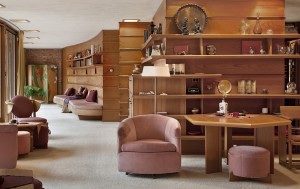
  Interior of Laurent House

Like many of today’s wounded warriors Returning from World War II with a spinal cord injury provided Kenneth Laurent with many new challenges he had not expected.   In 1949 he challenged an architect to design an accessible home. Completed in 1952 Mr. Laurent’s house was fully accessible some 20 years before the first ANSI standards for access and nearly 40 years before the Americans with Disabilities Act. Mr. Laurent credits his home with giving him the will and motivation to live – and to do so fully. He noted that the home has allowed him to focus on his ability rather than his disability.  The architect that rose to the challenge, Frank Lloyd Wright and the Rockville Illinois home is currently for sale.  For more information read the article below or follow this link http://blog.preservationnation.org/2011/12/06/interview-frank-lloyd-wrights-little-gem-up-for-auction/


Laurent House: A Frank Lloyd Wright-Designed Home in Rockford, Illinois USA


In August of 1948, Kenneth Laurent, a wheel-chair using World War II veteran, wrote to the world-famous architect, Frank Lloyd Wright, requesting that he design a house suitable for unobstructed living by a wheelchair-bound person and that it be modestly priced by the standards of the time. Wright responded, as he always did when confronted with a unique building problem, “We are interested but don’t guarantee costs.”


The formal drawings were finished and a contract for the services of Frank Lloyd Wright was signed in July of 1949. The house, in total, was designed by Frank Lloyd Wright, complete with furnishings, lighting and coloration. It was finished in May of 1952, and its authenticity has been maintained by Ken and Phyllis Laurent since.


The Laurent house was the first and only home Wright ever designed for a disabled person’s use and comfort; this was executed 40 years in advance of the Americans with Disabilities Act. Wright designed a house that shows its true beauty only when the observer looks at it from Ken’s eye level. All switches and fixtures are at a suitable, accessible level. There are no drawers in the built-ins, but hinged, horizontal doors suitable for unobstructed

access from a wheelchair. All built-in desks and tables for the homeowner’s use are cantilevered so that his wheelchair fits beneath. The built-in benches and ottomans that nestle beneath the tables are all designed to keep clutter and obstructions to a minimum. All doorways are a minimum of 36” wide, and all hallways are wide enough to turn a wheelchair.


The house met all of the needs of a wheelchair-bound client before design for disabilities was even considered by architects, builders or the government. It can be argued that this home is the first house ever designed for a disabled client. It allowed Ken to realize his full potential as a human being by giving him unrestricted access to everyday living. Wright gave him the level playing field we all take for granted.


In his design of the home, Wright was experimenting with what he called the “hemicycle” house based upon intersecting arcs and circles. The Laurent House is the second of only eight hemicycles he designed and the only one in Illinois. The culmination of this “arc and circle” experiment was the Guggenheim Museum in New York City.

Wright developed an uncharacteristic friendship with the Laurents. He visited the site during construction and visited the Laurents personally after the house was completed. They were invited to “drop in anytime” at Taliesin, Wright’s Wisconsin home, and participated in his birthday party celebrated there each year.


More information and pictures at http://blog.preservationnation.org/2011/12/06/interview-frank-lloyd-wrights-little-gem-up-for-auction/#more-22094


A Kodachrome from the Lycee

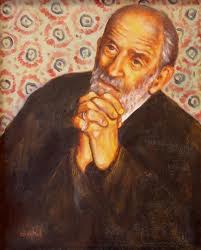
The Philosopher


“What is human reason?” asked Uncle Theory. He was, as usual, challenging the children. One little boy said he thought it had something to do with waking up alone.

It was just another morning amid the bruised hearts and Uncle was having none of it. “What on earth does your tiny heart, beating like a bird trapped in a barn, have to do with reason?” he shouted. 

Baby Deleuze climbed on his desk and spoke up. “Suppose we imagine the subordination of difference to identity.” he said.  “In ordinary terms difference is just an empirical relation between two terms each of which have an a priori identity– (“x is different from y”). But this notion of primacy can be inverted: identity persists, but it is now a secondary principle created by a prior relation between differentials (dx rather than not-x). Difference is no longer an empirical relation but becomes a transcendental principle that constitutes the sufficient reason of empirical diversity.”  

(Thanks are due to: Smith, Daniel and Protevi, John, "Gilles Deleuze", The Stanford Encyclopedia of Philosophy (Winter 2011 Edition), Edward N. Zalta (ed.), http://plato.stanford.edu/archives/win2011/entries/deleuze/


Essay: Living Inside a Tree

Some years ago I had a job interview and owing to the fact that I thought the interviewers were self-important twits I decided to say anything I liked. “What’s your next book going to be about?” “Well,” said I, “It’s about living inside a tree in Karstula, Finland where in fact, my grandfather also lives inside a tree. Did you know that the arctic birch and the ash share phonemic hexasyllables when the wind is right and the sun is the color of a copper kettle at midnight?”
I was very happy for indeed I didn’t get the job and I found my own dancefloor inside a yellow birch. The academic creative writing types (one of whom had on his web page that he’s a “genius”) looked at me as if I’d confessed to cat strangling.

Trans*Studies Conference 2012: CFP Deadline Extended!

Sent from my iPhone

Begin forwarded message:


Subject:
Trans*Studies Conference 2012: CFP Deadline Extended!
Reply-To: Roger Hallas <rhallas@SYR.EDU>

Greetings!
Please share this CFP with groups, departments, communities, organizations,
friends and others! (please email to get a copy of the flyer or visit our
website!)

trans*studies 2012
University of La Verne College of Law
Ontario, California
March 2nd-4th 2012

NEW EXTENDED DEADLINE
Sunday, January 15 2012
Submit 300 word panel or paper abstracts to:
elijah.edelman@american.edu and
dklein@laverne.edu
For submission and additional conference information please see

Current speakers include:
Dr. Trystan Cotton
Hon. Phyllis Frye
Dr. Sel Hwahng
Hon. Victoria Kolakowski
Prof. Dean Spade
Prof. Susan Stryker
Willy Wilkinson, Mph
And moreŠ

This inter-disciplinary and multi-disciplinary conference seeks to examine
and explore trans* spectrum studies and activisms of all kinds.

We seek a variety of projects which critically* explore: trans* identity,
practice, communities and embodiment, etc in contexts of race, class,
(in)accessibility, health, citizenship, higher education, and rights within:
legal, activist, medical, anthropological, sociological, psychological,
artistic, cinematic, literary, linguistic, moral, social, (geo)political,
philosophical, and religious dimensions, among othersŠ

*WE PARTICULARLY INVITE THE SUBMISSION OF WORK FROM PERSONS and COMMUNITIES
OF COLOR, TRANS FEMININE EXPERIENCES and PRACTICES, ACTIVIST STRUGGLES AND
ACADEMIC PROJECTS INVESTED IN ACCOUNTABILITY TO TRANS COMMUNITIES