Normal

I’ve been trying unsuccessfully for years to imagine the kind of society that cultural theorist Lennard J. Davis envisions in his book The End of Normal. Briefly: we know race, gender, and disability are social constructions—which means in the widest sense “normality” might be, conceivably, on the ropes. A boxing analogy is appropriate. We’ve been punching Old Normal for a long time. The maddening thing is how “Normal” keeps smiling, taunting us, snarling through his tombstone perfect American teeth. And if you think his teeth are infuriating, well, his odor is worse. He smells like “Brut” and bacon.  


Joking aside, we’re now in an age of post-modern bio-politics. We know “normality” was designed by committee in London early in the reign of Victoria. “Normal” meant “factory ready labor” and everyone else became a commodity (slave labor) or a liability (cripples). I’m simplifying but I get to do this because after all, this is my blog, and to paraphrase Huck Finn, “I don’t take no stock in normal.”     


The Huck Finn joke is pretty good I think, because Normal of course doesn’t take any stock in me. He can’t help it. As a blind person I’m of dubious value to him. (Or to her—there’s feminine normal too.)


Let’s say you were blind in the 17th century. You could get a job currying horses. Or feeding them.

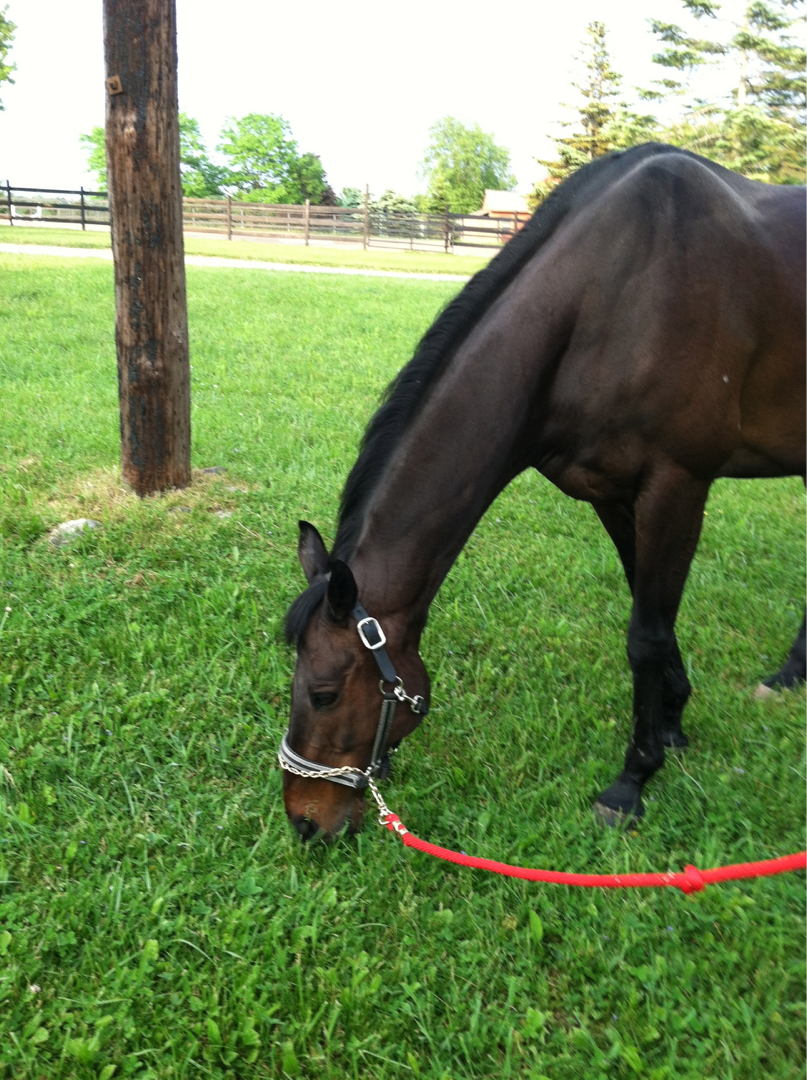
If you were deaf you could work in the blacksmith’s shop. The photo below depicts my wife’s horse “Luigi” who is an ex-racehorse. He’s a dark “bey” chestnut colored thoroughbred who has a very long neck. He’s eating grass on a summer’s day. In the old days, he’d have had a blind friend to braid his mane. He might have had a hunch backed girl to clean his hooves. 


Disability is a modern pejorative construction. We’ve known this for a long time now. I’m not talking about ableism; racism; misogyny, homophobia—these are with us still, and hauntingly so. But Lennard Davis has me thinking about the world we can insist on—one where the tyranny of industrial normal is over. One where everyone gets to curry the horse. 


Currying the horse is a metaphor and I won’t deny it. Proper accommodations change the world. 

As I write, people of color, predominantly young males, are being shot down in American streets. 

“Old Normal” sees them as having no value—just as he sees the disabled or transgendered people as having no value. But everyone can curry the horse. There’s a proper life and job for everyone in a culture that understands what a liability “normal” really is. 


Now I must go and shave. My chin wants to appear normal. He has different views than my upper noggin. But he won’t be getting any Brut. 


Normal

I’ve been trying unsuccessfully for years to imagine the kind of society that cultural theorist Lennard J. Davis envisions in his book The End of Normal. Briefly: we know race, gender, and disability are social constructions—which means in the widest sense “normality” might be, conceivably, on the ropes. A boxing analogy is appropriate. We’ve been punching Old Normal for a long time. The maddening thing is how “Normal” keeps smiling, taunting us, snarling through his tombstone perfect American teeth. And if you think his teeth are infuriating, well, his odor is worse. He smells like “Brut” and bacon.  


Joking aside, we’re now in an age of post-modern bio-politics. We know “normality” was designed by committee in London early in the reign of Victoria. “Normal” meant “factory ready labor” and everyone else became a commodity (slave labor) or a liability (cripples). I’m simplifying but I get to do this because after all, this is my blog, and to paraphrase Huck Finn, “I don’t take no stock in normal.”     


The Huck Finn joke is pretty good I think, because Normal of course doesn’t take any stock in me. He can’t help it. As a blind person I’m of dubious value to him. (Or to her—there’s feminine normal too.)


Let’s say you were blind in the 17th century. You could get a job currying horses. Or feeding them.

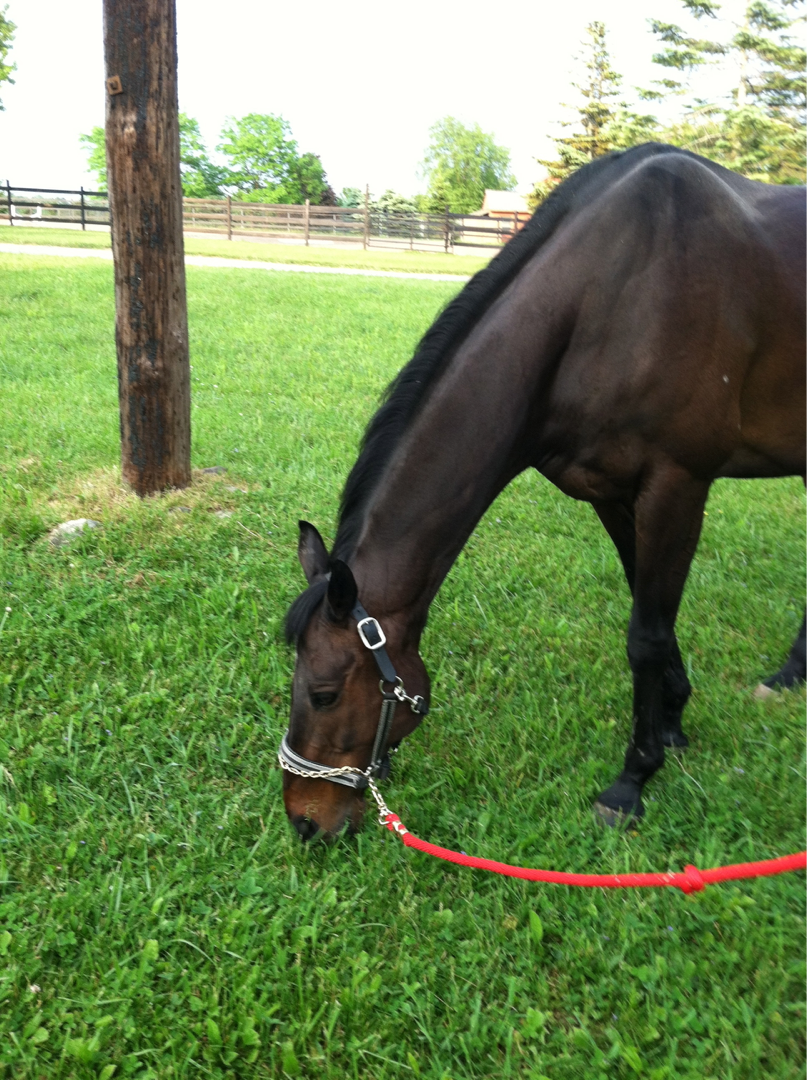
If you were deaf you could work in the blacksmith’s shop. The photo below depicts my wife’s horse “Luigi” who is an ex-racehorse. He’s a dark “bey” chestnut colored thoroughbred who has a very long neck. He’s eating grass on a summer’s day. In the old days, he’d have had a blind friend to braid his mane. He might have had a hunch backed girl to clean his hooves. 


Disability is a modern pejorative construction. We’ve known this for a long time now. I’m not talking about ableism; racism; misogyny, homophobia—these are with us still, and hauntingly so. But Lennard Davis has me thinking about the world we can insist on—one where the tyranny of industrial normal is over. One where everyone gets to curry the horse. 


Currying the horse is a metaphor and I won’t deny it. Proper accommodations change the world. 

As I write, people of color, predominantly young males, are being shot down in American streets. 

“Old Normal” sees them as having no value—just as he sees the disabled or transgendered people as having no value. But everyone can curry the horse. There’s a proper life and job for everyone in a culture that understands what a liability “normal” really is. 


Now I must go and shave. My chin wants to appear normal. He has different views than my upper noggin. But he won’t be getting any Brut. 


Disability Day: What Are You Doing?

Reposted from the BBC

Disability day: What are you doing?
By Emma Tracey & Kathleen Hawkins
http://www.bbc.com/news/blogs-ouch-30290656
BBC News, Ouch

People over the world are marking the International Day of Persons with Disabilities (IDPD) and have been getting in touch to tell us what they are doing.

All around the world, people are encouraged to get together to celebrate disability identity. It has been observed annually by the United Nations since 1992. It promotes disability rights and the benefits of integrating disabled people into all aspects of life.

Events in the UK tend to consist of performances by disabled artists and live discussion forums. This year, Liverpool’s DaDaFest are running their inaugural international congress on how disability arts has affected social change. The Central Library Manchester will give disabled people hands-on access to the books and artefacts on display in a First World War exhibition. And in Cardiff, Disability Wales are running an event to help shape their new manifesto.

So far, most disabled people who’ve contacted us weren’t aware it was happening.

James West, who has MS, obviously doesn’t think it’s a very special day, lined up for him is: “dragging myself out of bed and going to work, as I do every day”. Along similar lines: “I will be spending another day on public transport being kicked about & having to ask for a seat from oblivious folk”, tweets Penny Rabiger.

@dorsetcharlie isn’t impressed by the name of the day. She tweeted: ‘International Day of Persons with Disabilities’ Really, that’s the best name they could come up with?! #PCMadness

But @catobellingsen got in touch to tell us he is attending a conference in Oslo on growing up with a disability in Norway, where the minister for social inclusion Solveig Horne is speaking.

And @iainmassingham tweeted to say he is spending the day “showing thanks that I am part of the amazing disability football club @AFCMasters #football4all”.

@Matt_Davies1705 is spending the day talking to students with disabilities who are seeking paid internships, and @rebeccalawthon and @k_runswick_cole were both celebrating it with events in Manchester.

As the day rolls on, we’ll be tracking what people are doing.

Though the UN calls it IDPD, it seems to also go by other names and acronyms depending on language preference. The Department for Work and Pensions in the UK are referring to it as IDDP and many have inserted a W for ‘with’ as in IDPWD.

Sometimes, though, the IDPD bush telegraph goes quiet and it feels like the day goes by without much fuss or fanfare. So please tell us what you’re doing on December 3 this year. Or better still, send pictures and reports from your event. We’ll update this post with your contributions as the day progresses.

Email ouch@bbc.co.uk to let us know how you are marking the day, or tweet us @BBCOuch on Twitter or post on our Facebook page

The No Theory Zone

I have been thinking about poetry, not as a delivery system for beauty but as a correspondent articulation of suspicion. By articulation I mean structure and the voicing of structure and by suspicion I mean the human distrust of cant or doctrine.

We could say poets are likely to have the blues and few would argue. I think it was the poet Donald Hall who said poets generally write from unhappiness. The blues are not just a cris de coeur they’re also a structure of suspicion. Someone has done you wrong. Death has entered your house while you were eating your breakfast. Before this morning is over you’re going to have to dig a hole.

Theorizing about poetry is often fruitless. Beyond metaphors and their aptness or their cultural liabilities (outworn, tired, cliched) poetry is about suspicion. Poetry is rhythmic suspicion.

No one in his or her right mind would want to theorize suspicion.

Well, you say, that’s what Levi-Strauss did. And that’s what deconstruction is about.

But no. The language of curiosity and doubt is something you can analyze but you can’t theorize as you’re making it. The best you can do when making it is what we call articulation. You can be ironic, categorical, histrionic, wry, understated, sentimental, silly, or angry.

In its making, poetry is a resistance to theoretical impulses as surely as weeping is a resistance to the impersonal nature of human suffering.

This is why I cannot be a theorist.

Your theory and my blues are not of the same zoological exhibit.

My College Essay

As this is application season for American colleges and universities and as high school students are writing “essays” designed to win them favor at their school of choice and inasmuch as I’m a writer who teaches I think its only sporting to offer an essay of my own. Please notice my lack of excessive tenderness.

“Why You Should Admit Me to Your University: Part One”

I’d be nothing without you. I’m teetering on the brim of collapse for though I’ve read everyone from Montaigne to Zizek, and I know why Wilson’s “cloud chamber” produces contrary optical effects, my mind is nothing more than a prospective topiary hedge. In all honesty I need your faculty to clear out the grackles and sculpt me with scissors. As per my humanitarian qualifications, I’ve been pulling old ladies out of the streets for years. Not all of them like this. But I’ve always known I want to attend your school.

“Why You Should Admit Me to Your University: Part Two”

I’d be nothing without you. That being said, I have remarkable qualities. I can see through walls but I’m polite about it. I also have just enough irony to know why the Phrygians were only half right to build walls in the first place. As regards my emotional stability, I’m one of the .006% of the American populace under 18 who thinks Holden Caulfield is a shyte as they say in the United Kingdom. Did I mention I’ve been pulling old ladies out of the streets for years? Well, now I’ve taken to pulling them out of the streets in developing nations. You should see some of these streets.

“Why, etc. Part Three”

I was standing on my head when a bee flew in my ear. I knew enough to remain absolutely still.
“Simplicity, patience, compassion, these three are your great treasures” said Lao Tzu. I made a friend of that bee. Have you ever felt a bee clean all the wax from your ear while you hold your breath?

“Beyond Titles”

I’m a nerd but also athletic. Kind of like Jack Kerouac. But I haven’t killed anybody. Wait. Kerouac didn’t kill David Kammerer, he just helped hide the evidence. Well I wouldn’t do that. “There is nothing either good or bad, but thinking makes it so.” I promise to think what you tell me. My promises have heraldic depth. I swear, I’m deep.

**

Useful quotes for the college applicant to retain but not cite:

Oscar Wilde: “Everybody who is incapable of learning has taken to teaching.”

Ian Rankin: “My father was a slave to capitalist ideology. He didn’t know what he was doing.” “You mean you went to an expensive school?”

W. H. Auden: “A professor is one who talks in someone else’s sleep.”

Thinking of I.F. Stone

I was approximately 16 years old when I discovered I.F. Stone’s writing by way of his independent newspaper which lay askew on a table in the college library. Outside everything was going to hell as the Kent State shootings and the secret war on Cambodia had unleashed a wave of student dissatisfaction.  


What I loved about Stone was his certainty that all governments are in the business of lying. This seemed like an unassailable truth—and yet for Stone, the assertion wasn’t the keystone of pessimism. He saw opportunity—just dig and you’ve got a story.


Nowadays I think of “Izzy” Stone quite often. He was in effect our nation’s first blogger. His life and work were devoted to uncovering the truth that was (and is) always the first casualty of political rhetoric. 


If he was with us today he’s be taking on the awful lie that’s called “post-racial America” and he’d be decrying the ubiquitous and unpatriotic jargon of neoliberalism which insists we don’t need a middle class anymore. 


I love the following video of Stone from the MacNeil/Lehrer Newshour in which he talks about the trial of Socrates—which he’d written about with uncommon passion and intelligence. 


Enjoy:


 http://www.ifstone.org/macneil.php