Why Does a Dog Get Sick?

In his poem “One of the Animals” Marvin Bell writes:

Why does a dog get sick?

—You tell me.

What does he do about it?

—You tell me.

Does it make a difference?

—You tell me.

Does he live or die?

—You tell me.

Does it make a difference?

—That one I know.

Does it prepare you?

—That one I know too.

Will we know what to do?

—You tell me.

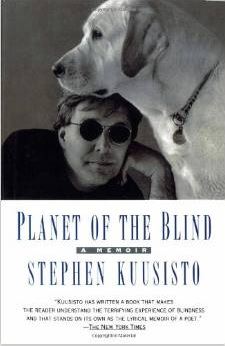
Yesterday this poem was much on my mind as my guide dog Nira had a seizure in the small hours of the morning and lost her ability to walk—her back legs were stymied, she stumbled from side to side with her hind quarters half dragging. I carried her from our bedroom, down the staircase. When I put her on the floor she fell. Then she staggered to her feet like a newborn foal, skittering and swaying. I lifted her again and brought her outside.

At the emergency veterinarian complex they ascertained she’d had a seizure and said they could run $1000 worth of tests. I declined. “Will we know what to do?” “—You tell me.” I think the vet wanted to fleece me. I took her for a second opinion. By the end of the day she was walking normally, her eyes were good. “Older dogs can have seizures,” the vet said. “They can be singular incidents, or they can happen more than once. They can be caused by anything from a brain tumor to simple aging.”

They took some blood. We will make certain her internal organs are functioning properly.

“Does it make a difference?” “—You tell me.”

My first guide dog Corky died of a brain tumor. She had a massive seizure and we took her to the vet. The vet wasn’t in. They told my wife and I to go have coffee and come back. When we returned, Corky was lying on a blanket with an I.V. attached to her foreleg. she was panting heavily. They told that it was a brain tumor and there was nothing they could do. It was time to say goodbye.

“Courage,” said Hemingway, “is grace under pressure.” I’ve never felt especially courageous. But it occurred to me there in that vet’s office that Corky spent her life protecting me. More than once she had taken evasive action to save my life. She was always looking out for me, concerned and yes, spiritually affirming. My dog. My special angel. I knew I had to force back my tears. I lay down on the floor beside her, held her, and sang to her our special walking song. And she died in my arms.

“Why does a dog get sick?” “—You tell me.”

This morning I’m grateful to have my dear Nira beside me for another day.

This morning I want to cry.

I won’t.

“You tell me.”


Anna Stubblefield and Facilitated Communication

By Ralph Savarese

As someone who has written a lot about the communication predicament of nonspeaking people with significant motor impairment (particularly autistics), I have held off commenting on the Stubblefield case because I continue to believe that it is a very poor vehicle for talking about a range of important issues: from the efficacy of certain forms of augmentative communication, to the sexual rights of disabled people, to the role of race in the study of cognitive disability, to so-called “standards” of academic publication. (Disability Studies Quarterly printed an article that was co-authored by Ms. Stubblefield and Mr. Johnson—some scholars are now calling on the journal to withdraw it.) While I sympathize with what appear to be Ms. Stubblefield’s intentions and while I have no problem imagining that Mr. Johnson is intellectually competent or that he both consented to and actively desired sex, I question her judgment—especially with so much on the line for her, for him, for the principle of competence she believes in and for other nonspeaking people whose communication might now be dismissed as a result of the negative publicity that the case has engendered. Taking the stipulated facts (not what is still subject to argument), I would say that Ms. Stubblefield’s actions were exceedingly incautious. In almost every conceivable way she did not follow “best practices.” But this is not the main point of my post. Rather, I want to clarify some things that have been said on various LISTSERVs about facilitated communication. I refer throughout to nonspeaking autistics, but what I argue is relevant to other disabilities.


There is no doubt that the current scientific research on facilitated communication is quite damning, but, contrary to what many think, the issue is far from settled—at least from the perspective of many nonspeaking people themselves, some educators, and some scientists. Proponents of FC shouldn’t dismiss this research because it is genuinely troubling. We ought to be wary of promoting anything that has failed to be validated or, worse, caused real harm. I’m thinking, for example of cases involving facilitated communication where fallacious charges of sexual abuse were leveled against parents and/or caregivers who spent time in jail and lots of money defending themselves. Facilitator influence is a problem—a big one–that simply won’t go away. (Here, the notion of “best practices” would demand that accusations of sexual abuse—or, as in the Stubblefield case, claims of sexual consent—would have to be verified by multiple naïve facilitators.) I’ve said it before and will say it again: FC has indisputably produced fraudulent communication.


At the same time, there are legitimate issues with some of the studies that have debunked FC by showing that users couldn’t pass messages when supported by naïve facilitators. These studies, you might say, were inhospitable: they didn’t take into account the complex needs of their research subjects. They failed to control for uneven performance by not testing subjects repeatedly in familiar settings over the course of several months. They also failed to control for anxiety, which is a huge problem in “classical” autism. We now know, from studies on trauma, what profound anxiety does to the brain’s expressive language centers. Moreover, despite what FC’s opponents have said in response to the Stubblefield case, there have indeed been a number of users who have authenticated their communication through message-passing protocols. There is even a published article about a user who learned how to pass such a protocol after failing repeatedly to do so. There are also a number of autistics who now type independently—Jamie Burke, for example, or Sue Rubin or Lucy Harrison, or Alberto Frugone or Sharisa Kochmeister. (Kochmeister, by the way, used independent typing to help convict the person who had sexually abused her. Burke used it to learn how to speak, but he still prefers to type his thoughts before uttering them.) All of these people report that independent typing took years to master. While we can’t state with certainty that FC enabled this skill, it’s worth listening to what users have to say about the crucial role that it played.


It’s also worth remembering that opponents of the technique have often greeted even independent typing with aggressive skepticism, claiming, for instance, that Sue Rubin’s words in the CNN documentary Autism Is a World were programmed into her communication device and thus not really her own. The bar keeps moving for users; no amount of independence will suffice for some experts. Finally, there are any number of users who type with varying degrees of independence. I know of a young man in California whose father rhythmically taps his foot to enable his son’s typing. Facilitator influence is much less likely at the foot than at the hand. Should this person’s communication be dismissed? I know other users who, complaining of inadequate body awareness, require light pressure on their shoulder or back to feel their arms in space and thereby type.


My son, who still needs some facilitation to type, took the ACTs by pointing independently at answer banks; a scribe then filled in the bubbles. The “a,” “b,” “c,” and “d” were enlarged and positioned at the four corners of an eight-by-eleven sheet of paper. He did well enough to be admitted to a highly selective college where he is currently a fourth-year student majoring in anthropology. Pointing at answers in a straight-line motion is much less complicated visually and motorically than keeping track of both a keyboard and a screen in different planes. What is more, a keyboard, unlike blown-up answer banks, demands something akin to pinpoint accuracy. Because my wife and I included our son in regular education and stressed the importance of literacy, his teachers and classmates saw him learn how to read. In the process, they became acclimated to his emerging competence and alternative form of communication. This, along with the fact that he has had multiple facilitators (including some who were utterly lost in math and science classes), perhaps explains why he has faced little skepticism.


I do not wish to demonize FC’s detractors—in part because I have enormous respect for science, even as I understand the damage that scientific understandings of disability have often done, and in part because I have reservations about the technique myself. It is clearly less than ideal, and the need to have confidence in the communication of users can only be called reasonable. But I’d ask, in light of considerable research that now understands “classical” autism to be a profound sensorimotor disorder, what is the alternative? Should we allow intellectually competent people to languish, or should we employ this technique in a careful and responsible manner, at least until we develop a better one? A couple of recent studies using event related potentials (or ERPs) have shown that some children with “nonverbal autism and severely limited mental abilities” are functioning in ways that completely belie their diagnoses. Deploying an innovative protocol that did not require intentional participation, researchers measured a brain response that could only be the result of linguistic reasoning (http://blog.autismspeaks.org/tag/high-risk-high-impact-initiative/). At the very least, if the studies can be replicated, we are missing some form of already present ability in a portion of the nonspeaking autistic population. What might vigorous instruction accomplish for the rest?


The science of “classical” autism is in its infancy. In the above-mentioned subjects, researchers caught a neurological glimpse of previously unobservable competence; we still have no idea what the full implications of that competence might be or how to aid its unambiguous expression. But the studies are provocative. Paired with the testimony of people who type independently or who have successfully navigated message-passing protocols, they suggest that we have been devastatingly wrong in some of our assessments. All too often, dismissing FC is simply a way of being able to generalize negatively about an entire population. And if we generalize negatively about an entire population, we don’t have to worry about disturbing exceptions. We can rest easy in the unmessy conviction that nonspeaking people with autism are intellectually disabled and that FC is always and everywhere a fraud. As a friend of mine commented, “Efforts to delimit what is known are inherently opposed to burgeoning inquiry.” I would feel better about the opposition of FC’s detractors if they at least acknowledged the heartbreaking cost of dismissing the technique wholesale. Yes, there are other methods that enable nonspeaking autistics to communicate, but they tend to be more basic, and they don’t allow complex expressive language.


I am unwilling to dismiss FC wholesale. We are talking, after all, about people’s lives. Imagine being trapped in a body, as one autist describes it, that doesn’t allow you to show how much you actually know. Imagine being dependent on the paternalistic judgments and goodwill of the nondisabled people around you. At the same time, I refuse to condone using the technique irresponsibly. “Presuming competence” is a fine motto for those who work with nonspeaking people, but it’s not a magic wand. Rather, it’s a commitment to fairness and possibility. We may object to a culture that fetishizes independence or that has a history of making pernicious assumptions about disability, but that’s the culture we live in. We have to be pragmatic; legal accommodation depends on it.


One final thing in a post that is already much too long. A few people have asked about the Rapid Prompting Method (or RPM). Developed by Soma Mukhopadhyay, it involves holding a vertical letter board in front of an autist and encouraging him or her, repeatedly and insistently, to spell out words with a pencil. The letters have been cut out of the board, so the autist must put the pencil through the narrow, open space of the letter he wants. The theory is that the constant verbal commands work to capture the autist’s attention and the tight fit of the pencil in the space offers both tactile and proprioceptive feedback. Once the autist has mastered spelling out words, Soma begins to ask him or her questions—at first, simple fact-based questions and then more complicated, open-ended ones. The advantage of this method is that the person holding the letter board isn’t touching the autist at all.


Soma’s son, Tito, the author of five, well-received books and a young man I have mentored for years, began with RPM and now types and writes independently. We recently did an event about reading and discussing Moby Dick together by Skype, two chapters a week for seventeen months, at Duke University’s Institute for Brain Sciences. (When he met with researchers and clinicians in the morning and noticed they were all drinking coffee, he wittily typed, “My cup is filled to the brim with autism; you are welcome to drink from it.”) Soma has several hundred nonspeaking people, autistics and others, successfully using the method. The disadvantage of RPM is that the person holding the letter board must keep track of what is being spelled out–the method doesn’t easily accommodate lengthy expression. As important, its detractors can be almost as virulently skeptical as detractors of FC, claiming that the person holding the letter board is subtly manipulating it and thereby signaling particular letters. To these detractors, needing someone to communicate in any way is unacceptable. Finally, some users of RPM (including my son) want an actual voice and thus prefer to type with facilitation on a text-to-voice synthesizer.


I am of the opinion that until we find a way to convey human thoughts directly by circumventing bodily expression altogether, nonspeaking people will be confronted with doubt. In the meantime, we need to uphold the highest ethical and professional standards when we employ controversial therapies.


Ralph James Savarese

Professor of English

Grinnell College


Autumn Butterflies

The leaves are coming down in steep rain—the kind of rain that turns the late autumn fields dark. I’m almost old. My neighbor across the street has suffered a stroke. He is perhaps 20 years older than me. Leaves drift through his yard and tangle in the tall, decorative grass. Autumn is its own industry, merciless, more of capitalism than anything Trotsky may have imagined. Autumn says we will die without dignity. If you want to imagine something else, you will have to stretch. As my Finnish friend, the late poet Jarkko Laine once wrote: “Withered leaves fly above the street—death’s butterflies.” And as the American poet Robert Bly once said: “So this is how my life goes before the grave…” Steep rain today. Many of my friends who are disabled are struggling—one can’t find an accessible home; another can’t find a steady job though he has a doctorate; still another can’t keep his car running so he can teach part time. The day is substantially dark.

I am Episcopalian—lefty Episcopal but still…I like the “Smells and Bells”.

Here: I put aside my customary worries.

Here I invoke the prayer for artists and musicians:

O God, whom saints and angels delight to worship in

heaven: Be ever present with your servants who seek through

art and music to perfect the praises offered by your people on

earth; and grant to them even now glimpses of your beauty,

and make them worthy at length to behold it unveiled for

evermore; through Jesus Christ our Lord. Amen.


Steep rain. Death’s butterflies. Amid them, glimpses of beauty. Let’s behold them, unveiled.

Branches tapping my windows.

Disability, Razzle Dazzle, and How Obama let Me Down

You won’t know it from the press reports. All you’ll hear today is that Barack Obama and Congress have struck a deal to keep to government running until after the presidential elections next Fall. I’ve heard exulting on behalf of the President—have already seen in on Huffington Post and other online news sites. What’s lost in the narrative is that Social Security Disability, a program that keeps millions of people alive, has been cut and moreover, it will be cut even more in the future.

Excuse me while I mourn. There are real lives in the balance. I’m dismayed by the cruelty of the Washington Bubble Classes.

Right now I’m so distressed I can barely type.

Silly me. To care about the elderly, the broken, veterans.

Bernie Sanders and the Tibetan Bardo

“Enter the world at your own risk,” says the sign as you pass through the Tibetan bardo. This is why infants are born crying. King Lear said something about this. Ooooh Baby Baby!

Risk means, among other things, life isn’t fair. Risk isn’t about practicalities. It’s always about something else. Prudence won’t save you from the bad effects of hourly gambling or of taking a brave position. Some children are brave. Many of them grow up to be brave.

W.H. Auden once described his own face as being like a “ruined wedding cake” or was it a cake left out in the rain—I can’t remember, and I’m not going to look it up. Whenever I see a grownup’s face I see a ruined child’s countenance and I suppose I’m lucky to be legally blind, as I can’t see faces until I’m very close and accordingly I’m protected from seeing a lot of broken children. But I hear them. Their voices are equally revealing. You know what I’m talking about: voices that conclude every assertion with a question mark, the vocal appurtenance designed to avoid risk. “I made no assertion at all; merely asked a question.”

I often conclude they weren’t brave children to begin with. I wonder where the bravery goes when it skips a child. Does it skip the next ten children born and land on the eleventh? I don’t know. If you’re reading me closely you’ll conclude I think bravery is inborn. I think this is true.

Cowardice, cruelty, racism, xenophobia, all the “isms” are taught. They come from “nurture”. Bravery is something else.

Now if you’re not really brave, you can still practice what it might be like—just like one pretends to be an athlete by playing catch.

It’s time for Americans to play “Bravery Catch” which means, among other things, recognizing the United States is only as good as its Democracy. Getting money out of politics. Putting term limits on Congress. Giving our veterans all the health care they need. Investing in our people.

I think Bernie Sanders is the only brave presidential candidate right now. I don’t like him but I know he’s got some courage.

The young people who are supporting him, who are showing up for his rallies also have courage.

Enter the world at your own risk. Risk isn’t about practicalities (voting for Hilary). It’s always about something else.


Disability All Day

I have a friend who’s a trainer of guide dogs. She had to wear a blind fold for an extended time while learning how to train dogs for the blind. That experience taught her somehting about the daily obstacles blind people encounter—from putting on your clothes to navigating flights of stairs. “I learned how talented and tough blind folks really are,” she said. Another lesson she learned is that disabled is disabled. You start the day unable to see. You end the day that way. And you get up the next day in the same condition. Maybe that doesn’t sound like much maybe. But it’s what you have to learn. Disability is an all day affair.

Sometimes I fear disability studies scholars who equate disabled performativity with dramaturgy fail to see the non-presentational parts of disability. The down on our knees groping for the electrical socket plugging in the steam iron hitging your head on unfamiliar furniture in foreign hotels—gestures which are in fact daily aspects of materiality. I don’t get to decide how my performance will look. My “performance” is ungainly and slow. I don’t have the leisure to be “super crip” on the stage of deliberative choreographed gestures.

That’s the problem. Disability starts the day and ends the day. Presentational effects that make this seem overtly artful are unduly false.

One of the things one necessarily learns.


18 Leading Higher Education Research Centers and Institutes Call for Knowledge on Campus Shootings

Reposted
 
 18 Leading Higher Education Research Centers and Institutes Call for Knowledge on Campus Shootings
 
 
 The deadliest shooting rampage in U.S. history occurred on a university campus. In 2007, a Virginia Tech student killed 32 peers and faculty members before taking his life.
 
 Earlier this month, an assailant walked into a classroom at Umpqua Community College, shot and killed nine students, injured nine others, and ultimately killed himself. This massacre is one of 66 reported incidents involving the discharge of firearms on college and university campuses since 2013.
 
 Despite the alarming numbers of deaths, injuries, and threats, scholars in the field of higher education have received too few resources to rigorously study the undercurrents and effects of gun violence on college campuses. Eighteen leading university-based higher education research centers and institutes call on foundations, federal and state governments, and entities on all sides of gun violence debates to sponsor research projects that expand knowledge in the field about important topics like the following:
 
 Depression, mental health, and suicide among college students.
 Effective prevention efforts to identify and preemptively support students, faculty, and staff members who are in psychological distress.
 Behavioral responses to fears concerning campus safety among students, faculty, and staff members.
 Impact of gun violence on students’ academic performance, persistence and degree completion rates, and post-college outcomes.
 The overrepresentation of college men among campus shooters.
 Enrollment patterns and college transition experiences of students who witnessed and survived shootings in their K-12 schools and home communities.
 Gun ownership policies at public institutions of higher education that are governed by different state laws regarding background checks, gun permit waiting periods, carrying concealed weapons in public, and other regulations.
 Evaluations of campus safety protocols and procedures at community colleges and four-year postsecondary institutions.
 Immediate and long-term effects of campus shootings on the psychological and physiological wellness of students, faculty, and staff, including longitudinal studies.
 Impact of open- and concealed-carry laws on classroom climates and campus cultures.
 Influence of television and films, video games, social and digital media, and violence in the larger society on campus shootings.
 How cultures and discourses of disrespect, bullying, isolation, inequity, and hate contribute to gun violence on campus.
 These are examples of 12 topics on which research is urgently warranted; several other related questions should be rigorously studied. Knowing more could enable postsecondary leaders and faculty to reduce gun violence, more effectively support members of campus communities in the aftermath of shooting tragedies, and use data and technologies to improve campus safety efforts.
 
 Political disagreements have stifled forward movement on issues related to gun violence in U.S. higher education. Meanwhile, shootings continue to occur in college classrooms and other campus spaces. Providing resources to expand what the field knows could yield an evidence-based set of policies and practices that make campuses safer and better positioned to support victims of shooting tragedies.
 
 Alliance for Higher Education and Democracy
 University of Pennsylvania
 
 The Bowen Institute for Policy Studies in Higher Education
 Claremont Graduate University
 
 Center for Community College Student Engagement
 University of Texas at Austin
 
 Center for Higher Education Enterprise
 The Ohio State University
 
 Center for Postsecondary Success
 Florida State University
 
 Center for Research on Undergraduate Education
 University of Iowa
 
 Center for Studies in Higher Education
 University of California, Berkeley
 
 Center for the Study of Higher Education
 University of Arizona
 
 Center for the Study of Higher Education
 The Pennsylvania State University
 
 Center for the Study of Race & Equity in Education
 University of Pennsylvania
 
 Center for Urban Education
 University of Southern California
 
 Higher Education Research Institute
 University of California, Los Angeles
 
 Institute for Research on Higher Education
 University of Pennsylvania
 
 Minority Male Community College Collaborative
 San Diego State University
 
 Pullias Center for Higher Education
 University of Southern California
 
 The Steinhardt Institute for Higher Education Policy
 New York University
 
 Wisconsin Center for the Advancement of Postsecondary Education
 University of Wisconsin – Madison
 
 Wisconsin’s Equity and Inclusion Laboratory
 University of Wisconsin – Madison
 
 For more information:
 
 Penn GSE Center for the Study of Race & Equity in Education | University of Pennsylvania | Graduate School of Education | 3700 Walnut Street | Philadelphia | PA | 19104


 – Posted using BlogPress from my iPad

The Intimate Wilding of William Cranford’s Consort Music for 4,5,and 6 Viols

Writing of the 17th century British composer William Cranford’s work for string ensemble,, Dudley North, his contemporary, observed it possessed: “gravity, majesty, honey-dew spirit and variety.” One may ask how such music was lost—a story of provincial culture and aristocratic friendship—Cranford wrote for his closest musical friends, artists all, who collectively played within the circle of St. Paul’s. (One is reminded of Elizabethan court poets writing behind palace walls, collecting verse in A Mirror for Magistrates.) The difference: Cranford’s music for strings is prescient and wholly original.

Now, for the first time, a recording of his Consort Music for 4, 5, and 6 Viols has been released by LeStrange Viols and the complex, lyric inventions of Cranford can be heard at last.

The CD’s press release points both to the intricacies of Cranford’s music and the vitality and experimentation of string composition in the age of Milton:

Little is known about the life of composer William Cranford (fl. 1630s) beyond his remarkable surviving chamber music for viol consort, a Renaissance string ensemble that attracted the best English composers from William Byrd to Henry Purcell. Cranford’s music—by turns sonorous, expressive, quirky, and forward looking—represents some of the finest surviving writing for the ensemble. LeStrange Viols presents the modern premier recording of nearly all of Cranford’s surviving works for consort, including the complete fantasias for 4, 5, and 6 viols, the substantial and virtuosic 6-part pavans (“Passamezzo” and “Quadran”), and Cranford’s distinctive 5-part setting of the In nomine and playful variations on the well-known tune “Go from my window.” 

Playful variations, yes, but something more comes across in the recording—a polyphonic conversance among viols, as if Cranford hoped to gather spirits in a wilding call and response. Each player conveys  lyric urgency and amusement, so much so, the result seems contemporary—there’s an evolving unexpectedness from the instruments. Strange indeed.

At times one feels as if both the elder Beethoven and a youthful Shostakovich had somehow flown backwards into Cranford’s circle and one wonders if this neglected figure was a Baroque composer at all.

This is the hook: LeStrange Viols has recovered and recorded an exquisite and odd music, “odd” not in the way of the “oddly shaped pearl” —that old apophthegm for Baroque ornamentation—but work so timeless and original its recovery reminds us how progressive the imagination can be. Additionally one is reminded of the creative ferment surrounding early string ensembles, a time when evolving instruments and intimate exchange made it possible to step out of time.

You can sample and buy William Cranford: Consort Music for 4,5, and 6 Viols at New Focus Recordings or via iTunes, Amazon, or CD Universe.

LeStrange Viols makes its New York City debut in a program featuring works from their new recording of the consort music of William Cranford.

“The mysterious Cranford, a contemporary of the metaphysical and cavalier poets, composed music whose mercurial affects range from deep pathos, through witty, playful moods, to sheer rapture.”

Friday, October 23, 8:00pm

Corpus Christi Church

529 West 121st Street, New York

Tickets available at the door, $20, $10 students & seniors

Or purchase tickets online HERE.


Kullervo, Early…

In the mornings I take down my old books, Kalevala, for instance,

and read of Kullervo, sad clown of the north, whose family

was an iron age house of incest and shattered cups

though it sounds better in Finnish—as if pain was inevitable

because they had few pronouns in those days,

there being no distinction between men

and women in Suomi and so, tragedy was pan-gendered

which means they talked of gravity long before Isaac Newton.

Disability Note for a Time Capsule

Disability. The word. The TV show. The human. Evers to Tinker to Chance. A perfect triangle. Disablement: to have no economic utility; TV: to be inspiring like Tiny Tim; the human, always forced to shout or write theoretical treatises—agency plus disability minus disability equals the post-human times one or two crippled legs. The poet says: “I’ll take a few more crippled legs, please, and maybe a plate of sliced peaches and a summer storm.” Poets say things like this. Especially the crippled ones. Shriveled leg equals peaches. If you need a translation: it, the leg, is just another thing like candy or coconuts. “Get over your valuation taxonomies” the poet says, though she doesn’t like the word taxonomies but recognizes its necessary like dental floss. Did you know that even cripples use dental floss? They do. But seldom on TV. We keep hearing disabled people are coming to TV. But then, like the old shell game, not really. Or worse, they appear on American Horror Story—and I’m not strong enough today to talk about AHS except to say that no amount of decadence and irony can whitewash ableist tropes, even through a convex mirror of imagined history. Even Kathy Bates wearing a beard can’t fix it. Digging up Todd Browning is disgraceful. Yes. I have insufficient post-modern flexibility. You betcha. The poet says “time will say nothing but I told you so” and time has no heart.