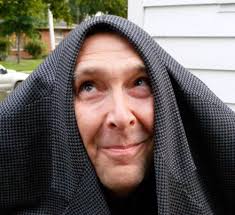
Always someone in the rain with a hammer. That’s working life. And the wind, which has no politics, adds its blank cruelty. No theory can explain this, though Carl Jung tried. His essay on Job is still the greatest analysis of unjustified suffering and the uncaring cosmos. But a man or woman, even a child, must wave a hammer in rain. And the disabled wave two hammers. In this way, I’ve always thought of the disabled, my friends, as “Thor”—my pal Bill with his wheelchair has at least two hammers. My friend X who is blind and angry has five or six hammers. And they move about in rain. Navigate with insistent and pure energies. Thor’s hammer, which was made by the dwarves, according to Snorri, has the lightning on the inside where it truly counts.
Month: October 2015
Autobiographia Literaria
Alright. I’m going to die without ever having known what it was all about.
As a boy with poor eyes I put my face in the water,
watched a turtle swim in and out of a long shadow.
– Posted using BlogPress from my iPad
Poetry and Your Money
So you want a description of poetry. I remember a Japanese lyric about a red maple leaf frozen in ice. It's the remembering makes poetry. The poet is simply a mnemonic mailman.
Myself. I am hopeful. Willfully imprecise in my thinking. I've a mind like an unmade bed. A description of the poet but not of poems.
A poem will turn your pockets inside out. Garnish the wages of attention. Drop pennies in a storm drain. Cauterize future wounds.
You must choose your voice and posture with a poem. Here's the Finnish poet Paavo Haaviko:
“This poem wants to be a description,
And I want poems to have
Only the faintest of tastes.
Myself I see as a creature, hopeful
As the grass.
These lines are almost improbable,
This is a journey through familiar speech
Towards the region that is no place,
This poem has to be sung, standing up,
Or read without voice, alone.”
(Translation, Anselm Hollo)
You see, you can take a journey through familiar speech to the region that is no place. I choose to call it the reverential space where future wounds are cauterized. You may call the poem something else. You can sing or keep silent.
The Finnish poet Jarkko Laine said:
“You've reached a far shore, outside of time,
Your money is useless.”
Poems may hint at death, but they're not the THING because, after all, they're attached to human memory.
Sing or keep silent.
Please, whatever you do, be judicious.
 Posted with Blogsy
A Small Morning Opera
Did I tell you the root hairs of the dragonfly crossed my wrist? I knew the insect was my brother, long gone, a lifetime ago, my twin, who died just one day after our births. Silly to say those mating filaments tickling my arm might be anything at all. Foolish to be a poet. Did I tell you I’ve been a fool all my days? That I grew up blind and mostly in the woods? Ergo it’s been a life of phonograph records, Russian opera, madcap forensics of invisible clocks, dark moods, child-like wishes, and clotted phrases drawn from under green ribs. As for my brother, I suppose he’s nothing. And there is no heaven. Boris Godunov where is your time piece just now, as it is midnight though the sun is perfectly up?
Poetry, and a Service Dog Memory as Autumn Comes
I have joined poet Bob Herz as co-editor of Nine Mile Magazine, and Nine Mile Books. Our latest issue, Spring 2015 is now online and you can read it here. I also urge my blog readers to visit our wonderful series of podcasts “Talk About Poetry” available both on Sound Cloud and iTunes.
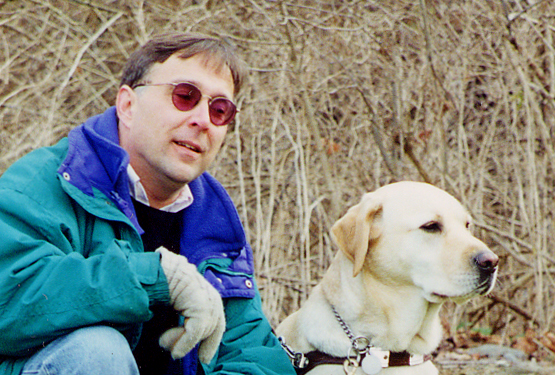
“Do not be shy about poetry,” said the great American poet known as “My Dog” who has been to more poetry readings than most two legged poets, “for poetry is memory turned toward affection.”
I quizzed her about this. “Affection can’t be “all” that a poem is concerned with, surely,” I asked.
“I mean affection in a mammalian sense,” she said. “Affection is whatever ain’t neurosis.”
Aside from the fact my dog is a Jungian (and perhaps a bit sentimental in a Manichean way) I think she’s right. Poetry is the best available means of crafting both our memories and our instincts.
Robert Frost said famously: “A poem begins as a lump in the throat, a sense of wrong, a homesickness, a lovesickness.”
The crafting is another matter. The poem, a made thing, a true “fancy” is more than a lump in the throat. In effect a poem becomes a mythos—wherein past and present combine, and in turn, where that combinative work changes the future. Frost understood this better than many. We love him for knowing it. “Two roads diverged”:
“I shall be telling this with a sigh
Somewhere ages and ages hence:
Two roads diverged in a wood, and I—
I took the one less traveled by,
And that has made all the difference.”
What poems give us whether we are makers or readers is the artful relief of aleatoric forces, the accidents, the large or small calamities that winnow us, frighten us, deplete our spirits.
Poetry always says we are smarter than we knew. We were homesick at first, then we found true Ithaca.
“True Ithaca” might be the title of a good poem. Please write it.
Meanwhile I hope you will visit our magazine. f
**
Odd events happen when you have a service animal, what I like to call little movies. For instance I was minding my p’s and q’s in Ithaca, New York, when the phone rang. The woman’s voice was gravelly and hesitant. “I don’t know you,” she said, “but I asked around about you.” “Oh yes,” I said and waited to hear what she had to say. “Well,” she said, “I’m the president of the local garden club and we’re a group of women who gather and talk about nature and we thought it would be fun if you came to our next meeting. You know, just talk about guide dogs.”
I agreed to do it. What harm could there be? I pictured a tastefully decorated sun room and a dozen women and a tea trolley. I should have suspected things would be different when Mrs. Grundy (for that’s what I’ll call her) dispatched a limousine to get me and bring me to their party. And I should have been suspicious that the garden party was meeting in the evening. Who holds garden parties at night? Corky and I got into the Lincoln town car and the uniformed driver drove us through the rainy night for over half an hour only to drop us at a remote farm house. I didn’t know where I was. For some reason it didn’t occur to me to ask. I was attending a garden party at a gentle farm. How bad could it be? I had my dog. How bad could it be? The driver drove away. I stood for a moment in the rain and collected my wits and headed for the front porch. Up the steps we went. And the door swung open and there was Mrs. Grundy laughing to see us.
Soon enough we learned it wasn’t a garden party at all, but an “Amway” meeting—the event was about recruiting women to sell cleaning products and we were treated to a film about soap and stain removers and a dozen of us sat in rickety chairs and rain beat at the windows and I did my best to smile while stroking my dog’s ears—my dog as familiar, my dog as lucky blanket. I was in the country home of Mrs. Grundy who had a smoker’s cough and a watery personality, which is to say, she didn’t understand human beings are something other than images in dreams. We were captive in the temple of her thin, rural dream—we would sell soap and she would become the queen of soap and our chairs squeaked and every now and then you could hear November wind punching at the eaves of the old house.
When it was time for discussion, following the movie, and Grundy’s pitch about financial independence through soap, which meant, selling lots of soap, and in turn, recruiting people to sell soap, for Amway is a pyramid scheme—you sell detergent and get ten acquaintances to sell detergent, and you’re promised a handsome return—and after all that, I asked what any of this had to do with guide dogs. I was kindly or so I thought. Wasn’t I supposed to talk about nature?
Well Grundy had a different take for she said without irony that blind people are poor—aren’t they? And why couldn’t I recruit an army of blind soap sellers and thereby make sightless people rich? I could, couldn’t I? And that was my introduction to the able-bodied idea that all blind people must necessarily know all other blind people.
One woman spoke up. I don’t remember her name. She said: “How can Steve know every blind person? Do you think blind people just hang out together under a bridge somewhere?”
I loved her for saying it. But Grundy had no irony as I say, and she sailed onward:
“He can call all the guide dog users, they must have a network,” she said.
I was properly kind—said something about privacy laws.
It got worse of course. Mrs. Grundy said something about “the problem” with disabled people. That they don’t want to work.
I decided to walk out of her house and into the rainy night. I had no idea of the Lincoln town car would be outside. It didn’t matter. I figured with my dog by my side I could hitch hike back to Ithaca. I felt strong. The unknown didn’t bother me. It was a new feeling for me. I’d barely been home a month from guide dog school and I felt utterly independent.
I just got up. Opened the door and shut it behind me.
I walked a long way in the rain with Corky jingling beside me. Eventually I reached the bottom of Grundy’s twisted drive and just as I did so, the Lincoln pulled up and the driver swung open the back door and in we climbed and off we went.
I shared none of the story with the driver. Maybe he was Grundy’s grandson.
Blind people don’t want to work. All blind people must know each other. What wonderful medieval ideas, I thought. I pictured the blind, all of them, living under a bridge in Paris, all clutching battered fiddles, one or two of them with an untrained skinny dog on a string.
The Art of Getting Disabled and a Short Rant
We talk about the art of getting naked or of flower arranging, but we never speak of the art of becoming disabled. In America disability is discussed simply as rehabilitation, as if living is no more complicated than lighting a stove.
The art of getting disabled is a necessary subject. When we look to history we find examples of this art everywhere. Disabled makers stand against loss. They make something of difference. When traveling in France Thomas Jefferson broke his wrist. A surgeon set the break badly. A major facet of his life was changed forever. He was forced to put aside his treasured violin. In turn he took up long, slow, leisurely horseback rides as a meditative practice.
Blind people don’t necessarily need dogs. White cane travel is a very fine way to get around. But I say guide dog travel is an art. It’s a means toward living much as Jefferson learned to live. Moving in consort with an excellent animal is one way to make a life. Art is mysterious. Some find a path to a certain form. Some find an unlike form.
Oh I know Jefferson sang to his horses. He was very fond of singing. Moving in consort requires it I think.
It’s hard to imagine singing to a white cane.
Do you need to sing to live well? No. I’ve a great good friend who is nonspeaking. But in turn his whole body is music.
My deaf friends sing.
“You got to keep something moving all the time,” said Huddle Ledbetter, otherwise known as “Leadbelly” when asked how he played the 12 string guitar.
Many of my wheelchair pals are dancers.
Several of my disabled friends are comedians.
We crackle, zip, exhale, inhale, sport with our fingers, flap, jump, pop wheelies, and jingle with harnesses.
Resourceful life is practiced. Sometimes it is silly. Art can and often should be frivolous. With permission from curators at the Museum of Modern Art I was once allowed to spin Marcel DuChamp’s famous wheel, a bicycle fork with front wheel mounted upside-down on a wooden stool. DuChamp was a DaDaist. He made art by placing things side by side that did not formally belong together. A MOMA staff member handed me a pair of latex gloves and I pulled them on and with Corky watching beside me, I reached out and gave DuChamp’s aluminum wheel a spin. “This is the steering wheel of my life,” I thought. Eccentric motion. A dog walking life not always understood by others, but simple and smoothly elegant.
No you don’t need a dog, or any other animal if you have a disability. Solo life contains its own joys.
I certainly know some blind folks who would say I’m over the top talking about art in the context of service dog life. I know people who say a guide dog is just a mobility aid. I’m fine with that. As long as they’re kind to their dog machines I’ve nothing to say about this view. To each his own. I have friends who don’t like poetry. I don’t think their worlds are harmed by their disinterest. All I know for sure is what a guide dog can do. Though the stationary wheel of your life seemed forever stopped, she says give it a turn. You’ll be surprised where the imagination can take you.
**
Nowadays one thing the blind have to contend with is service dog proliferation. There are many kinds of professionally trained dogs performing dozens of assistive tasks for disabled people. This is a very good thing in my view, as dogs and humans working together can change the world or at least the playing field. Service dogs are, in the strictest sense, dogs trained specifically to help the disabled manage one or more life functions that otherwise would be impossible.
In fact that’s what disability is — a function disjunction. The ADA makes it clear:
The term ‘disability’ means, with respect to an individual (A) a physical or mental impairment that substantially limits one or more major life activities of such individual, (B) a record of such an impairment or (C) being regarded as having such an impairment. Major life activities
include: but are not limited to, caring for oneself, performing manual tasks, seeing, hearing, eating, sleeping, walking, standing, lifting, bending, speaking, breathing, learning, reading, concentrating, thinking, communicating, and working.
Major bodily functions means: “functions of the immune system, normal cell growth, digestive, bowel, bladder, neurological, brain, respiratory, circulatory, endocrine, and reproductive functions.”
The range of disability is broad not because bureaucrats have big imaginations but because substantial limitations are wide spread in a complex society. In turn, when thinking of service dogs, I’m reminded of the digital slogan: “there’s an app for that.” Nowadays there’s a dog for almost any disability as canines assist wheelchair users retrieve objects, open cupboards, hand money to cashiers or help with balance, just to name a few of their skills. Dogs are trained to detect the onset of seizures or help hearing impaired people detect audible signals. Some dogs assist diabetics by sensing changes in blood sugar. There are dogs to help children with autism and dogs who accompany people with Post Traumatic Stress Disorder. All these skills reflect the amazing talents of dogs and the pioneering vision of the guide dog movement which started the service dog industry by pairing trained dogs with blind veterans.
Despite the acceptance and advantages of working dogs many who use them are experiencing increasing obstacles in public. One reason is dogs are often trained to help people with invisible disabilities. Many wounded warriors are being helped by extraordinary dogs trained to help with anxiety. Post Traumatic Stress Disorder is crippling but it can’t always be seen. Ironically, when a trained dog helps its owner stay focused and calm, his or her disability won’t be at all apparent. Legitimate service dog users are routinely denied entrance to public venues and are often humiliated. Lately the stories have been piling up on my desk — a service man and his superbly trained dog were recently booted out of a fast food restaurant; another veteran not long ago was denied access on a public bus. A legally blind woman, whose blindness allows her what’s called “residual vision” was recently hassled in a movie theater by another customer who argued loudly that she and her dog were fakes. As I say, the stories are legion. Not long ago I was prevented from entering a restaurant near Central Park by an overly officious doorman. He didn’t question my disability — he questioned whether my dog was legit.
Some argue these problems could be prevented by requiring service dog users to carry identification cards. But there’s a good reason we’re not compelled to do this — my disability is my business and not yours. Why should I have to disclose that I have a psychiatric condition or a neurological disease? Moreover the ADA defines a service animal as any guide dog, signal dog or other animal individually trained to assist an individual with a disability. If they meet this definition, animals are considered service animals under the ADA regardless of whether they have been licensed or certified by a state or local government.
The simplest way to tell if an a dog is a working animal is by its professionalism. If you’re a business owner the law does not force you to endure a misbehaving animal. In fact it’s the performance of a service dog that really matters — not just in traffic or in crowds, but everywhere. Public life is the goal for the disabled but I fear the village square is narrowing and has grown more covetous over the past decade. Not long ago a reporter for a major New York tabloid took her own badly behaved dog into a famous restaurant, telling the manager she had a disability, knowing full well she didn’t need to produce any proof. Then she ostentatiously encouraged her dog to eat off plates on tables. Her point? Anyone can bring his or her dog anywhere because of the specious ADA. Lost on on this writer is the hoary fact that people can imitate anything in America. If you wish, you can pretend to be a Rockefeller or dress as a priest. We’ve always been a nation of con men and the able bodied have always pretended to be disabled, imagining advantages like better parking or early boarding on airplanes. But here’s what I suggest: Look for the professionalism of the disabled and their companion animals and try to remember the village is open space, and we’re here: women, men and our dogs.
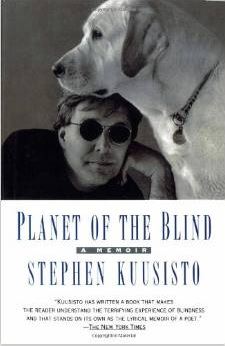
 Planet of the Blind