28, 2017
From DREAM: Disability Rights, Education, Activism, and Mentoring
Sponsored by the National Center for College Students with Disabilities and the Association on Higher Education And Disability (AHEAD)
* Alan Goldstein and his NYU engineering course is about disability, with people who have disabilities, making collaborative films, and that innovation has won him recognition from the Chronicle of Higher Education as one of “10 Classroom Trailblazers” in the U.S.: http://www.chronicle.com/article/Alan-Goldstein-Makes/241484?cid=cp156
* Three staff from Syracuse University talk about their experiences with mental and emotional health issues in a short film, and their advice for students who might be experiencing similar situations or struggles (film is captioned but not audio described): https://www.youtube.com/watch?v=9GySqG2Dowo&feature=youtu.be
* Taking an ASL course? Here’s a humorous guide for what NOT to do when you are making a video in ASL for homework and tests (no captions or audio description for the non-signing, but most sighted non-signers will still appreciate it): https://www.youtube.com/watch?v=uOIILzYgxTk
* Students are fighting back and raising awareness at the University Limpopo in South Africa, widely regarded as having some of the best disability services in the country – with students saying that from their experience, the services are not working: https://mg.co.za/article/2017-10-27-00-students-say-disability-friendlyvarsity-is-anything-but
* Ada Palmer, professor at the University of Chicago, won science fiction’s prestigious “Best New Writer” Campbell award at the Hugo Awards in Finland, and used her speech to publicly discuss her disabilities of Crohn’s disease and PCOS for the first time (full text of her speech available at this link): https://www.exurbe.com/?p=4269
*Many colleges still do not accept American Sign Language in fulfillment of the foreign language requirement, even though it is a “real” language, and Deaf Syracuse University student Kate Corbett Pollack asks why this is still happening: https://petroleusesletter.wordpress.com/2017/10/23/yes-sign-language-is-a-real-language-on-american-sign-language-asl-and-academic-language-credits/
* Sexual assault is not viewed as a “disability issue,” but it is, meaning any government actions on Title IX could have a disproportionate effect on college students with disabilities: https://rewire.news/article/2017/10/24/betsy-devos-title-ix-actions-will-hurt-students-disabilities/
* A new “Diversability” student group has started at Albion College in Michigan, emphasizing diversity and intersectionality of people with disabilities while still focusing on disability: http://www.albionpleiad.com/2017/10/diversability-an-interest-group/
* Collin Diedrich says his learning disabilities make him a better scientific researcher, even though his doctoral advisor had suggested a career in business might be a better option than microbiology: http://science.sciencemag.org/content/358/6362/558
* At age 2½, doctors told Stephan Shore’s parents he was psychotic and autistic and should be institutionalized, and today he is a professor of special education at Adelphi University in New York, arguing that autism is something that can be leveraged as a strength: https://www.irishtimes.com/news/ireland/irish-news/make-autism-about-abilities-not-limits-says-professor-with-condition-1.3265018
* Oxford University’s Bodleian Library’s honored Keeper of the Books, Professor Dennis Shaw, recently passed away from mesothelioma cancer that may have been caused by asbestos poisoning from Shaw supervising various renovations to the 400 year-old library: http://www.telegraph.co.uk/education/2017/10/26/keeper-books-oxford-universitys-bodleian-library-may-have-killed/
* #InvisiblyDisabledLooksLike has gathered thousands of stories from across the world from people with disabilities that are not always visible to others: http://www.bbc.com/news/disability-41733769
* The Asian and Asian American communities have specific mental health needs, and the New York-based Asian American Federation has issued a report hoping to help professionals and policymakers understand the issues, with statistics about New York, cultural stigmas, and recommendations to move forward: http://www.atimes.com/article/group-calls-new-york-asians-mental-health/
* Happy Halloween from around the world – 90 Deaf people from different countries sign “Happy Halloween” in their native sign languages (video is not captioned or audio described): https://www.facebook.com/exploretheworld2017/videos/1656876901029664/
This week’s issue of the DREAM weekly e-mail is available at the DREAM website, with archived back issues available, as well (http://www.dreamcollegedisability.org). For more information about DREAM or AHEAD contact Wendy Harbour (wendy@ahead.org).
To subscribe or unsubscribe, please go to http://ahead-listserve.org/mailman/listinfo/dream_ahead-listserve.org. Wendy Harbour can also handle requests to subscribe or unsubscribe.
By the way, please don’t presume DREAM, the National Center for College Students with Disabilities, or AHEAD agree with everything in these links we send out – we’re just passing along the information so you can form your own opinions. Thanks.
_________________________________
– Posted using BlogPress from my iPad
Month: October 2017
The AWP, Academic Creative Writing, and the Disabling Ethic of Higher Ed
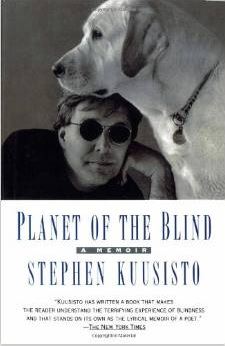
By now I’ve written a good deal about what it’s like to be disabled and work in higher education. Why return to the subject? What more could I possibly say? First off there’s an important new book “forthcoming” from University of Michigan Press by Jay Dolmage entitled “Academic Ableism” which (from the website): “brings together disability studies and institutional critique to recognize the ways that disability is composed in and by higher education, and rewrites the spaces, times, and economies of disability in higher education to place disability front and center. For too long, argues Jay Timothy Dolmage, disability has been constructed as the antithesis of higher education, often positioned as a distraction, a drain, a problem to be solved. The ethic of higher education encourages students and teachers alike to accentuate ability, valorize perfection, and stigmatize anything that hints at intellectual, mental, or physical weakness, even as we gesture toward the value of diversity and innovation. Examining everything from campus accommodation processes, to architecture, to popular films about college life, Dolmage argues that disability is central to higher education, and that building more inclusive schools allows better education for all.”
Yes disability is enacted on university campuses as the antithesis of higher education. It’s not merely “a distraction, a drain, a problem to be solved” (though arguably these ableist perturbations remain true) but also a de facto bearding of the noble lion as disablement requires vigorous reexaminations of pedagogy, administrative systems, institutional histories, faculty preparedness, information technology, and what is meant by cultural inclusion. Colleges that do not do these things are most often participating in what Professor Dolmage calls the ethic of higher ed. I should know: I’ve been stigmatized repeatedly throughout my career because my blindness hints at intellectual, mental or physical weakness. I still remember the graduate student in creative writing at Ohio State who dropped my nonfiction writing workshop because I was asking students to read their work aloud. My assistive technology hadn’t arrived yet. My mother died on the first day of class. I invented my time pressed accommodation and gave those students the benefit of twenty years of writing and reading. The woman who quit told a senior faculty member that I was a lousy teacher. Hearing her fellow students read was beneath her. And clearly I wasn’t capable of running a workshop. That student effectively undermined much of my subsequent career at OSU. Although I did receive tenure and ultimately went on to receive tenure at the U of Iowa and Syracuse, the dog whistle followed. It follows because of blindness. The blind, who must do everything differently, are suspect. Are they really reading? (It’s only been 200 years since the blind were conceived of as literate. You shouldn’t think for a minute that old prejudices have vanished. Strangers on public buses offer to pray for me; give me money; imagine I’m destitute.)
The “ethic” is false as practiced and I’ve been put in mind of this all over again by recent developments at the AWP, (The Association of Writers and Writing Programs) the sponsor of the nation’s biggest academic creative writing conference. Each year they manage to humiliate disabled writers by failing to provide basic accommodations, and each year they receive criticism for this, as well as merited approbation for a lackluster commitment to featuring disability related writing at their conference. These are just criticisms and there’s no denying it.
What the AWP “has” is the capacity to stigmatize anything that hints at intellectual, mental, or physical weakness. After fumbling badly with accessibility at their 2017 conference in Washington, DC the leadership of the conference hired a consultant to help them tackle the problem. (Football imagery intentional.) Now the organization has put out the following statement to address the ongoing concern that there’s not enough recognition of disability writing: “We believe the current scope of the conference strikes the best balance between inclusion and good, selective programming.”
Talk about valorization of accentuated taste (read perturbations regarding ability).
Why return to the subject?
I return because I heard a writer at AWP say “that’s not germane to me” when told of a panel on disability and nonfiction writing.
I return because my own university is still struggling to admit the disabled have appropriate and necessary opinions about accessibility problems they continue to encounter on campus.
I return since labels are for jars and not people.
I come back again because most campus accommodation processes are demeaning, stuck all over with red tape, and yes, their very presence signals to faculty and college administrators that the 19th century model of sequestering the disabled is still OK.
And I return because today, right now, even as I’m typing, there are students and faculty and staff with hidden disabilities who are scared as hell to disclose them at their respective colleges and universities.
I can’t convince them they shouldn’t be.
The disabled walk in the same sunlight, even beside the ivory tower.
Perhaps, just maybe we can stop pretending they are “other” and their talents are stealing the goodies from the strapping, healthy taste makers.
I’ve Got a Secret
I take inventories of my head, patrolling it, though I’m no cop. There are ugly notions inside me and “Holy Gilles DeLeuze Batman!” they’re slick, fast as minnows—my scrutinizer can hardly catch them, though sometimes I capture one old, clotted, loathsome, prejudicial idee fixe and raise it to the light.
Recently I watched a vintage TV game show—“I’ve Got a Secret” from 1961. I remembered the damned thing though I was six when the program first aired. I watched it for twenty minutes. It was benign and faintly amusing. A homely “not ready for prime time” contestant appeared and whispered her secret to Garry Moore the emcee while the audience saw it on screen. Panelists then tried to ferret out the secret by asking yes or no questions. Tame enough.
Suddenly I was awash in sadness—clobbered by it. You might think I was victimized by middle class white American nostalgia but that wasn’t it. I wasn’t sorry for lost innocence, either my own or the nation’s. It was my ugliness I saw.
I liked that world of Cleanliness capital “C”—the witty panelists and TV host resembling urbane cocktail guests, not a mean drunk in the lot. I felt my own affection for banality. I couldn’t blink it away. I liked the sanitized, irreproachable steadfastness of TV Land.
It was bad news. The Head Patrol had returned to base with a culprit in tow—my starchy, middle brow affection like a shoplifter arrested British style, his hands cuffed in front since he’s not that dangerous.
How to blink this away? Is it plausible I’ve no nuance or scruple? I genuinely liked the cheap TV studio and the clubby, ambient aura of normalcy, everyone wearing his or her Sunday best. I loved it that the secrets weren’t lurid. Understanding how much I liked “I’ve Got a Secret” was a train wreck for my sense of irony and discernment. It pleased me immensely that the first contestant was the only female “plasterer” in the United States.
When partaking of nostalgia television it’s easy to say “those were the days” without a moue of disgust. Even the most detestable treacle seems innocent—Ozzie and Harriet; Father Knows Best—or the happy vulgarity of a live dancer selling deodorant.
There’s not help for it. I too can be tricked into affection for falsehoods. I’m better off admitting it.
Still I peered behind the curtain of “I’ve Got a Secret” just to see who the panelists actually were. I knew the names of course: Bess Myerson, a former Miss America, Bill Cullen, a perennial game show host for nearly forty years, Henry Morgan, whose real name was Henry Lerner Van Ost Jr., a witty man who was dismayed television would have him, Betsy Palmer, a talented actress whose father was an immigrant chemist from Czechoslovakia named Rudolph Vincent Hrunek—I knew their names but I didn’t know just how much television had disguised their lives. “I should have known,” I thought. And I should have known disability lurked just off stage. As Rosemarie Garland-Thomson and Brenda Brueggemann once observed: “Disability is everywhere in culture–from Oedipus to the Human Genome Project–once critics know how to look for it.” Turns out “I’ve Got a Secret” had a disability secret.
Bill Cullen was a regular on the show and on many other TV and radio programs but despite his notoriety it seems the general public had no idea that he was a polio survivor. According to Wikipedia he contracted poliomyelitis in 1921 when he was 18 months old. His polio left him with lifelong ambulatory difficulties. Here’s what the Wikipedia entry says:
His physical disabilities were—and largely remain—unknown to the general public, due in large part to directors taking great care to limit the extent that Cullen was shown walking on camera. Each show’s set was designed to accommodate Cullen’s limited range of motion; the podiums, game boards, props, and any physical movements by contestants were arranged so that Cullen could, for the most part, remain stationary. Rather than the grand entrance common for most game show hosts, Cullen began each show either already seated, or hidden on set behind a nearby prop so he would only have to take a minimum number of steps to his podium. Cullen always sat in a chair while hosting, even on shows where the other participants stood. Similar accommodations were made when he appeared as a guest on other game shows.
This is of course F.D.R.’s version of polio, a condition disguised as much as possible in public. Here’s where I had to sit up and take notice. Wikipedia continues:
As a consequence of these arrangements, many of Cullen’s peers were likewise unaware of his disability, which occasionally led to awkward situations. In the August 2010 issue of GQ under the heading “Epic Tales of Embarrassment”, Mel Brooks related the following story to writer Steve Heisler:
The week of October 17–21 in 1966—that would make me about 40—was a special celebrity week on Eye Guess. Bill Cullen was the host. The game was very similar to Concentration. I was teamed up with Julia Meade. Remember her? Actress, very pretty young lady, blonde… Okay, never mind. I don’t think I won, but I did get the take-home game. Anyway, the show is over, and I start walking toward the podium to say good night to Bill, to thank him for having me on. He starts coming toward me cross-stage, and I don’t know what he’s doing. His feet are flopping. His hands are flying everywhere. He’s doing this kind of wacky walk-of-the-unfortunates that Jerry Lewis used to do. So I figured, what the hell, I’ll join him. I start doing, I dunno, this multiple-sclerosis walk, flapping my arms and doing the Milton Berle cross legs—my own Jerry Lewis impression… And Julia is whispering, “No! He’s crippled, Mel!” I don’t even hear her. Finally we meet in the middle, we hug, and he says to me, “You know, you’re the only comic who’s ever had the nerve to make fun of my crippled walk. Everyone’s so careful, it makes me feel even worse.” And I realize, Oh, my God, this guy is really crippled! It was my worst moment — and if you weren’t me, probably the funniest thing that ever happened.
Funny or not it’s a secret within a secret since taped studio television is a both a managed environment where all human encounters are essentially choreographed, or in Cullen’s case, choreo-erased. Once the disabled are erased within a broadcast environment it’s impossible for Brooks to imagine Bill Cullen’s polio as anything other than shtick. Brooks of course doesn’t get it. It’s not his worst moment. It’s a signature of television. Crippled actors are still today fighting for their places before the cameras.
I’ve got a secret indeed.
The Buckler Narrative, or Waving a Very Personal Disability Shield
Over the past few weeks I’ve read a series of books and articles about the human body, more specifically the disabled body, and it’s apparent that “life writing” or “memoir” or “personal essays” claiming fidelity to disablement have a commonality beyond brokenness. While it’s been customary to speak of autobiographical narratives about disability as falling into two camps: the “overcoming” story or within a smaller range, a “refusenik” approach to the former, (which one can think of as “woke” writing) I’m now finding an insistence on the body as escutcheon—your body and mine, queer or trans or blind, on wheels, is now a shield or emblem. We may usefully say we’re in the age of body bucklers.
There’s power when writing about personal experience. I’ve been doing it for years. The crippled human has had very sad circumstances. Annie Sullivan in the Massachusetts institute for crippled children; polio kids; incarcerated children defined as “feeble”—their histories are still fresh and their stories haunt and educate. Anne Finger’s “Elegy for a Disease” is about her formative years as a polio patient and it tells the story of a generation of polio-citizens. Molly McCully Brown’s poetry casts backward to revision stories of lives lost in hospitals. The power in their books resides in bringing other lives forward.
The body buckler story has nothing to do with this broader view—a political understanding that no one is a representative of a particular disability. In the escutcheoned narration the author claims her body and her body alone, which is to say, she proceeds with singularity, minus irony, without seeing a body reduced to its ailments is a medicalized thing.
I won’t say which books and articles I’ve read are buckling. Not today anyway. But you can see them too: hero cripple narrators, more than faintly inspirational, but not interested in the cripples around them.
Nameless
So many poets say the rain can see
As if the heavens cry eyes down
Angels breaking, fields dark,
—Oh no, rain is blindness
But always finding home—
Something to be proud of
From branch to branch
Why Some Special Ed Profs are Afraid of Autists: Hint, They Don’t Know Very Much
“It is difficult for nonspeaking people to define their feelings in language which is chiefly made by talkers to express theirs.”
—my paraphrase, Thomas Hardy
Hi. My name is Steve. If this was a twelve step program instead of an essay you’d say “Hello Steve!” (presumably with warmth) and I’d announce: “I’m blind and though I’m a reasonably well known writer (which means I’ve found many nuanced methods to swindle readers) I must make a confession.” Yes. Here it comes. When I type I don’t look at the keys. That’s right: I just peck from inside a cloud of unknowing which some might call memory and others may call serendipity—and soon I’ll explain the difference but not yet—not yet because if you’re a neurotypical sighted person I think you look at your keyboard when you type. You do this not only for help (your knowledge of the keys is incomplete; you really don’t know where the “t” and the “o” are) but also as a means of confirmation. I know you don’t think of your eyes as accommodating agents. I understand you think sight is an autonomic extension of your inmost thoughts. You must believe this for to acknowledge vision’s documented primacy in all your achievements would be too humbling. Yes. Your eyes correct your typing which means you’re not a typist at all. That’s right. And worse for you, your memory is substandard. You couldn’t name where all the letters are on a qwerty keyboard or what’s right now on your bookshelf—not without your peepers.
I know my keyboard from memory, not by luck or deceit. I’m literate (though the blind have only been viewed as being so since the late 18th century) and what’s more I’ll kick your ass at Scrabble. The difference between mnemonic prowess and serendipity is the difference between lightning and the lightning bug, to borrow an analogy from Mark Twain who used it with more panache though you shouldn’t repeat what he said in mixed company.
I’m a blind high speed typer who knows where everything is on his bookshelf and can find a book in the dark.
I have a dozen autistic friends who type to communicate. They’re frequently attacked by a school of special education professors who believe non speaking people can’t possibly do this. The professors’ thinking goes like this: “If an autistic goes into a forest with Hansel and Gretle and he points at a tree and Gretle supports his elbow so he can touch it, has he really communicated anything? Maybe the hapless autist didn’t want to touch that tree at all. What if Hansel and Gretel forced him to touch that Fagus sylvatica—for Gretle especially loves the beech trees of the Black Forest? (Much worse of course is that Gretle doesn’t even know she has a beech tree bias.) Now in turn, if the autist wanted to point at the beech tree and Hansel took his elbow, well Hansel might conceivably force him to touch a Scotch Pine since Hansel is a variant of “Hans” and Hans means “one who repeatedly rubs pine trees” and yes, Hansel is more than half dishonest, and in any case the poor autist doesn’t know the difference between a beech and a Christmas tree you see.
**
Divagation #1: wandering off the path, especially in forests…
There are no autists or people with autism. There are no blind people, no deaf people. The terms are meaningless as no two disabled citizens who are categorically believed to have the same disablement will experience it in the same way.
Divagation #2: Charles Darwin put his finger on it…
Referring to Darwin’s trans-speciesism where use of language is concerned, Elizabeth Grosz writes in her book “Becoming Undone: Darwinian Refections on Life, Politics, and Art”:
“The human represents one branch of an anthropoid line of language, birds an altogether different line, and bees and other insects another line again. Each develops languages, communication systems, forms of articulated becoming, sign-systems, according to its own morphological capacities, its own sexual interests, and its own species-specific affects. Each “speaks” as it can, elaborating a line of movement that brings sound, movement, resonance into being, that composes songs, sound-lines, statements, expressions as complex and rich as each species can bear.”
Clearly autists are human and not cockatoos or bees, but articulated becoming, sign-systems, and individuated morphological capacities are essential to any understanding of what language is.
Sound, movement, resonance, articulated becoming, complexity are all components of languages and work across what we call species but which we might as well call life itself.
Divagation @3: the boy next door has made a whistle from a blade of grass; I’m playing a trumpet…briefly, we make the same note on October 2nd 2002, in Columbus, Ohio…
**
The professors I allude to in the field of Special Education are proponents of “exceptionality” and believe that a cohort of disabled students can only be taught if identifiable patterns of strengths and needs common to all students can be understood. In parts of Canada and in various places in the US a disabled student can only access special education services if he or she has an exceptionality—that is, they must prove they’re better than the rest of those dumb kids. In these days when neuroscience and assistive technology are changing our understanding of individual needs and competencies the hoary idea that autistic people must fit a neo-Victorian template, a spectrum if you will, with high functioning and low functioning labels trotted out like specimens in 19th century science is still prevalent. Forget that these professors have a stake in waving the flag of science as a red herring—that the majority of special education faculty are ill equipped to engage with contemporary neurological research into the nature of autism—let us just pretend that autists are mannequins, and voila! You’ve got the professors’ favorite “ableist” conspiracy theory. You see: there are no talented, imaginative non-speaking people. The term “facilitated communication” is their rhetorical weapon of choice—an outdated term and one that has zero relevance these days, but it is so easy to paint with an old, stiff, unwashed brush. It’s important to the proponents of exceptionality that the public continue to think nonspeaking people have no thoughts of their own. Moreover the general public should also believe that all inclusive communication techniques are dishonest because, after all, you must always remember Hansel and Gretle and the woods.
Of Phony Service Dogs and True Ones
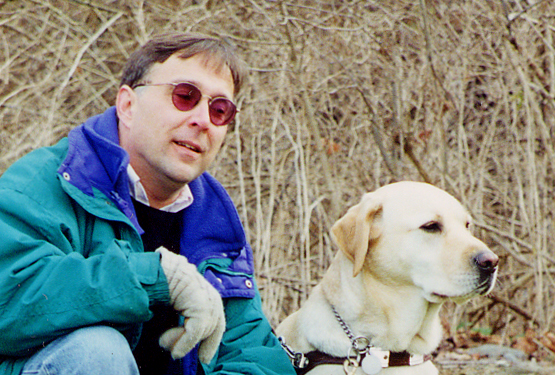
“I am his highness’s dog at Kew; / Pray tell me, sir, whose dog are you?”
—Alexander Pope
If you’re like me and travel with a trained guide dog you’ve likely heard about the steady and alarming appearance of false service dogs in public. You don’t have to be blind or deaf or experience PTSD or diabetes or balance issues and navigate with the assistance of a professional canine to have seen this story. Incidents of faux service dogs are everywhere in the news.
My guide dogs have been expertly trained to work in midtown Manhattan traffic, locate the edges of railway platforms and stop, disobey unwise commands, watch out for low hanging branches or storefront awnings, avoid holes in sidewalks, find ways around construction obstacles, locate stairs and elevators, and yes, be good citizens in shops, restaurants, movie theaters, ball parks, or when riding public transportation.
One of the finest compliments a guide dog user can receive is when departing a restaurant someone says: “Oh, I’d no idea a dog was under that table!” The surprise of others reflects the serious training our dogs have received and our commitment as dog handlers to keep that training sharp. The latter is as important as the former.
Yes. Real service dog users have skill. Not only that, we’ve studied it. In my memoir Have Dog, Will Travel: A Poet’s Journey (due out from Simon & Schuster in March, 2018) I describe what it was like to learn how little I knew about myself and about dogs when I trained with my first guide, “Corky” a yellow Labrador. Here, a trainer I’ve called “Linda” addresses a dozen blind people and their new dogs:
“Our new dogs require praise—lots of praise,” said Linda. “It’s all in the voice. Nowadays a guide dog loves it when you say, ‘Good dog’ with a tone of true joy. Try it!” And we all said, “Good dog” just as Linda had shown us.
Corky raised her face to look at me, her big yellow snout pointing straight up. And every dog in the room did the same. Something palpable went around our circle—the star of praise that only dogs can see was re- leased by our voices. “Good dog!” We said it again and again. Our overdramatized tones were like stylized laughter in an opera. All tails were wagging.
“We say, ‘Good dog’ because Guiding Eyes dogs really want to work,” said Linda. “They have been through many months of training. These dogs enjoy their jobs. But just like you, they require praise. From this moment on you will be saying ‘Good dog’ as much as a hundred times a day.”
Who affirms good things even a dozen times a day? Who makes “talking goodness” a habit of her or his minutes? I sat with my Corky’s head on my shoe and thought about the “talking blues”—as a literary guy I’d studied vocal sorrow—but never had I considered a running, day long practice of spoken good. “Good dog” would become my hourly practice and over time (though I didn’t yet know it), dog-praise would change many of my habits of thought.
One of the surest giveaways you’re not seeing a real service dog is its owner’s obvious lack of control and his or her concomitant lack of praise. Not long ago on an airline flight from Dallas to New York I heard a woman loudly berating her dog because it was barking and it obviously had the jitters. It was obvious the dog wasn’t professionally trained to do anything other than follow its owner everywhere.
My own dog was curled up under my feet and entirely quiet.
I felt terrible for that dog much in the way I often feel sorry for children being scolded in supermarkets by unfit parents.
The fake service dog people are ungenerous both to dogs and to disabled folks. It takes profound commitment to train with a guide dog or a PTSD canine—or any other genuine service dog. The disabled who train with professional dogs know more about dogs than almost anyone. Moreover they know a great deal about themselves and their hopes and aspirations.
The shouting woman on that plane insisted that she had a disability and her dog was a service dog. “Look!” She said, “It has a vest!”
That dog barked and scrabbled all through the flight.
The Americans with Disabilities Act asserts that as far as service dogs are concerned authorities cannot ask the disabled for papers, a safeguard is designed to protect a person’s privacy. It’s nobody’s business if you have an invisible disability, or so the thinking goes. I agree with this position. Invisible conditions should in general be your own business. Why must someone with a traumatic brain injury have to disclose their disability to the general public?
Predictably enough unscrupulous vendors have been taking full advantage of the ADA’s guarantees of privacy. A considerable online industry caters to able bodied people who want to take their pets everywhere. All you have to do is get a doctor’s note saying you need of a service dog, send it in, and voila, you receive a vest that says “Service Dog” and no one can ask you a thing about it. You can take your untrained “Barky Boy” anywhere you like.
Dishonest? You bet. But for my money the worst thing about it is the insult to my dog’s ardor, faithfulness, and intelligence. And yes, the further insult to guide dog trainers and puppy raisers who devote a whole year of their lives to raising future guide dogs. And yes, the insult to the work that true service dog users must undertake to become successful.
Another way to say this is, there’s no love in it. Fake service dog people don’t love their dogs or anyone else.
Personal Essay
As I was walking under apple trees.
As my dog was with me.
Yes my father had died not long before.
Yes Fall had come without him.
I said, “insufficiencies of the living.”
I said, “living…”
What cheer to be alive in an orchard.
That was what I thought.
The apples, golden,
Were suspended
Like nothing I’d known
When my old man was alive….
Sorrow
‘Tis from the dictionary
My boyhood companion
Brought to this world
Already lost, having come
From Mithraic light
Sun that falls on pages
The words unable to save us.
Miniature Horse

On my shelf, not archeology,
Palm sized, upright,
Sun going down outside
So that he seems to cross
The long plain of my library,
Steady in primal snow…
 Planet of the Blind