Equivocation at 2 AM

I often read far into the night. Last evening—early morning really—I found myself thinking about the word “equivocation” which emerged in Shakespeare’s time and is an early modern neologism—to half speak, parallel speak, hedge speak. The word itself is a barometer of how literacy affected the public nerve. Once people could read they could engage in irony. To equivocate became a crime in some cases as Shakespeare knew. Talking at cross purposes was a newfangled thing. Oh people had always been liars. But equivocation was unique—a conspiracy within the self if you will. Shakespeare’s late plays are concerned with this. Dr. Faustus perfects the matter later. From “The Year of Lear” by James Shapiro:

“Shakespeare was clearly fascinated by the various ways that one could equivocate and had been employing this device in his plays and poems long before he or his culture had settled on a name for it. For better or worse, it was simply part of how people communicated (a view perfectly encapsulated in the deeply equivocal Sonnet 138, which begins: “When
my love swears that she is made of truth, / I do believe her though I know she lies”). What else, after all, did actors do for a living other than convincingly recite words they didn’t actually mean while at the same time suppressing their own thoughts? And what else did playwrights do, in an age of theatrical censorship, but encourage actors to say one thing while slyly pointing at another? Though the scene in The Second Part of Henry the Sixth would be the first time Shakespeare so explicitly employs what would come to be called equivocation, it would be far from the only instance of this verbal trick to appear in his plays. One of the great pleasures afforded by his works is watching his many lovers, rivals, servants, avengers, and villains equivocate, sometimes playfully, sometimes in the most cunning and destructive ways imaginable. He would have understood efforts to reduce equivocation to the diabolical, to something that could somehow be rooted out and eliminated, as hopelessly if not dangerously naive.”

Meanwhile let me not equivocate. I’m short. You see? The truth is seldom promising. This is why short people join societies, become demotic, develop academic disciplines like “diminution studies” and argue that tallness is a conspiracy.

As I say: I’m just short.

Sometimes subjective bravery requires talking less.
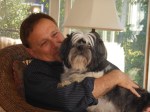
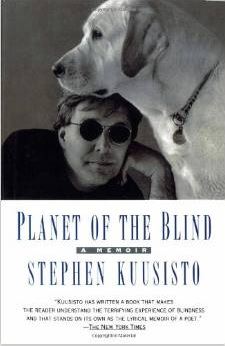
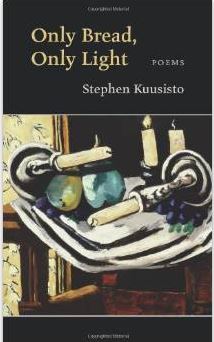
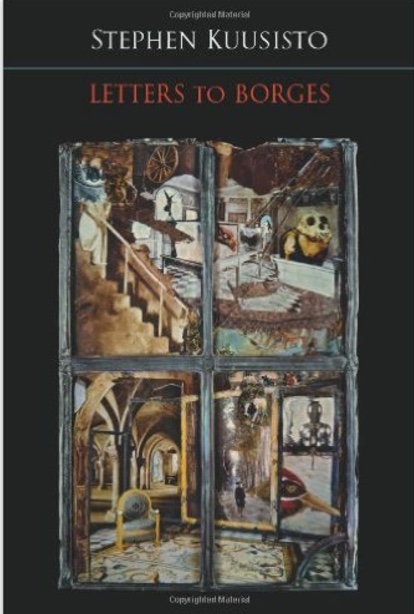
Stephen Kuusisto and HarleyABOUT: Stephen Kuusisto is the author of the memoirs Have Dog, Will Travel; Planet of the Blind (a New York Times “Notable Book of the Year”); and Eavesdropping: A Memoir of Blindness and Listening and of the poetry collections Only Bread, Only Light and Letters to Borges. A graduate of the Iowa Writer’s Workshop and a Fulbright Scholar, he has taught at the University of Iowa, Hobart and William Smith Colleges, and Ohio State University. He currently teaches at Syracuse University where he holds a University Professorship in Disability Studies. He is a frequent speaker in the US and abroad. His website is StephenKuusisto.com.

Have Dog, Will Travel: A Poet’s Journey is now available for pre-order:
Amazon
Barnes and Noble
IndieBound.org
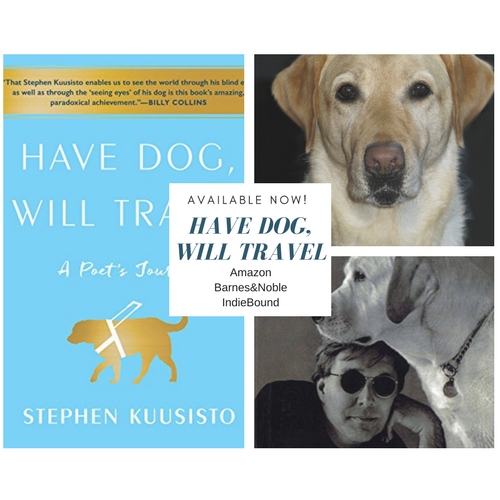
Have Dog, Will Travel by Stephen Kuusisto

(Photo picturing the cover of Stephen Kuusisto’s new memoir “Have Dog, Will Travel” along with his former guide dogs Nira (top) and Corky, bottom.) Bottom photo by Marion Ettlinger 
Galileo, Blind, Saw Stars With His Body

Yes people go blind late in life and they go on living, seeing in different ways. Sight is an immoderate thing which makes its imagined absence a sublime condition, a vast terror, something beyond understanding. Blindness is not this at all. Trust me: I know thousands of blind people. They don’t live in the unlit depths of the sea. They’re not helpless on the streets. As with Galileo, blind at the end, they go on knowing. It’s painful to write such a rebarbative sentence but the sighted know nothing.

There are different kinds of not knowing and at the risk of going Hegelian let’s say that the largest of these is tied not to phenomenology but superstition. Seeing is more than believing, it’s conceiving. Why if you can’t see an object it simply disappears. The majority of people believe this, world over, and it doesn’t matter their respective level of education. Doctors, scientists, professors of education, analytic philosophers, data miners, mattress testers, all imagine that without sight the essences of things will vanish. The American poet Wallace Stevens concludes a poem called “The Snowman” with the line: “the nothing that is not there and the nothing that is”—a perfect jeu d’esprit for the sub-phenomenological dread of vision loss.

The blind of course, who are simply your neighbors, children, mothers, fathers, the college student in the room next door are always in the position of having to reassure the puny sighted that life without peepers has meaning. For meaning you can substitute any variety of terms: dignity, joy, hot sex or popcorn. “My life has as much meaning as yours,” says the blind girl though she says it in Morse code tapping her way down the sidewalk with her stick. Tap. Tap. Tap. I’ve got rhythm. Possibility. I’m fantastic. Do you see how fantastic I am? And of course the sighted can’t believe it. They’d sooner believe in alien abductions than rest assured that a man, woman, or child can have a lyrical, involved, sophisticated and examined life without billboards, Keep Off the Grass signs, and all the other quotidian junk the sighted absorb minute by minute. In fact I’ll admit it right here. I feel sorry for the sighted who are prisoners of whatever dopey nonsense they encounter: panel truck messages, junk mail, commercial art, what the Beatles once called “corporation tee shirts.” Far from needing to prove my life has value I think the sighted are the most wanton people, walking about with advertising slogans on their lips.

Now you’ll say I’m being a little hard on the sighted and you’d be right. But I’m not wrong to suggest the blind are forced across the globe to play out the “fear of blindness absolution charade” by performing logo-rhythmically a dance that says our lives have value. This is true for all disabled people. Our crippled existences are OK. You see? We are happy just like you! With blindness though there’s this extra twist: “We can be happy despite your all encompassing dread that objects and pathways forward exist only because of sight.” Our lives are more difficult to imagine owing to the weakness of the average man or woman’s visual centric ego. It’s as if the customary sighted person is no more than a child who believes that when his or her parents turn out the lights everything in the room disappears.

I’ve just returned home to Syracuse from a trip to Kazakstan where I met with blind children and their parents. Inclusive education is still not customary for disabled kids in much of Central Asia and I spoke to an audience of parents and young people with vision loss about having a life. After the hour was up I was on the verge of tears. The sighted believe the blind are not of this world. They believe it from Kansas to Nur Sultan. How many rooms have I entered just to say “your customary fears are groundless.” I”d put a question mark there but I don’t know.

Stephen Kuusisto and HarleyABOUT: Stephen Kuusisto is the author of the memoirs Have Dog, Will Travel; Planet of the Blind (a New York Times “Notable Book of the Year”); and Eavesdropping: A Memoir of Blindness and Listening and of the poetry collections Only Bread, Only Light and Letters to Borges. A graduate of the Iowa Writer’s Workshop and a Fulbright Scholar, he has taught at the University of Iowa, Hobart and William Smith Colleges, and Ohio State University. He currently teaches at Syracuse University where he holds a University Professorship in Disability Studies. He is a frequent speaker in the US and abroad. His website is StephenKuusisto.com.

Have Dog, Will Travel: A Poet’s Journey is now available for pre-order:
Amazon
Barnes and Noble
IndieBound.org

Have Dog, Will Travel by Stephen Kuusisto

(Photo picturing the cover of Stephen Kuusisto’s new memoir “Have Dog, Will Travel” along with his former guide dogs Nira (top) and Corky, bottom.) Bottom photo by Marion Ettlinger 
Lines Written in the Frankfurt, Sheraton

What is it about being alone in a strange hotel room that drives me always to think of my dead twin brother? He died shortly after we were born. I did not know him. Yet always in places of loneliness he seems to be with me as he is, early morning, before sunup in the airport Sheraton in Frankfurt, Germany. Am I tired? Does this make me sentimental? Do I have Madame Blavatsky on the brain? Is he always with me? Will genetic research prove it? Am I really living for two? I had wild dreams last night and woke and felt him with me. It’s a sensation known to everyone I think—that your private dead are there just when you weren’t especially thinking of them. Yes this is the source of all myth. Yes and even in a sterile, megalithic business hotel there’s a mysterious and unanticipated shiver and I wonder how many other rumpled travelers are with me.

Stephen Kuusisto and HarleyABOUT: Stephen Kuusisto is the author of the memoirs Have Dog, Will Travel; Planet of the Blind (a New York Times “Notable Book of the Year”); and Eavesdropping: A Memoir of Blindness and Listening and of the poetry collections Only Bread, Only Light and Letters to Borges. A graduate of the Iowa Writer’s Workshop and a Fulbright Scholar, he has taught at the University of Iowa, Hobart and William Smith Colleges, and Ohio State University. He currently teaches at Syracuse University where he holds a University Professorship in Disability Studies. He is a frequent speaker in the US and abroad. His website is StephenKuusisto.com.

Have Dog, Will Travel: A Poet’s Journey is now available for pre-order:
Amazon
Barnes and Noble
IndieBound.org

Have Dog, Will Travel by Stephen Kuusisto

(Photo picturing the cover of Stephen Kuusisto’s new memoir “Have Dog, Will Travel” along with his former guide dogs Nira (top) and Corky, bottom.) Bottom photo by Marion Ettlinger 
Exercise

It was the first time I was alone—I mean truly alone as my parents couldn’t find me and the knowledge of this was joy to me. I was four years old and while my mother and father slept aboard a great ocean liner I slipped from our stateroom and ran in total freedom. By the time I was found hours later far below decks wandering aimlessly I’d discovered the thrill of random escape. You will never forget it once you’ve lived it.

Can you be a poet at four? The question is absurd. You’re an artist the first time you feel love calling you forward and no one else is around.

Some children are more gifted in this way perhaps. My first spoken word was “door.”

I don’t want to remember the flip side—the loneliness of boyhood, a solitude that I can only describe as a taste like milk and iodine.

Stephen Kuusisto and HarleyABOUT: Stephen Kuusisto is the author of the memoirs Have Dog, Will Travel; Planet of the Blind (a New York Times “Notable Book of the Year”); and Eavesdropping: A Memoir of Blindness and Listening and of the poetry collections Only Bread, Only Light and Letters to Borges. A graduate of the Iowa Writer’s Workshop and a Fulbright Scholar, he has taught at the University of Iowa, Hobart and William Smith Colleges, and Ohio State University. He currently teaches at Syracuse University where he holds a University Professorship in Disability Studies. He is a frequent speaker in the US and abroad. His website is StephenKuusisto.com.

Have Dog, Will Travel: A Poet’s Journey is now available for pre-order:
Amazon
Barnes and Noble
IndieBound.org

Have Dog, Will Travel by Stephen Kuusisto

(Photo picturing the cover of Stephen Kuusisto’s new memoir “Have Dog, Will Travel” along with his former guide dogs Nira (top) and Corky, bottom.) Bottom photo by Marion Ettlinger 
Saxophone and Horse

I’m flying a Kazakh air flight from Almaty to Nur Sultan listening to John Coltrane’s “Prestige” recordings from 1957. Far below are the steppes of Central Asia where nomads first domesticated horses and traveled with their superb, portable, round houses. I’m surrounded on this Airbus by modern businessmen and women who are reading newspapers. I’m just a poet flying on alto saxophonist and nomadic equine sparks. I feel free. By ‘57 Coltrane was back from the dead having survived a bout of suicidal heroin usage. Sometimes we get to soar clean.

**

I know I can’t explain. There’s no ethnography to equine-jazz-rebirth-on a domestic flight in Kazakhstan. I can’t interview my fellow passengers about the matter. Statistically it’s likely some of them like jazz. Some have owned horses and love them. Many have descended from the Altaic nomads. The imagination knows there’s freedom not tying people together in controlling narratives.

As far as instruments are concerned the saxophone is a late arrival on earth. The horse was early. Here: I put them together.

Stephen Kuusisto and HarleyABOUT: Stephen Kuusisto is the author of the memoirs Have Dog, Will Travel; Planet of the Blind (a New York Times “Notable Book of the Year”); and Eavesdropping: A Memoir of Blindness and Listening and of the poetry collections Only Bread, Only Light and Letters to Borges. A graduate of the Iowa Writer’s Workshop and a Fulbright Scholar, he has taught at the University of Iowa, Hobart and William Smith Colleges, and Ohio State University. He currently teaches at Syracuse University where he holds a University Professorship in Disability Studies. He is a frequent speaker in the US and abroad. His website is StephenKuusisto.com.

Have Dog, Will Travel: A Poet’s Journey is now available for pre-order:
Amazon
Barnes and Noble
IndieBound.org

Have Dog, Will Travel by Stephen Kuusisto

(Photo picturing the cover of Stephen Kuusisto’s new memoir “Have Dog, Will Travel” along with his former guide dogs Nira (top) and Corky, bottom.) Bottom photo by Marion Ettlinger 

Keeping Track in Nur Sultan

Yesterday I spoke with blind children in Nur Sultan. Will I be called an inspiration pornographer when I say they were beautiful? The small girl in a white dress with angel wings sang a song. An equally tiny boy who was dressed like latter day Elvis also sang his heart out. Teachers brought forward a blind autistic boy who spontaneously added large sums. None of them had much in the way of orientation and mobility skills. They were talented and were led about. I was a foreign blind poet who felt himself shivering apart like a packet ship. I was aground on a reef of hardship. Parents wanted to know how I made it as a blind student and I had to tell them the way is hard—had to say the blind must work steadfastly and without pause; that in many instances we must work harder than sighted people. Even then we need luck and love. In Kazakhstan disabled children are largely segregated and though the Kazakhs have signed the UN Charter on disability rights—in effect committing their nation to disability justice—the way forward for the disabled is still steep and this is true in my own country god knows. One thinks of all the universities in the US that still adopt inaccessible software and course materials; colleges that imagine the disabled are structurally “apart” from student life. “Isn’t there a special office for them?” One shouldn’t imagine that with our mighty ADA we’re a shining city on a hill. But yesterday I heard small children singing and I thought of Emily Dickinson’s remark about the writing of poetry, that the imagination is akin to whistling as we walk past a graveyard. It’s a hard life. It’s best to sing. Silence is privilege.

Stephen Kuusisto and HarleyABOUT: Stephen Kuusisto is the author of the memoirs Have Dog, Will Travel; Planet of the Blind (a New York Times “Notable Book of the Year”); and Eavesdropping: A Memoir of Blindness and Listening and of the poetry collections Only Bread, Only Light and Letters to Borges. A graduate of the Iowa Writer’s Workshop and a Fulbright Scholar, he has taught at the University of Iowa, Hobart and William Smith Colleges, and Ohio State University. He currently teaches at Syracuse University where he holds a University Professorship in Disability Studies. He is a frequent speaker in the US and abroad. His website is StephenKuusisto.com.

Have Dog, Will Travel: A Poet’s Journey is now available for pre-order:
Amazon
Barnes and Noble
IndieBound.org

Have Dog, Will Travel by Stephen Kuusisto

(Photo picturing the cover of Stephen Kuusisto’s new memoir “Have Dog, Will Travel” along with his former guide dogs Nira (top) and Corky, bottom.) Bottom photo by Marion Ettlinger 

Poetry, Dance, Jazz, and Fiction in the Beehive

Today is the day that student poets, dancers, and musicians in Almaty, Kazakhstan will come together and perform their work as part of the disability and cultural diplomacy workshop my friends and I have been teaching over the last 72 hours. As a teaching poet I’m after art not the reductiveness of identity. I want poetry to come and the accompanying astonishments before anything else. Our students here have disabilities and have, to the best of my knowledge, had little inclusive engagement with the world. So we started out by dancing in a large public space; circling; bending; reaching; dipping; swaying; going low; wide; small; and very large.

As the American poet Elizabeth Bishop knew, the imagination has cardinal points but far more than the average map indicates. We’re making new maps for our insides.

My teaching colleagues include the superb choreographer and dancer Michelle Pearson, poet and nonfiction writer Christopher Merrill, novelist Cathleen Dicharry, and the world class jazz composer and musician Damani Phillips. Our trip has been sponsored by the U.S. Department of State and the International Writing Program of the University of Iowa. Cultural diplomacy in this case means inclusive arts education. But that phrase can’t capture what happens. In my class yesterday a woman wrote a poem about living in a sustaining star. We’d been talking about how poetry lets us imagine places that can’t be seen or drawn with a pencil. We’d been talking about inner freedom. We talked about many things: W.H. Auden, Andrei Voznesenskii, Emily Dickinson, Whitman. We wrote together. And there was probative discovery.

Lest you accuse me of “inspiration porn” let’s get something right and from the start. The imagination does not transcend disablement or color or ethnicity or gender. But as the American poet W.S. Merwin once pointed out—“it”—imagination—“lives up here and a little to the left.” Poetry is decisive and clear and often like the clouds in a Tintoretto painting and each of us has access to this. When we come down from this space we’re refreshed. Intellectual refreshment is a human right.

Poetry is play. We made an exercise yesterday. We each had to write a poem that would begin and end with the same line. There had to be an animal in it. And water. A color. A place you’ve never been. Music.

Yes you have to be willing to be a joyful ass! (How else does one describe in essence the method of James Joyce or the Beatles?)

I wrote:

Here’s a dog with a red piano

He pulls it like a plough

And farms the musical dirt in Scotland

Some say he’s from Loch Ness

But he’s an ordinary musician

Changing the world row by row

A dog with a red piano

What was “killer” as we say in the vernacular was the student poems. They went far out and actually made art.

As I type these lines I don’t have their poems in front of me. But tonight they’ll perform them to jazz and dance.

Changing the world row by row.

Stephen Kuusisto and HarleyABOUT: Stephen Kuusisto is the author of the memoirs Have Dog, Will Travel; Planet of the Blind (a New York Times “Notable Book of the Year”); and Eavesdropping: A Memoir of Blindness and Listening and of the poetry collections Only Bread, Only Light and Letters to Borges. A graduate of the Iowa Writer’s Workshop and a Fulbright Scholar, he has taught at the University of Iowa, Hobart and William Smith Colleges, and Ohio State University. He currently teaches at Syracuse University where he holds a University Professorship in Disability Studies. He is a frequent speaker in the US and abroad. His website is StephenKuusisto.com.

Have Dog, Will Travel: A Poet’s Journey is now available for pre-order:
Amazon
Barnes and Noble
IndieBound.org

Have Dog, Will Travel by Stephen Kuusisto

(Photo picturing the cover of Stephen Kuusisto’s new memoir “Have Dog, Will Travel” along with his former guide dogs Nira (top) and Corky, bottom.) Bottom photo by Marion Ettlinger 

Disability Poems Worldwide

It is a matter of advantage to say I will never be understood. In a poetry class with disabled students in Almaty yesterday I stressed the power of being unclassifiable. This is the fundamental work of the imagination and I felt lucky to be able to talk about it in a nation of nomadic descendants. No two persons will have the same feelings about the moon but we all know why the emotion matters. If we can explain just an inkling of this we are fortunate. It’s also possible to laugh in the face of what we don’t know and be poets together. There was more than a little of Emily Dickinson in that room. As part of an exercise to write about going far into the world I wrote the following lines:

Terra Incognita

Sometimes I leave the house and walk for miles

Because of an old song—a Finnish hymn

Which says I have yet to find my home

Clouds and birds follow

There is no name for this

I stop beside a river

There is no name

If disability or “to be disabled” is a label (it is) then such labeling insists on singularity. I found it apt that we were conducting our workshop in a very contemporary “maker’s space” with 3D printers and stylized cartoons of robots. One woman in an adjacent room had manufactured several plastic baby doll arms and was busy trying sequentially to attach different ones to a doll torso—the disfigured doll had an electronic voice box and was wailing. I thought of the “medical model” of disability—the disabled man, woman, or child reduced to being merely a patient among doctors who must be cured or face a reduced life. The doctor who fails to fix the doll says “I’m sorry, there’s nothing more I can do for you” and wants no further conversation. The woman with the baby doll couldn’t get the arms to fit and gave up. I don’t I know where she went or what became of her broken doll but I know what the delimitation of projective disfigurement will likely mean and the bots on the posters won’t save us.

Let me add you don’t need arms to make poetry.

Stephen Kuusisto and HarleyABOUT: Stephen Kuusisto is the author of the memoirs Have Dog, Will Travel; Planet of the Blind (a New York Times “Notable Book of the Year”); and Eavesdropping: A Memoir of Blindness and Listening and of the poetry collections Only Bread, Only Light and Letters to Borges. A graduate of the Iowa Writer’s Workshop and a Fulbright Scholar, he has taught at the University of Iowa, Hobart and William Smith Colleges, and Ohio State University. He currently teaches at Syracuse University where he holds a University Professorship in Disability Studies. He is a frequent speaker in the US and abroad. His website is StephenKuusisto.com.

Have Dog, Will Travel: A Poet’s Journey is now available for pre-order:
Amazon
Barnes and Noble
IndieBound.org

Have Dog, Will Travel by Stephen Kuusisto

(Photo picturing the cover of Stephen Kuusisto’s new memoir “Have Dog, Will Travel” along with his former guide dogs Nira (top) and Corky, bottom.) Bottom photo by Marion Ettlinger 

Disability Songs in a Far Land

I’m awake in a strange hotel in Almaty, Kazakstan. It is five in the morning. I’ve come here to sing some songs and write poems with young disabled people. The air conditioning hums in this high rise corporate hotel and just now I’m considering my insignificance for the circumstances surrounding disability are vast and my boat is so small. In Kazakstan children with disabilities are home schooled. I know what this means. Disability is inconvenient, shameful, a domestic trauma. I also know more than I care to about embodiment disgrace.

My life is so tiny. All I can do is sing a little and hope to foster personal connections. Help people with the little I know and it’s certainly little enough. I’m a blind poet with some razzle dazzle. Yesterday I surprised some people by dancing with my white cane on the street.

Stephen Kuusisto and HarleyABOUT: Stephen Kuusisto is the author of the memoirs Have Dog, Will Travel; Planet of the Blind (a New York Times “Notable Book of the Year”); and Eavesdropping: A Memoir of Blindness and Listening and of the poetry collections Only Bread, Only Light and Letters to Borges. A graduate of the Iowa Writer’s Workshop and a Fulbright Scholar, he has taught at the University of Iowa, Hobart and William Smith Colleges, and Ohio State University. He currently teaches at Syracuse University where he holds a University Professorship in Disability Studies. He is a frequent speaker in the US and abroad. His website is StephenKuusisto.com.

Have Dog, Will Travel: A Poet’s Journey is now available for pre-order:
Amazon
Barnes and Noble
IndieBound.org

Have Dog, Will Travel by Stephen Kuusisto

(Photo picturing the cover of Stephen Kuusisto’s new memoir “Have Dog, Will Travel” along with his former guide dogs Nira (top) and Corky, bottom.) Bottom photo by Marion Ettlinger 

Your Astrology

If you were born on this date

It was likely wartime

And hardly your fault

Though it was likely wartime.

America eats with a baby spoon

But this is not your fault

A violent infant state

Is scarcely your fault.

It was wartime

And the pond where you were born

With its oxidizing auto

Was not your fault.

An infant state

Is not your fault.

A violent state

Is scarcely your fault.

No one can blame you

For the martial music.

Yes I stare at my mirror

Leaning close as the blind do

And I declare

This isn’t mine

Though it is

As Poe knew—

This telltale

War-heart

Mine and yours

You can look it up.

Stephen Kuusisto and HarleyABOUT: Stephen Kuusisto is the author of the memoirs Have Dog, Will Travel; Planet of the Blind (a New York Times “Notable Book of the Year”); and Eavesdropping: A Memoir of Blindness and Listening and of the poetry collections Only Bread, Only Light and Letters to Borges. A graduate of the Iowa Writer’s Workshop and a Fulbright Scholar, he has taught at the University of Iowa, Hobart and William Smith Colleges, and Ohio State University. He currently teaches at Syracuse University where he holds a University Professorship in Disability Studies. He is a frequent speaker in the US and abroad. His website is StephenKuusisto.com.

Have Dog, Will Travel: A Poet’s Journey is now available for pre-order:
Amazon
Barnes and Noble
IndieBound.org

Have Dog, Will Travel by Stephen Kuusisto

(Photo picturing the cover of Stephen Kuusisto’s new memoir “Have Dog, Will Travel” along with his former guide dogs Nira (top) and Corky, bottom.) Bottom photo by Marion Ettlinger