Don’t imagine your shoes are innocent…

Don’t imagine your shoes are innocent. They know the moist, ineluctable whispers of the unconscious. And don’t imagine that just because pharmaceuticals have been pushed as the cure for depression there’s no such thing as the unconscious. Freud and Jung had it right and even your pharmacist knows it, knows it because his shoes are dark and moist. Even the dancing pump and the foam filled cross-fit shoes of leisure are filled with half starved archetypes. The murderer knows his shoes. The priest. The politician. I take no pleasure saying so, I”d prefer innocence encasing our precious feet.

In her novel “The Cold Song” Linn Ullman writes of Jenny, an aging socialite who’s preparing for a party in her honor:

“She looked at the shoes, paired up like well-behaved children on the floor by her bed. Such pretty shoes, the color of nectarines, from the sixties, she remembered the store where she had bought them.”

Ullman knows. The shoes look pretty but they’re steeped by the drains and threads of the unconscious and they’re not well behaved children at all. And we know about those stores from the sixties don’t we?

**

Shoe, I have not loved you with my whole heart;
Truss, I fear you’re coming…

Emergence of old age.

Dante: “we call shaggy all words that are ornamental.”

Ornaments of this aging vulgar tongue…

Pray the noblest words alone remain in the sieve…

For Dante, language was new—it was his language, the juicy vernacular. English ain’t so new anymore. “Make it new, make it new,” he cries, waving his stick. That “he” is me.

Spoon me some glottal stops, shout me some noble ballate.

Had me a literary education. Learned about recitations charmingly delivered. But at night I kicked frozen turds on the icy street. In those days I talked to anyone. Fable fable.

Gettin’ old. Just want to rest my head on the bosom of moral philosophy. Ain’t that the way of it? Start and end with moldy books and sinister shoes.

**

Imelda Marcos had one thousand six hundred pairs of shoes and a lot of blood on her hands. The unconscious won’t let you “buy out.” As for those shoes, Imelda’s, they were telephones to the torture chambers.

**

I went to the shoe store and placed my feet in the measuring pans. My feet transmitted a sudden and stark message—“we feel shy down here; we’re under examination. Please get us back inside our shoes.” I wondered about this. The tragedy of it. “When,” I wondered, “had my feet learned to be timid?” “It’s the whole damn system” I told them. “Capitalism has taught you to feel incomplete.” But when your feet are farouche the whole body jumps that way. The temporal lobe said: “I too don’t wish to be known.”

I really wanted Mozart just then. Anything other than the grey neural distress that emanated from my feet and circled outward to the farthest ring of my skull. “Jesus,” I said, “you’re just buying some shoes.” But the temporal lobe said: “There’s no such thing as just. Would you just saw off your hand?” So I was forced to conclude, encouraged to conclude, the body’s anguish is like intense moonlight.

The shoe moment helped me recognize what my autistic friends already know. There’s no “me”—there are only the eager, bristling, dancing, component parts. Now ask yourself how you get through the day?

Oh my feet, you moth eaten grand seigneurs, keep talking. It’s OK.

You can have your shoes back even if they’re not without red dreams.

If we’re honest we understand how our comfort works…

If we’re honest we see how our comfort works. Privilege recognition is a vital part of this but so is knowing where ease of habit must necessarily end. For instance, I’m blind and as I’ve traveled the world I’ve met thousands who turn awkward and even become tongue tied at the sight of a blind man who journeys largely on his own. I transform the comfort of others into “the place where ease of habit necessarily ends.” I never plan to do this.

White people who don’t see how their privilege sits atop their mental comfort will never grow.

Ableism isn’t distinct from racism or homophobia. It rests on the assumption that people not like yours are disturbing and you’ve the right to demean them. Or worse: consider the astounding statistics concerning police violence against the disabled, who of course, hail from every background. The story becomes tragic when the disabled are black:

“Sandra Bland, Eric Garner, Freddie Gray, Tanisha Anderson, Deborah Danner, Ezell Ford, Alfred Olango, and Keith Lamont Scott were all Black and tragically killed by police. They also have one other thing in common: they were all disabled.

As police brutality against Black people continues to be in the national spotlight, the reality of police violence against disabled people—especially Black people—is less-often discussed.”

(See: https://www.wnycstudios.org/podcasts/takeaway/segments/police-violence-disabled-black-americans)

Anti-racism and anti-ableism are also connected. I remember how, a couple of years ago, when I was trying to get a taxi in New York City, a driver raced away from me because I had a guide dog. This is illegal but try doing something about it. A second cab pulled up. The driver said: “Hop in!” As we drove I learned he was from Egypt and his daughter was deaf. He’d come to America for better accessibility and educational opportunities for her. We had a tremendous conversation.

I can’t tell you how to be you; how to sail the coast of your own comfort where the water turns shallow and you feel panic. I can’t tell anyone how to live or what to do. Honesty forbids it. I scarcely know how to live myself. But I do know this: being interested in others is the antidote to the discomforts which leverage suspicion and hostility.

Ever since I found out about Pablo Neruda’s disabled daughter…

Ever since I learned about Pablo Neruda’s disabled daughter and how he abandoned her I’ve felt revulsion toward the man. Then I saw his admission of rape in his memoir and felt more revulsion. Then I revisited his praise of Stalin…and so on as Kurt Vonnegut Jr. would say.

Poets are infantile, self-absorbed, charming, and generally not upstanding citizens. That and a buck gets you a cup of Joe. Didn’t we resolve this with Pound? Poets are lousy neighbors but still we want them around.

Of course the solution was to put them in the academy that old flophouse for deviants.

**

So anyway, last night I dreamt I was young once more. I was taking a class at the University of Iowa’s “Writer’s Workshop” with the late Donald Justice, a poet of distinction who was my teacher in the late 1970’s. Don was flinty, how does one say it–he’d fillet his students. He saw himself as the bulwark of literary decency. He was often mean.

He made young students who deigned to study poetry writing flee his classroom in tears.

Then the “visiting poets” would come to town to read their poems and attend boozy parties in their honor. They too were mean.

**

The only kind poet I ever met during those years was Gary Snyder who showed genuine kindness to his audience and at the requisite party “leaned in” as they say, listening to what the silly but yearning graduate students had to say.

**

Some poets are like playground bullies. They declare their patch of sand and dare you to enter their imaginary sacred space.

In my dream I was again in a classroom with Donald Justice. Daylight was turning de Chirico green which meant a tornado was coming.

Suddenly Justice had a conductor’s baton and was waving it about. He said it was a poet’s job to conduct the storm.

Even in my dream I knew this was exquisite bullshit.

Thank God I woke up.

**

Don was a good poet, a Pulitzer Prize winner. He didn’t like young people.

I admire poets who take a genuine interest in young people.

I read poets who were never nice.

I don’t have to like an artist to know her or his merit.

Once, again, years ago I saw the poet May Sarton humiliate a young woman who dared to say she was interested in the connections between poetry and dance. Sarton looked the poor girl in the eye and said, “you my dear are a fake.”

So, heck, she didn’t like young people.

But she sure could write about being old.

**

Auden said famously: “Poetry might be defined as the clear expression of mixed feelings.”

Do you understand? Kindness is a mixed feeling.

And it’s what’s required if you want to live among people.

I am like you, by turns terrified or resisting terror…

I am like you, by turns terrified or resisting terror. Oh my ancestors I see what you were about. My great grandfather, a wheelwright in rural Finland built more than his share of baby coffins. He saw trees as signals of dark futures.

It is sobering and admissible to say it will never be any better. That it’s wrong is beside the point. Dark feelings have you by the throat. Who can argue with feelings?

I see what you were about Grand-Grand-Papa. It’s the argument with darkness makes tomorrow possible.

It’s the Finnish lullaby which was always a dirge.

**

Who can argue with feelings? What a foolish question. Even a house cat does it. It bites its tail.

Ah but the cat doesn’t worry about tomorrow.

It doesn’t have to examine the trees and think, “there’s a coffin in there.”

I don’t think I’d prefer the gritty phenomenology of the cat.

Still I’d like to reach back through history and tell my forebear: “some day the trees will just be trees, antibiotics are coming.”

**

In Finland they burn the dead winter grass.

John, Yoko, and Jefferson

“I like the dreams of the future, better than the history of the past.”

–Thomas Jefferson

Do you see? Tomorrow’s people will be more loving though you can’t suppose it. (Me)

It is hard to believe in better dreams. It takes more than a little work. Man Oh Man soul work is difficult.

White silence is violence is a phrase that invites soul work for white people. Growing is not easy.

America with its long history of torch light parades and hangings and white silences.

Little America with its redlining and its gated communities, having abandoned “we the people” as, well, inconvenient.

Damn right I like the dreams of the future.

At the end of his life Jefferson wrote:

“I shall not die without a hope that light and liberty are on steady advance….”

“You may say I’m a dreamer, but I’m not the only one…”

Thomas Jefferson would have loved that song.

From the Book of Angelic Interpretations

There are so many things I can’t explain. “Inside” I take things on faith. “Outside” I prize what’s explainable. This is why I only hint at God. “I believe,” I say, if pressed and change the subject.

All human beings, whether they believe in God or The Gods or nothing at all walk about saying “one more minute” and only the birds hear it.

There are so many things I can’t explain. “Inside” I take things on faith. “Outside” I prize what’s explainable. This is why I only hint at God. “I believe,” I say, if pressed and change the subject.

I don’t want you to know about my soggy, superstitious, altogether sentimental heart.

Nor do I want you to know I think we’re in this world to suffer into truth. Think of the stars filled with tears and wisdoms.

I’m a lovely failure. I read as much scientific inquiry as I can get. I especially love the double hydrogen bonds that hold DNA together. I love Gregor Mendel but wonder if he ever ate the damn peas.

Are you a lovely failure?

“What a gulf between the self which experiences and the self which describes experience.” (Edmund Wilson)

Edmund Wilson was not a lovely failure. He was mean. I swear my soggy heart wishes to never be mean and grieves for me when I am.

About face.

“Heaven knows we need never be ashamed of our tears, for they are rain upon the blinding dust of earth, overlying our hard hearts. I was better after I had cried, than before–more sorry, more aware of my own ingratitude, more gentle.” (Charles Dickens, “Great Expectations”)

About face again.

“What was in our stars
That destined us for sorrow?”
(Anna Akhmatova)

Don’t worry Anna, that’s just wisdom coming back.

D.H. Lawrence, Disability and Two Fires in the Mind

When I entered college in 1973 I found no one was teaching Lawrence. He was considered a kook. At best he was a polemicist for psychoanalysis and at worst a pornographer but in any case professors assured me he was nothing more. If you wanted an English moralist you were instructed to read Hardy.

I fell in love with D. H. Lawrence as a high school student. His poems reached me first; then the essays. I don’t know if it matters what kind of reader I was back then. We spend so much time pre-fronting our subjectivities nowadays but yes I was legally blind. I read what I could get via long playing records and tapes from the Library of Congress. I listened slowly and in more than ordinary solitude. (It wasn’t possible in those days to hear a record while sitting under a tree.) I received my Lawrence in dark rooms.

When I entered college in 1973 I found no one was teaching Lawrence. He was considered a kook. At best he was a polemicist for psychoanalysis and at worst a pornographer but in any case professors assured me he was nothing more. If you wanted an English moralist you were instructed to read Hardy.

The photo on my freshman I.D. shows a boy-child who was 5′ 6″ tall and weighed 102 pounds. I’d barely survived a bout of adolescent anorexia. I started reading poetry in the hospital. I read this:

“The Uprooted”

People who complain of loneliness must have lost something,
lost some living connection with the cosmos, out of themselves,
lost their life-flow
like a plant whose roots are cut.
And they are crying like plants whose roots are cut.
But the presence of other people will not give them new, rooted connection
it will only make them forget.
The thing to do is in solitude slowly and painfully put forth new roots
into the unknown, and take root by oneself.

Of course I read all the poems of Lawrence I could find in recorded formats. “The Ship of Death” with its Egyptian incense, “The Snake” and the lesser known “Almond Blossom”:

“Trees suffer, like races, down the long ages.
They wander and are exiled, they live in exile through
long ages
Like drawn blades never sheathed, hacked and gone black,
The alien trees in alien lands: and yet
The heart of blossom,
The unquenchable heart of blossom!”

If you’re lonely by circumstance and you’re in “alien lands” then you’ve got to make something of it. You must believe the “unquenchable heart of blossom” is the signature of all things.

Lawrence was disabled. Like so many people born in the latter part of the 19th century he had tuberculosis. He was born on September 11, 1885. He was ten years younger than Thomas Mann who’s canonical novel “The Magic Mountain” offers the best description of the social psychology of TB.

No one has written with greater lyric urgency and intelligence than Lawrence about the side by side flames of soul and death. And yes eventually they become one flame but our work is different for now. We must adore them both:

“Medlars and Sorb-Apples”

I love you, rotten,
Delicious rottenness.

I love to suck you out from your skins
So brown and soft and coming suave,
So morbid, as the Italians say.

What a rare, powerful, reminiscent flavour
Comes out of your falling through the stages of decay:
Stream within stream.”

Jeffrey Meyers writes in his excellent biography of Lawrence:

“Lawrence’s life and character were strongly influenced by the progress of his disease. He had (at various times) all the symptoms of consumption, which intensified toward the end of his life. He suffered from irregular appetite, loss of weight, emaciation, facial pallor, flushed cheeks, unstable pulse rates, fever, night sweats, shortness of breath, wheezing, chest pains, frequent colds, severe coughing, spitting of blood, extreme irritability and sexual impotence. The toxemia of Lawrence’s lungs influenced the state of his mind and provoked febrile rages. As John Keats had told Fanny Brawne, emphasizing the gulf between the sick and the well: “A person in health as you are can have no conception of the horrors that nerves and a temper like mine go through.” Witter Bynner wrote of Lawrence’s stoic attitude but uncontrollable anger: “He had never given me any evidence of his illness by complaint in words or faltering in spirit but only by bursts and acts of temper.”

One supposes Bynner wasn’t much of a reader when it came to Lawrence’s poetry since poem after poem stills us, stands us on the by turns dark, then evanescent unseeable line between living and dying; between apprehension and the vatic. Here’s the end of
“Medlars and Sorb-Apples”:

“Sorb-apples, medlars with dead crowns.
I say, wonderful are the hellish experiences,
Orphic, delicate
Dionysos of the Underworld.
A kiss, and a spasm of farewell, a moment’s orgasm of rupture,
Then along the damp road alone, till the next turning.
And there, a new partner, a new parting, a new unfusing into twain,
A new gasp of further isolation,
A new intoxication of loneliness, among decaying,
frost-cold leaves.”

“Parting, partner, infusing, twain,” “a new gasp of further isolation.”

This is conceivably the greatest description of disability as lived experience at the hot core of soul and body as they engage in tug of war.

Disability, Pornography, Kompromat, and Trump

Kompromat in this instance employs paraphilia: abnormal sexual attraction, and at “The Act” Trump was treated to the sight of a deformed blind man as sex toy– a convoluted projection of teratophilia–a sexual attraction to deformed people or monsters.

In a ghastly but revealing article over at The Washington Post
Aaron Blake details some of the overlooked details in the Senate’s findings about Donald Trump and Russia. There’s the usual fawning over Putin, Trump’s beseeching of oligarchs, a probable affair with a woman (kompromat) while “the Donald” was in Moscow for the Miss Universe pageant…and then there’s this:

“And two witnesses — Rob Goldstone and former Trump lawyer Michael Cohen — recall the Agalarovs and the Trump team visiting a club that featured a strange show which Cohen said involved a “sex act.”

Goldstone, a Brit who later served as an intermediary for the 2016 Trump Tower meeting, said Trump bodyguard Keith Schiller approached him about the proposed trip to a club called The Act, where an associate of Emin Agalarov was an investor. “Mr. Trump wants to come,” Schiller said, according to Goldstone.

Cohen described the club as “more than a burlesque club” and a “wild place.” Here’s Cohen’s recollection

He said the show that night featured a “young man” in a body suit who was blind and, in Cohen’s estimation, appeared to have suffered from birth defects. He said the man sang a patriotic song while a large woman in a thong bikini performed “sex acts” on him.”

Straight away my ears perked up–(I read with a screen reader) here’s kompromat meets disability meets freak show. Evers to Tinker to Chance.

In her book “Media, Performative Identity, and the New American Freak Show” Jessica L. Williams writes: “The freak show succeeded…because it reinforced binaries about gender, race, and ability but its failure was cemented when scientific advances and human rights issues altered the ways viewers saw otherness. ”

In other words, the freak show returns as pornography when science and human rights are nuisances.

Kompromat in this instance employs paraphilia: abnormal sexual attraction, and at “The Act” Trump was treated to the sight of a deformed blind man as sex toy– a convoluted projection of teratophilia–a sexual attraction to deformed people or monsters.

The Russians are terrific at Kompromat. After viewing “the act” should the news ever get out, the headline would read: “who’s the monster now?”

Blake adds:

“Trump’s visit to The Act was reported in a 2018 book by Michael Isikoff and David Corn, though it didn’t specify what was onstage that night. Cohen has teased his new book by apparently referencing the club visit but referring to another act — one involving urination — that doesn’t appear in the Senate’s report.”

Augustine’s Daughters

Forbearance is the girl who loves chemistry and owns Carl Jung’s dictionary of alchemical symbols. She’ll turn shit into souffles when she has to.

I’ve learned to ask questions of myself during “the pandemic” as we call it though I prefer “the time of anger and courage” hearkening to Augustine’s maxim: “Hope has two beautiful daughters; their names are Anger and Courage. Anger at the way things are, and Courage to see that they do not remain as they are.”

One principal self-directed question concerns my vanity though it’s not framed as a matter of sin. Blind as I am I’ve been told I don’t belong from kindergarten to faculty lounges. Vanity ain’t narcissism if you’re a cripple. It’s the third daughter Augustine forgot. She’s called Forbearance which is a lumbering and graceless name but nevertheless she knows more about her sisters than most.

She’s lately asked me questions as I sit alone and ruminate about being 65 years old and still watching my disabled peers struggle for what we call “inclusion” and which I call citizenship. An aside: if you’re blind and can’t get a driver’s license you can get a state issued I.D. that resembles it at the motor vehicle department. The average motor vehicle department in America is located beyond the reach of our meager public transportation systems. Maybe you can afford a taxi or Uber but given the 80 per cent unemployment rate for blind folks maybe you can’t. Without the plastic card your citizenship is in question. Inclusion is to citizenship as the lightning bug is to lightning.

We disabled live between Anger and Courage as the middle daughter, the one who says “get on with it” and then stirs whatever is in the elastic retort. Forbearance is the girl who loves chemistry and owns Carl Jung’s dictionary of alchemical symbols. She’ll turn shit into souffles when she has to.

But her middle name is Vanity.

(My vote is still out as to her last name but I’d like to think its Grace.)

I belong in this room. I matter. This is more than stamina. I belong genuinely. The disabled belong without question.

Resistance takes clarity, faith, energy, spirit, and a never retreat intelligence. Black Lives Matter depends on this as do all human rights struggles.

Yet sitting in solitude I’m aware I sometimes react too viscerally to the world, insist others are wrong, see ableism where it may not exist–this broken gate wasn’t designed as a slap at the disabled–it’s just broken. As the poet David Ignatow once wrote:

“I should be content
to look at a mountain
for what it is
and not as a comment on my life.”

Vanity is, in my case, an overripe insistence on my victimization. This is an American problem and its larger than my small orbit. The disabled are in fact treated horrifically and that’s not debatable but the overripeness I’m describing is a matter for some reflection–at least for me.

Ignatow’s poem depends upon the word “content” and therefore we must assume he’s a man of some privilege. He can let go of his mountain envy. I live in a world that’s not accepting of the blind and built environments are nearly always exclusionary. Try getting through an airport screening process with a guide dog sometime.

I am allowed to be angry. I’m called upon quite often to have courage. Crossing a Manhattan street at rush hour when blind is in fact an act of courage even though the disability community winces at such language.

Now I see that I haven’t been good with the side effects of persistence. My Forbearance becomes Vanity. I’m willing to pound the table, assume “the system” is against me when sometimes it isn’t.

Sometimes it is.

But sometimes it really isn’t.

All successful spiritual lives demand an engagement with Mr. and Mrs. Vanity.

There’s much to be angry about.

It pisses me off no end that the Democratic National Convention just now concluded had nothing to say about disability.

It pisses me off that the disabled are ten times more likely to die than others during this pandemic.

There are many rages.

It’s the inauthentic rage I’m trying to figure out.

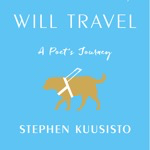
In my recently published memoir “Have Dog, Will Travel: A Poet’s Journey” I wrote about an incident I experienced in New York City shortly after getting my first guide dog, a sturdy yellow Labrador named Corky. In this scene I aim at comprehending inauthentic rage and changing it:

“I walked into a large computer store on Sixth Avenue. I wanted to purchase a laptop. As we pushed through the door a security guard put his hand on my chest. “You no come in, no dog,” he said.

I pressed forward and the guard stepped back. “Stop! Stop!” he shouted and waved his arms. Customers stared. My civil rights and the security guard’s dignity were equally delicate. I didn’t know where the guard came from, but his accent sounded East African. How could he possibly know anything about guide dogs? The store’s manager hadn’t given him information. All he knew was “no dogs allowed,” and there I was with a big-assed dog. As we stood in the doorway I figured it would be my job to foster dignity for both of us. They hadn’t taught me this at Guiding Eyes; they’d given me a booklet with access laws—a useful thing—I had the right to go anywhere the public went—but no one had mentioned emotional intelligence or how to engage in public mediation.

I made Corky sit. “Listen,” I said, softly, “get the manager. This will be okay. This is a special dog for the blind. I wanted to turn our misunderstanding into something respectful.

The manager was one of those guys you see all the time in big-city stores: sadder than his customers, red-faced and put-upon. He had a scoured toughness. He approached and began shouting at the guard. “It’s a seeing-eye dog for God’s sake! Let him in! Sorry, sorry!”

My fight-or-flee rush was subsiding—I wanted all three of us to experience kindness.

I was in a Manhattan electronics store and dignity was in peril. It would have been easy to say “Fuck it” and look out for myself alone. I’d gotten into the store. I was angry. I could have pitched a fit. But I didn’t feel like doing that. The guard’s name was Ekwueme. My name was Stephen. The manager’s name was Phil. “Listen,” I said, “dogs for the blind are not common, you don’t see them every day. This is Corky. She’s very smart.” I let my voice become soft. Ekwueme and Phil both petted Corky. A customer approached, said: “I’ve raised puppies for the guide-dog school! Best dogs in the world!” Phil seemed suddenly pleased, as if he too was philanthropic, or could be someday. Ekwueme admitted he loved dogs.

Outside with a computer under my arm, I reckoned life with Corky was more complex than just a story of freedom. Ekwueme and Phil would become legion in my travels but I didn’t know it yet. What I did know was reflected in a quote I’d always liked from Martin Luther King Jr.: “An individual has not started living until he can rise above the narrow confines of his individualistic concerns to the broader concerns of all humanity.”

I sensed that having a service dog meant something more than honoring my own rights. “Take the first step in faith,” said Dr. King. “You don’t have to see the whole staircase, just take the first step.”

I admit freely I’m not always this good. I share with disability cultural warriors the full recognition that our lives are often at stake. From the medical care system to the streets, from disaster relief to public policing the disabled are ill treated and often threatened.

I do however understand I’m not always able to find the proper musical notation for emotional intelligence and with that failure I can be brittle, self-assured, and wrongheaded. In America this doesn’t make me exceptional. It makes me like everyone else. Maybe that’s what my Vanity is after?
“Lie Machines”

In his new book “Lie Machines: How to Save Democracy from Troll Armies, Deceitful Robots, Junk News Operations, and Political Operatives” Philip N. Howard suggests that according to his research at Oxford University, there was a one to one ration of junk news to professional news on Twitter during the 2016 presidential election. I say “suggests” because Howard is doing research and one thing researchers know for sure is that it leads to more work. I’m willing to venture the ratio has only gotten worse.

Howard writes: “for each link to a story produced by a professional news organization, there was another link to content that was extremist, sensationalist, or conspiratorial or to other forms of junk news.”

Bots, algorithms, trolls, and organized cyber disinformation campaigns have strengthened over the past four years and accordingly we don’t know what the ratios may be right now.

The effect of so much disinformation is to turn people off from believing in the very things social democracies stand for: justice, equality, truth in the practice of law and medicine, the free expression of ideas and the dignity of citizenship. Instead you’re to embrace the idea that the system is out to destroy you, cheat you, undermine the good life as you imagine it. The “Lie Machine” is built from fascist ingredients: sinister minorities or foreigners are stealing your life force.

The social effects of this are now everywhere. As a university professor I’m watching many of my colleagues assert that the administration is trying to kill students and staff by reopening the campus–this despite tremendous safeguards and protocols to keep people safe. It remains to be seen if my university, Syracuse, can stay open, but I know full well that the leadership is not sinister or malign. Yet there’s a one to one ratio of vetted accurate information to falsehood in digital spaces and public exhaustion and conspiratorial thinking is the direct result.

Howard writes: “Public life is being torn apart. Lie machines sow distrust and infect political conversations with anger, moral outrage, and invective in ways that forestall consensus building. It is not simply that social media may have side effects, making us dependent on our screens for news and information, or that our mobile phones may be isolating us from our neighbors. Troll armies, bot networks, and fake news operations are formal structures of misinformation, purposefully built.”

“Many outrageous political stories, rumors, and accusations spread rapidly over social media, and there are businesses that profit by marketing, amplifying, and advertising political lies. In 2016, bots were successful in spreading a crazy story, often called #pizzagate, that supposedly linked Hillary Clinton with a pedophilia ring based out of a pizza parlor in Washington, DC. In 2020, it was automation on TikTok and Twitter that tried to convince local activists and the world at large to dismiss Hong Kong’s democracy advocates as violent radicals. Every country now has similar kinds of politically potent lies—stories that remain believed long after they have been disproven. Who takes a potent piece of misinformation that serves the interests of political elites or some ideological agenda, does the market analysis, and unleashes a marketing campaign over social media? Who are the political operatives who buy and sell our data, make or break politicians, and distribute political lies over the internet?”

Of the “who” there are many. The arrest of Steve Bannon for his role in crowd sourcing fraud is just the tip of the proverbial iceberg as we say.

Howard:

“There are multiple challenges before us if we want to live in functional democracies: A politician who doesn’t like how a question is phrased dismisses the questioner as “alt-right” or “alt-left.” A political leader who doesn’t like how a news story is framed labels it “fake news.” A political consultant who doesn’t like the evidence comes up with “alternative facts.” Growing numbers of citizens believe junk science about climate change and public health. Traditional pollsters can’t call an election, and the surprising outcomes of elections seem to have their roots in manipulative leaders in other countries.”

This is a very timely and important book. As he says:

“By closely examining lie machines, we can understand how to take them apart. I offer basic policy recommendations on how we can protect political speech while demolishing the mechanisms for producing, distributing, and marketing misinformation. I provide civic defense tips that should help us proactively protect ourselves in the years ahead. Yet the best way to solve collective problems is with collective action, so I also identify ways that our public agencies can protect us with policies that make it tough for these big lie machines to operate in our democracies. It is possible to block the production, dissemination, and marketing of big political lies, but we’ll have to act together to do this effectively.”