Disability, Coltrane, Thorn Soup, etc.

The opportunity one sometimes has to hear John Coltrane playing Soul Eyes. That’s a sentence for the indirect object is perfectly implied. If you don’t get it you don’t.

If you don’t get that I’m blind but not deficient in imagination or discernment well, you don’t get it. Artists at the famous arts colonies and conferences don’t grasp this. I’m used to it.

I’m a poor, blind, unknowing wretch.

I’ve been writing against disability as pejorative metaphor for thirty years.

What can I say?

Soul Eyes.

Try it.

The narrow highways of ableist fancy take the sighted to the shopping malls of vanity where no reappraisal of physical trauma will ever jar their consumerist ambitions.

**

By day I want to go from the white square to the black. I don’t require much. Ambient chess in the wind torn world.

**

I have a sense of myself as a social thorn. And the ablest types are happy to confirm this. What they don’t know is I come from a culture that makes excellent thorn soup.

**

Scientists think they’ve discovered the secret to Coltrane’s high notes. They think it has to do with the man’s glottis.

I say its thorn soup.

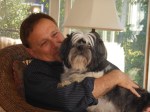
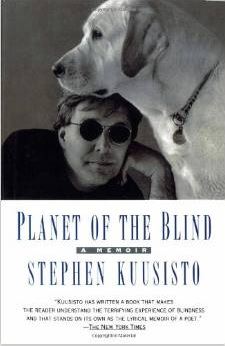
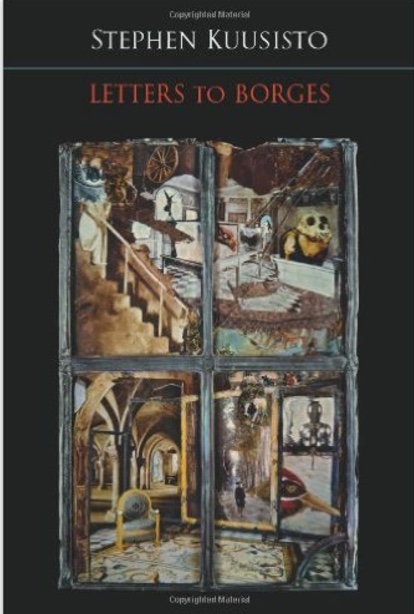
Stephen Kuusisto and HarleyABOUT: Stephen Kuusisto is the author of the memoirs Have Dog, Will Travel; Planet of the Blind (a New York Times “Notable Book of the Year”); and Eavesdropping: A Memoir of Blindness and Listening and of the poetry collections Only Bread, Only Light and Letters to Borges. A graduate of the Iowa Writer’s Workshop and a Fulbright Scholar, he has taught at the University of Iowa, Hobart and William Smith Colleges, and Ohio State University. He currently teaches at Syracuse University where he holds a University Professorship in Disability Studies. He is a frequent speaker in the US and abroad. His website is StephenKuusisto.com.

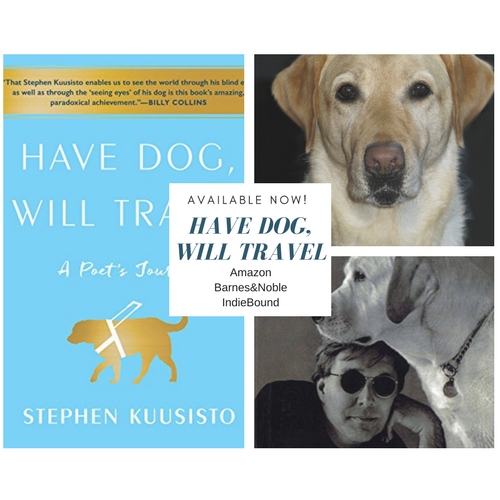
Have Dog, Will Travel: A Poet’s Journey is now available for pre-order:
Amazon
Barnes and Noble
IndieBound.org

Have Dog, Will Travel by Stephen Kuusisto

(Photo picturing the cover of Stephen Kuusisto’s new memoir “Have Dog, Will Travel” along with his former guide dogs Nira (top) and Corky, bottom.) Bottom photo by Marion Ettlinger 

Disability? No Permission Necessary

I have for much of my life been an outsider. By this I do not mean a victim or beseecher. Perhaps I’m these things in dreams. Asleep I’ve begged for admittance to Noah’s ark. By day I give no ground to those who dismiss me. Make no mistake: as a blind citizen I’m dismissed every day. Every. Single. Day.

My “outsider” status is therefore a matter of discrimination, ableism, of cozy habitual group dynamics. Geography doesn’t matter—I’m dismissed or have been dismissed at Syracuse University (where I currently teach) and on vacation. Blindness is a stigmata to the educated and whatever we might mean by the uneducated. Where disability discrimination is concerned its been my experience there isn’t much of a difference between the two.

I am not a defective sighted person. The majority still believes this. And so I’m an outsider by virtue of a twofold misapprehension. While visual impairment is inconvenient its no measure of my value unless we imagine value as the capacity to read eye charts. The ancients would have seen my value differently. They’d have applauded my memory or my brand of intelligence.

That the customary view of blindness is mediocre and unimaginative is hardly news to me and all the other blind people I know. That the social reception we receive continues to be miserable is the grout or cement of my outsider status.

The second dynamic of outsiderness is my refusal to accept the position. I’m not asking for permission to be in your cohort.

Permission is only a thing in desperate dreams.

I wonder if Noah allowed any disabled animals on his ark?

I wonder if Noah had a disability, either visible or invisible?

Was he obsessive compulsive?

What about Mrs. Noah? Did she suffer from seasickness? Agoraphobia?

I can say for sure that religious organizations are as dismissive of the disabled as the faculty clubs of universities.

The trick as I see it is to remain fresh, optimistic, grounded, kind, and unyielding in the personal and collective fight for dignity.

I don’t need permission for that.

Nor do you.

Stephen Kuusisto and HarleyABOUT: Stephen Kuusisto is the author of the memoirs Have Dog, Will Travel; Planet of the Blind (a New York Times “Notable Book of the Year”); and Eavesdropping: A Memoir of Blindness and Listening and of the poetry collections Only Bread, Only Light and Letters to Borges. A graduate of the Iowa Writer’s Workshop and a Fulbright Scholar, he has taught at the University of Iowa, Hobart and William Smith Colleges, and Ohio State University. He currently teaches at Syracuse University where he holds a University Professorship in Disability Studies. He is a frequent speaker in the US and abroad. His website is StephenKuusisto.com.

Have Dog, Will Travel: A Poet’s Journey is now available for pre-order:
Amazon
Barnes and Noble
IndieBound.org

Have Dog, Will Travel by Stephen Kuusisto

(Photo picturing the cover of Stephen Kuusisto’s new memoir “Have Dog, Will Travel” along with his former guide dogs Nira (top) and Corky, bottom.) Bottom photo by Marion Ettlinger 

On Disability and Smokey the Bear

Remember Smokey the Bear? “Only you can prevent forest fires!” Cartoon bear wearing a forest ranger’s hat and a pair of dungarees. I think he had a shovel in one paw. I could look it up but I don’t feel like it.

Smokey’s tag line was an imprecation as much as a public service announcement. If forest fires happen you probably caused them. You didn’t do your job. For it was always “only” you who could save the trees.

I’m in mind of this today because I think Smokey was a cruel ironist. He knew I couldn’t stop all the forest fires. He knew and didn’t care. He was a liar. But you see he was a particularly American type. A spokes bear pushing a social lie.

The poet Kenneth Rexroth describes the American version of the social lie this way:

“Since all society is organized in the interest of exploiting classes and since if men knew this they would cease to work and society would fall apart, it has always been necessary, at least since the urban revolutions, for societies to be governed ideologically by a system of fraud.”

Yes and then there’s this:

“There is an unending series of sayings which are taught at your mother’s knee and in school, and they simply are not true. And all sensible men know this, of course.”

Smokey you stinker! You knew a little boy couldn’t stop the forest from burning down.

Now I’m in mind of him because I now realize I’ve a bad case of “Smokey the Bear Syndrome.”

I think I’m supposed to fix everything that proves problematic and is somehow contiguous with my daily life.

Old Smoke really messed me up.

When I fly its my thoughts that hold the plane aloft.

Its only me can fix the horrid rococo inefficiencies of my university.

Only I can save blind people from being unemployed.

On and on.

This is what we mean by liberal guilt. Smokey did it to me.

He didn’t say “only we together can prevent forest fires.”

Nope. Only I can do this.

This is especially bad when you’ve a disability.

Only you can make able bodied people respect the disabled.

Only you can defuse able bodied tension about disablement.

Only. Only.

Stephen Kuusisto and HarleyABOUT: Stephen Kuusisto is the author of the memoirs Have Dog, Will Travel; Planet of the Blind (a New York Times “Notable Book of the Year”); and Eavesdropping: A Memoir of Blindness and Listening and of the poetry collections Only Bread, Only Light and Letters to Borges. A graduate of the Iowa Writer’s Workshop and a Fulbright Scholar, he has taught at the University of Iowa, Hobart and William Smith Colleges, and Ohio State University. He currently teaches at Syracuse University where he holds a University Professorship in Disability Studies. He is a frequent speaker in the US and abroad. His website is StephenKuusisto.com.

Have Dog, Will Travel: A Poet’s Journey is now available for pre-order:
Amazon
Barnes and Noble
IndieBound.org

Have Dog, Will Travel by Stephen Kuusisto

(Photo picturing the cover of Stephen Kuusisto’s new memoir “Have Dog, Will Travel” along with his former guide dogs Nira (top) and Corky, bottom.) Bottom photo by Marion Ettlinger 

Cranky

I must admit I’m a cranky man. This means I’m a hurdy gurdy man, a street nuisance. Did you know most curbside organ players were disabled? Many were war veterans. Jobless. They played for your amusement. Several cities in America didn’t like them. “Ugly Laws” were adopted across the nation at the turn of the last century—edicts stipulating bothersome, unsightly people were forbidden to appear in public. This was excellent news for the asylum business. The United States loves to lock people up for any reason at all—you’re black and deaf. Asylum. You’re blind. Asylum. You’re an immigrant in Trump’s America. Instant prison camp. Native American. Home detention. Gay? The Asylum. The Los Angeles County Jail is the largest psychiatric facility in the U.S. Cranky? You bet. I’m so cranky I can’t muster irony.

Disabled I know a good deal about cruel irony—“the act of using somebody’s words against them, usually when something to their great detriment is about to be inflicted upon them.”

I’ll never forget an administrator of a certain college who, once he had me behind a closed door told me I wasn’t a competitive blind person, why he had a roommate at university who was a blind Olympic rower and so forth. He was essentially firing me because I’d asked for a reasonable accommodation.

But you see here’s the trap. I’m cranky if I talk back, assert my dignity and my rights. I am especially cranky at the University where when I ask for basic ADA 101 accommodations, (a sighted graduate assistant to help me in my daily work) accessible texts, descriptions of overhead projections, asking that our websites and teaching software be accessible and so forth) I’m labeled as a real cranky pants. Academic ableism is built on cruel irony. “If you were more like us you wouldn’t have a problem. You don’t like what’s happening to you? You must be the problem. Not us. Not us able bodied birdies….”

I’ve met so many able bodied birdies. They may have different kinds of feathers but their song is always the same.

Ableism, the experience of it, requires the French adjective écœurante —for disability discrimination is simultaneously heartless and sickening. I recall the professor of English at the University of Iowa who told me my blindness would preclude me from being in his “famous” graduate class on Charles Olson. Another professor snickered when I said I was reading books on tape. When I protested the chairman of the English department told said I was a whiner and complainer. I wept alone in the Men’s room. My path forward to a Ph.D. in English at the University of Iowa was stymied. This was a full six years before the ADA was signed into law. Who was I to imagine a place at the agora’s marble stump?

Now I had an MFA degree from the creative writing program at that same university and I just went ahead and wrote books and sometimes appeared on radio and television and I wrote for big magazines and over time I received tenure at The Ohio State University. Later I went back to teach at Iowa despite my earlier experience and these days I’m at Syracuse. I’m a survivor of sorts. I’m a blind professor. The odds were never in my favor. Somewhere along the way I began thinking of Moliere in my private moments and I laughed because after all, every human occasion is comical and Moliere recognized the comedic types one encounters in closed societies better than anyone before or since.

It doesn’t really matter what institution of higher education you’re at, if you’re disabled you’ll meet the following Moliere-esque figures. The heartless and sickening ye will always have with ye if you trek onto a college campus. You’re more likely to spot them first if you hail from a historically marginalized background however, the ecoeurantists are more prone to blab at you if you’re disabled, especially behind closed doors. Ableists love closed doors. All bigots love closed doors.

The “Tartuffe” is an administrator, usually a dean or provost who will tell you with affected gestures that he, she, they, what have you, cares a great deal about disability and then, despite the fact a disabled person has outlined a genuine problem, never helps out.

The “Harpagon” is also an administrator, but he, she, they, can also be a faculty member. The Harpagon is driven by rhetorics of cheapness. It will cost too much to retrofit this bathroom, classroom, syllabus, website, etc. If the Harpagon is a professor he, she, they, generally drives a nice car.

Statue du Commandeur: a rigid, punctilious, puritanical college president—“this is the way we’ve always done it. If we changed things for you, we’d have to change things for everybody. Yes, it certainly must be hard…” See:

The Geronte: when his son is kidnapped he says: “Que diable allait-il faire dans cette galère?” (What in the deuce did he want to go on that galley for?” In other words, he brought this upon himself. “Really, shouldn’t you try something easier? I could have told you.”

These are the principle types of ableists. I invite you to add your own.

The one thing they have in common besides a privileged and thoroughly unexamined attachment to the idea that education is a race requiring stamina and deprivation, is that they all genuinely believe that accommodations are a kind of vanity.

Stephen Kuusisto and HarleyABOUT: Stephen Kuusisto is the author of the memoirs Have Dog, Will Travel; Planet of the Blind (a New York Times “Notable Book of the Year”); and Eavesdropping: A Memoir of Blindness and Listening and of the poetry collections Only Bread, Only Light and Letters to Borges. A graduate of the Iowa Writer’s Workshop and a Fulbright Scholar, he has taught at the University of Iowa, Hobart and William Smith Colleges, and Ohio State University. He currently teaches at Syracuse University where he holds a University Professorship in Disability Studies. He is a frequent speaker in the US and abroad. His website is StephenKuusisto.com.

Have Dog, Will Travel: A Poet’s Journey is now available for pre-order:
Amazon
Barnes and Noble
IndieBound.org

Have Dog, Will Travel by Stephen Kuusisto

(Photo picturing the cover of Stephen Kuusisto’s new memoir “Have Dog, Will Travel” along with his former guide dogs Nira (top) and Corky, bottom.) Bottom photo by Marion Ettlinger 

Why the Able Bodied Don’t Like Disability in the Arts

I was in residence at an arts colony not long ago when I heard a noted American novelist tell a wide audience that they’d never be so blind and poor of judgment again—referring to (wait for it) a broader appreciation of marginalized art forms.

Blindness as metaphor, indeed all disability as metaphor is offensive and “not cool” anymore. That this occurred at a well heeled arts event doesn’t surprise me. It’s still the case that disability isn’t part of inclusivity in the arts even when some of the most amazing creative work in contemporary America comes from the disability community.

Just so the leading national academic conference for creative writing, the AWP (Association of Writers and Writing Programs) has a long standing problem with disability. They dislike having to provide accommodations at their conferences and they are particularly disdainful to disabled writers.

I’ve come to see this as a matter of resort sales. Years ago I ran training sessions for Sandals and Beaches resorts. The idea was to help beach front hotels become better service providers for the disabled.

One executive said that having disabled people on their property would negatively affect business.

I saw what he meant: all their promotional material featured photos of sleek, gym toned, happy looking people. Some were white, some were from different ethnicities. But the point was everyone was very very attractive.

When you look at the photos featured on the AWP’s website you’ll notice that all the writers look like they’ve just come from the gym.

When you look at the photos from arts colonies you’ll notice that everyone looks like they’ve just come from the very same gym.

That the arts industry (such as it is) has so little awareness (such as it might be) about it’s devotion to normality is telling. Diversity is OK if it’s about race, gender, sexual orientation, but it’s not applicable if you use a walker, a stick, talk with your hands, walk with a guide dog, etc. Everyone knows that disability art isn’t real art. It is something else, isn’t it?

Adrienne Rich, Virginia Woolf, William Carlos Williams, Audre Lorde, Stanley Elkin, Robert Lowell, Andre Dubus, Walt Whitman, Hart Crane—all were disabled. Some walked with canes, some stuttered, some used wheelchairs. None looked like they were fresh from the spa.

In the narrow confines of American art, which let’s admit is academic art, it’s still the case that when illness is thought of at all, it’s imagined as something to be overcome. The arts in America are driven by the medical model of embodiment.

Try explaining this to the arts administrators. They’ll say, as indeed someone at the AWP said to a room full of disabled writers, “your time hasn’t come yet.”

Stephen Kuusisto and HarleyABOUT: Stephen Kuusisto is the author of the memoirs Have Dog, Will Travel; Planet of the Blind (a New York Times “Notable Book of the Year”); and Eavesdropping: A Memoir of Blindness and Listening and of the poetry collections Only Bread, Only Light and Letters to Borges. A graduate of the Iowa Writer’s Workshop and a Fulbright Scholar, he has taught at the University of Iowa, Hobart and William Smith Colleges, and Ohio State University. He currently teaches at Syracuse University where he holds a University Professorship in Disability Studies. He is a frequent speaker in the US and abroad. His website is StephenKuusisto.com.

Have Dog, Will Travel: A Poet’s Journey is now available for pre-order:
Amazon
Barnes and Noble
IndieBound.org

Have Dog, Will Travel by Stephen Kuusisto

(Photo picturing the cover of Stephen Kuusisto’s new memoir “Have Dog, Will Travel” along with his former guide dogs Nira (top) and Corky, bottom.) Bottom photo by Marion Ettlinger 

On the Probable Death of Empathy

Empathy is an engrossing word. While it means the capacity to understand and share the feelings of others, its Greek origin suggests entering into the emotions of others. The Greeks thought empatheia was sacred. In dramatic terms its absence was viewed as a tragic flaw. With the advent of literacy (“book learnin’” as Huck Finn called it) empathy was reckoned as the ability to imagine what someone feels, a difference, as the Greeks didn’t fully believe in imagination in these terms instead viewing it as a divine prerogative only available to the best minds.

In the modern world (which for argument’s sake starts with Shakespeare) empathy as imagination has been a responsibility of sorts. Dickens, Dostoevsky, Whitman, George Eliot, Grace Paley, Eudora Welty—a long list—each of these writers shouldered a duty to bring forward the buzz and confusion in the minds of outsiders. Beginning with the Elizabethans literary writing is understood as an obligation to reach beyond the self.

With the altogether exciting rise of singular voices in literary publishing, those who speak from singularities—disability, blackness, Native American experience, LGBTQ lives, Asian-American experiences, regionalisms of all kinds—literary empathy is often recast as “cultural appropriation.” It is asserted that no one “not of your neighborhood” should ever ever imagine your life for you. There’ve been many brouhahas recently about writers who are believed to be transgressors, who willfully seized the interiority of human beings not of their own neighborhoods.

As one who hails from a historically marginalized position I believe this febrile, literary neighborhood watch is both understandable and fatal.

I’m a blind poet and I loathe Anthony Doerr’s Pulitzer Prize winning novel All the Light We Cannot See. Doerr presents a blind teenager, a girl, as helpless to the point of needing to be bathed by her father. Since Doerr makes her blindness vaguely interesting, allowing some flashes from her point of view many non-disabled readers flipped for the book.

From a disability POV Doerr extends damaging stereotypes—her inability to bathe, her half- prophetic intelligence—are junk. Many in the disability community have cited the book for “cultural appropriation” a position I fully grasp. Doerr uses blindness as a literary device to advance his plot, Within the field of Disability Studies this is called “narrative prosthesis.”

Does the novel really do damage to the blind? Who knows. The blind are 70% unemployed in the United States. We’re imagined as quasi-helpless, burdensome. Doerr plays into this. He does present her as having an inner life. Big whoop! I’m citing him for a failure of empathy. He cannot steal my culture.

This is the crux of the matter: talented writers can enter effectively into the lives of others, even people who aren’t situated precisely next door. For my money one of the most effective portrayals of disability in all of literature was written by Toni Morrison. In her novel Sula she puts readers inside the head of Shadrack, a World War I veteran suffers from PTSD and has been released prematurely from a veterans hospital. He can’t order his mind or control his hands. He’s seen brains flying in the air. She writes at first of his experience in the ward:

“When Shadrack opened his eyes he was propped up in a small bed. Before him on a tray was a large tin plate divided into three triangles. In one triangle was rice, in another meat, and in the third stewed tomatoes. A small round depression held a cup of whitish liquid. Shadrack stared at the soft colors that filled these triangles: the lumpy whiteness of rice, the quivering blood tomatoes, the grayish-brown meat. All their repugnance was contained in the neat balance of the triangles—a balance that soothed him, transferred some of its equilibrium to him. Thus reassured that the white, the red and the brown would stay where they were—would not explode or burst forth from their restricted zones—he suddenly felt hungry and looked around for his hands. His glance was cautious at first, for he had to be very careful—anything could be anywhere. Then he noticed two lumps beneath the beige blanket on either side of his hips. With extreme care he lifted one arm and was relieved to find his hand attached to his wrist. He tried the other and found it also. Slowly he directed one hand toward the cup and, just as he was about to spread his fingers, they began to grow in higgledy-piggledy fashion like Jack’s beanstalk all over the tray and the bed. With a shriek he closed his eyes and thrust his huge growing hands under the covers. Once out of sight they seemed to shrink back to their normal size. But the yell had brought a male nurse.

“Private? We’re not going to have any trouble today, are we? Are we, Private?””

Later, out in the world, alone, without assistance, we see him on a country road:

“Once on the road, he headed west. The long stay in the hospital had left him weak—too weak to walk steadily on the gravel shoulders of the road. He shuffled, grew dizzy, stopped for breath, started again, stumbling and sweating but refusing to wipe his temples, still afraid to look at his hands. Passengers in dark, square cars shuttered their eyes at what they took to be a drunken man.

The sun was already directly over his head when he came to a town. A few blocks of shaded streets and he was already at its heart—a pretty, quietly regulated downtown.

Exhausted, his feet clotted with pain, he sat down at the curbside to take off his shoes. He closed his eyes to avoid seeing his hands and fumbled with the laces of the heavy high-topped shoes. The nurse had tied them into a double knot, the way one does for children, and Shadrack, long unaccustomed to the manipulation of intricate things, could not get them loose. Uncoordinated, his fingernails tore away at the knots. He fought a rising hysteria that was not merely anxiety to free his aching feet; his very life depended on the release of the knots. Suddenly without raising his eyelids, he began to cry. Twenty-two years old, weak, hot, frightened, not daring to acknowledge the fact that he didn’t even know who or what he was…with no past, no language, no tribe, no source, no address book, no comb, no pencil, no clock, no pocket handkerchief, no rug, no bed, no can opener, no faded postcard, no soap, no key, no tobacco pouch, no soiled underwear and nothing nothing nothing to do…he was sure of one thing only: the unchecked monstrosity of his hands. He cried soundlessly at the curbside of a small Midwestern town wondering where the window was, and the river, and the soft voices just outside the door…

Through his tears he saw the fingers joining the laces, tentatively at first, then rapidly. The four fingers of each hand fused into the fabric, knotted themselves and zigzagged in and out of the tiny eyeholes.

By the time the police drove up, Shadrack was suffering from a blinding headache, which was not abated by the comfort he felt when the policemen pulled his hands away from what he thought was a permanent entanglement with his shoelaces. They took him to jail, booked him for vagrancy and intoxication, and locked him in a cell. Lying on a cot, Shadrack could only stare helplessly at the wall, so paralyzing was the pain in his head. He lay in this agony for a long while and then realized he was staring at the painted-over letters of a command to fuck himself. He studied the phrase as the pain in his head subsided.”

Morrison’s portrayal of Shadrack is pure empathy and is a demonstration of literary writing at its finest. I won’t quibble about a non-disabled writer entering into the thoughts and torments of a wounded veteran. I can’t. The disabled need all the allies they can get. When a novelist as talented as Morrison turns her attention to a man with shell shock, who has no language for his experience, who cannot control his hands, then she is employing art in the service of a greater appreciation of tragedy and difference for every reader. This is empathy at its best. Its stunning.

I don’t believe in cultural appropriation. I think non disabled writers can write brilliantly about disability experience. They need to do their homework—talk to real blind people, true cripples, what have you.

The term cultural appropriation must never detract writers from the brilliant art of literary empathy.

I don’t want to live in the age when empathy died.
Stephen Kuusisto and HarleyABOUT: Stephen Kuusisto is the author of the memoirs Have Dog, Will Travel; Planet of the Blind (a New York Times “Notable Book of the Year”); and Eavesdropping: A Memoir of Blindness and Listening and of the poetry collections Only Bread, Only Light and Letters to Borges. A graduate of the Iowa Writer’s Workshop and a Fulbright Scholar, he has taught at the University of Iowa, Hobart and William Smith Colleges, and Ohio State University. He currently teaches at Syracuse University where he holds a University Professorship in Disability Studies. He is a frequent speaker in the US and abroad. His website is StephenKuusisto.com.

Have Dog, Will Travel: A Poet’s Journey is now available for pre-order:
Amazon
Barnes and Noble
IndieBound.org
Have Dog, Will Travel by Stephen Kuusisto

(Photo picturing the cover of Stephen Kuusisto’s new memoir “Have Dog, Will Travel” along with his former guide dogs Nira (top) and Corky, bottom.) Bottom photo by Marion Ettlinger 
Like a Falling Leaf….

Like a falling leaf
The boy in me, spinning
How to take him with me
As my years advance?

Finnish poet Paavo Haavikko:
I hear a happy tale, it makes me sad:
no-one will remember me for long.

The boy, a blind young man
Knew a thing or two.

He was never “in” time
Like those trees you see
In certain forests
Still green
Though there’s more darkness
And we are long into September.

Stephen Kuusisto and HarleyABOUT: Stephen Kuusisto is the author of the memoirs Have Dog, Will Travel; Planet of the Blind (a New York Times “Notable Book of the Year”); and Eavesdropping: A Memoir of Blindness and Listening and of the poetry collections Only Bread, Only Light and Letters to Borges. A graduate of the Iowa Writer’s Workshop and a Fulbright Scholar, he has taught at the University of Iowa, Hobart and William Smith Colleges, and Ohio State University. He currently teaches at Syracuse University where he holds a University Professorship in Disability Studies. He is a frequent speaker in the US and abroad. His website is StephenKuusisto.com.

Have Dog, Will Travel: A Poet’s Journey is now available for pre-order:
Amazon
Barnes and Noble
IndieBound.org

Have Dog, Will Travel by Stephen Kuusisto

(Photo picturing the cover of Stephen Kuusisto’s new memoir “Have Dog, Will Travel” along with his former guide dogs Nira (top) and Corky, bottom.) Bottom photo by Marion Ettlinger 
Washing Birds is the Work of the Gods….

Washing birds is the work of the gods
They’ve been at it some thirty thousand years
One may reasonably believe
Birds were not clean
Before rain gods came
I stand before a plate glass window
Drinking coffee from a paper cup
Many of my friends are dead and gone
Leaves whirl under a streetlamp
Death’s butterflies
I’ve a hymn in mind
Called I Must be Home by Now…

Stephen Kuusisto and HarleyABOUT: Stephen Kuusisto is the author of the memoirs Have Dog, Will Travel; Planet of the Blind (a New York Times “Notable Book of the Year”); and Eavesdropping: A Memoir of Blindness and Listening and of the poetry collections Only Bread, Only Light and Letters to Borges. A graduate of the Iowa Writer’s Workshop and a Fulbright Scholar, he has taught at the University of Iowa, Hobart and William Smith Colleges, and Ohio State University. He currently teaches at Syracuse University where he holds a University Professorship in Disability Studies. He is a frequent speaker in the US and abroad. His website is StephenKuusisto.com.

Have Dog, Will Travel: A Poet’s Journey is now available for pre-order:
Amazon
Barnes and Noble
IndieBound.org

Have Dog, Will Travel by Stephen Kuusisto

(Photo picturing the cover of Stephen Kuusisto’s new memoir “Have Dog, Will Travel” along with his former guide dogs Nira (top) and Corky, bottom.) Bottom photo by Marion Ettlinger 

Her hands in the stream…

You can tell me about Helen Keller
But you can’t say what words
Perform on the inside.

Have you seen a cormorant
Drop from on high
And enter the sea?

That’s my Helen Keller—
That falling…

ie Kuusisto :
Stephen Kuusisto and HarleyABOUT: Stephen Kuusisto is the author of the memoirs Have Dog, Will Travel; Planet of the Blind (a New York Times “Notable Book of the Year”); and Eavesdropping: A Memoir of Blindness and Listening and of the poetry collections Only Bread, Only Light and Letters to Borges. A graduate of the Iowa Writer’s Workshop and a Fulbright Scholar, he has taught at the University of Iowa, Hobart and William Smith Colleges, and Ohio State University. He currently teaches at Syracuse University where he holds a University Professorship in Disability Studies. He is a frequent speaker in the US and abroad. His website is StephenKuusisto.com.

Have Dog, Will Travel: A Poet’s Journey is now available for pre-order:
Amazon
Barnes and Noble
IndieBound.org

Have Dog, Will Travel by Stephen Kuusisto

(Photo picturing the cover of Stephen Kuusisto’s new memoir “Have Dog, Will Travel” along with his former guide dogs Nira (top) and Corky, bottom.) Bottom photo by Marion Ettlinger 

Faeries, come…

All those who believe I’m vagrant—blind as I am
Walking with my stick or dog—
That woman in Boston who hoped to pray for me
Who ran away when I offered to pray for her,
What’s wrong with a disabled prayer?
I stood in the street and waved my arms.
In London a girl called me “poor Dearie”
And thrust coins in my hands.
Once in Cleveland a red faced man
Followed me block after block
Proposing to help…better I thought
Than the alternatives—
The asylum; the work houses.
In general the poets of my nation
See the blind as an existential blank.
But tired of standing for nothing
I sing and walk down Broadway
The sweet, manifold, wishful syllables
Of William Yeats—
Faeries, come take me out of this dull world,
For I would ride with you upon the wind,
Run on the top of the dishevelled tide,
And dance upon the mountains like a flame.

Stephen Kuusisto and HarleyABOUT: Stephen Kuusisto is the author of the memoirs Have Dog, Will Travel; Planet of the Blind (a New York Times “Notable Book of the Year”); and Eavesdropping: A Memoir of Blindness and Listening and of the poetry collections Only Bread, Only Light and Letters to Borges. A graduate of the Iowa Writer’s Workshop and a Fulbright Scholar, he has taught at the University of Iowa, Hobart and William Smith Colleges, and Ohio State University. He currently teaches at Syracuse University where he holds a University Professorship in Disability Studies. He is a frequent speaker in the US and abroad. His website is StephenKuusisto.com.

Have Dog, Will Travel: A Poet’s Journey is now available for pre-order:
Amazon
Barnes and Noble
IndieBound.org

Have Dog, Will Travel by Stephen Kuusisto

(Photo picturing the cover of Stephen Kuusisto’s new memoir “Have Dog, Will Travel” along with his former guide dogs Nira (top) and Corky, bottom.) Bottom photo by Marion Ettlinger