When Keats and Rexroth Saved My Life

Beauty is twice beauty when we’re talking about John Keats. “The only means of strengthening one’s intellect is to make up one’s mind about nothing — to let the mind be a thoroughfare for all thoughts.” I remember reading that for the first time and lifting, lifting inside, like a sea creature who becomes itself by rising.

I was in the hospital at the time. I was barely seventeen and I’d largely given up on life. My parents were alcoholics and by turns abusive and distant. I was legally blind and unable to keep up in school. Classmates were cruel. At a loss to imagine a robust method to end it all I starved myself. Anorexia was easy. Not eating was a discipline. By the time I hit 100 pounds I looked like John Lennon or Mick Jagger—thin by means of corruption, cool, pale, faintly menacing.

There was that damned Keats. “Make up one’s mind about nothing…” How does one explain the moral imperative of adolescent thought? It’s easy to describe its delinquency but not its aspirational qualities. I was sick. Incredibly ill. Strengthening one’s intellect seemed both superfluous and everything. Let the mind be a thoroughfare. Could I imagine another me?

I had some help from other poets. I read Rexroth and was surprised by this:

Yin and Yang

It is spring once more in the Coast Range

Warm, perfumed, under the Easter moon.

The flowers are back in their places.

The birds are back in their usual trees.

The winter stars set in the ocean.

The summer stars rise from the mountains.

The air is filled with atoms of quicksilver.

Resurrection envelops the earth.

Goemetrical, blazing, deathless,

Animals and men march through heaven,

Pacing their secret ceremony.

The Lion gives the moon to the Virgin.

She stands at the crossroads of heaven,

Holding the full moon in her right hand,

A glittering wheat ear in her left.

The climax of the rite of rebirth

Has ascended from the underworld

Is proclaimed in light from the zenith.

In the underworld the sun swims

Between the fish called Yes and No.

That a person could conceive of fish in the underworld and that the sun could swim fish like between yes and no—this, I saw, was what Keats meant. This was the everything principle that Keats and Rexroth brought to me while I lay in my sickbed and boy scouts raised and lowered the American flag beneath my window and the body, mine, so thin it was actually throbbing, a body which was about to fall away, reached out for the ancient dropped lifeline of ascendant blazing solar fish and atoms of quicksilver.

Make up one’s mind about nothing. It’s the most complex sentiment one can read.
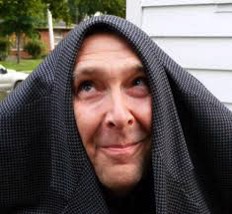
 

Top Ten Reasons “Normal” People Wish They Were Disabled

Top Ten Reasons “Normal People” Wish They Were Disabled…

  1. We have that “cute little logo”.
  2. We don’t have to stand up for the national
    anthem.
  3. We have psychic powers: All disabled people know all other disabled
    people.
  4. They’re jealous of our specialty clothing.
  5. Disabled people are “more musical”.
  6. We have sign language and Braille and other
    “sneaky stuff”.
  7. We can park anywhere, just like the Pope.
  8. We have really cool pets and we can take them
    anywhere.
  9. We have our own stalls in public restrooms,
    some with “high-tech” devices.

 And the number
one reason normal people wish they could be disabled:

  1. Airline employees are actually forced to help us.

Now


Each morning I carry to my garden

—I do not have a garden


I carry my father’s old rake

—Father 


And rake

Long gone


I dig in loam

—Earth, it is true


Hearing

In skull


—Head is clear 

A Schubert


Quartet

Quarter notes


Derived

From dance


Knowing

How


Dance

Returns to us


Father and rake.

Everything Behind Me, I See…

There will be a day soon when old translations, flawed though they may be, will defy the odds and return to meaning—pages falling at the feet of reckless students, word-scraps carried on the wind like newsprint. Cicero will get tangled in your hair: a room without books is like a body without a soul… Montaigne catches on your wrist: My life has been full of terrible misfortunes most of which never happened… I wish I could tell you more but there’s little enough to say, the dead stick around for better or worse, words poorly understood always plot their homecoming. I say they come back before sunrise. The Finnish poet Saarikoski, a great translator wrote: “everything behind me, I see, is just death, but when I sleep, I sleep…”


Fallen Birch

Say “the world” but not canker

Never rags, nor blood—

In the library

You’ll be safe.

You meant blue planet

Coleridge

Reveries…


I know.

I’m no better.

I still want some gods

Inside the wind.


Once I went all the way to Karstula,

My grandmother’s town

In Finland,

Walked into empty woods

Saw two sets of initials

Carved on a fallen birch.


Remembering Velamo


I am walking in circles. I erase this sentence. It’s better to be clever. Perhaps I should bring a talking animal into this? You see I didn’t erase it. You see how convoluted narration—any—really is? My mother died today, or was it yesterday? It doesn’t matter, the old country is dead.

Bring on the talking crow. Or the hundred year old monk I met in the sauna whose sweat smelled of strawberries. The sighs of a centenary holy man—who was celebrating his birthday in a steam bath, they are ‘of or pertaining to’ the talking animal. I left that sauna wiser.

I’d no language for the matter. Time wasn’t reliable. My Merleau-Ponty wristwatch had stopped. One wished to be shrewd, but it didn’t matter because there, mid-summer, beside a monastery, time had stopped.

String

I write poetry, a foolishness

Much like thinking

The heart

Has an Edenic flavor—

Continue my mistake

In these times.

I’m an old, mad, blind, despised,

And dying king alright.

Fine saying so.

When I was very small

My father bought me

A kite and you can imagine

That sightless child

Holding a string.