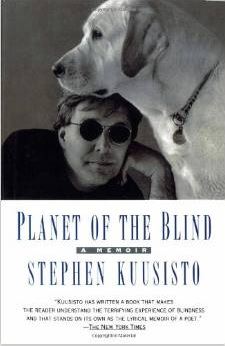
From the Lonesome Man’s Bible


The master surrenders his beliefs.

He sees beyond the end and the beginning.

He cuts all ties.

He gives up all his desires.

He resists all temptations.

And he rises.

“The Dhammapada.”

1.

In the old days I didn’t know how to be with people. Sure there was blindness—all that “not fitting in” known by the poor and cripples—but now, these days I see biographical detail has nothing to do with it. I am deliciously lonely. I’ve wept in foreign churches, swum in the Aegean in winter when only fishermen can be seen; stood on my hands where Finland meets Sweden and Russia, touching three lonesome places at once. Yes, I’ve walked in a monastery, was found by a priest with a candle in my hand and fully asleep. The blind carry candles, did you know? We too need to be seen.

2.

All of the children played at living and dying in tall grass.  We tore our clothes in grass; scraped skin from our arms; slapped at midges and mosquitoes. Sometimes we pressed our mouths into green and sucked moisture–though one of us, an older one–that knowing child found in every group—said the earth was radioactive and we believed her because she said President Kennedy said it. We were clear headed by turns, then knocked flat. Some of us knew the names of birds.  My favorite was the White Throated Sparrow who we called the Peabody Bird. His little song could break your heart. Lots of things could break your heart.  The Wood Thrush was also a heart breaker and lying face down in the woods he’d get inside you. He’d get inside us because we were playing dead. This was in the final days before television. We played dead and listened to bird song.


3.

He found it difficult to tell the story of grass and the aspen that shivered and the names inside him.

When he was grown he imagined other adults once held themselves perfectly still in the green unspoken.

When he was grown he orbited poetry.

When he was 17 and suffering from anorexia–a factor of disability and depression, he was given the gift of Kenneth Rexroth’s poems. He read poetry in the suicide ward.

This poem may have saved his life:

Wind Tossed Dragons

The shadows of the cypresses

On the moonlit avenue

To the abandoned palace

Weave in tangles on the road

Like great kelp in the depths of the sea.

When the palace was full of people

I used to see this all the time

And never noticed how beautiful it was.

Mid-Autumn full moon, the luminous night

Is like a boundless ocean. A wild

Wind blows down the empty birds’ nests

And makes a sound like the waves of the sea

In the branches of the lonely trees.


That was the year he understood all things were lonely—all hearts give themselves up to the moonlit avenues.

4.

Sartre said: “If you’re lonely when you’re alone, you’re in bad company.” That was the thing!

I understood early and often I was never in bad company when I was by myself. That was the damed thing!

I would never tire of the milk and iodine taste of water that comes when strictly alone.

5.

As a graduate student at the Iowa Writer’s Workshop I took a 16 hour bus trip to visit the poet Robert Bly who lived in Minnesota. I rode for two days aboard several Greyhound buses.

When I got to Bly’s house in the tiny town of Moose Lake Minnesota, I asked a stranger if he knew where the poet lived. “Everyone knows where Robert lives,” said the man. “We have a real poet in our town!”

Bly hosted me some hours of joy, reciting poems, talking about Scandinavia, Pablo Neruda, the military industrial complex, a hundred things. But the best part of the day was a small poem. “Have you ever heard this little poem by David Ignatow?” he asked me.

“I should be content

to look at a mountain

for what it is

and not as a comment on my life.”


Maybe blindness—my socialized understanding of blindness was my mountain.

Then I saw it was loneliness.

And I did not perform a little dance.

I took it inside me.

The oak turns its pockets out because it’s Sunday and late, and trees and fences merge and I turn on the radio pre-tuned to Shostakovich.

I will live a long time yet in the hard world watching for ships returning with news. If they don’t return that’s another verse.


Feel the Bern? That Might Just Be Trump…

In Arthur Schlesinger’s “The Crisis of the Old Order” one finds the following passage rather near the book’s beginning:

“And so, as the third summer of the depression began to move into the fourth winter, the time of patience was running out. Virgil Jordan, the conservative economist of McGraw-Hill and the National Industrial Conference Board, reported after the 1931 meeting of the United States Chamber of Commerce that businessmen had lost faith in their leaders; they were ready to shoot the works. “An economic Mussolini, before many months have passed,” said Jordan, “could have them parading in red, white and blue shirts, and saluting some new symbol.”

An economic Mussolini! Well ahem, yes, that’s always been the fantasy of the Chamber of Commerce. Donald J Trump has a long cape.

“The time of patience” is an interesting phrase. It’s understandable contextually. By the third summer of the great depression America was a country of homeless wanderers and beggars.

Trump’s advantage this election cycle is his canny understanding that Chamber of Commerce types and long disadvantaged Red State whites have never had a time of patience. While that’s not a coalition that can carry him to the White House it gets him half way there. It will certainly get him the GOP presidential nomination.

In the general election he will talk about the dark predators and terrorists and shout that only he can fix the American economy. That will be enough to get elected. He knows it.

Democrats should fear him. Moreover, Dems who say, “I’m not going to vote for anyone if I can’t have my candidate…” will most certainly put Trump in office. Feel the Trump.

The Donald knows it.

He also knows he has the media in his back pocket. There’s nothing NBC would like more than a reality show where average Americans parade in red, white and blue shirts, saluting outside the newly decorated Trump White House.

“What about Bernie Sanders?” you say. “Isn’t he the second coming of FDR?”

FDR had charm my friends. And enough backers from the financial world to get over the transom.

Bernie, not so much.

As Irene Colthurst writes over at Quora:

“He (Sanders) needs to acknowledge that coalition-building is the way forward, and that that’s hard.   It was hard to assemble the New Deal coalition. But the way forward is to square the circle and build its 21st century equivalent, which means young black activists sharing space and being in solidarity with working class white men on an agenda that calls for both wholesale reworking of American law enforcement and greater social democracy.   He needs to quit calling for general movements and say that.”

If Hillary Clinton falls to Bernie Sanders there’s an outside shot Bernie can take Trump in the Fall.

If Hillary Clinton beats Sanders, and his supporters sulk, stay home and give up, then Trump’s Chamber of Commerce coalition with its disaffected white anger will likely be enough to carry the day.

Sanders needs to square the circle, as Colthurts puts it. He needs to do so now.


Ridiculous Enterprise, A Brief Admission about Poetry

One hot summer afternoon when I was maybe six years old, I lay in a ditch filled with dry leaves because it offered a world for me. The ditch was in the woods. The place was quiet. It was one of those summer days when everything was silent. I fell asleep in my Rip Van Winkle nest. When I woke I heard a crinkling in the leaves and I felt a toad timidly placing his feet on my outstretched arm. He walked along my wrist and disappeared into the further recesses of the ditch. I was sorry he was gone. Funny how I can remember that. At six I felt the departure of a toad as a personal loss. Ridiculous!

All emotional responses to the things of this world are laughable. If you’re lucky you grow sufficiently to know it.

When I think about the poems I like, I generally find there’s a commonality to them–not a sameness, not a generalized theme or subject–but a discordance or disconnect between primary emotion and whatever we may call something wiser. By this I mean sensibility. And also a hint of the absurd that must come with strong emotion. Here are lines by Yeats that I’ve always admired:

I made my song a coat
Covered with embroideries
Out of old mythologies
From heel to throat;
But the fools caught it,
Wore it in the world’s eyes
As though they’d wrought it.
Song, let them take it,
For there’s more enterprise
In walking naked.

Day One at the Guide Dog School, or Thoughts While Shaving…

If you evade disability by refusing to accept it, you’re a failure both inside and out. While you’re living this evasion the whole thing feels complicated. But it’s not complex. My childhood neighbors and my parents and teachers didn’t like disability. They hated it. They’d grown up watching newsreels at the movies. The March of Dimes. In one famous short from the 1940’s called “The Crippler” unsuspecting children were attacked by polio, who appeared as a menacing shadow—a pervert at the playground’s edge. My parents believed disabled children were victims of untoward darkness.

Why did it take me so long to figure this out? I wasn’t a victim of the Crippler, my parents views were immaterial… thoughts while shaving…guide dog Corky at my feet in our dormitory room… shaving at a mirror though I couldn’t see my face. One shaves before a mirror because that’s where it’s done, right? There I was, in my thirties, understanding blindness was an inconvenience and not a comment on my life.

So I’d been slow, who cares, I thought. And fuck the Crippler, I thought. And who cuts his nose with an electric razor, I thought. And I lay on the floor with Corky. It was cold linoleum, solid and good. My thoughts went everywhere. Is this how it is when you feel good with a dog, I thought. Thoughts going everyplace like wine on cobblestones. I remembered desperately trying to fit in in high school. At the suggestion of a boy who had a good heart, I tried out for the track team. I ran for a week with a group of boys who outpaced me, following them on country roads, plunging through green mist. I was proud not to be the slowest. There were at least three kids behind me. I ran my lungs out. Then I was summoned to the principal’s office.

The principal was unkind. “You may not run track,” he said. “You’re an insurance liability.”

I was simply too blind for sports. “That’s just the way it is,” he said. “Can I keep the track suit?” I asked. “No,” he said. I resolved to keep them. And after that some kids called me “blindo” in the hallways, which wasn’t as vexing as the body slams I frequently received. And the shoves on stairs.

So of course in fevered adolescence I learned to distance myself not merely from blindness—I’d already learned that—but from any hope I might become part of something. If early childhood was difficult, it had been possible to befriend a few kids—Grimes and the like, just by being a daredevil. But the teen years were more grueling, tinged by social Darwinism, Primatology and tears.

“What if I’m tough?” I said to Corky there on the floor. “What if I somehow forgot about that?”

“What if I kick the Crippler in the nuts?” I said to her.

“What if I make a Voodoo doll of the principal and burn him in a shoebox?” I said.


**

As a graduate student at the Iowa Writer’s Workshop I took a 16 hour bus trip to visit the poet Robert Bly who lived in Minnesota. I rode for two days aboard several Greyhound buses.

When I got to Bly’s house in the tiny town of Moose Lake Minnesota, I asked a stranger if he knew where the poet lived. “Everyone knows where Robert lives,” said the man. “We have a real poet in our town!”

Bly hosted me some hours of joy, reciting poems, talking about Scandinavia, Pablo Neruda, the military industrial complex, a hundred things. But the best part of the day was a small poem. “Have you ever heard this little poem by David Ignatow?” he asked me.

“I should be content

to look at a mountain

for what it is

and not as a comment on my life.”

Maybe blindness—my socialized understanding of blindness was my mountain.

What if I’m tough?

My dog thought so.


On Being Moliere, Most Days, but Especially in 2016

A game I play, more often than I should admit, is a dramatic transference for which there may be a name but I’ve never found one. Perhaps there’s something in German. In short, I employ the characters of Shakespeare and Moliere as standard bearers for people I meet and especially for  public figures. The literary term for this is “comparison” but what I’m describing is better than that—“kayfab” is what they call it in professional wrestling, where everyone, both wrestlers and fans collectively pretend a false drama is real. Essentially I live and have always lived since my late teens in Tartuffe and The Taming of the Shrew and at this stage of life there’s no help for it. This is comedy as it’s lived but not necessarily admired. Moliere:

The comic is the outward and visible form that nature’s bounty has attached to everything unreasonable, so that we should see, and avoid, it. To know the comic we must know the rational, of which it denotes the absence and we must see wherein the rational consists . . . incongruity is the heart of the comic . . . it follows that all lying, disguise, cheating, dissimulation, all outward show different from the reality, all contradiction in fact between actions that proceed from a single source, all this is in essence comic.


Both Moliere and Shakespeare grew up watching morality plays, fables whose stock characters were invariably named God, Death, Everyman, Good-Deeds, Angel, Knowledge, Beauty, Discretion, and Strength. Because they lived during the first flowering of public literacy they understood the indispensable healthiness of word flipping. Talk about nature’s bounty! Words were no longer merely to be received and absorbed. Can you imagine the joy of a 17th century adolescent forced to watch Everyman or The Second Shepherd’s Play, as he substituted Satan, Life, Neighbor, Sin, Second Rate Demons, Ignorance, Ugliness, Gossip, and Basic Human Weakness for the stock characters of religious drama? Of course you can. Almost no one who’s lived through a high school production of The Man of La Mancha has not done this.

Comic irony is when you recognize the impostors beyond their appearances on stage. The characters in Tartuffe are at every holiday party. They creep through the workplace. Confidence men, hypocrites, exceptionally vain head cases, the credulous, and all who make their living feigning virtue. Ah, nature’s bounty indeed!

By living Moliere I reside in kayfab—I know the world may be better or worse than this adoption, but I can bear my illusions for not to live in Tartuffe would be, at least for me, unsupportable. Comedic representation is healthier than plodding credulity and more philosophical since incongruity is the mainspring for understanding the irrational. If you’re following me, you’ll say my proscenium of custom if it’s all Moliere, all Shakespeare, all the time, is a matter that must by necessity make me unreasonable. I prefer this to any conversation with the human resources crowd or political canvasers or god help me, professors at a conference. I’d gladly sip the milk of custom and spit it in a potted plant than talk to Orgon or Tartuffe. Contradiction isn’t a customary beverage. It’s milk and iodine and it’s healthier for you than any drink Madame Pernelle will offer.

Shakespeare was the first comic writer to dramatize reverse psychology as Petruchio, a wandering nobleman, undertakes the wooing of Kate who’s notoriously short tempered and cruel:

“Say she rail; why, I’ll tell her plain

She sings as sweetly as a nightingale.

Say that she frown; I’ll say she looks as clear

As morning roses newly wash’d with dew.

Say she be mute and will not speak a word;

Then I’ll commend her volubility,

and say she uttereth piercing eloquence.”

We are the ones invited to say she rail; we’re instructed to become as devious as Petruchio. Taken into his confidence we’re delighted by his promissory book of lies.

That’s comedy. Not as a vehicle for pratfalls or put downs, but discernment where the irrational is concerned.

I am in mind of Donald Trump as Tartuffe as he brags about his religious ardor; talks up his virtues; steadfast in his desire to win, needing to win because he has no inner life. And Orgon, who represents our soggy press corps, infatuated, until he can’t see what’s in front of him. And then, like Petruchio, who plans on subduing angry Kate with persistent, counter-intuitive lies, our press corps tells us how Trump-tuffe is wash’d with dew, clear, eloquent.

You see how it is. Perhaps it is thus with you?


Playing Chicken, Driving a Motor Bike, Pretending to See

My thoughts while waiting to take my first guide dog walk.

Feigning sight was always a chicken game. Two drivers racing toward each other. Who will flinch first? Will anyone flinch? If neither flinches, both perish. If only one flinches, he’s a coward.

While pretending to see, reality was my opposing driver. Would he quiver? Would “the real” step aside for my blind plungings? I counted on this. Once, on a study abroad trip to the Greek islands, I rented a motor bike because my college pals were doing it. Some of them knew I couldn’t see, or at least I imagined they knew, for I though paraded around without asking for help, I was halting and clumsy. But it was the late 70’s: no one had any language for disability and hey, I was an unlikely guy and so were we all. We rented our motorbikes on the island of Santorini a dark crescent that rises steeply from the sea—it’s all that remains of a larger island that disappeared in a volcanic flash in the 16th century BCE.

We rented the motorbikes in Fira from a man who was listening to a football match on his radio and who hardly noticed us. He didn’t need to see our licenses, only required a credit card and we were off. I followed a student named Roger who wore a red windbreaker. If I stayed very close I could track his jacket with my left eye. I saw his rectangle of red bobbing up and down. It was the flag in a bullfight. The sharp curves and severe hills of Santorini wound like a lethal high speed ribbon under my wheels. I swayed and dipped but I held that red flag in view, or imagined I did, and unlike my classmates, I saw nothing of the panoramic ocean or cliffside ruins, or pelicans crossing the road on foot.

No one plays chicken because he feels good. Nor is it a game for anarchists who believe in human decency. It’s for stripling losers. In political science its called brinksmanship.

It’s the Cuban Missile Crisis. When you play chicken with your disability you’re trying desperately to convince yourself you don’t have a weak hand. And you have little affection for others. Who are they, anyway?

No one forces you to play it. You simply do it because it’s what you know. You learned it when you were knee high. In grade school I received several lessons:

  1. Sighted children shared nothing.
  2. No one played fair.
  3. Hitting people was easy and the blind kid was a perfect target.
  4. Hiding things from the blind child was sport.
  5. Disarranging the blind kid’s possessions was also rather fun.
  6. See above.
  7. Sorry is absurd.
  8. Steal soap from the blind kid.
  9. Push him in the toilet whenever you have a chance.
  10. Always take the blind kid’s lunch.

Is it too easy to say I feigned sightedness and became a daredevil because of kindergarten? Maybe. But when you add churlish school administrators and drunken parents you discover wildness and deflection are a satisfying dish. Someone once asked Leadbelly, the King of the 12 String Guitar, how he played the thing. “You gotta keep something moving all the time,” he said. That’s how you play sighted man chicken when you can’t see. The movement is wild and fresh and sweetly terrifying.


Notes for the Afterlife Sauna

Oh Wallace Stevens I love you. You are a demi tasss cup with a chipped gold rim. You are the blind man’s imagined peacock, and by God I heard a real one once—it sounded like a human baby being torn apart, though I cannot confirm this sentiment.

Oh Muriel Rukeyser I love you. You pulled from ether Penelope’s unraveled loomings and you were funny. God yes.

Oh Auden.

Oh Ted Berrigan…

Oh Alice Notley…

Oh Herkimer Puccini (my father’s nickname for me, growing up…)

**

The rich have “panic rooms” which are like bank vaults. They go right in, like Hitler to his bunker.

The poor have “panic shoes” which are like those puffy red envelopes from bill collectors.

**

“Elämä on ihmiselle annettu,

jotta hän tarkoin harkitsisi,

missä asennossa tahtoo olla kuollut…”

Life was given to man

so he may consider

what position he’ll assume when dead…

Pentti Saarikoski

**

Oh Pentti…

**

Oh Elizabeth Bishop:

“Think of the long trip home.

Should we have stayed at home and thought of here?

Where should we be today?

Is it right to be watching strangers in a play

in this strangest of theatres?

What childishness is it that while there’s a breath of life

in our bodies, we are determined to rush

to see the sun the other way around?

The tiniest green hummingbird in the world?

To stare at some inexplicable old stonework,

inexplicable and impenetrable,

at any view,

instantly seen and always, always delightful?

Oh, must we dream our dreams

and have them, too?

And have we room

for one more folded sunset, still quite warm?”

**

Oh Plato, I went down to the Pereus. Walked among the yachts. Saw rich men drinking retsina. Even at twenty two I could see they didn’t have much in the way life.

Plato I loved you that year. And I loved you for this:

“The soul takes nothing with her to the next world but her education and her culture. At the beginning of the journey to the next world, one’s education and culture can either provide the greatest assistance, or else act as the greatest burden, to the person who has just died.”

I hope you and Saarikoski are in the great afterlife sauna…with whisks made from birch leaves…


Disability, the Academy, and Gestural Violence

In his essay “How Can We Explain Violence Against Disabled People?” Dan Goodley, Professor of Psychology and Disability Studies at the University of Sheffield argues that offenses against the disabled have their origins in ableist cultural practices. He points to the circulating practices of ableism:

The cultural theorist Slavoj Žižek, in his 2008 book Violence suggests while it is important to document and address all forms of violence we should also be prepared to move back from the obvious signals of violence to ‘perceive the contours of the background which generates such outbursts’. Žižek urges us to consider the ways in which the whole panoply of violent acts against (disabled) people can only be understood by reflecting on the wider circulating practices of dominant (disablist) culture.


Those of us who live with the daily reality of disability know first hand the meanings of “the wider circulating practices of dominant (disableist) culture” as its circulations are a hydra headed affair, a monster with many heads, and it generally appears no matter what state of mind we may be in.

Goodley adds:

His ( Žižek’s) work encourages us to consider the normal, everyday, mundane, accepted workings of societal institutions and community practices as being inherently violent against those that, in some way or another, threaten their everyday workings and practices. Other forms of violence emerge. One of these is what is Žižek terms systemic violence; which he understands as the often catastrophic consequences of the smooth functioning of our economic and political systems. ‘We’re talking here’ he says, ‘of the violence inherent in a system: not only of direct physical violence, but also the more subtle forms of coercion that sustain relations of domination: including the threat of violence’ (Žižek, 2008: 1-8). This kind of violence was apparent in the lives of the disabled children and families that we spoke to who told us of disabled children being manhandled in Christmas performances by staff in order to behave and not disrupt the show. This violence is to be found when a child’s hand are pulled away from a canvas because their messy painting methods were at odds with the classroom task that had been set in tune with the requirements of a lesson in-keeping with the National Curriculum.  Similarly, we find the pressures of the system in the numerous parental stories of stress, tears and near breakdown explained by the endless need to fight the school system to recognize and include their children. These narratives of systemic violence might not be as hard hitting as the earlier accounts of physical and mental acts of abuse. They are often not as newsworthy. They are, however, as brutal and potentially damaging as any form of disablist violence because they say something profound about the wider disablist culture in which we live.


The wider disablist culture is the thing I live, have lived, and most likely, despite advancements in the law, shall continue to live. Because I’m blind I often suppose when I’m in a meeting with sighted people (and here I must insert sighted people to whom I am beseeching an accommodation) that they are vexed by a cathectic thing, as blindness bears to the sighted both psychological discomfort and a concomitant demand for creativity. Where the latter is concerned we recognize how fickle the gods of imagination are and have always been. As to the former, nothing scares sighted people more than the prospect of sightlessness. Ipse dixit. Most sighted people, even progressive ones, won’t readily admit this. But the cue cards of the sighted often read as follows: “I’m a good person; didn’t I let you enter my house with your guide dog?”; “I’m a good person; didn’t I admit you to my university class in hermeneutics—and now you want accessible books? I’m a good person but you’re straining my limits. My goodness is my bond, surely, but I’m not required to imagine how I might work with you.”

These are micro-aggressions routinely experienced by the blind. In turn there is the violence of  playgrounds (which we survived, though not without aspects of PTSD) and then there are the manifold aggressions of sighted teachers and administrators, shop keepers, business figures, politicians, Uber drivers, airline personnel, stray zealots, and the creeps one meets on the riverboat as Mark Twain would say. (One finds every sort on the river boat…)

At its very core blindness represents to the sighted a catastrophic obstacle to the smooth running of economic and political systems. Throughout my entire professional life (which has, so far, spanned faculty and administrative assignments at 4 colleges) I’ve absorbed lots of callous and infantilizing rhetoric when requesting accommodations. We live, it seems, forever on the playgrounds of childhood if we’ve a disability and propose to live professional lives.

Sometimes I picture academic workplaces as schoolyard swing sets. Twenty years ago there was a popular self-help book by Robert Fulghum called “All I Really Need to Know I Learned in Kindergarten”.  When it hit the stores I took its title ironically—through a disability lens if you will. Fulghum’s conceit was that early childhood classroom experiences offer us a Dale Carnegie practicality, a spit and polish straightforwardness which, when reimagined, leads you to adult triumph. Here is Fulghum’s kindergarten règles de la vie:

  1. Share everything.
  2. Play fair.
  3. Don’t hit people.
  4. Put things back where you found them.
  5. CLEAN UP YOUR OWN MESS.
  6. Don’t take things that aren’t yours.
  7. Say you’re SORRY when you HURT somebody.
  8. Wash your hands before you eat.
  9. Flush.
  10. Warm cookies and cold milk are good for you.
  11. Live a balanced life – learn some and drink some and draw some and paint some and sing and dance and play and work everyday some.
  12. Take a nap every afternoon.
  13. When you go out into the world, watch out for traffic, hold hands, and stick together.
  14. Be aware of wonder. Remember the little seed in the Styrofoam cup: The roots go down and the plant goes up and nobody really knows how or why, but we are all like that.
  15. Goldfish and hamster and white mice and even the little seed in the Styrofoam cup – they all die. So do we.
  16. And then remember the Dick-and-Jane books and the first word you learned – the biggest word of all – LOOK.”

Aside from obvious inaccuracies (that we don’t know why plants grow, or that cookies are good for you) what’s always interested me about the list is its core assumption that all kids are the same. Here’s what I learned most days as a blind child in elementary school:

  1. Sighted children shared nothing.
  2. No one played fair.
  3. Hitting people was easy and the blind kid was a perfect target.
  4. Hiding things from the blind child was sport.
  5. Disarranging the blind kid’s possessions was also rather fun.
  6. See above.
  7. Sorry is absurd.
  8. Steal soap from the blind kid.
  9. Push him in the toilet whenever you have a chance.
  10. Always take the blind kid’s lunch.
  11. You get the picture…

Back to Slavoj Žižek. Ableism and dominance. ‘We’re talking here of the violence inherent in a system: not only of direct physical violence, but also the more subtle forms of coercion that sustain relations of domination: including the threat of violence.” Blind people are largely familiar with relations of domination, and for my purpose here, I will rename the threat of violence in the academic workplace as “gestural violence”—certainly the blind can hear body language. Umbrage needs no visible hand gestures. Annoyance, spoken, does not require facial features.

Gestural violence is deterministic; it’s predicated by inconvenience—a blind graduate student needs multiple streams of accessible information if she’s to succeed. The Dean or Associate Dean finds this request threatening for she knows nothing about the ways and means of delivering accessible information. It’s vexatious, the request, the ignoble “ask” because the system is incommodious. For over forty years American colleges have pursued a rehabilitation model of disability that relies on the creation and maintenance of offices of disability services. These are generally designed for undergraduate students. They are geared to make accommodations for students according to narrow expectations. Extra time for tests; a book printed in Braille; a note taker perhaps. These are good things, necessary, and altogether outdated in the age of information technology when students are expected to work through multiple online information systems to complete assignments.

Gestural violence happens in the academy whenever a disabled employee or student asks for an accommodation the school doesn’t know how to deliver, or fears will be expensive.  G.V. is always the first response when non disabled administrators or faculty are faced with bewildering disability related challenges. It works by deflection. It works by assumptions. If you were a better disabled person you wouldn’t be bothering me. If you were less blind you’d be easier to deal with. If only you had a better attitude about life. Gestural violence is automatic. It is invariably disgraceful, shockingly unacceptable, and yet, tied to dominance, it is widespread within higher education.

Often a signature of disablist G.V. is that the abused individual imagines he has some control over the situation—the disabled person may even try to relieve his abuser, a scenario familiar to those who work at Women’s Resource Centers. I don’t know how many times I’ve endeavored to make disablist colleagues feel some uplift while discussing ADA violations—the newly renovated building that has no accessible restrooms; the broken wheelchair lift; the philosophy conference on disability that was wholly inaccessible; the problems with course management software; systemic breakdowns in the delivery of basic services—always trying for agreement, making my little jokes: “It’s not the Cuban missile crisis…” or the like. But this seldom works. Because deflection and deferral are the mainstays of systemic ableism, the cripple must be persistent. Week after week he bothers the system; year after year. Ableists then call the beseecher a crank, a malcontent, a man with a bad attitude.

Certainly these things have been said about me at every institution of higher education I’ve been at. The blind professor doesn’t have the proper attitude. He’s a nuisance. His very presence asks too much of us. “I’m sorry Steve, but I didn’t have time to make an accessible copy of this.” “I thought this accessibility problem was solved a long time ago, gee…”


True Love on Christmas Eve

c73e6-6a00d8341dbac353ef019101b961bc970c-pi

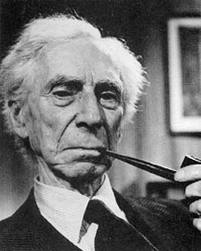
Photo of Bertrand Russell


“My conclusion is that there is no reason to believe any of the dogmas of traditional theology and, further, that there is no reason to wish that they were true. Man, in so far as he is not subject to natural forces, is free to work out his own destiny. The responsibility is his, and so is the opportunity.”

The lines are Bertrand Russell’s and I’ve been in mind of them for many days. I suppose like most people I endeavor to affirm the rightness of human consciousness by which I mean the hopeful, shy, steady properties of optimism. Obviously it’s a steep task, especially if you’re subject to depression as I often am, and certainly the steepness I speak of is tipped all the more by the suffering and dying we witness–have witnessed–know that we will witness. What I know about hope may feel insufficient hourly, but I know my version of the good is borne out by history and not by the ideas of destiny that are peddled by traditional theology.

Not long ago I saw a minister on TV telling his flock that unless they admitted and re-admitted their fallen condition and gave everything they had to Jesus they would be going to Hell. I found myself talking to the screen saying essentially, “the trees don’t go to hell, the cats and dogs don’t go, the brute whales don’t go, in fact, dear, you’ve reserved only one kind of life for eternal damnation and you’ve done it with sheer inelegance.” That’s what I dislike most about organized religion–it’s sheer inelegance, its lack of grace, and the baldness of its salvation narrative. Religion, as defined by preachers is too ugly for nature and too ugly for god.

I’m in mind of this today both because it’s Christmas Eve and because I’ve been reading poetry about love. There’s more love in poetry and the privacies of hope than in all the churches. This has always true but I felt like writing it down.

Bertrand Russell again:

“One is often told that it is a very wrong thing to attack religion, because religion makes men virtuous. So I am told; I have not noticed it.”

Here’s Elizabeth Barrett Browning:

The Face of All the World (Sonnet 7)

by Elizabeth Barrett Browning

The face of all the world is changed, I think,

Since first I heard the footsteps of thy soul

Move still, oh, still, beside me, as they stole

Betwixt me and the dreadful outer brink

Of obvious death, where I, who thought to sink,

Was caught up into love, and taught the whole

Of life in a new rhythm. The cup of dole

God gave for baptism, I am fain to drink,

And praise its sweetness, Sweet, with thee anear.

The names of country, heaven, are changed away

For where thou art or shalt be, there or here;

And this… this lute and song… loved yesterday,

(The singing angels know) are only dear,

Because thy name moves right in what they say.

Hang it all

Hang it all Robert Browning, but best skedaddle for now. Here come the perfessors.

Triflers beware! The perfessors are here:
Punctilious, mindful, on the move,

They’ll flush you out, invest your reveries,
Or close your brown studies. It’s you they’ve watched

Woolgathering, or nonchalant, improvident- tant pis!
Micawbers, slackers, skimmers, here’s your match,

The perfessors have arrived: the robed Savonarolas!
Leap in the dark, grope or guess, send up a trial balloon,

Rummage, ransack, winnow or appraise–
Inquisitors will grill you: mooncalf, booby, lout, buffoon.

It’s time for gumption, prudence, brains and mother wit:
A bluestocking’s wrangle, a sine qua non;

Alas, poor duffers, bookless, smattering, you invent
A limerick, an Irish muddle, clearly heretic.

O the perfessors are here: praise Mentor!
They swoop through the long schoolroom,

Vertiginous, oracular, confirmatory, O rodomontade!