Miami to Milan, Guide Dog Style

At the Miami Book Festival Vidal and I walked around with a poet who had recently returned to the US from Viet Nam. We sat in a Cuban coffee shop and I mentioned causally that I’d love to visit Viet Nam some day. “If you do,” said my friend, “you better leave your dog at home.” “Why is that?” I asked. “Because they will eat him,” he said. 


As I walked downtown Miami I thought about my circumscribed freedom. Its true: there are lots of places you can’t go with a guide dog. Without civil rights you can’t navigate. Once on a trip to Italy I met all kinds of obstacles—social obstacles. The Italians were not disability “hip” and I encountered restaurant waiters, tour guides, hotel employees, and store owners who were all opposed to my dog. I felt conditional and fragile everywhere I went. My version of Italy is not an able bodied person’s Italy—its a paranoid tippy toe through hostilities. Just try to enjoy the art. 


At La Scala, perhaps the world’s most famous opera house, Connie and I and guide dog Corky sat in a luxury box with three patrician women, all strangers. They were disapproving of the dog’s presence. Disapproving of us as foreigners. While we listened to “La Forza del Destino” we were getting “the stink eye” from those bibulous, over-dressed, powdered women. Though I love opera; though it was the dream of a lifetime to go to La Scala, I turned to Connie and said “let’s get out of here.” We scarcely made it through the first act. 


You can feel disdain even when you don’t see it with precision.


Dog World, No Band Aids Please

A lot of writing about service dogs asserts the dogs heal wounded people. That’s a misrepresentation. A man or woman heals herself and additionally, real disabilities don’t go away. What a dog can do is entice you into the world again. You begin to feel better about who you are while walking in sunlight or in rain.


Maybe that story isn’t romantic enough. You know, a person returning to daily weather. But that’s what the dogs are thinking. 


W. H. Auden wrote: “Evil is unspectacular and always human.” But all dog walks are spectacular and always doggy. When people understand this, they’re animals again. 


Today I’m an animal again. 


I am happy walking beside a fence where sunlight and shade make a kaleidoscope. 


Oh Anima, Where Art Thou?

Dreamt last night I was in a field of talking sun flowers. Really. Woke up thinking that in dreamscapes flowers are seldom detestable. And of course I don’t remember what the dream flowers were saying, only that they were amused—though not as poets are amused—not with the self-congratulatory pleasure of attainment. They were simply flowers that liked growing. It was obviously an anima dream. They stood in peace and there were mountains.

Easy Knowledge

I feel like a child whose Bat Man suit has caught on fire:

its a life without wishing or forgiving. 

So much for boyhood. 


Today is a winged affair, with flames. 

“Do you fear others?”

“Yes, but with strict beauty.” 


If I make it through this day

I’ll build a shrine to friendship,

assuming I still have hands. 


Even the Blind and Their Dogs Like Photos

Corky and I once met a blind chess master from Russia. We were in Milan being photographed for an advertising campaign. The chess master was also being photographed. There were three blind people altogether—blind writer, blind chess master, blind concert pianist. The gimmick was that we’d appear in magazine spreads extolling the graceful design of Artemide lighting. Even the blind love art. 


None of the other blind guys were friendly. 


Hell, even the photographer wasn’t friendly. And he was famous for his dog photos. 


I wondered if it was possible to photograph dogs without really liking them. I’d never thought about this before but being in the presence of Eliot Erwitt made me think about it. Yes I think you can photograph dogs without liking them at all. Erwitt’s dog photos are oddly lifeless while William Wegman’s photos are full of joy. Even the blind love photos. 


Last Night Vladimir Putin Stole My Dog

I dreamt I was in Russia. Something had happened—a foreign exchange program “gone bad” as I was not permitted to leave. Worse, they took my guide dog. In dreams when you cry the floodgates open. I wept and wept. 


They put me in a building, gave me a little apartment. There was a piano in the lobby. There were a dozen blind people all playing chess. 


Dear Lord Byron, may I stay home in my imagination—

I’m not as stoic as you, if they took away your dog 

you’d swim the Bosporus, endure conflagrations

all to get him back. I sat before a tuneless piano

and blindly played “Stormy Weather”

with tears running down my face.

The blind chess masters moved their pieces and said nothing. 


On Trying to be Good for the Sake of Your Guide Dog

I try to be good. My dog deserves my attention to respectability, or at least the pursuit of it. I imagine I should be Siddhartha of the guide dog world. I tell myself I must be as good as my dog. But I fail. I feed Corky a strawberry while sitting in a Manhattan hotel lobby. I say ungentlemanly things to people I don’t like, much in the manner of Groucho Marx. “I’d horsewhip you if I had a horse,” I say to a pompous academic at a conference. I’m certain Corky would not approve. This is a problem. I mustn’t let her canine decency represent my own sad, Lutheran conscience. Nor should she be an impossible “master” in a Buddhist temple. “No projections, please,” she says, looking me over as we ride the subway to Grand Central Station. “You be you,” she says, “and I’ll be me.” “In this way we’re perfect.” 


But I’m a rascal—I’ve always been a rascal. Perhaps not in a hysterical way, but with a steady irreverence. As a boy I used to feed caramels to the squirrels just to see them chew with developing terror. That was the extent of my animal cruelty. But I should be clear, I’ve had trouble holding things sacred. I once stole a bishop’s mitre from a church and wore it to a party.


Oh yes my dog is good. She’s probably too good for me. But the great thing is she doesn’t think so. She doesn’t think so at all. 


At the MacDowell Colony for the Arts in New Hampshire, Corky climbs on my bed and licks my ear just when I’m feeling like a failure. Most writers will tell you they feel like failures at least once a day. There you are, in the unlighted alley of your depressive imagination, and voila, a canine tongue enters your ear. “To hell with Siddhartha,” she says. 


I'm Going to Jackson, A Guide Dog's Tale

Corky and I went to Jackson, Mississippi for a conference on blindness. We exited our hotel and two African-American men jumped aside as they saw us. Around a corner we went. We met a black woman who ran away. I commented on this to a blind man later that day. He was a white blind man. He said, “Oh yeah, black people don’t like dogs.” But I thought, “Black people don’t like dogs in the hands of white people, even blind white people.” I was sad all day. I felt the old distressed garments of American racism falling down like scarves. 


The schismatic inheritances America offers are enough to make a grown man and his dog weep. How does a dog weep? She stops wagging her tail. It was not long before I noticed Corky wasn’t wagging in Jackson. Maybe she was picking up on my mood. Maybe. But a dog who loves people must also sense their fear and feel a compensatory sadness. 


Wallace Stevens wrote: “The world is ugly and the people are sad.” He could have added dogs.  


Inside of a Dog

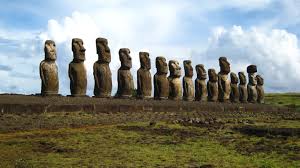
Easter Island Votive Statues


Photo: Easter Island Statues


Vidal is stoic. He likes to sit and stare at distances. In Port Townsend, Washington, he sits beside me in the strange, weak sunlight of the American northwest and he sits so still I think he’s turned into a statue. He’s having a rendezvous with Chinese ghosts. But then, as my imagination starts working on his general state, he turns back into Vidal and eats a slow moving bee. I’m talking to a poet when it happens. “That was artful,” says Sam. “He just plucked it out of the air.” So Vidal is part guide dog and part something else. The something else eludes me.


This is the wonderful thing about dogs. We know them but only just so. Their pulses differ from ours. 


Vidal’s pulse reinforces his hunger which is tuned to allotments and rubbish. His hunger upon which he concentrates completely until it becomes a third party in our life together. 


At the home of friends he sneaks away from me and eats five pounds of Chinchilla food. Later that night as I’m sleeping in a guest room I hear him in the dark. He stands up and lets out a single moan, then proceeds to vomit wildly with long hacking coughs and convulsions. I stagger to my feet and cry for help. 


Chinchilla food is alfalfa and inside a dog it expands—Vidal has turned into a field, a farm, he’s a staggering barfing alfalfa ranch. 


As he stumbles around the room he produces whole statues of alfalfa, monuments sculpted by his digestion. They look like the Easter Island stele. And they’re strangely dry as I lift them. “Ready mades,” I say to David, whose house has been defiled. “He’s a regular Marcel Duchamp.” 


Groucho Marx famously said: “Outside of a book, a dog is man’s best friend. Inside a dog its too dark to read.” 


But Groucho was wrong. Inside a dog is a room with votive alfalfa demi-gods; where moonlight shines down on green and knobby figures of pure appetite. 


Cripples Abroad


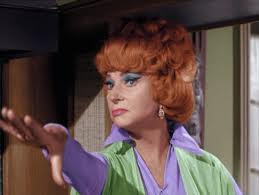
Agnes Moorehead


Photo of Agnes Moorehead from “Bewitched”


When my friend Bill Peace wrote yesterday about meeting a gas station attendant who was clearly addicted to meth amphetamine, and the intersection of that encounter with his own disability, I was reminded of the dozens of times I’ve been in the company of drunks, addicts, and broken wanderers. Traveling blind differs from sighted travel in only one respect: strangers are more likely to approach when you can’t see. They’re generally not malevolent, though I can’t prove it—my impression is they’re lost. Its ironic they should gravitate to a blind person. Over the years I’ve come to see this gravitation as something spiritual. I don’t mean this in a churchly sense, but more like Carl Jung’s analysis of UFOs. A blind person going confidently about his or her business means something to hapless wanderers. Once in New York City I was grabbed by an Asian man who dragged me across the street. On the far side he actually bowed and then ran away. He never said a thing. My guide dog was as stumped as I was. They didn’t teach us about this at guide dog school. The man was working something out. Doing some penance. 


What’s clear is that disability always represents something—its like the mirrored ball in a disco. You may be—no, likely are—minding your own business. You’re pumping gas like Bill Peace was doing, or you’re standing on a corner thinking about tartar sauce, why do they call it “tartar sauce”—did the Tartars actually make sauce—when a man disguised as a man appears. He says he has headaches. He says he lost his job. Says inside his clenched fist he has a ruby that once belonged to Agnes Moorehead. These things happen all the time when you have a visible disability. There is no such thing as shining, neutral weather. Not if you are a cripple abroad in America.