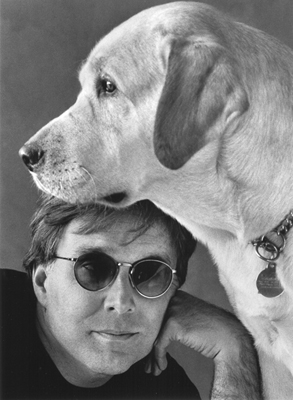
Look! They're Staring at Me!

“I don’t want to know you,” says the stare. Disabled people know the stare. It happens all day long. It happens regardless of your mood. There are many good books about the stare by scholars of disability. If you’re an artist you can put “the stare” into the Dice-a-Matic of cultural pan optics  and create an indicting performance—ironic and flinty. But the stare is ex-cathedra and a-performative. The stare is the stare. Its automatic, without mindfulness. Crip culture attacks the stare—re-performs it; disarticulates it; turns it into confetti. But stare don’t care. Stare don’t give a diddly damn. 


You look different. The aim of culture is to create language that bridges difference. Trouble is, human beings don’t live long enough to bridge anything. Here comes another staring baby, without the advantages of her great grandmother. Meanwhile staring is a genetic and neurological determination. Staring at unlike things is value neutral. 


Of course we have to stare. But what then? William Gass wrote “culture has completed its work when everything is a sign” but alas, from a disability studies perspective, culture has no lingo for aporia. Over the centuries we’ve failed to create the linguistic static to promote advantageous doubt.  


Comic books come close. Sci-fi too. And ancient stories like the Finnish Kalevala (from which Tolkein got most of his ideas). In general human beings desperately need stories that promote advantageous doubt about unlikeness.  


You can argue with my premise about the neutrality of the stare—the long history of social ostracism and scapegoating does, at first, belie my point, save that political exploitation of staring requires machinery, beatings, printing presses, Joseph Goebbels, Fox News, and legions of terrified parents. Even better: undedicated parents. Culture has completed its work when everyone is a sign. 


I’m just a blind guy. I walk with a dog. I don’t represent anything. I don’t portend God’s unhappiness. I don’t need you to pray for me. I don’t require a donation. I don’t want you to run in front of me and open the door. In general I like staring babies. They haven’t had the advantages of culture. 


Holiday Greetings to All Our Marginal Friends:


Readers’ Note: Once again I’ve failed to send out Holiday Cards. 


Well, its been a big year in the Kuusisto household. Uncle Urpo Kuusisto (who is 108 years old BTW) invented the “reverse slingshot” and knocked out his right eye—BTW it wasn’t his good eye so he didn’t mind. The slingshot delivers vodka balls straight to your glottis if your aim is true. Maija Anna-Maija Anna Maija Kuusisto (who is 82) (and whose relationship with the rest of the family has not been precisely established) became convinced by overwhelming persuasion that one can find the true tomb of Jesus over the next hill. At first we kept her chained to the electric light pole in the yard, but she tore it out, dragging it behind her, trailing wires and sparks. At the suggestion of Sorpa Suru Kuusisto (home from college) we gave her a cocktail of Adderall and meat tenderizer and she’s now happily reading the Farmers’ Almanac backwards.     

This year, the biggest news in Kuusisto-land comes from the Communist side of the clan. Cousin Alpo Kuusisto (who is 108 years old BTW) lead a group of retired old men eating out (they call themselves ROMEO) in the singing of the Internationale at a Denny’s Restaurant in Fitchburg, Massachussetts. The police took no action because the sight of so many red phlebitis stockings robbed them of their customary stamina. Ah, anthropology! Other lefty news comes from Jussi Kuusisto who studies marketing at Slippery Rock College and has patented “The Old Joe Stalin Embalming Method” which he says, will allow every aging and unrepentant socialist to lie in state forever. “Picture it,” says Jussi, “old communists on severe display in every neighborhood in this bloody monolith of shopping they call America!” Jussi gets excited and we’re excited for him—as someone in our clan must make an honest living and we’re hoping the taxiderming of superannuated lefties will lead the way. The rest of the Kuusistos are up to their usual dark habits—watching flights of birds for omens, and of course, cooking atrocious meals. May your new year bring you endearments hitherto unimagined, a sincere wish, though we scarcely know you. 


Self Interview, Dec. 20

I am slow. Alright. I’m not. I’m faster than Goethe’s cuckoo clock. Faster than a glass of water. For company I have a dictionary. Raspberries. Risible. Rococo. What’s that at my door? Its the Rosicrucians. 


In our youngest days when we were shaken awake by desires we loved the Phoebe bird. Even now, verging on age, we love the Phoebe. He sang from a birch as I passed this morning walking my dog. He thrilled my heart. My confused and abject little heart. 


A writer I admire once said there are many situations when the first person—second person pronoun monopoly of the English language is insufficient. I and You need gussying up. 

This is especially true in airports. To whit: “The passenger known as Kuusisto (see his ticket) would like the august and delightful employee of Curbcut Airlines (hereby identified as Herkimer Kiwi) to smile broadly and groove to the warmth of our combined and burning identification papers.” 


I wonder where the old, dried boys of my childhood are today? The ones who chased me with sticks because I was blind. Oh well. Goethe’s cuckoo clock cuckoos. “No time for weevils,” it says.


Let’s pass through the gate of horn. 


**


My mother was a woman of snow

My father was a man of snow

My fingers are made of snow

That is all


Äitini oli nainen lunta

Isäni oli mies lunta

Sormet tehty lumesta

Se on kaikki


**


I once ate a bear steak and felt rather bad about having done so. That is, I suffered only the ill effects that arise from eating your brother. 


**


I try to be funny—you know, only half in the world. In this way, the further griefs sometimes miss me. 


**


Thinking of the new pope—reminded of Carl Jung’s assertion Catholics are easier to cure of neuroses than Protestants. Francis wants more neuroses in the flock. And good for him. 


**


Here come the three strange angels formerly known as D.H. Lawrence. 


Let them in. 


The Guide Dog Miracle on 125th Street

The guide dog world is a small one. It surprises people to learn there are only 10,000 guide dog users in the United States. There are lots of reasons the number is small: blindness is a low incidence disability; not every blind person likes dogs; two thirds of “the blind” in America are over 65 which means, among other things, they may not be genuinely healthy enough to walk with a powerful dog. Add the indisputable fact the US doesn’t have comprehensive national rehabilitation services (providing outreach and information to newly disabled citizens) and “voila” you have the prospect that many people facing vision loss don’t know they qualify for a guide dog and they certainly don’t know guide dogs are offered free of charge.   

via www.planet-of-the-blind.com

The Guide Dog Miracle on 125th Street

The guide dog world is a small one. It surprises people to learn there are only 10,000 guide dog users in the United States. There are lots of reasons the number is small: blindness is a low incidence disability; not every blind person likes dogs; two thirds of “the blind” in America are over 65 which means, among other things, they may not be genuinely healthy enough to walk with a powerful dog. Add the indisputable fact the US doesn’t have comprehensive national rehabilitation services (providing outreach and information to newly disabled citizens) and “voila” you have the prospect that many people facing vision loss don’t know they qualify for a guide dog and they certainly don’t know guide dogs are offered free of charge.   


In sum there’s a lot of “I don’t know” when it comes to the blind, whether we’re talking about guide dog users or not. Advocacy organizations like the American Council of the Blind, The National Federation of the Blind, and the American Foundation for the Blind do a great deal to educate the public about the blind in particular and disability in general. But for all their work the broader view about blindness in America is largely clueless.    


I’m in mind of these things because a blind man named Cecil Williams and his guide dog Orlando have been in the news—rightly so—for Mr. Williams fell onto the subway tracks in New York City and his dog, ever loyal, jumped after him. This is everyone’s nightmare, whether you’re blind or not. Its the terrifying scenario of Law & Order episodes. Its the bad stuff of dreams. One can’t imagine the terror that Cecil Williams must have felt. Then try to imagine being in the crowd on the platform—seeing a blind man and his dog down on the tracks, and hearing the oncoming train. 


There are moments in this life that strip imagination naked. 


Williams and Orlando survived being run over by a train and their story invites pure, instinctive joy. All the laws of machinery and probability have been swept aside. The fact invites one to believe in miracles. God or no God—it doesn’t matter. A man and his dog are safe. In a dark time when many feel civic or existential malaise this story is more than restorative—it affirms our nation’s ethos—people care. Bystanders waved their arms, alerting the train. Police and civilians came together. 


Then things went a little crazy. This is the part where the public’s lack of information about blindness in general, and guide dogs in particular enters the picture. Mr. Williams explained to reporters he was retiring Orlando. Orlando is, after all, 11 years old.  Its time for him to stop working. Williams had arrived at this difficult decision long before his accident. When asked what was going to happen to his brave dog, Williams said he was returning Orlando to the guide dog school. “Why,” the press wanted to know? Enter blindness-guide dog-sub-text number one:


“The guide dog school must be taking the dog away!” (This narrative automatically assumes three things: the blind are entirely passive and helpless; blind people are vulnerable; and behind this there lurks a heartless “them” because that’s a story Americans have come to imagine in these benighted times. Some horrible bureaucracy, some “Bain Capital” (or as Mel Brooks would have it, some “Engulf and Devour Corporation) was poised to take the man’s dog. 


Does it matter that none of the above is true? Yes. The blind do not live in a Victorian world of abjection and helplessness. Nor does any professional guide dog training school “demand” guide dog owners return their dogs when they grow old. A guide dog is yours for life. The only exception I know concerns verifiable animal abuse. Guide dog schools are not in the business of taking dogs away. 


Mr. Williams explained he didn’t have enough money to care for a new guide dog and keep his old dog. Enter blindness-guide dog-sub-text number two:


Blind people and their problems are entirely matters of money. 


Here’s the deal: a working guide dog team can receive money to offset the costs of veterinary care. A retired dog does not qualify for the stipend. This is a big honking deal if you live on a limited income. But its also a big honking deal if you do not. Every dog owner knows that veterinary care for older dogs is a considerable expense. Mr. Williams felt (prior to his accident) that letting the guide dog school find a suitable family to adopt Orlando would be in Orlando’s best interests. But there are other interests too. Many blind people (especially those who live in apartments) find it difficult to have two dogs. And the dogs themselves—that is, the retired dogs—can have trouble adjusting to staying home alone. The best scenario is when a dog can retire and there are people at home and maybe another dog or two. 


What I”m getting at is that Williams was giving his dog back to the guide dog school for all the right reasons. But suddenly, in a crazy and highly charged twist, the story became a charity narrative. That’s because surely all blind people must be terribly helpless; must need help overcoming the obstacles of a cruel world. None of this obtains in Williams’ story but the narratives sure took off. 


I don’t know Cecil Williams. But I know he loves his dog. I know that retiring Orlando will be terribly hard. I know he will always hold Orlando dear. I also know that the decision to let Orlando go to an adoptive family was not made because of a bank book. But that’s the narrative that ballooned out of control. By the end of the day on Wednesday some $40,000 has been donated to save Orlando. This is not necessarily a bad thing, except that mainstream news outlets are now reporting that because of this outpouring of generosity Williams can now keep his dog. 


Lost in the midst of this is that Williams may not want to keep Orlando—his plan was always to let him go to a home where he can have fun—rather than sit around in an empty apartment while the new dog goes places. 


The donated money will help retired dogs and will go toward Orlando’s retirement care. There’s nothing wrong with goodness. I’m not that much of a contrarian. But I do think the press should know more about disability in the broadest sense. It should know what the dilemmas and opportunities are for people with disabilities. Instead, what usually transpires whenever a disabled person gets in the news, is this outworn Dickensian world view. That’s the way this was presented just this morning on MSNBC’s “Morning Joe”—the poor blind man gets to keep his dog. I can attest there’s much more to this story. More professionalism. More community. More and more. 
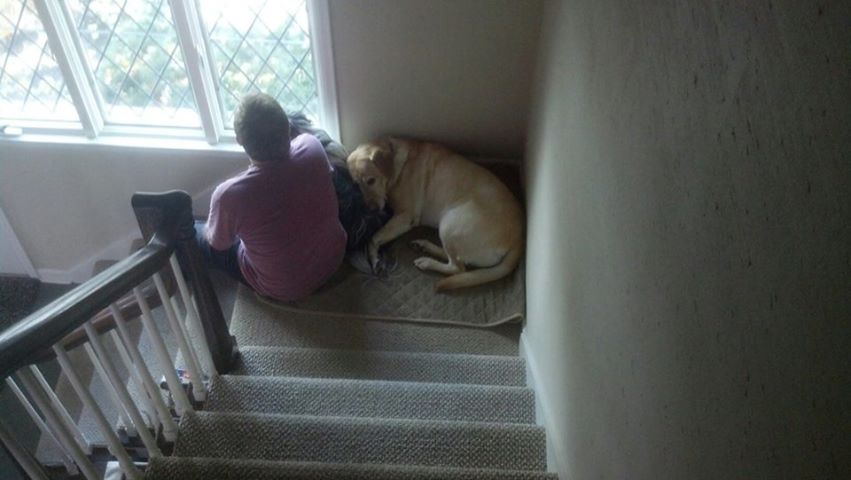


A Dog Loves Me

A dog loves me.  The cleansed skins of the apple trees darken with morning sun.  A dog loves me.  Before the first light of day Venus appears from behind a winter cloud.  A dog’s love is not presumptive: it is no mere wish.

There are mythical scenes in human lives—light bulb moments, the college kid understanding Emerson for the first time, and, as a friend of mine would say, he “bumps along the ceiling of his skull” for myth is one of the lauds, the oldest prayer.

But a dog loves me.  She wakes me early.  We stand beside the Asian Maple tree, its hydra branches dusted with snow and we talk.

When a man or woman talks to a dog its not always a spoken thing.

My dog scents the new snow, putting her snout deep in a snow bank.  She snorts like a horse.  Snow magnifies the delicate scents of mice.  The man says nothing but sees inwardly expanding circles on water—smells broadcast in snow—and as he thinks it, he sees what his dog sees.  Forget your occupation or ideas of sensible success.  The man and dog stand in the cuneiform world of things unseen.

But forget poetry.  This can be diverting, this business of man and dog moving together in subordinate thought.  In a business meeting I hear my dog sigh from under the table.  She’s heard the grey voices above her, voices so monotonous she is asking: “who among the humans besides my good man is happy to be alive?”  I know this is what she’s saying.

In an elevator she smells one man’s fear and another’s sorrows.  We’re just going down two floors.  It’s an ordinary day.  “The people,” she thinks, “are passively borne by dark emotions.”  I know this is what she’s saying.

Riding an escalator in Macy’s (the original flagship store in New York) she knows the false symmetry of human occasions, thinks the place needs a thousand wild birds.  I know this is what she’s saying.

We move to and fro.  Swiftly.

She loves me.  There is never a moment she does not love me.  We move to and fro.  All day, every day, we have light bulb moments.

We talk.

We ride uptown on Fifth Avenue and for once the cab driver is friendly.  He likes dogs.  He’s from Egypt.  His sister back in Cairo is deaf.  He knows a lot about struggle.  My dog smiles at him.  Honestly.  She smiles.  He asks if he can pet her.  I tell him he can.  He smiles.  I know he’s telling her to keep up the good work.  I know she’s telling him about her fleet footed life.  She’s telling him life is life and we can go places.

We move to and fro. A dog loves me.

**

Once upon a time, years ago, long before I got a guide dog, I climbed to the top of a ski jump tower in Finland.  I was with a friend who thought this would be fun.  The skiing season was over and the tower was deserted.  We climbed a ladder that seemed to never end.  Up and up.  I’ve never been good with heights.  My stomach felt green and cold.  But I didn’t want to appear cowardly.  I kept going.  The top of the ladder met a platform where the skiers line up.  The mighty drop beyond was a terrifying thing.  We stood there for a time, right at the lip.  I remember thinking as I stood there, that truth and love will always go astray but visceral fear—that you can count on.

But now a dog loves me.  She stops me at the edge of the railway platform.  We talk.  She likes her life.  She knows a great deal about quelling fear.

We talk. She says fear is not what people suppose—its not just danger, its not knowing what to do.  She says dogs know what to do.  She likes her life.  She loves me.

Dog Schmooze

Professor Stephen Kuusisto is the author of Eavesdropping: A Memoir of Blindness and Listening” and the acclaimed memoir Planet of the Blind, a New York Times “Notable Book of the Year”. His second collection of poems from Copper Canyon Press, “Letters to Borges has just been released. Listen to Steve read “Letter to Borges in His Parlor” in this fireside reading via YouTube. He is currently working on a book tentatively titled What a Dog Can Do. Steve speaks widely on diversity, disability, education, and public policy. www.stephenkuusisto.com, www.planet-of-the-blind.com

The One In Which I Punch Some Shit

By Andrea Scarpino


I fancy myself a non-violent/yogic/Buddhist personality—or at least someone trying to increase her non-violent/yogic/Buddhist tendencies. I meditate daily. I’ve marched for peace, written anti-war protests. I grew up deeply respectful of the Quaker faith. I grew up hearing the words ‘conflict resolution’ on a regular basis. I remain horrified that Zac’s parents encouraged him as a child to hit a tree with a baseball bat when he was angry—how could anyone hit a tree? 


And suddenly, I find myself boxing—a sport I would have decried as violent just months ago. I find myself paying membership to a boxing gym. I find myself saying, ‘my boxing coaches’ in conversation with friends. I find myself reading Mike Tyson’s Wikipedia page, googling articles about Mikaela Mayer, watching YouTube fights, imagining myself being hit in the face. 


I find myself loving the feel of my black hand wraps, how gloves fit over my fists. Loving the feel of the punching bag when I hit it just right. Loving the hook. Loving the upper cut. How I turn my body. How I try to throw my weight into it. Loving the sound the jump rope makes. Loving the weight of medicine balls. 


Loving the boxing gym’s teamwork, how we count stretches out loud together, how we help one another into our gloves, how we shout encouragement. 


How good it feels—empowering—to learn how to hit. To punch some shit. To concentrate on my body’s movement through space. To feel my body as strong, capable, able to act and react. 


How when class ends, I feel released. The stress of the day slipped away, anxiety, sadness. I leave the gym with a quietness. How unexpected that is: to punch some shit and find some peace. 


Disability and the Middle Ages, or, How to Count Your Blessings Stupid

NewImage


Medieval image: the blinding of Samson’


No. This is not a scholarly paper. Concerning the middle ages and disability I’ll say only this—prior to the Enlightenment disability was conceived as a punishment from god or a mark of  dishonesty for disfigurement or blinding was a social punishment as Oedipus well knew. Therefore laughing at the disabled was either a religious matter or a village sport. Parading cripples through the streets was a vulgar form of comedy. This comes to mind often if you have any kind of disability for the contemporary public carries vestiges of the medieval unconscious. 


There’s been a lot of cheap comedy following the South African sign language interpreter incident. Disabled people don’t think the sport is amusing. Bill Peace over at Bad Cripple writes about the unrefined quality of the media responses to the affair:


I saw Stephen Colbert mock what took place. I was not impressed. Sorry but I find absolutely nothing funny about what took place in South Africa. All I can think of is the few deaf people I know and how they struggle to communicate in the hearing world. I wonder why is ASL not taught in every elementary school in America? Most importantly, why has the fraud become a joke?


There are two interesting rhetorical questions here. We know why the fraud has become a joke: disability has never stopped being a joke. It was always a joke because god willed it so—the infirm, the unseeing, the deaf were put on this earth to make “fit people” count their blessings. This is why American churches are not required to conform to the Americans with Disabilities Act. Don’t delude yourself: the cripples are not among the elect. They never were. 


So an ersatz sign language interpreter standing behind the President of the United States and gesticulating wildly, giving the finger to the crowd and making meaningless geometries in the air—well, that’s an incitement for ancient village laughter. Normal people never make a distinction between fake disability (which is funny) and real disability (which is funny) and Praise Be to God when the two subjects are combined. 


That’s an answer to Peace’s second rhetorical question. His first, why ASL isn’t taught in every elementary school, has just as much to do with the middle ages as the first. The aim of public education in the US isn’t to advance communication but to diminish it. If you’re child’s fate is to be a serf, why fill her up with abstruse nonsense like language skills or art? 


Its been my experience that the vast majority of “normal” people have no idea what their respective degrees of physical privilege really mean—or, in turn, how much that privilege colors their understanding of society. This is why Stephen Colbert or Jon Stewart or Rachel Maddow or the Today Show are largely no better (either individually or collectively) than a village farce when it comes to understanding the social construction of normalcy and its deleterious effects.    

Free speech is a tautology. Its primary clause is comedy. In its medieval guise it reassures normal people they’re still elect. 


Explanation


When the river asked me to join

wind was still. So I put half my arm 

in there—cold bone brother

and sure 

river wasn’t satisfied—

it begged for more arm. 

I plunged up to my shoulder

like a man 

who’s dropped his car keys,

reaching among reeds 

feeling my ancestors.

Grandfather was giddy

with parturition and slick. 

“God help me,” I thought, 

“letting fast river talk me 

into metempsychosis.”

Water flowed one way

and the dead the other.