Self Interview, December 14

My psyche is built of mordancy and keenness. I laugh oddly because I’m one of those souls who thinks playing chess by our own rules is truly funny. One of the highlights of my life was being allowed to spin Marcel Duchamp’s bicycle wheel in the Museum of Modern Art. That was a Rabbinic moment for me—I was aging Adam and being granted one more look into Paradise. 


**


Carl Jung said modern science tells mankind there’s no one looking after us, and so, accordingly, we’re filled with fear. I can’t explain my contrarian feeling—but I’m not afraid. I had one mother and one father and they were helpless people. I don’t need a heavenly father or mother. I’ll be happy to return to star dust. 


**


So what makes me laugh my ass off? Greek poetry! Become what you are! 


Some mornings I make up my own Greek poets. Here is the ancient poet “Hygiene”:


The drip of the bathroom tap

Morse code of a sort—

Wash your fingers separately 

the gods say

But they don’t tell us why…


**


Mistakes are funny. I once stepped on a water lily. I was four years old. Stepped right out of the boat. 


**


BTW—not very funny, but  illuminating. The Brothers Karamazov and Carl Jung’s Psychological Types make excellent paratactic reading. I love it when books go perfectly together. 


**


When the old queen dies, who will burn her secret, impious books?


**


Great moments from Auden:


“After Krakatoa exploded, the first living thing to return 

Was the ant, Tridomyrex, seeking in vain its symbiot fern.”


**


Even in winter I dream of insects. 


**


The able bodied people laugh at the infirm. This is because we’re still living in the Middle Ages. Science was working to pull us out, but the Cold War buffaloed the effort. Its all darkness and lesser darkness in the public mind. Science got slaughtered in its cradle. 


There is nothing funny about this. 


**


Here’s wishing you a neutralizing peace and an average disgrace, as Auden would say…


Self Interview December 12, 2013

IMG 0018


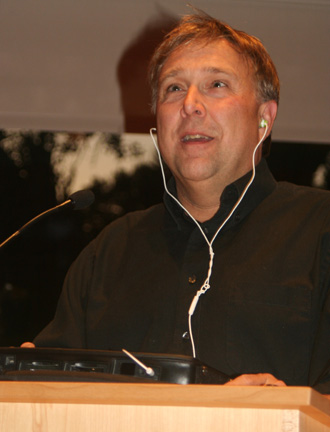
Photo of Stephen Kuusisto taken at Grinnell College, courtesy, Ralph Savarese


The appearance of an ersatz sign language interpreter at the memorial service for Nelson Mandela reminds me that able bodied people are fakers.


Who are you? Not the first question of philosophy. But the most important. 


Old woman yesterday in bagel shop, admiring my dog. Her face a Britannica Encyclopedia of acquired pain. 


A knock on the door. Oldest dramatic device. Second oldest—poisoned swords.


Its early and I’m drinking coffee. Typing fast. Still walking the basement of dreams.


Dreamt last night of a fine sailing ship. It was beautiful turning into the wind. 


Many years ago I went into a repair shop in Helsinki—the old man who repaired typewriters was deaf. A friend said: “He’s good with machines.” But I saw he was good with what Jung called the psyche. 


Good bye, Medieval God, you who rewarded goodness, punished evil. Sometimes I think I miss you. But then I read Tom Paine and I cheer right up. 


Here come my dogs. Its time to go out into snow. 


Here’s to the new Institute of Hope. I dreamt it last night. 


Because My Dog Loves Me

Because my dog loves me I’m fractionally taller than I used to be. Of course this sounds silly. But then again, it isn’t. Walking with a guide dog makes you stand up straighter. “Damn,” says my dog, “damn you look good!” 


We follow the twisting tracks of the day. I’m straight. She’s fast. How perfect this team is! 


We walk through a green plush garden. Its an amazing garden. The dog says: “You ought to smell the chickadee. Now that’s a smell!” I know this is what she’s saying. Me? I hear it. A bird like a stenographer. Happy talking bird. My dog says she loves her life. I can hear her also. I think all blind people who have guide dogs know what I’m talking about. Dog-a-sthesia. You’re just walking around and darned if you’re not connected to everything. 


My dog’s inner life magnifies my own. Some people would think this is nonsense. I don’t really care. More and more, by tacit consent, I ignore the able-bodied world. I know its there. But I don’t care much about what they think. 


I’m tall. My dog is fast. We talk to birds. Over and out. 


Self Interview, December 10

All the cautionary tales of civilization are spread out in my dreams. Up first: Charles Babbage tried to convince me, just last night, that statistics will help the poor. I really dreamt this. Later I dreamt of acorns. I woke up with the little dog kissing my face and the big dog staring at me.


**


The rocks are big and bad. America. Everyone staggers under monetized fear. All those hopeless baseball hats. Everyone needs a service animal. 


**


Ptolemaic America—what they mean by exceptionalism. We’re at the center. This is of course ridiculous. It makes my lips numb from mumbling.


**


I also mumble in my sleep. Good morning Emily Dickinson. Happy birthday.

Feeling Good

By Andrea Scarpino


We’ve all seen them, the feel-good stories showcasing people with disabilities and their non-disabled benefactors. The high school football team who ‘lets’ a player with autism score a touchdown. The cheerleaders who welcome to their squad a girl with Down syndrome. The family who makes a point of adopting kids with physical disabilities. O the kindnesses of strangers. O how generous the people who open their hearts to those different from themselves. 


This is the time of year for these stories, of course: we all want to believe we’re a pretty good species, despite the contrary evidence. See how we help one another. See how resilient we are. 


But should we really be patting one another on the back for acting with basic human decency? Is it really worthy of the news when we treat one another with kindness? 


Or are these stories serving an important societal purpose: maintaining the hierarchy between ‘able’ and ‘disabled’? Solidifying socially-constructed difference. Supporting the supposed normalcy of the disability-free body. Encouraging the gratitude of people with disabilities for any non-malicious treatment. Because what these stories teach me is that people with disabilities are so foreign, so other, so much work that we should feel grateful that anyone without a disability pays us any attention. 


Clearly, the media thinks the currently non-disabled do us great favors in offering their friendship; the non-disabled deserve great praise for treating us with basic human decency. Otherwise, why would the family that adopts children with disabilities deserve columns of writing when adoption is a common and usually non-newsworthy occurrence? And why isn’t anyone writing congratulatory stories about the men who don’t abuse their female partners? 


I believe that disability is a social construct, that health and illness are social constructs, that everyone will experience disability if she lives long enough. And I believe that my body—physically disabled by birth and chronically disabled by a hormone-related constellation of pain issues—is just as worthy of kindness as any other body. I believe that I deserve friendship and non-malicious treatment just by virtue of being a person in the world—not because my body is so different from yours that you are doing me a favor in showing me kindness.


Because we all deserve kindness, don’t we? Whether or not we are currently disabled. Whether or not our bodies demonstrate difference. Whether or not a journalist is nearby, pen in hand. 


Self Interview, 9 AM


I went to a meeting at 8 which was actually scheduled for tomorrow. Now I’m sitting in the Bruegger’s Bagel shop adjacent to Syracuse University. I have retreated to this place (with its ersatz bagels and third rate coffee) because there’s no “here” here—by which I mean, Syracuse University has no decent local coffee places; no “Indie” bookstore; no worthwhile hangout. Its “life without Mozart” just now.


Which gets me to thinking that even Mozart’s life was life without Mozart—every moment he was composing he was “out of himself” living in the vaporous clouds of illumined mathematics that comprised his private entry way to the universal unconscious. Strictly speaking there was no Mozart. And the music we call “Mozart” isn’t Mozart either—its the numerological impersonation of Mozart. 


Meanwhile, here in the phony bagel joint, no muzak and no Mozart and for that we are grateful. 


Self Interview Before Dawn


NewImage


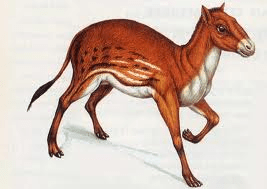
I jump out of bed declaring I will be at peace with myself. Marvelous error! I am so happy! I have been awake two minutes and have already given away the flag of sensible success. I decide over coffee to give away the stars of mythology throughout the day. “Here friend, here is a star called Eohippus—tiny, horse shaped, filled with light… Of course the secret is—you never say so…never tell people the magic you’re giving them. 


**


Over the course of a 22 year career in baseball, Ted Williams struck out only 70 times. He was an example of the maxim: “none of us knows what we know”. All that concentration in the batter’s box while the rest of his life was a mess. Each life must decide itself to what it will be applied. Ted never found a tiny horse filled with light. 


**


Dreamt recently I was in a flood. The architecture was some kind of shopping mall. There was a professor there, a man I haven’t seen in years. He was youthful. He was calm. Outside, with the flood behind us, he asked after my father, calling him by the wrong name, unaware he’s been dead for years, said: “I imagine he’s napping?” 


**


A light of recognition fills the whole great day. The horse says so. 


The Dog Among Strangers


A guide dog provides a series of “firsts”: the first time in a public restroom, the dog sitting obediently while you pee; two airline pilots seeing this and whispering about it. One of them laughs. The sight is also a first for them. They have no words for it. They like seeing the dog. They’re unsure what to say. The dog just sits and smiles.


The presence of working dogs in businesses is a catalysis—every moment is odd. In cosmopolitan work places people are not accompanied by animals. The arid environs don’t require them. A dog in a grocery store is strange, like seeing a horse in a saloon.


First time in a barber shop, Ithaca, New York. A Wednesday, early April, snow. I’d decided on impulse to get a haircut. Corky and I descended steps—the shop was below the sidewalk in a downtown building. A bell on the door tinkled when we went in. Men were talking as we entered but they turned silent upon seeing us. I wondered what the term was for a group of men gone quiet. The ancient soul surely knows what this is—five or six men staring and no one bothers to speak. The sight of a man and dog had violated the house geography. I shut the door. The bell wasn’t cheerful. “Christ,” I thought, “even the bell is against us.” Still no one said a thing. Disability scares some people. They have no words for it. On a primitive level they probably think disability is contagious like influenza, or worse, its the evil eye.


I had to be the one to break the ice. I went for a dog joke. “Hey, my dog needs a trim,” I said. That was all it took for the boys to snap back to life. It was like saying “abracadabra”. There was old guy laughter. “Great,” said the barber, “take a seat.” I took a seat. Corky lay down.


Though I was in the shop, happily awaiting a haircut, a tangible change had come over the men, who were not in fact getting trims or shaves. The old barber’s place was their social club and my presence had dampened things. Even the radio high on a corner shelf wasn’t helping as it was tuned to static. No one seemed to notice. The silence of the men continued for two full minutes. Corky rattled her dog tags. The silence was exceedingly strange.


Rather than throw out another joke I stayed quiet wanting to see what would happen. I thought the barber would toss out a cliche—something like: “We don’t get many dogs in here,” to which I’d reply, “at prices like these its no wonder.” But it wasn’t the barber who broke the silence. One of the old men said: “My friend, who I served with in Korea, he went blind—got a seeing-eye dog back around ’55.”


Then I understood their silence. It wasn’t the oddness of a blind man and his dog, or disability as a portent that had kept them quiet. It was memory. We talked a long time after the ice broke. But I felt faintly silly for my failure of human imagination.


Insomnia and the Hats of Sleep

Grand vizier copy

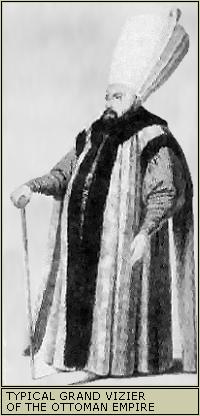
For my blind friends, photo is entitled “Typical Grand Vizier of the Ottoman Empire” and depicts a somber, bearded, richly robed Ottoman judge wearing an immense hat which resembles a dirigible.

 So I have a friend who lives in Port Townsend, Washington. I sent him some news. He wrote me back at 4:45 AM his time. “insomnia,” he wrote. I sent him a picture of the “Grand Vizier” and told him he needs one of these magical hats for sleeping. 

Then it dawned on me: everyone in America needs a hat like this. Let’s be clear. Nothing says big ideas, vast dreams, happiness, and “look at me” quite like an airship atop your head. And look at that hat! Doesn’t it just bespeak dreams? Why if you’re wearing a hat like that to bed, you’re going to dream of the 2,000,000 year old man inside you, or woman inside you, and just as Carl Jung said, you will have some fun with your instincts. 

BTW: what good are instincts if you can’t have some fun with them? 

You wear a hat like this and dream of Zosimos the Greek and your hair turns into feathers. 

I for one would like to see the President of the United States wear a hat like this when he speaks before Congress. 

I’d like to see my faculty colleagues at Syracuse University dress like this as they cross the quadrangle. 

I most certainly want the students to adopt this hat. They need to dream bigger. 

I want people on the IRT in New York to war this head dress. I want to see them getting on and off the trains at rush hour like senescent angels. 

I want to see executives making their ways through revolving doors with their Hindenburg Hats. 

One especially appealing thing about the Grand Vizier’s hat is that it seems to have a condom like receptacle at the top. Who can say what’s contained therein? 

Thank you to The Huffington Post

I’d like to thank The Huffington Post for allowing me the privilege of being an occasional guest blogger.  I am honored to have this opportunity.

Steve_Corky_GEBIn this post titled Dogs on the Playing Field I discuss the role of professionally trained service dogs serving people with disabilites in the U.S. today and ask (and answer) this question: …even 23 years after the passage of the Americans with Disabilities Act and 70+ years since the introduction of guide dogs in the U.S. life in public isn’t always friendly. Lately it seems more unfriendly than at any time since the late 1930s when the blind had to fight for the right to enter a store or ride a public bus. What’s going on?

I am grateful to The Huffington Post for allowing me the use of their platform to explore this issue.  You would “make my day” by stopping by and sharing THIS POST with your social circles.  Thank you!

Photo: author Steve Kuusisto being guided by yellow Labrador, guide dog “Corky”, circa 1995.

Dog Schmooze

Professor Stephen Kuusisto is the author of Eavesdropping: A Memoir of Blindness and Listening” and the acclaimed memoir Planet of the Blind, a New York Times “Notable Book of the Year”. His second collection of poems from Copper Canyon Press, “Letters to Borges has just been released. Listen to Steve read “Letter to Borges in His Parlor” in this fireside reading via YouTube. He is currently working on a book tentatively titled What a Dog Can Do. Steve speaks widely on diversity, disability, education, and public policy. www.stephenkuusisto.com, www.planet-of-the-blind.com